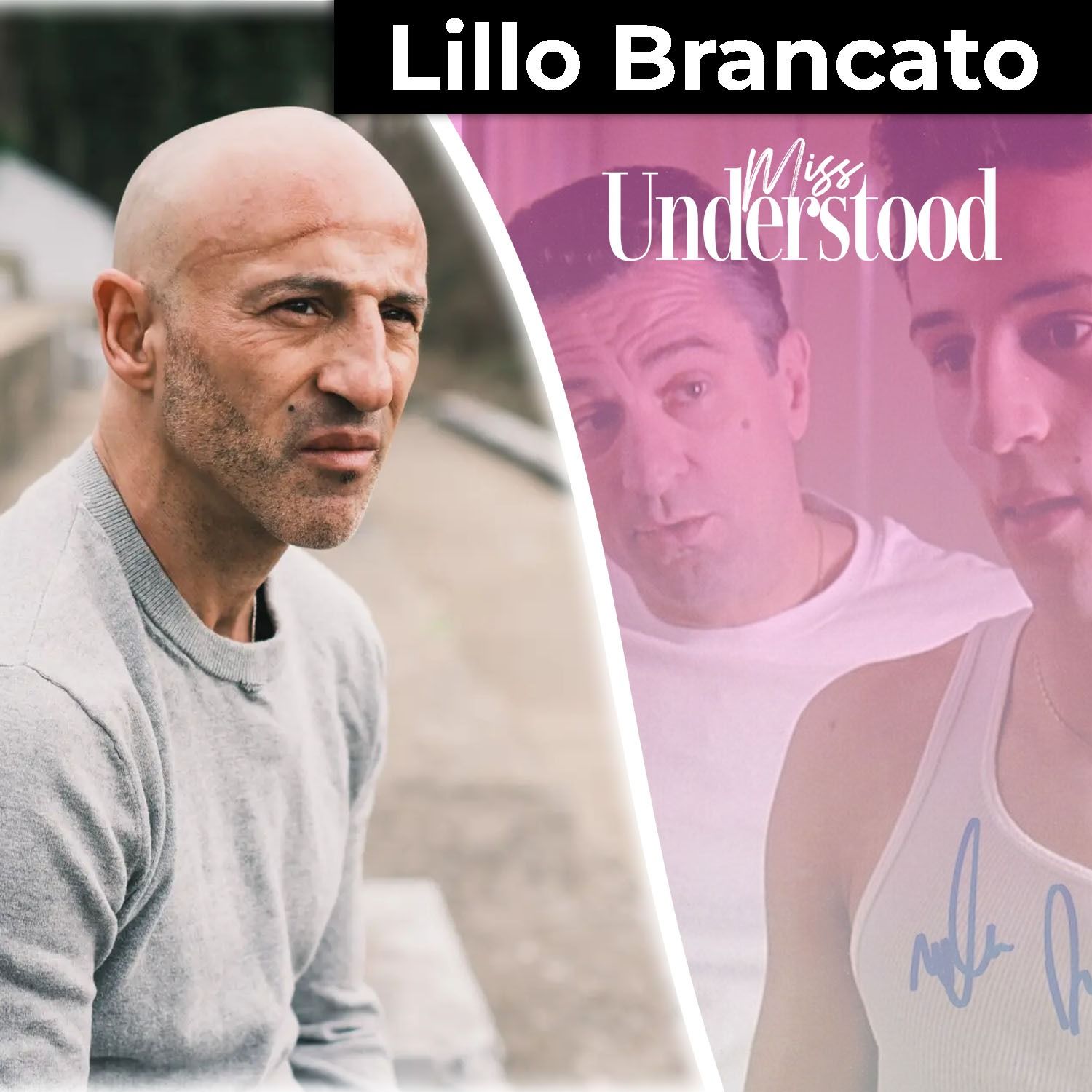
Lillo Brancato From A Bronx Tale Talks About Wasted Talent, Redemption and Life After Prison
Today’s guest is known for his role as Robert Di Nero’s son in the film "A Bronx Tale".
While Lillo Brancato won over audiences on the big screen, most don’t know what was actually happening behind the scenes.
Lillo shares with us the story of how he got tangled up in drug addiction, leading to a tragic fatal shooting.
He opens up about his time in prison and how it became a pivotal moment in his life, which he now channels into helping others.
This is an inspiring story of redemption and hope.
Be sure to follow Lillo on Instagram, where you can find all his links and what he's up to lately!
--- --- ---
PLEASE LIKE, SHARE, SUBSCRIBE, AND GIVE US A 5-STAR REVIEW!: ratethispodcast.com/missunderstood
Become a Patreon Member: https://www.patreon.com/c/MissUnderstoodwithRachelUchitel
Shop Miss Understood Merch https://mumerch.com/
Follow Rachel on Instagram! https://www.instagram.com/racheluchitelnyc/?hl=en
Follow Rachel on TikTok! https://www.tiktok.com/@itsracheluchitel
Executive Producer: George Carmona
Do you have show ideas, media requests or sponsorship opportunities? Email the show at: ru@missumedia.com
Listen on Apple, Spotify or wherever you get your podcasts.
YouTube: https://www.youtube.com/channel/UCw13NrSKD-nD_8E0vBHt5hA
Rumble: https://rumble.com/c/RachelUchitel
Website: https://missunderstoodpodcast.com/
Hosted by Simplecast, an AdsWizz company. See pcm.adswizz.com for information about our collection and use of personal data for advertising.
Available Results
Generated results are saved to the knowledge database for reuse and search.
Extract Knowledge
Pick what you want extracted first. Model, scope, and chapter options appear after a template is selected.
Transcript
[SPEAKER_01]: Today, on Misunderstood with Rachel Yucatau.
[SPEAKER_00]: We all remember Elilo Broncoito.
[SPEAKER_00]: He was such a rising star, acted with the Nero, James Gendofini, but his career came to a screeching halt one night when he was involved in a crime that ended with a police officer dead.
[SPEAKER_02]: As I'm walking away, someone said, don't move, move, move, move, start shooting.
[SPEAKER_02]: I got shot three times.
[SPEAKER_02]: And at this point, I told him to die.
[SPEAKER_02]: Next thing, you know, somebody's dead.
[SPEAKER_02]: Right.
[SPEAKER_02]: At the hands of my addiction.
[SPEAKER_01]: How did you get involved with drugs the first time?
[SPEAKER_01]: Well... You went to trial and you were acquitted.
[SPEAKER_02]: The sentence in guidelines three and a half and fifteen.
[SPEAKER_02]: They gave me ten.
[SPEAKER_02]: You know what I dodged the movie because I couldn't win away for twenty-five to life.
[SPEAKER_02]: I came out of the house so satisfied with what I did with my car.
[SPEAKER_02]: Now you're where I am supposed to be.
[SPEAKER_01]: Hi, guys.
[SPEAKER_01]: Welcome back to misunderstood.
[SPEAKER_01]: I'm your host, Rachel, you could tell.
[SPEAKER_01]: So our guest today is somebody that I had been trying to get on for a long time.
[SPEAKER_01]: I think he's somebody who really epitomizes what this show is about and being misunderstood.
[SPEAKER_01]: We know Lilo Brancado as playing the role of C, which was Robert De Niro's son in the film, a Bronx tale.
[SPEAKER_01]: He narrated the film.
[SPEAKER_01]: He was a complete breakout star.
[SPEAKER_01]: And from that, his life changed.
[SPEAKER_01]: She got, you know, to be on shows like Sprano's and a bunch of other things.
[SPEAKER_01]: But if you, by the way, if you haven't seen the Bronx Tale, you should go watch it because it's one of those really timeless movies that I watched it the night before I interviewed him.
[SPEAKER_01]: And, you know, it's just as fascinating and good.
[SPEAKER_01]: And then my daughter saw it and she just fell in love with him.
[SPEAKER_01]: But what was interesting is that, you know, while you can watch somebody on screen and really feel for them, you have no idea what's going on behind the scenes.
[SPEAKER_01]: And Lilo had developed a drug problem so bad that he decided one night in looking for drugs to go burglarize a friend's house.
[SPEAKER_01]: And during that burglary,
[SPEAKER_01]: as many of you may know, a undercover cop was shot and killed.
[SPEAKER_01]: We low ended up going to prison.
[SPEAKER_01]: He was sent there for ten years, he got out after eight, and he's been spending all of his time giving back in the treatment community and helping people that are addicts.
[SPEAKER_01]: So he really opens up about his time in prison, how it became a pivotal moment in his life, which he now channels into helping others.
[SPEAKER_01]: It's an inspirational story of redemption and hope, and I really hope you guys give a chance.
[SPEAKER_01]: to listen to my interview.
[SPEAKER_01]: We'll Lilo Brancado.
[SPEAKER_01]: Hey Lilo, thank you so much for joining me.
[SPEAKER_01]: I really appreciate you being with Miss Understud.
[SPEAKER_02]: Thank you for having me.
[SPEAKER_02]: I appreciate it.
[SPEAKER_01]: So I've been so looking forward to talking to you because you're like the perfect guest for my kind of show.
[SPEAKER_01]: Somebody who maybe had a narrative that was created by the media, from people knowing you just from, you know, being in the movies and then something else happening.
[SPEAKER_01]: And so I think it's so important for someone like you to be able to tell your story and your words and also talk about what it's taught you and all the lessons and the power of second chances.
[SPEAKER_01]: Because I think so many people
[SPEAKER_01]: really feel like once somebody has done something or something's happened, it's really hard to come back for it, or people just don't give the forgiveness that they can.
[SPEAKER_01]: So I think you're a really good example of someone who's done the work and really shown how to make a wrong turn, but how to make a right turn from that.
[SPEAKER_01]: So I think you're really, a really important, inspiring person.
[SPEAKER_02]: Thank you.
[SPEAKER_02]: I appreciate saying that.
[SPEAKER_01]: Yeah.
[SPEAKER_01]: So let's start with how like most people know you.
[SPEAKER_01]: I think everyone has seen a Bronxdale if they haven't, you know, they should, obviously.
[SPEAKER_01]: It's something that if you watched it today, it has the same effect on you as if you watched it, you know, years ago because it's just such a phenomenal film and you are such a phenomenal star in it.
[SPEAKER_01]: When you are a child, did you want to be an actor?
[SPEAKER_02]: No, that just happened.
[SPEAKER_02]: I was working at a florist back in like the early nineties.
[SPEAKER_02]: I was just, and there was Christmas time, so we had the Christmas roots, and I was bringing them outside.
[SPEAKER_02]: And I remember how I had an Atlanta Braves hat on, and the sky asked me something, and when I looked up at them, people were like, oh my God.
[SPEAKER_02]: Then I went into the tell you, you look like Robert De Niro.
[SPEAKER_02]: And you know, I got to be honest with you, I didn't really know who he was.
[SPEAKER_02]: I heard the name Robert De Niro, but I didn't really know who he was.
[SPEAKER_02]: And then, you know, like, growing up Italian and, you know, every Italian knows he didn't even know.
[SPEAKER_02]: So when I asked my dad, my mom, like, yeah, you know, the guy.
[SPEAKER_02]: So I started watching his movies and I saw how crazy he was.
[SPEAKER_02]: And, you know, I wanted to so much then at that point, I don't know if I wanted to be an actor or I wanted to be Robert De Niro.
[SPEAKER_02]: Um, but then, you know, in nineteen ninety two July fifth nineteen ninety two.
[SPEAKER_02]: That's when they discovered me on the beach.
[SPEAKER_02]: Um, I had heard about the Bronx Hill and I know like my cousin ran for the park.
[SPEAKER_02]: They went to his school.
[SPEAKER_02]: I know a lot of kids that actually were for the park, but I just thought it would be such a long shot.
[SPEAKER_01]: So they had like, they had like an open casting and just people in the area were, were getting involved.
[SPEAKER_01]: So you didn't really have to have any experience.
[SPEAKER_02]: That's what they wanted.
[SPEAKER_02]: That was like a prerequisite.
[SPEAKER_02]: That's what they wanted.
[SPEAKER_02]: They wanted to make this film as authentic as possible.
[SPEAKER_02]: And that's, I mean, obviously, you need the star power to get the film made.
[SPEAKER_02]: So you needed you had the narrow and you had peshi.
[SPEAKER_02]: But, you know, and the fact that it was this directorial debut was also a big selling point.
[SPEAKER_02]: But then he went with all unknown actors.
[SPEAKER_02]: And, you know, I had to say, very years later, it could look back and say he made the right choice of yours.
[SPEAKER_01]: So tell me about the process of you trying out for the film.
[SPEAKER_01]: What was that like?
[SPEAKER_02]: Well, like I said, they discovered me that day in the beach.
[SPEAKER_02]: The guy this guy, Marco Brecco, he was handing out flyers.
[SPEAKER_02]: And then my brother saw the flyer and, you know, automatically knew that he should come get me out of the water because I looked like the near-world.
[SPEAKER_02]: Like, you know, I loved the near-world.
[SPEAKER_02]: You know, like, this is my moment, this is my shot right now.
[SPEAKER_02]: And, you know, my brother couldn't have not said anything, and it wouldn't have probably had what he did.
[SPEAKER_02]: He came to get me out of the water.
[SPEAKER_02]: The guy was there, and I started doing it for who's like, wow, you know, he does look just like him.
[SPEAKER_02]: So then I did a couple of impersonations for him.
[SPEAKER_02]: He invited me to the Belmont Playhouse in the Bronx where the actual film takes place although we didn't shoot it there.
[SPEAKER_02]: But I went there later on that night, no acting experience.
[SPEAKER_02]: He gave me the scene when I was changing.
[SPEAKER_02]: And I said, hey dad, but originally, then you're all shaving.
[SPEAKER_02]: And I walked to him because the story changed a little bit.
[SPEAKER_02]: But then the way it worked out, where the scene was in the film later on, was it worked out that scene right before the date.
[SPEAKER_02]: So it made more sense that I was shaded in.
[SPEAKER_02]: But that was the scene.
[SPEAKER_02]: And the guy Marco told me to take a few minutes, learn it, turn the lines, and then we'll do it.
[SPEAKER_02]: And I just it just seemed something that was very familiar to me.
[SPEAKER_02]: It just seemed like something I was able to do like just looking at it, even though it was my first time.
[SPEAKER_02]: It didn't seem like that.
[SPEAKER_02]: It's just like, okay, interior bathroom night.
[SPEAKER_02]: Hey, Dad, let me issue you know, so it's just like it just was there.
[SPEAKER_02]: I didn't have to really do anything to play this character had you ever read sorry to interrupt you had you ever read sides or screenplay like that nothing nothing and to take it to step even further as far as this character.
[SPEAKER_02]: My dad, my doctor dad, he's facility, and he was legal, like me.
[SPEAKER_02]: And that's a very facility in a name, just like hello Joe, my father's from the town.
[SPEAKER_02]: And the province of Abdi Jendom is a little town of nine.
[SPEAKER_02]: He's the, that, that, you know, like in Italy, all these little towns, like have little saints that come from these towns.
[SPEAKER_02]: And my father's town was Sunday, hello Joe.
[SPEAKER_02]: You could look it up.
[SPEAKER_02]: San Gamo, Giro, Dinalo, and ARL.
[SPEAKER_02]: So this name to me was like, something like a cousin that comes from Sicily on summer vacation.
[SPEAKER_02]: That's their names are Colo Giro.
[SPEAKER_02]: So like what I heard this name was like, it was just meant to be.
[SPEAKER_02]: I was the age and it was just like,
[SPEAKER_02]: It seemed really surreal, like just the way it was all the stars were aligning and everything was just happening all at once and it just happened so fast.
[SPEAKER_02]: But you know, I went in that night, he loved everything I did and this was back in the day like the VHS tapes and stuff like that.
[SPEAKER_02]: He put me on tape while everything.
[SPEAKER_02]: They sent the tape to Manhattan.
[SPEAKER_02]: They sent it to Tribeca.
[SPEAKER_02]: I was working in a law office at that time.
[SPEAKER_02]: My dad was a builder.
[SPEAKER_02]: So the guy Corey used in the contracts, the contracts for him, the real estate stuff, the real estate contracts for the houses.
[SPEAKER_02]: He gave me a summer job.
[SPEAKER_02]: So I was working for him, filing, and I had no jobs, like ten dollars in hell off the books in nineteen ninety-two.
[SPEAKER_02]: That was a lot of money.
[SPEAKER_02]: I remember you stayed in contract.
[SPEAKER_01]: Yeah, that's a good living.
[SPEAKER_02]: Yeah, thank you guys so much.
[SPEAKER_02]: Fifteen year old kid.
[SPEAKER_02]: So I came home from work that night and I remember I was making English muffins and they called and, you know, like this woman sounded very professional, like, you know, like, you know, so I thought she wanted my dad because my dad like gives us the mix, you know, he does jobs, he does extensions and all that.
[SPEAKER_02]: So I said, you want to speak to my dad.
[SPEAKER_02]: She said, are you legal?
[SPEAKER_02]: And I said, yeah, she says, oh, I'm so and so I'm trying back up reductions.
[SPEAKER_02]: We sort of the tape.
[SPEAKER_02]: We really loved it.
[SPEAKER_02]: We wanted to come down.
[SPEAKER_02]: So now when I went down there first, there was like million kids there reading for my part.
[SPEAKER_02]: that I got invited back and there was less invited back, less, less, less, less to the point of just me.
[SPEAKER_02]: And then eventually they went in and introduced me to the mirror.
[SPEAKER_02]: Everything everybody introduced on first name basis.
[SPEAKER_02]: So when they said we're going to go upstairs to meet Bob, it kind of like caught me off guard.
[SPEAKER_02]: So we met him.
[SPEAKER_02]: It was like on the label.
[SPEAKER_02]: I couldn't even believe it.
[SPEAKER_02]: I don't know if you have a sort of film that he did combat dog and glory.
[SPEAKER_02]: No.
[SPEAKER_02]: It was like an early nineties movie.
[SPEAKER_02]: If you see that film when I first mentioned, that's weird.
[SPEAKER_02]: That he had just finished that.
[SPEAKER_02]: He had that, like, mustard color hair.
[SPEAKER_02]: It was like a weird color.
[SPEAKER_02]: So that's when I first met him, he turned around and he had to hair.
[SPEAKER_02]: And I was just, like, just a kid and he's coming at me.
[SPEAKER_02]: And then, you know, but he said, I like everything that you're doing.
[SPEAKER_02]: Don't change a thing.
[SPEAKER_02]: You all could fix for this and see, you know, maybe some more possibilities.
[SPEAKER_02]: So then, you know, we were working together.
[SPEAKER_02]: I would leave the dirty different roles, you know, because, you know,
[SPEAKER_02]: I got to tell you the end of this story before I could tell you this park, because I don't want to.
[SPEAKER_02]: So one day he said, listen, I want you to dress like you're the only church.
[SPEAKER_02]: We're gonna do a screen test and we're gonna put you on film.
[SPEAKER_02]: So that's when he auditioned all the finalists.
[SPEAKER_02]: At this point, I thought I was, I thought my hands apart.
[SPEAKER_02]: So this kid, the kid who shot Sony at the end of the film, he came up to me.
[SPEAKER_02]: He was like, hey, my name's Phil.
[SPEAKER_02]: I'm gonna be reading for collogers as well.
[SPEAKER_02]: So now I'm like really nervous because I didn't know that there was anyone else.
[SPEAKER_02]: Because I didn't see anyone else coming to audition.
[SPEAKER_02]: So just compensate.
[SPEAKER_02]: So you don't need to be in the business to know that that's a good sign.
[SPEAKER_01]: What then he wasn't he a little older than you?
[SPEAKER_02]: He was.
[SPEAKER_02]: You're absolutely right.
[SPEAKER_02]: He was twenty one.
[SPEAKER_02]: I was sixteen.
[SPEAKER_02]: The film would have been a little different.
[SPEAKER_02]: Yeah.
[SPEAKER_02]: Obviously he was good to have made it to that point.
[SPEAKER_02]: But I guess the decision was made because it works better when the kids younger.
[SPEAKER_00]: Yeah.
[SPEAKER_02]: Because at sixteen, you know, you still didn't go right or left.
[SPEAKER_02]: Right.
[SPEAKER_02]: You know what I mean?
[SPEAKER_02]: At twenty one, you're ready like there.
[SPEAKER_02]: Ready on your way to like prison.
[SPEAKER_02]: You can run your way to like
[SPEAKER_01]: You know, you could still be molded and you're still learning those lessons, which becomes such a big part of that movie.
[SPEAKER_01]: And so I think it's probably important that they take a picture.
[SPEAKER_02]: Yeah, you absolutely right.
[SPEAKER_01]: So all right.
[SPEAKER_01]: So finish your story of politics.
[SPEAKER_02]: So, well, yeah.
[SPEAKER_02]: So, everyone went in with Beaver's to-kid, the birthday's got a film.
[SPEAKER_02]: And there was one scene when Beaver's up on Sunday said, when did you go with my car?
[SPEAKER_02]: He went first and beat him up really bad.
[SPEAKER_02]: They were really slapping.
[SPEAKER_02]: I was outside with my dad.
[SPEAKER_02]: Well, listen, we're sharing it.
[SPEAKER_02]: Bangs, man.
[SPEAKER_02]: So then when I went in, I was afraid, is that the one was going to beat me?
[SPEAKER_02]: They were going to beat me up, too.
[SPEAKER_02]: But they didn't.
[SPEAKER_02]: Later on, then they were told me, we didn't have to beat you up.
[SPEAKER_02]: You did it without us having to do that.
[SPEAKER_02]: I was like, oh, all right.
[SPEAKER_02]: Like, wow, I was like the greatest compliment ever.
[SPEAKER_02]: Yeah.
[SPEAKER_02]: Robert Deneer said, like, you didn't need to do that.
[SPEAKER_02]: Oh, okay.
[SPEAKER_02]: Well, you know, that was Thursday, then by Monday, Sunday, they called me.
[SPEAKER_02]: They said, Bob wants to see you.
[SPEAKER_02]: I went on Monday and he basically told me, you know, you got the power.
[SPEAKER_01]: How did that feel when he told you?
[SPEAKER_02]: My, I was on the eighth floor and to go up to his floor, you need to keep for the elevator, but he overlooks overlooking the balcony and the balcony.
[SPEAKER_02]: He could see my dad used to drive me down there every day.
[SPEAKER_02]: My biggest supporter, rest in peace.
[SPEAKER_02]: He was down there and Deniro, because him and my dad like the same age.
[SPEAKER_02]: And they were like friends, they used to talk and my Deniro speaks Italian well, sort of my dad and my dad boarded the swine that he liked.
[SPEAKER_02]: And they were like, you know, because Deniro has a son too, Rafael, he's my age.
[SPEAKER_02]: Wow.
[SPEAKER_02]: So he's got a son.
[SPEAKER_02]: So like they had a lot, you know, Deniro was very down for a guy.
[SPEAKER_02]: So when he gave me the park, he had his arm around me.
[SPEAKER_02]: He brings me out to the balcony and he, you know, and I told my father, I got the part and then my father looked up at me.
[SPEAKER_02]: So it was a really nice time.
[SPEAKER_02]: I called my mom soon.
[SPEAKER_02]: He said, if you want some privacy, you could use the phone in the bathroom.
[SPEAKER_02]: So I went in the bathroom.
[SPEAKER_02]: And I called my mom as she was all excited and stuff.
[SPEAKER_02]: So it was really nice time.
[SPEAKER_02]: I just, I still like at that point I still couldn't believe that it was happening because like I said from the forest, this is like something like a dream come true to have been in a film with De Nero in this well, that's been in this capacity.
[SPEAKER_02]: Yeah, more just to be in a film with them.
[SPEAKER_02]: It's a work, but to be in a film in this capacity within here, like this guy is like choosing new to play this role.
[SPEAKER_02]: Right.
[SPEAKER_02]: And you know, we're a film that he's going to put a stamp on like this is the first time on directing bang.
[SPEAKER_02]: Here it is.
[SPEAKER_02]: You know, so that's, that's, you know, that he's got, you know, you got to really, really trust someone.
[SPEAKER_04]: Yeah.
[SPEAKER_02]: You know what I mean?
[SPEAKER_02]: Even me, like if I write stuff and, you know, I have ideas to do things and that's one of the biggest things one of my biggest concerns.
[SPEAKER_02]: Can I trust this person?
[SPEAKER_02]: Because like I like to write industry like really intricate complex characters.
[SPEAKER_02]: And this is like, you know, stuff that I've seen in these places I've been, those people are all, you know what I mean?
[SPEAKER_02]: Yeah.
[SPEAKER_02]: And then it comes down to truck and I trust this person.
[SPEAKER_02]: You're going to show up every day.
[SPEAKER_02]: Are you going to be able to do this?
[SPEAKER_02]: You know what I mean?
[SPEAKER_02]: Yeah.
[SPEAKER_02]: And it's, that's a lot.
[SPEAKER_02]: And just now putting myself in those shoes, that's really important.
[SPEAKER_02]: And it makes it so much more special for me to have been in that film knowing what this guy.
[SPEAKER_02]: I mean, I'm not even close to what the hero is to narrow.
[SPEAKER_02]: And to say, I'm make this film with this guy.
[SPEAKER_02]: And I hope you love it.
[SPEAKER_02]: You know what I mean?
[SPEAKER_02]: It's, it's really, it says a lot.
[SPEAKER_01]: Well, you really, I mean, I rewatched the film two nights ago, because I knew I was having you on, and you made the film.
[SPEAKER_01]: I mean, you have chas, commentary in there, you have Robert Teniro, obviously, you have a bunch of different people that are phenomenal, but you narrate the whole film, and then you're really in it, and you make all the difference to the film, honestly.
[SPEAKER_01]: What was that like acting with them, though, were you nervous being in scenes with them?
[SPEAKER_01]: Were you, I mean, did they coach you at all?
[SPEAKER_01]: What was your relationship that built on those days with them?
[SPEAKER_02]: I got to say, you know, one thing that I did, that was my first stone.
[SPEAKER_02]: So everything that was done on that set and everything in preparation, I thought was will standard.
[SPEAKER_02]: This is the way it's done, but it's not, it's not.
[SPEAKER_02]: There was so much preparation, so much rehearsal.
[SPEAKER_02]: Then you were gonna have a video camp, we didn't have the phone, you know, this is back in the name of the two.
[SPEAKER_02]: He'd be, we'd be on the sidewalk, you know, on regular days, you know, on the locations, like there was a lot of preparation.
[SPEAKER_02]: So by the time we got there, it was like nothing.
[SPEAKER_02]: You know, I mean, I'll see the cameras rolling, you know, the stakes are a little higher, but we did build that level of comfort amongst each other as actors and build that built that chemistry that when it was trying to go, you know, we were ready.
[SPEAKER_01]: And did you know it would be such a hit?
[SPEAKER_02]: No, I didn't think so.
[SPEAKER_02]: I thought it was a game, you know, because it's like, we are all unknown actors.
[SPEAKER_02]: People could have watched it and said, where did they make this piece of shit?
[SPEAKER_02]: Why didn't they use real actors?
[SPEAKER_02]: Because she was my language, but it could have went that way as well.
[SPEAKER_02]: You know, but, you know,
[SPEAKER_02]: And it just kind of felt something special going on, you know, every day being there.
[SPEAKER_02]: And I felt very confident in what I was able to do under the near holes, you know, I mean, yeah.
[SPEAKER_02]: And in his guidance and I mean, you know, because he's like, he was directing you as an actor.
[SPEAKER_02]: It was better for me, I think.
[SPEAKER_02]: He wasn't directing me as a director.
[SPEAKER_02]: He was directing me as an actor from one actor to another.
[SPEAKER_02]: Not saying this is the way I think you should do it, because he's not like that.
[SPEAKER_02]: I can't even explain it.
[SPEAKER_02]: It was like, for one act, it's one other, and it's me, it helps me.
[SPEAKER_02]: Because there was no minced words, it was just like this, you know what I mean?
[SPEAKER_02]: Right.
[SPEAKER_02]: The neural's very straightforward, it's not a band of many words, and he's just like, just think of what it is.
[SPEAKER_02]: You know, like, and that doesn't, like, love doesn't, like, three, drink of what it is, nothing.
[SPEAKER_02]: But when you do think of what it is, and you think of yourself in the situation and the camera's low, and it just, I don't know, he just did it right, and I just felt like I was never nervous, and I was where I needed to be.
[SPEAKER_02]: Wow.
[SPEAKER_01]: I'm just curious, what was your relationship like with Chas?
[SPEAKER_01]: Because you spent so much time with him, at least on camera.
[SPEAKER_02]: Oh, yeah.
[SPEAKER_02]: You know, I said this in the interviews, I remember one time my soul entered when I was a kid.
[SPEAKER_02]: But it was like, I had to be fathers at that time.
[SPEAKER_02]: I had my own dad, and then I had dinner, and then I had Chas.
[SPEAKER_02]: So we were very close.
[SPEAKER_02]: We were very close.
[SPEAKER_02]: I remember Chas.
[SPEAKER_02]: I remember back then, my favorite story was the gap.
[SPEAKER_02]: So I remember he said that, you know, because we were close and you know, kind of took me on the reswing and he said before we do the film, he took me on a little shopping street, you know, spend like a thousand dollars at the gap.
[SPEAKER_02]: What's, you know, it's like back in the day, too much more than it is to out.
[SPEAKER_02]: It was just a very nice gesture, you know.
[SPEAKER_01]: So you were close with these guys.
[SPEAKER_01]: So all right, the movie comes out.
[SPEAKER_01]: It's a huge hit.
[SPEAKER_01]: How did that affect you?
[SPEAKER_01]: What kind of went on in your life after that?
[SPEAKER_02]: Well, once that happened, you know, you start seeing all these people come out of the woodwork from everywhere.
[SPEAKER_02]: Relatives that you didn't know.
[SPEAKER_02]: Well, they were there, but they never chose to reach out until now and just like everything and everything was happening at a really fast pace.
[SPEAKER_02]: And it seems like because you don't have that experience, see like everyone want that to be your friends.
[SPEAKER_02]: And it's just like just the way they were coming at you.
[SPEAKER_02]: Just seeing like it was okay to do the things that I was being exposed to just because these people seem so cool and they all have my best interest at heart and it was like the hugest recipe for disaster.
[SPEAKER_01]: right so all of a sudden you're being offered all these different temptations and all these things that normally may not have come down your path but they did and at this point I'm assuming you're making more money than you had had from ten dollars an hour and that could sort of feed any fun times or you know bad times so to speak so talk to me about that I mean so obviously drugs I have to bring it up have been a big part of your past because there are big you know addiction is a big part of who you are now and who you're helping
[SPEAKER_01]: So everyone has a first time.
[SPEAKER_01]: How did you get involved with drugs the first time?
[SPEAKER_02]: I mean, you want to consider weed because, you know, weed was, I mean, I drank fire to that, but like, drinking is so, socially acceptable.
[SPEAKER_02]: You know, I was a little kid, twelve, thirteen year old, but like, I knew you was like, what all my aunts and uncles and my cousins, of course, you have a little champagne.
[SPEAKER_02]: And of course, you get one, two glasses, you're already drunk.
[SPEAKER_02]: So I don't even know if you want to count that, but the first time, I smoked weed, was there with the kid who shot something in the wrong stuff.
[SPEAKER_02]: He was doing his scenes.
[SPEAKER_02]: He's still much, right?
[SPEAKER_02]: I just talked to my three weeks ago.
[SPEAKER_02]: He would hate me, but he's like kind to see me when I was away.
[SPEAKER_02]: He's a really good guy.
[SPEAKER_02]: His name is Philadelphia Arena.
[SPEAKER_02]: So one night, you know, they had the car service to me, usually to take me home.
[SPEAKER_02]: And someone said, you know, it's going to be a little bit of a wait if you want to wait or Philadelphia Arena to take you home.
[SPEAKER_02]: He said, no problem.
[SPEAKER_02]: So I'm just, you know, I'll go with Phil.
[SPEAKER_02]: So you know, we were driving, we were in the park and I've been looking at his astronauts and roaches.
[SPEAKER_02]: And I didn't know what they were, so I was like, what is that?
[SPEAKER_02]: I don't even, so things start saying it's weed so we smoke.
[SPEAKER_02]: I didn't get high the first time and then we smoked on set because I had an apartment because I want to have my tutoring stuff and I used to let my friends because I was the lead.
[SPEAKER_02]: I had the biggest apartment so I used to let my friends go in there again in the case of these guys who are in your smoking weed.
[SPEAKER_02]: So now when I went in there, I snouted in, oh, it's only Leelo.
[SPEAKER_02]: So we ran it from under the rug and the carpet, and they started swapping it again.
[SPEAKER_02]: And because I thought I was high the first time, but I was, so I smoked, I took like two hits, and then I had to do the scene when I asked, is it better to be loved or feared?
[SPEAKER_02]: That was the first time I was ever high.
[SPEAKER_02]: Watch that scene again, see my high.
[SPEAKER_02]: Yeah, I didn't know it's so embarrassing, but it's, it's, because like I said, I thought I was high the first time.
[SPEAKER_02]: I thought I was gonna be able to handle it.
[SPEAKER_02]: And that was the first time.
[SPEAKER_02]: And they got it and never a lot of dialogue.
[SPEAKER_01]: But yeah, no, I was just going to say, I mean, did they ever notice that you started to change a little bit while you were working on that film?
[SPEAKER_02]: That was the only day.
[SPEAKER_02]: That was the only day.
[SPEAKER_02]: That's not really when it was noticeable.
[SPEAKER_02]: That's when I started entering the belly of the beast.
[SPEAKER_02]: That was just like a little drink in some smoking weed.
[SPEAKER_02]: And that's pretty much about it, but then like later on after the film had come out.
[SPEAKER_02]: That's what I started with like, you know, the hallucinogens, but the cocaine.
[SPEAKER_02]: That's when I discovered that.
[SPEAKER_01]: So, you know, addiction is a really interesting thing because a lot of people will, you know,
[SPEAKER_01]: frown upon it, right, and act like they're above it.
[SPEAKER_01]: But quite frankly, I think that everyone's been related to addiction in some way, shape, or form.
[SPEAKER_01]: If they are not an addict, they have been affected by addiction in some way, from somebody in their family, a loved one of friend.
[SPEAKER_01]: And I think it's really important to make mention of that because I think, honestly, addiction in all way shapes and forms can affect everybody.
[SPEAKER_01]: And it's a really important topic.
[SPEAKER_01]: For me personally, I was never an addict but my father died of a cocaine overdose when he was forty four years old.
[SPEAKER_01]: I was fifteen.
[SPEAKER_01]: It obviously affected me and it changed my life in the way that I was always scared to try drugs because I knew that I had an addictive personality.
[SPEAKER_01]: And he was someone who always, you know, would frown upon drugs and say that it was not for him and it was for people lesser than him that couldn't handle it in blah, blah, blah.
[SPEAKER_01]: And then as soon as he got into it, it became such a big part of his life.
[SPEAKER_01]: I mean, he didn't even have a septum and as knows anymore because he had done so much cocaine.
[SPEAKER_01]: So, you know, anyways, I just think that it's such a big thing that people should really pay attention to and listen to because it's not just people that have lost control or don't give a shit.
[SPEAKER_01]: There's so much more to it.
[SPEAKER_01]: And it usually stems from some sort of pain or trauma as what I have found.
[SPEAKER_02]: Right.
[SPEAKER_02]: Well, that's, yeah, that's the real gateway.
[SPEAKER_02]: You know, the pain, the trauma and you know, like the addiction manifests in so many different ways.
[SPEAKER_04]: Yeah.
[SPEAKER_02]: Yeah.
[SPEAKER_02]: I mean, so like people just they hear the word, it's not only like the people shop in the addiction sex addiction, you know, there's so many.
[SPEAKER_02]: I actually most frankly, called never hear heroes.
[SPEAKER_02]: It's about addiction.
[SPEAKER_02]: My character's a gambler.
[SPEAKER_02]: Show me, Preston, and I'm going to have Terrell Hicks from the Bronx Tale.
[SPEAKER_02]: She's going to play my wife, Joanne.
[SPEAKER_01]: The girl who played your girlfriend in.
[SPEAKER_02]: Yeah, but we're not the same characters as it walks.
[SPEAKER_02]: Right.
[SPEAKER_02]: Right.
[SPEAKER_02]: This is all over the top of my head and it just shows how addiction manifests and how it's passed on genetically.
[SPEAKER_02]: how that addictive genes passed on genetically.
[SPEAKER_02]: And then with trauma being the catalyst, it can set it off.
[SPEAKER_02]: It's, you know, nature versus nurture.
[SPEAKER_02]: And this is what I do at the treatment center.
[SPEAKER_02]: Yeah.
[SPEAKER_02]: I teach this kind of stuff.
[SPEAKER_02]: So I'm getting like real life experiences stuff.
[SPEAKER_02]: I personally experience.
[SPEAKER_02]: And then maybe I'll get a little piece from what this girl just said home shit.
[SPEAKER_02]: Wow, what did she just said?
[SPEAKER_02]: You know, like, it's crazy.
[SPEAKER_02]: Some of the stuff you hear.
[SPEAKER_02]: Right.
[SPEAKER_02]: But it's just like, and just how you said, you know, you were afraid to go that way.
[SPEAKER_02]: I see what these kids go through now.
[SPEAKER_02]: I would be afraid to relapse.
[SPEAKER_02]: I would be afraid to relapse.
[SPEAKER_02]: I hear the horrors like these kids today are much worse than my generation.
[SPEAKER_02]: Like, they'll shoot anything.
[SPEAKER_02]: They'll shoot marijuana if they could.
[SPEAKER_02]: Yeah.
[SPEAKER_02]: They did it.
[SPEAKER_02]: It's like the craziest thing, but this is where I'm getting this story.
[SPEAKER_02]: I would say it's about ninety percent on.
[SPEAKER_02]: I could shoot it right now, but I just want more complexity.
[SPEAKER_02]: I have everything on index cards.
[SPEAKER_02]: I have all apps.
[SPEAKER_02]: I have a, you know, I have an script form to, but as new stuff comes to me, I just write it on index cards and then I put it in the script.
[SPEAKER_02]: I love it.
[SPEAKER_02]: It gives me like for me now this is a high.
[SPEAKER_01]: Yeah.
[SPEAKER_02]: Like writing is a high.
[SPEAKER_01]: Right.
[SPEAKER_01]: It gives you a purpose and something to look forward to, which I think is so important.
[SPEAKER_02]: And you know what sometimes, like back in the day, like if things weren't going my way, I was a little upset.
[SPEAKER_02]: I'd go drinking, get I. But now, when I feel like that, I don't even, that's the foot of this thing from my mind.
[SPEAKER_02]: When I do that now, I get the index cards.
[SPEAKER_02]: And it's crazy because when I'm like that, it's when the best stuff comes out of me.
[SPEAKER_02]: It just comes out so naturally.
[SPEAKER_02]: Sometimes I'll have writers walk.
[SPEAKER_02]: When I'm like the happiest guy and everything's cool, nothing comes.
[SPEAKER_02]: And then like one night of me, just like being upset on my brother or something,
[SPEAKER_02]: I go get the index card and I just wrote, you know, back story for the whole family.
[SPEAKER_02]: I can tell you where they come from.
[SPEAKER_02]: I can tell you the father's a bus mechanic at Liberty Line.
[SPEAKER_02]: It's like all the stuff is like, because I've seen this, you know, I don't know.
[SPEAKER_02]: It just brings it out of me.
[SPEAKER_02]: So it's a good thing.
[SPEAKER_01]: I think it's so amazing that we'll get into that in a minute about how you're helping people now because I think it's so important for people that need to help here about someone else's experience that's really been through it.
[SPEAKER_01]: And you've really been through it, you know what I mean?
[SPEAKER_01]: So just talk to us for a minute more about how you realize that you are drinking and you're doing marijuana and whatever all of a sudden became a problem and you are chasing that pie all the time to get yourself into a place where you got in trouble.
[SPEAKER_02]: Well, it didn't happen like that, but I knew it was a problem because like, you know, like when we did it, like, you know, eighteen, nineteen years old, and I did it with my other friends.
[SPEAKER_02]: They're, I didn't go to college.
[SPEAKER_02]: I did after.
[SPEAKER_02]: Okay.
[SPEAKER_02]: And I do have this, you know, I do have a degree, but it was after.
[SPEAKER_02]: It was a way.
[SPEAKER_02]: It's like I always find a need to have to do it.
[SPEAKER_02]: Not all the time.
[SPEAKER_02]: But if I have liquor, if I drank, it's definitely happening.
[SPEAKER_02]: I would take, I would like steal my father's car that I've crashed in the past.
[SPEAKER_02]: I would spend sixty dollars, thirty dollars going in a camp, thirty dollars coming back just to go get a twenty bag.
[SPEAKER_02]: You know, like that kind of stuff.
[SPEAKER_02]: And then it just, but that was when it wasn't that bad, right?
[SPEAKER_02]: The clay was like weekend warrior type stuff.
[SPEAKER_02]: And then you know, cocaine psychosis is, I do.
[SPEAKER_02]: People get like, yeah.
[SPEAKER_02]: And I get like paranoid.
[SPEAKER_02]: Like that, because I used to get like that, like really like an extreme case, and I knew all the guys, and this gonna be in my film, too.
[SPEAKER_02]: It's gonna be meth psychosis still.
[SPEAKER_02]: My daughter's gonna experience it.
[SPEAKER_02]: So one night, I'm experiencing this in the car with my friends, and I thought these guys would kill me for real.
[SPEAKER_02]: Just the way they're gonna be.
[SPEAKER_02]: These guys, like, lumping.
[SPEAKER_02]: So I was like, you know what, I just opened the side board and jumped out, doing sixty miles and out.
[SPEAKER_01]: Oh my God.
[SPEAKER_01]: Oh wow.
[SPEAKER_02]: Yeah.
[SPEAKER_02]: Enter narcotic pain medication.
[SPEAKER_02]: That's how that started.
[SPEAKER_02]: Wow.
[SPEAKER_02]: So now, because I was in the hospital, I had staff infection, and it would be more pain, and then I started taking the, you know, the, the, the viking, because that was back, and this was happening in two thousand.
[SPEAKER_03]: Okay.
[SPEAKER_02]: So that was viking in purpose, you know, even before.
[SPEAKER_02]: It's like right around that time.
[SPEAKER_02]: So then I started taking those and I didn't realize I put it in my mom had them.
[SPEAKER_02]: They were all over the house, you go to redentus, right?
[SPEAKER_02]: So then I was like, wow, these things are great.
[SPEAKER_02]: So I just started taking them and then I got to a point where I was taking it for forty a day, fifty a day, you know.
[SPEAKER_02]: And that was like two thousand to go bad.
[SPEAKER_02]: You know, I had this one girl from she was six years older than me.
[SPEAKER_02]: And all she wanted to do was get married and I wasn't ready.
[SPEAKER_02]: And I was a lot of drugs.
[SPEAKER_02]: So she moved on.
[SPEAKER_02]: She's married.
[SPEAKER_02]: No, it's kids.
[SPEAKER_02]: Actually, she actually messaged me recently, too.
[SPEAKER_02]: She's doing well.
[SPEAKER_02]: But then I met another girl in two thousand three.
[SPEAKER_02]: So
[SPEAKER_02]: because I'm just a time lapse from two thousand to two thousand straight because in two thousand three is when I met the girl who father shot the cup.
[SPEAKER_02]: She was like nineteen years old because now I didn't want someone older just because they wanted to get married.
[SPEAKER_02]: I didn't want to do that.
[SPEAKER_02]: So I figured someone young would be safe.
[SPEAKER_02]: I met her at the gym.
[SPEAKER_02]: We started hanging out.
[SPEAKER_02]: She had an old place where father lived downstairs and that was like my haven till I do drugs.
[SPEAKER_02]: So I was taking pills and my addiction's getting worse.
[SPEAKER_02]: She was going for him college.
[SPEAKER_02]: She was actually going to go to school to be a doctor, take DM cats and all of that.
[SPEAKER_02]: So she was like really bright.
[SPEAKER_02]: So in the beginning, things were good, you know, first couple years.
[SPEAKER_02]: I mean, I met her dad at this point and I see, you know, he's a rough guy, serious guy.
[SPEAKER_02]: And then by two thousand, I would say, and the four, two thousand five is when I started with the heroin.
[SPEAKER_02]: Then I, because the pills that would just so hard to get on the street, they're being more regulated by the government, it would just harder to get heroin.
[SPEAKER_01]: And what I just wanted to say is that what people maybe miss the fact on is that like all these things you're talking about up until the heroin is stuff that like people having their cabinets and they can get totally addicted to it and not even realize it's a problem until it moves to the next stage.
[SPEAKER_01]: But like that's what's scary especially now because kids are doing it like it's nothing.
[SPEAKER_01]: And then you add something in that, by the way, it only takes one time to, you know, be doing Coke that's lace with fenton on your dead.
[SPEAKER_01]: So it just, it's people don't even realize that they have a problem sometimes.
[SPEAKER_02]: Yeah, and that's I didn't know that it was a problem until like I remember we ran out of the pills in the house so just was no more.
[SPEAKER_02]: I did the ones at the doctor gave me I ate all my fathers by brother one of the medicines all day a hydrocodone and I did them all.
[SPEAKER_02]: So now it's like all right no more so I didn't think twice I said right you know whatever it's over you know
[SPEAKER_02]: And then I didn't realize, no one I went to sleep.
[SPEAKER_02]: That's when I realized I couldn't sleep.
[SPEAKER_02]: And then I was getting sick and I felt something.
[SPEAKER_02]: You know, like I thought like I had a flu, but it was a little different.
[SPEAKER_02]: It was a little different.
[SPEAKER_02]: So I'm like, huh, this is weird.
[SPEAKER_02]: What is this?
[SPEAKER_02]: So I'm like tossing and turning.
[SPEAKER_02]: And then I remember who was that I spoke to.
[SPEAKER_02]: And they're like, yeah, you're probably withdrawing from those pills.
[SPEAKER_02]: Oh, is that what it is?
[SPEAKER_02]: And then that's when I went to seek the pills.
[SPEAKER_02]: And then I couldn't get those.
[SPEAKER_02]: And then it was the heroin.
[SPEAKER_02]: And then I started with the crack tubes I was doing the cocaine.
[SPEAKER_02]: And there was like the summer it was like true level five when everything really set motion.
[SPEAKER_02]: June of all five.
[SPEAKER_02]: And then by October the girl broke up with me.
[SPEAKER_02]: She's like, you know, I got me going to school to be a doctor.
[SPEAKER_02]: I can't have this to strike.
[SPEAKER_02]: I'm like smoking crack in her house and like bad people in the house and just really bad stuff.
[SPEAKER_01]: So she broke up with you because of your drug addiction.
[SPEAKER_02]: Right.
[SPEAKER_01]: And so, and up until now, had anyone else kind of confronted you or said, you have a problem.
[SPEAKER_01]: I can't be with you.
[SPEAKER_01]: Did anyone else kind of have some boundaries?
[SPEAKER_02]: Well, the first girl from one that was older than me, that was one of the issues as well that I didn't want to get married and I was a drug addict.
[SPEAKER_02]: But I wasn't nearly as bad with the first one that because, you know, it progressed and they got a lot worse.
[SPEAKER_03]: Yeah.
[SPEAKER_02]: Yeah, that was it.
[SPEAKER_02]: Like, when I didn't expect her to say, you know, I don't want to be with you anymore.
[SPEAKER_02]: It was just like, I was devastated.
[SPEAKER_02]: I couldn't believe it.
[SPEAKER_02]: So, wow.
[SPEAKER_02]: And then I went back home and then my drug addiction really spiraled out of control.
[SPEAKER_02]: And every time I'll go by the house, her or her twin sister will call the cops.
[SPEAKER_02]: So then I said, you know what, I gotta find the loophole.
[SPEAKER_02]: So then I started hanging out with her father.
[SPEAKER_02]: He snorted heroin together.
[SPEAKER_02]: He was a big guy.
[SPEAKER_02]: He snorted the heroin.
[SPEAKER_02]: So then we became more friendly.
[SPEAKER_02]: So then I would just say, I'm here to see your father.
[SPEAKER_02]: So then one that one, you know, December ten, two thousand five, we'd become friends.
[SPEAKER_02]: And you know, it's that we had really ever hung out to go get drugs.
[SPEAKER_02]: I pick them up at the bar.
[SPEAKER_02]: drive to the spot, and then come back, drop them off, and that's it.
[SPEAKER_02]: But he called me at like, you know, I think it was like, twelve, one of the more he calls me and says, I'm the next one.
[SPEAKER_02]: He says, do you want to go get a drink?
[SPEAKER_02]: That was the first time.
[SPEAKER_02]: And I was like, yeah, right?
[SPEAKER_02]: Because I knew that would entail smoking cracks, nor dope, you know.
[SPEAKER_02]: So I went pick them up, we went broke, cracked them, went to the strip club that my friend ran.
[SPEAKER_02]: So we didn't go through the metal detector, which was in the bit of the trial.
[SPEAKER_02]: Because they would say, how do you this guy not know about the gun, but they never seen us, because he said, have them all around.
[SPEAKER_02]: So we go to this place, we hang it out for a few hours.
[SPEAKER_02]: Now we want to more heroin, because like we were smoking crack, we go out and we'll park a lot of smoke crack, go back inside.
[SPEAKER_02]: So that would either way, the heroin.
[SPEAKER_02]: So now we're getting like really sick.
[SPEAKER_02]: And at this point in time, like right now, when seven we went back then, it was like, one footy, I was really like, don't doubt drugged out.
[SPEAKER_02]: So then we decided we needed to get more.
[SPEAKER_02]: And that's what we went to the Bronx.
[SPEAKER_02]: And I was so desperate and I knew this guy, that's why I was so sloppy, make it all this noise.
[SPEAKER_02]: Because in my mind, because I knew the guy, I'm so dumb on so many things, strong smoke, you know, practice, that I just broke the window.
[SPEAKER_02]: And it's like, when they, you know,
[SPEAKER_02]: Who does that in a dormery?
[SPEAKER_02]: Like, I'm like, I'm not a smarter guy in the world, but I'm not going to make all that noise.
[SPEAKER_02]: I knew the guy.
[SPEAKER_02]: Just the one I said that I knew the guy used my friends exactly the way really was.
[SPEAKER_02]: You know, there's stuff in that case.
[SPEAKER_01]: You know, so what was your intention?
[SPEAKER_01]: Obviously, you were going there to get drugs.
[SPEAKER_01]: Did you know?
[SPEAKER_02]: prescription codey because the guy I knew in the Bronx didn't have anything.
[SPEAKER_02]: So this was a desperate attempt.
[SPEAKER_02]: He lived next door to the little kid who played me at nine years old.
[SPEAKER_02]: His system was my first love.
[SPEAKER_02]: That's how I knew this guy.
[SPEAKER_02]: He used to drive me to yankers, like I would sleep over there house and sometimes her mom could drive me.
[SPEAKER_02]: This guy was a Vietnam veteran.
[SPEAKER_02]: He was like loop, he was like rain man.
[SPEAKER_02]: And he would take me on because he used to be prescription pills back then.
[SPEAKER_02]: So then I don't like as we were in that neighborhood.
[SPEAKER_02]: So kind of don't know, maybe we could go to this guy's house.
[SPEAKER_02]: I know he's in there.
[SPEAKER_02]: I know he likes me.
[SPEAKER_02]: He used to drive me home.
[SPEAKER_02]: My father used to give him two cumbersome tomatoes from the garden.
[SPEAKER_02]: So I know her friends and these people paint the dispatcher.
[SPEAKER_02]: These guys have blunt thirsty cop killers.
[SPEAKER_02]: It was nothing even close to that.
[SPEAKER_02]: It was not even close to that.
[SPEAKER_02]: It's so redabby.
[SPEAKER_02]: I'm right here this.
[SPEAKER_02]: And people collect people drive by and you cop killer.
[SPEAKER_02]: It's a crazy thing.
[SPEAKER_02]: So
[SPEAKER_02]: I'm like, you know, broke the window all this noise as I'm walking away.
[SPEAKER_02]: Someone said, don't move.
[SPEAKER_02]: Boom, boom, start shooting.
[SPEAKER_02]: I got shot three times.
[SPEAKER_02]: Wow.
[SPEAKER_02]: Yeah.
[SPEAKER_02]: Yeah.
[SPEAKER_02]: So I got shot first.
[SPEAKER_02]: So now I'm like, oh, my stomach is blood making out of like, like, through my fingers and I just can't believe that.
[SPEAKER_02]: But I'm going for the way more shots.
[SPEAKER_02]: I hear my friend screaming.
[SPEAKER_02]: I didn't even know he had it done.
[SPEAKER_02]: And when people go, how did you not know, leave out?
[SPEAKER_02]: Okay.
[SPEAKER_02]: How about this?
[SPEAKER_02]: I was thirty years old, I was twenty nine, thirty years old at this point, right?
[SPEAKER_02]: So if I was a gun guy and I was hanging out with people, we were doing this on a regular basis.
[SPEAKER_02]: Don't you think there would have been some pattern established, like maybe in grade school, you know, kid in the head would have chair.
[SPEAKER_02]: And then at an house party and college, I stabbed somebody.
[SPEAKER_02]: So then you're like, you know what?
[SPEAKER_02]: He's a bad kid.
[SPEAKER_02]: This shit was bound to happen.
[SPEAKER_02]: I've never been in trouble like that.
[SPEAKER_02]: And just the way they spun.
[SPEAKER_02]: So I got shot.
[SPEAKER_02]: This guy said, no, I don't know.
[SPEAKER_02]: This guy has a gun because I wouldn't have let him in my car.
[SPEAKER_02]: It's not like this is so, you know?
[SPEAKER_02]: So now I'm already down the street because my fighter flight kicked in, my adrenaline.
[SPEAKER_02]: It really works.
[SPEAKER_02]: And this is why you know, I had to say maternity as Trump, Joe Takapin.
[SPEAKER_01]: Oh, yes.
[SPEAKER_01]: I did.
[SPEAKER_01]: Yeah.
[SPEAKER_02]: Okay, but they were so, you know what, there was an independent witness.
[SPEAKER_02]: I screamed, can they, can they, as I'm like holding clutch and I didn't want it.
[SPEAKER_02]: And I'm like, and I'm screaming, Kenny, that's the guy who lived in the house that they were saying were robbing.
[SPEAKER_01]: Right, I was just gonna ask where was he?
[SPEAKER_01]: Did he ever come to the door?
[SPEAKER_02]: No, he died.
[SPEAKER_02]: He died in July of HIV.
[SPEAKER_02]: Oh, my God.
[SPEAKER_04]: Imagine that.
[SPEAKER_02]: So I use heroin, okay, using the Vietnam War, and that's where he was a veteran, and that's how he got HIV and died.
[SPEAKER_02]: I didn't know that.
[SPEAKER_02]: But the fact that I'm shot out and screaming, can I?
[SPEAKER_02]: Should tell you, I don't know he's dead.
[SPEAKER_02]: Number one, and number two that she showed that she showed a jury that this guy wasn't robbing his guy because
[SPEAKER_02]: In a situation like that, that's what's called a spontaneous utterance.
[SPEAKER_02]: It's not a statement.
[SPEAKER_02]: You're adrenaline, you're subconscious.
[SPEAKER_02]: It's saying these things.
[SPEAKER_02]: This is what you're thinking, right?
[SPEAKER_02]: So why did I scream police?
[SPEAKER_02]: Why did I scream our mental?
[SPEAKER_02]: The guy I was with?
[SPEAKER_02]: Why did I scream my habit?
[SPEAKER_02]: No, I scream Kenny.
[SPEAKER_02]: The guy who said I'm robbing.
[SPEAKER_02]: Okay?
[SPEAKER_02]: A burden if you feel they don't have license or privilege,
[SPEAKER_02]: to be in there.
[SPEAKER_02]: It's not a boundary.
[SPEAKER_02]: I'll screen why when I, this is my most legitimate shot at getting help and if I'm screaming at him, doesn't it make sense that I wouldn't be dropping the guy who I feel at the same time I had the most legitimate shot at saving my life?
[SPEAKER_01]: So did it end up being someone else's house and he had after he died someone else bought the house or it was his family?
[SPEAKER_01]: No.
[SPEAKER_02]: I don't know, because his parents were old, because he was a veteran, so he was older, too.
[SPEAKER_02]: His parents were really old when we knew him back then.
[SPEAKER_02]: And his mom was like a little like head dementia.
[SPEAKER_02]: But his dad, you know, the dad, I spoke for a few times.
[SPEAKER_02]: He was an old Italian in American guy.
[SPEAKER_02]: Got him.
[SPEAKER_01]: OK.
[SPEAKER_01]: So you're running away and the guy that you had gone there with the father of your ex-girlfriend at this point had shot the off duty cop, correct?
[SPEAKER_01]: Did you even know that that had gone down?
[SPEAKER_02]: No, I did not know that went down.
[SPEAKER_02]: Now, if you were on my corner, I was going to get the car to go get him, because I felt strong enough, I heard from the springman, so I literally wanted to get the car, get in and get out of the boat.
[SPEAKER_02]: But once I got to the corner, all of that fighter flight, it left me.
[SPEAKER_02]: My legs got weak, there was blood all over my car, and I just literally collapsed, I literally against the wall.
[SPEAKER_02]: And at this point, I told him, I'm gonna die.
[SPEAKER_02]: Next thing, you know, cops come, they were down the street.
[SPEAKER_02]: It was played called Holy Bancels.
[SPEAKER_02]: They were getting bangles down the street.
[SPEAKER_02]: Next thing you know,
[SPEAKER_02]: They come up because they are gunshots.
[SPEAKER_02]: It wasn't before the July.
[SPEAKER_02]: So it was like, what the hell is this?
[SPEAKER_02]: So then they come up and they say me, you know, like we're in the Bronx, they came from the Bronx tail, right?
[SPEAKER_02]: So it's like, is this real right?
[SPEAKER_02]: So the guys, like, I'm like, uh, and he's like, oh my god, it's like, oh, it is.
[SPEAKER_02]: It's a long draw from the Bronx tail, right?
[SPEAKER_02]: I couldn't even believe this shit was happening, right?
[SPEAKER_02]: I'm like holding off a dear life and about to die.
[SPEAKER_02]: He's guys talking about the Bronx.
[SPEAKER_02]: I was going to miss me.
[SPEAKER_02]: I was a warrior with the mirror, right?
[SPEAKER_02]: So
[SPEAKER_02]: So, so next thing you know, he says, who shot to, who the fuck shot to?
[SPEAKER_02]: Was it him?
[SPEAKER_02]: And then I look and I see my, the guy I was with, he was riddled.
[SPEAKER_02]: He got shot like eight times.
[SPEAKER_02]: He's got a three, five, seven Magnum, and he's got latex gloves on.
[SPEAKER_02]: He's got all of this, and can they tell, drop the gun, drop the gun, drop the gun, drop the gun, drop the gun, drop the gun, drop the gun, drop the gun, drop the gun, drop the gun, drop the gun, drop the gun, drop the gun, drop the gun, drop the gun, drop the gun, drop the gun, drop the gun, drop the gun, drop the gun, drop the gun, drop the gun, drop the gun, drop the gun, drop the gun, drop the gun, drop the gun,
[SPEAKER_02]: And that was a crazy night and people like calling the ambulance like come here because they had the cops, you know, they know that's their neighbor.
[SPEAKER_02]: So in other words, like screw these two pieces of shit.
[SPEAKER_02]: Come help this guy come help this guy.
[SPEAKER_02]: That's what it was.
[SPEAKER_01]: Right.
[SPEAKER_01]: So at that point where you were you realizing this was a cop that was now down.
[SPEAKER_01]: You done it.
[SPEAKER_01]: Okay.
[SPEAKER_02]: No, not yet.
[SPEAKER_02]: It was like not this that morning because it was already like five thirty in the morning.
[SPEAKER_02]: We had emergency surgery.
[SPEAKER_02]: I got my room removed part of my colon.
[SPEAKER_02]: I had a collapse long.
[SPEAKER_02]: I was in bed, shrink.
[SPEAKER_02]: I was on like life support.
[SPEAKER_02]: Not that morning because obviously I was very out of it.
[SPEAKER_02]: And next morning, I was handcuffed to the bed, right?
[SPEAKER_02]: Imagine that with tubes intubated and all that handcuffed to the bed.
[SPEAKER_02]: Next thing you know, some guy just like little doctor, he comes over there.
[SPEAKER_02]: He goes, you proud of yourself.
[SPEAKER_02]: Showing the color of the paper.
[SPEAKER_02]: You proud of yourself.
[SPEAKER_02]: He goes, you and your friend killed the cop.
[SPEAKER_02]: Because he won't be up to tell me that.
[SPEAKER_02]: Because I was so out of it.
[SPEAKER_02]: And then I was like, I was like, I was like, I was just like crying.
[SPEAKER_02]: Like, you know, like serious.
[SPEAKER_02]: You know, that's very serious stuff.
[SPEAKER_02]: I mean, not even that's a cop.
[SPEAKER_02]: Somebody's dead.
[SPEAKER_02]: Right.
[SPEAKER_02]: At the hands of my addiction.
[SPEAKER_02]: But this is what everyone always talked about this and now it's here.
[SPEAKER_02]: Now I got, you know, now I kind of see what I got to do to get myself out of this.
[SPEAKER_02]: Right.
[SPEAKER_02]: And there's poor family of these people, you know.
[SPEAKER_01]: So eventually, obviously, you went to trial and tell us what happened in the trial.
[SPEAKER_01]: You were acquitted of murder, right?
[SPEAKER_02]: I mean, murder to sell any murder when you attempt to commit commit infertors or an immediate flight.
[SPEAKER_02]: They're from such an intentional thing.
[SPEAKER_02]: If you're part of a felony and a non-participant dies, that's felony murder.
[SPEAKER_02]: You robin a lake's purse.
[SPEAKER_02]: She has a heart attack.
[SPEAKER_02]: She dies.
[SPEAKER_02]: You killed her.
[SPEAKER_02]: That's not just, yeah, that's felony murder.
[SPEAKER_02]: So it's very serious.
[SPEAKER_02]: So I was acquitted to that.
[SPEAKER_02]: I was in two counts of burglary.
[SPEAKER_02]: because we never went in.
[SPEAKER_02]: And then the two, there was two lesser included offenses.
[SPEAKER_02]: The attempt to burglary with the fire on, which they couldn't prove that I knew about, and then you had the attempt to burglary with serious physical injury to a non-participant.
[SPEAKER_02]: And that's what they convicted me of.
[SPEAKER_02]: The sentence in guidelines three and a half to fifteen, they gave me ten, which was a little, a little much because there's case, there's different cases in that county, when eight years a guy in a second conviction, and they gave me ten, but whatever, you know, I went up state.
[SPEAKER_02]: I didn't even have a high school diploma at that point because I was, you know, all those years I was like messing around with drugs and I got the movies and I always put it off.
[SPEAKER_02]: But now I go to myself.
[SPEAKER_02]: This is the perfect kind to do this.
[SPEAKER_02]: Yeah.
[SPEAKER_02]: That's at least I can come home because you know what I dodged a really big bullet.
[SPEAKER_02]: Like, you know what I mean?
[SPEAKER_02]: I couldn't win away for twenty five to life.
[SPEAKER_02]: That would've been the last thing on my mind.
[SPEAKER_02]: But now I know I'm going to be home.
[SPEAKER_02]: I'm still going to be in my thirties a young guy.
[SPEAKER_02]: I'm going to take care of myself and educate myself.
[SPEAKER_02]: And you know, like, people when I come home, people don't want to hear my story.
[SPEAKER_02]: Yeah.
[SPEAKER_02]: So it's, I have a vested interest to learn how to speak better, you know, speak well.
[SPEAKER_02]: So like, you know, people, you know, just give you more of the, you know, the benefit of the doubt.
[SPEAKER_01]: So you learned how to have a really good attitude about being there and take advantage of what you could do and learn there, obviously.
[SPEAKER_01]: Right.
[SPEAKER_02]: Absolutely.
[SPEAKER_02]: I always looked on the bright side and that it was a reason why I was there.
[SPEAKER_02]: I mean, obviously, I would have been dead.
[SPEAKER_02]: You know, me times I would call my mom from their own.
[SPEAKER_02]: Oh, yeah, you French and me died.
[SPEAKER_02]: I saw his aunt the other day.
[SPEAKER_02]: He overdosed his best, his basement.
[SPEAKER_02]: Oh, wow.
[SPEAKER_02]: Oh, you know, Anna's son, Angela.
[SPEAKER_02]: Yeah, he died.
[SPEAKER_02]: Wow.
[SPEAKER_02]: So many people.
[SPEAKER_02]: And when this was happening, and I was hearing this, I'm like, I'm in the place where I'm supposed to be.
[SPEAKER_02]: Yeah.
[SPEAKER_02]: And where I was supposed to be.
[SPEAKER_02]: And it was totally fun.
[SPEAKER_02]: I got my education.
[SPEAKER_02]: I got in the socialistic break.
[SPEAKER_02]: Well, first I got my G-day.
[SPEAKER_02]: That was pretty easy.
[SPEAKER_02]: And then I made it major in business management.
[SPEAKER_02]: I went so much.
[SPEAKER_02]: Michael, we can make ethics, politics, accounting, and learn so much.
[SPEAKER_02]: Learn so much, and I came out of there was so satisfied with what I did with my time.
[SPEAKER_01]: No, it's going to say it's so interesting to me, though, that it's almost like, you know, life imitates art.
[SPEAKER_01]: I mean, it's very similar to what happened in the Bronx tale with the exception that you figured it out before you went over to, you know, those guys, you know, you got out of the car, jazz saved you, and you got out of the car before it all happened in your life's rundown, the train.
[SPEAKER_01]: But, you know, I think it's very interesting how there were so many similarities.
[SPEAKER_01]: I'm curious if you thought about that movie and the lessons you learned from the movie because there were so many good things about, you know, there was nothing worse than ways to tell it, you know, and I wondered if that ever haunted you.
[SPEAKER_02]: my God, it still does.
[SPEAKER_02]: You know, but I try to offset it by just making and being the best mate.
[SPEAKER_02]: Whether it's in film and television or something else, because that's not what my soul about.
[SPEAKER_02]: You know, there's a lot more to life, a lot of other things that I do, and do enjoy, I do enjoy that as well.
[SPEAKER_02]: But yeah, that definitely the saddest thing of life is wasted, Helen.
[SPEAKER_03]: Yeah.
[SPEAKER_02]: You know, although I think it's one of the saddest things in life.
[SPEAKER_02]: For me, the saddest thing in life is one of the little babies born sick and they never did anything and they're just born sick.
[SPEAKER_02]: To me, that's sadder than wasted talent.
[SPEAKER_02]: You know, but um, it's definitely one of the saddest things, but um,
[SPEAKER_02]: You know, but let's talk about one other thing like, that's in jail is where I got sober.
[SPEAKER_01]: Okay, yeah, I was gonna ask you.
[SPEAKER_02]: But right after I enter the hospital, I went to Microsoft, that's city jail.
[SPEAKER_02]: That is the worst.
[SPEAKER_02]: You go over top worst five gels in America and you'll see what you'll see what they say.
[SPEAKER_02]: And again, that place is a nut house.
[SPEAKER_02]: You have no idea what a nut house it is.
[SPEAKER_02]: And that's where I did three years.
[SPEAKER_02]: It's held on earth.
[SPEAKER_02]: But you have no idea of the things that go on in this place.
[SPEAKER_02]: Like, two thousand six, I was in punitive segregation.
[SPEAKER_02]: I was in the hole in the box.
[SPEAKER_02]: They put me in this place for twenty eight days for smoke.
[SPEAKER_02]: They found sulfur and they found the match with my shoe.
[SPEAKER_02]: So whatever, they sent me to the box in the twenty eight days.
[SPEAKER_02]: So when you go out to the yard, you know, it is all bloods.
[SPEAKER_02]: I didn't even know that there were bloods in New York.
[SPEAKER_02]: I didn't even know there were bloods in New York.
[SPEAKER_02]: I thought it was only California.
[SPEAKER_02]: So when you go to a wreck, there's fifty cells.
[SPEAKER_02]: You're just locked in.
[SPEAKER_02]: There's a little window.
[SPEAKER_02]: So you got to wait up by your gate.
[SPEAKER_02]: Like, oh, no, I want to go to a wreck.
[SPEAKER_02]: Yeah.
[SPEAKER_02]: And then they see you.
[SPEAKER_02]: They open up the slot.
[SPEAKER_02]: That means they know they got to cuff you.
[SPEAKER_02]: If the slot's open, then the next gate.
[SPEAKER_02]: Then we go into this one place where they search.
[SPEAKER_02]: Like I go up with all the time, so times for each other cuts don't stop cuts.
[SPEAKER_02]: I do a cut.
[SPEAKER_02]: So I call this guy a cut.
[SPEAKER_02]: When we went to the thing, I'm like, oh, it's up, cut.
[SPEAKER_02]: And the bloods call each other homey, what's poppin' homey, and the grips call each other cuts.
[SPEAKER_02]: What's crackin' cuts, right?
[SPEAKER_02]: So I'm like, yeah, what's up, cause I do a record.
[SPEAKER_02]: So he's out before me.
[SPEAKER_02]: Sure?
[SPEAKER_02]: I'm like, what?
[SPEAKER_02]: Well, what happened?
[SPEAKER_02]: Hey, so then the other kid was like, no, no, he didn't mean anything by her.
[SPEAKER_02]: I just like the worst day in jail.
[SPEAKER_02]: I've played the worst.
[SPEAKER_02]: I didn't think I'd have said this on anything.
[SPEAKER_02]: Just a part of it.
[SPEAKER_02]: This is my worst day in jail.
[SPEAKER_02]: I was like March, two thousand seconds.
[SPEAKER_02]: So these guys are about to kill me.
[SPEAKER_02]: I'm still strong out.
[SPEAKER_02]: I'm like a hundred and forty five pounds.
[SPEAKER_02]: I'm like a goldfish among all these coronas.
[SPEAKER_02]: And I'm like leaking blood.
[SPEAKER_02]: That's what I felt like, right?
[SPEAKER_02]: Well, you know, the fact that I was there, so we're kind of, we're in that kind of situation because they like that kind of stuff.
[SPEAKER_02]: It's not like you're there like they went y'all fall.
[SPEAKER_02]: You know, like the phrase, right?
[SPEAKER_02]: So now, okay, everything gets straightened out.
[SPEAKER_02]: So now we're on the fifth floor.
[SPEAKER_02]: We got to go down to the yard.
[SPEAKER_02]: walking down the stairs and wind up like ten fifteen guys on what's called the daisy train where you get coughed on your ankles and you're hooked up to another fifteen guys and you're shackled everywhere you go right.
[SPEAKER_02]: I didn't know this was the stairway of death.
[SPEAKER_02]: So what happens is they stop going down a really fast.
[SPEAKER_02]: If you don't know, you get trampled.
[SPEAKER_02]: You're going to slip and they're going to kill you.
[SPEAKER_02]: So like, I almost died in these stairs, right?
[SPEAKER_02]: So like, all the stuff.
[SPEAKER_02]: And I'm still getting hot.
[SPEAKER_02]: I'm still a fan.
[SPEAKER_02]: As bad as what this is, like I should learn my lesson, like I'm about to get, I'm going to get killed in the stairs.
[SPEAKER_02]: And then we get, and then like, we're all in our own little cages.
[SPEAKER_02]: So these guys are smoking weed.
[SPEAKER_02]: This is before I got sober, right?
[SPEAKER_02]: So it's like you want some.
[SPEAKER_02]: So he started saying, I sold drugs to kids.
[SPEAKER_02]: And now because he don't want drugs guys.
[SPEAKER_02]: A lot of drugs bloods.
[SPEAKER_02]: So I was like, he started around a lot of his names and he said, Mitchell, we don't.
[SPEAKER_02]: I'm like, yeah, no, Mitch.
[SPEAKER_02]: So we started talking.
[SPEAKER_02]: So I thought everything was cool.
[SPEAKER_02]: We got to think it serves like, many times.
[SPEAKER_02]: If you want to guys got blondes, like, when you put this stuff that they don't see it, he's got like, it's like he was in the street, right?
[SPEAKER_02]: So he's in the cage across, right?
[SPEAKER_02]: So now.
[SPEAKER_02]: He says, I'll save you so.
[SPEAKER_02]: So I'm waiting for him to save it.
[SPEAKER_02]: So then he throws us away steps on it.
[SPEAKER_02]: I was like, yo, I don't even save me so.
[SPEAKER_02]: And he was like, dude, they totally flipped on me, right?
[SPEAKER_02]: I'm like, oh my God, this guy's crazy, right?
[SPEAKER_02]: So I'm like, we have a couple words, whatever.
[SPEAKER_02]: I don't want to be a big deal because I couldn't do anything.
[SPEAKER_02]: So then we got back on the trains because they got just fifty cells, fifty little cages.
[SPEAKER_02]: You know, get everybody.
[SPEAKER_02]: So there's a lot of weight in time.
[SPEAKER_02]: But, you know, I just didn't church.
[SPEAKER_02]: I was getting more feet in that church.
[SPEAKER_02]: As getting more feet in that church, I had another blood in the next cell block.
[SPEAKER_02]: He used to get me hair over four bags for a hundred dollars from Brooklyn.
[SPEAKER_02]: It was called hard bodies to put my ramen noodles.
[SPEAKER_02]: And then on November, twelve, two thousand six, I went to church.
[SPEAKER_02]: I got twenty more feet and that's come out then, I chewed them.
[SPEAKER_02]: And then I snorted four bags to help.
[SPEAKER_02]: And then I'm in the corner in the TV room.
[SPEAKER_02]: And I got this guy Bobby, he's playing look out for me.
[SPEAKER_02]: He's looking back.
[SPEAKER_02]: He's like, with the gloves.
[SPEAKER_02]: I'm in the corner.
[SPEAKER_02]: The cameras in the corner, right?
[SPEAKER_02]: And I'm smoking a cigarette that I molded, right?
[SPEAKER_02]: So I'm over there like, I felt like my throat was trying to swallow my coat.
[SPEAKER_02]: I was on being and I didn't realize what was happening.
[SPEAKER_02]: Wow.
[SPEAKER_02]: And I'm like, I have to keep my hand on my mouth and I said, yo, I don't feel good.
[SPEAKER_02]: I've went down to my cell and said, come check on me.
[SPEAKER_02]: You didn't even make another guy's doing your eyes all white.
[SPEAKER_02]: You're like kind of taking it.
[SPEAKER_02]: So I overdosed that day.
[SPEAKER_02]: I still didn't stop doing drugs.
[SPEAKER_02]: I didn't tell on anyone.
[SPEAKER_02]: I said, it was my sugar levels.
[SPEAKER_02]: That's why I didn't have to, but it was the weekend.
[SPEAKER_02]: So they could drug test me for one day.
[SPEAKER_02]: So I still got that girl.
[SPEAKER_02]: I still got the connect.
[SPEAKER_02]: I'm not telling.
[SPEAKER_02]: They closed my cell up.
[SPEAKER_02]: So I'm going, going, going, going, going.
[SPEAKER_02]: Then on November, a team was the last time I got high.
[SPEAKER_02]: Okay.
[SPEAKER_02]: When I was in the box, I had an attorney visit from Corey.
[SPEAKER_02]: I'm of the attorney that I worked for.
[SPEAKER_02]: Yeah, him.
[SPEAKER_02]: So you're still there for me.
[SPEAKER_02]: And he's a recovery as well.
[SPEAKER_02]: You know, so like, you know, since eighty two.
[SPEAKER_02]: So he was like my mentor, Corey Raven.
[SPEAKER_02]: And then you have my cousin Pat, who's a judge now.
[SPEAKER_02]: But he was an attorney as well.
[SPEAKER_02]: So they were able to come whenever it's not designated visit days.
[SPEAKER_02]: They can come up.
[SPEAKER_02]: So these guys come in.
[SPEAKER_02]: And I was happy to see them.
[SPEAKER_02]: And then he was, they were like not happy to see me.
[SPEAKER_02]: They were very disappointed, very disappointed.
[SPEAKER_02]: And just for some reason that day, I really felt it.
[SPEAKER_02]: And they were like, you know what, you got all these people that want to see me in this case.
[SPEAKER_02]: You can do with this in my son's dad.
[SPEAKER_02]: And for some reason, just like resonated.
[SPEAKER_02]: When I should have heard a long time ago, I heard that just at that moment.
[SPEAKER_02]: Yeah.
[SPEAKER_02]: And I never looked back when I'm less that attorney does it that day.
[SPEAKER_02]: And I swear to God, it felt like a modern day miracle that obsession to want to get high was lifted.
[SPEAKER_02]: I looked at church.
[SPEAKER_02]: I see all the same people and it just left me.
[SPEAKER_02]: And then I got addicted to like working out, studying my case and all of that.
[SPEAKER_01]: Right.
[SPEAKER_01]: So I know you have a hard out.
[SPEAKER_01]: So I just want to wrap it up because it's like now.
[SPEAKER_01]: But I do want to just talk about the process and what you are in now and your recovery really quickly and like the lessons you have showed you.
[SPEAKER_02]: Well, what do I do now?
[SPEAKER_02]: I'm director of public relations over at more life recovery.
[SPEAKER_02]: You know, everyone there's basically your recovery as well.
[SPEAKER_02]: The one of the owners is named Stephen Barone.
[SPEAKER_02]: He was with another company and I was with them first.
[SPEAKER_02]: But this is a little more hands on, you know.
[SPEAKER_02]: I've never really got anything from meetings, like going to NA meetings, they're very cultish.
[SPEAKER_02]: And it just doesn't work for me.
[SPEAKER_02]: Because it seems like I don't really wash you like you're the diseased person and you have to come where you go, my God.
[SPEAKER_02]: I don't want to like that chapter's gone.
[SPEAKER_02]: Like I don't want to keep saying I'm an addict, I'm legal, I'm going to, you know, I just don't want to do that.
[SPEAKER_02]: And I get so much more.
[SPEAKER_02]: Because then I write up lesson plans and stuff like that.
[SPEAKER_02]: Like if you ever have one of the most experienced based neuroplasticity, you know, that is, you know, like how you're brain, like when people say, oh, you'll remember the bad stuff.
[SPEAKER_02]: Like that's true to a certain extent because that's what you're brain allows you to remember.
[SPEAKER_02]: to protect you for survival.
[SPEAKER_02]: The good stuff.
[SPEAKER_02]: So this is the kind of stuff.
[SPEAKER_02]: And like when they see me, I come and dress up nice.
[SPEAKER_02]: It's just like such a beautiful thing.
[SPEAKER_02]: You don't know what I mean to get some of these kids and their moms and dads message me.
[SPEAKER_02]: Like months after they left more life than to know
[SPEAKER_02]: As did you mean say, you know, this, you know, my son sure is doing so well.
[SPEAKER_02]: We low thank you.
[SPEAKER_02]: This kind of stuff has so bright, it's like so rewarding way better than seeing yourself in a movie and stuff like that.
[SPEAKER_02]: Because do you know what I would have done for my parents to stop feeling the way they did when I was getting high?
[SPEAKER_02]: My mom and dad used to cry like that.
[SPEAKER_02]: My dad was as tough as you do to me.
[SPEAKER_02]: Look at that's my dad right there.
[SPEAKER_02]: Okay.
[SPEAKER_02]: And he was, he built homes and he was, he was, he wasn't a street guy, but trust me, he was just as tough as one and he worked like you have no idea.
[SPEAKER_02]: And he was as tough as they got.
[SPEAKER_02]: And the reason why I'm building up the toughness is because when he used to see me like that and he would know he was helpless, you would see that tough guy cry like a baby.
[SPEAKER_02]: And I think about those days and my mom and dad and how they cried because they were powerless.
[SPEAKER_02]: Yeah.
[SPEAKER_02]: It's like, you know, how much more to do, we've told you, we will do anything.
[SPEAKER_02]: We've told you what you need to do.
[SPEAKER_02]: But now you have to do it.
[SPEAKER_02]: And I can get myself to do it.
[SPEAKER_01]: And you have to want it.
[SPEAKER_01]: And you some people have to hit rock bottom.
[SPEAKER_01]: And but you have to want it to make that choice and to do it.
[SPEAKER_01]: And I think it's amazing.
[SPEAKER_01]: I think it's amazing that you are spending your life now trying to change other people's lives or give them the tools and you know, tell them about your experience to help them get through theirs because I think so many people are, you know, they live their life based on shame and guilt and they don't actually know how to start over and I think it's great to have a friend in you.
[SPEAKER_02]: Right, and it's also, it's just like, you know, when you're in the depths, and you're in the grips of the addiction, it kind of steals your ambition.
[SPEAKER_02]: You lose all that ambition, and it's like, and you're right, after you've been like, so broken down, and people look at you a certain way that's like some people don't even have the courage to come out of their house at that.
[SPEAKER_02]: Let alone, you know what I want to show them, there is some power in that, but it's got to come from you.
[SPEAKER_02]: You're the only person that can do this.
[SPEAKER_02]: You don't do a little thing.
[SPEAKER_02]: You do so great.
[SPEAKER_02]: Yeah, you know, how did you do it?
[SPEAKER_02]: I did it because I really wanted to do it.
[SPEAKER_02]: You know, I do want to embarrass my parents anymore.
[SPEAKER_02]: And I just want that to be a good person and someone's dead.
[SPEAKER_02]: And so much has happened.
[SPEAKER_02]: And now it's time for me to like turn this around and at least make God save when they was at least work happy.
[SPEAKER_02]: You know, it was a little more than having this guy in the world for as long as I did.
[SPEAKER_02]: You know what I mean?
[SPEAKER_02]: That's the way I think it's like we're guests here, whether it's God or whoever put us here, we're guests.
[SPEAKER_02]: And our time is limited.
[SPEAKER_02]: So I think, you know, we've got to make the most of it.
[SPEAKER_02]: And that's what I'm doing now.
[SPEAKER_01]: And just a few quick questions that I think people would want to know.
[SPEAKER_01]: What's your relationship now with Chaz and Bob?
[SPEAKER_01]: Do you still talk to them?
[SPEAKER_01]: Have you heard from them since you got out of prison?
[SPEAKER_02]: Yeah, well, Bob, I don't know if you saw the New York Post thing, Bob left the comment, but I saw Bob when they did the Irishman, Cherry Popolis, he does Bob's hair.
[SPEAKER_02]: I was in Woody Allen movie called Wonder Will, which Justin Timberlake in Caitlin's back in like, sixteen sixteen.
[SPEAKER_02]: Yeah, before I shaved my head.
[SPEAKER_02]: And you'll see why I shake my head, right?
[SPEAKER_02]: So I went to the audition.
[SPEAKER_02]: The lady was like, you know, the Patricia, the sort of notions the cast and woman.
[SPEAKER_02]: She said, what do you really love to him?
[SPEAKER_02]: It was good because he didn't really know who I want.
[SPEAKER_02]: So he's picked for me.
[SPEAKER_02]: So he's like, what do you really love directing?
[SPEAKER_02]: He loves your voice.
[SPEAKER_02]: She's like, um,
[SPEAKER_02]: Would you wear a hair piece?
[SPEAKER_02]: She said, right?
[SPEAKER_02]: So I said, absolutely, I would wear a hair piece.
[SPEAKER_02]: So that's one Jerry Poppins, then he rolls hair, make up that he did the hair piece, oh man, so he can not tell my house.
[SPEAKER_02]: He doesn't, we like, surround, wrap, and then he draws the lines where the contours would be.
[SPEAKER_02]: And all the lines, you know, like, they sent this to London, it's a wig maker, it's like a twenty thousand dollar wig.
[SPEAKER_02]: The wig costs more than my salary, let's put it that way.
[SPEAKER_02]: It was one scene, right?
[SPEAKER_02]: So he knew where I lived.
[SPEAKER_02]: It was right on the Hudson River, and the high rises in South Galapas, they put all these new buildings.
[SPEAKER_02]: So they were shooting the Irishmen not far, where D'Anero shows the gun in the water.
[SPEAKER_02]: So he messaged me on my Instagrams, I was on the treadmill at like five, thirty in the morning.
[SPEAKER_02]: He was like, hey, leave off.
[SPEAKER_02]: He was like, uh,
[SPEAKER_02]: Bob's going to be down here.
[SPEAKER_02]: He would love to see you.
[SPEAKER_02]: Just the fact that he'd love to see you means that they have spoken about me before and for him to say come down to the set means it's okay because if Bob he said don't bring that kid around, please I don't want to see him.
[SPEAKER_02]: I don't he wouldn't say that when he did that, but I'm not a pro anymore.
[SPEAKER_02]: I just kind of stupid to say, but I won't say this.
[SPEAKER_02]: It's only four dinner on they said come down.
[SPEAKER_02]: I had no right, I'm still unparalleled and I don't have a car.
[SPEAKER_02]: So when I did, was I took my dad's car.
[SPEAKER_02]: You know, I know it's going against what is, and I am a good person and I do do the right thing, but I just thought, like, how great would it be to see Robert and Aaron right now?
[SPEAKER_02]: He's five minutes from where I live.
[SPEAKER_02]: So I go down there and I got a hat on and I was clean shaven.
[SPEAKER_02]: So I looked probably like from your Bronx there, right?
[SPEAKER_02]: So he's coming back and you know, that character was like six, four, four.
[SPEAKER_02]: You know, Frank Scheer and the character that he played.
[SPEAKER_04]: Yeah.
[SPEAKER_02]: So he had to wear the platforms.
[SPEAKER_02]: So he's coming to that beat.
[SPEAKER_02]: And I'm standing there with Jared, right?
[SPEAKER_02]: And I'm just like, and Bob's walking.
[SPEAKER_02]: Because he's done that scene.
[SPEAKER_02]: He's done.
[SPEAKER_02]: He's walking back to Australia.
[SPEAKER_02]: He's got to pass me on his way.
[SPEAKER_02]: So he looks like, because you know, he had the contacts.
[SPEAKER_02]: He's got these green contacts.
[SPEAKER_02]: He looks like Fred Munster.
[SPEAKER_02]: And he also had the lines on his face.
[SPEAKER_02]: For, you know, the CGI.
[SPEAKER_02]: He's got all these weird lines.
[SPEAKER_02]: He's got green contacts.
[SPEAKER_02]: He's like, just like this orange hair.
[SPEAKER_02]: And he's got like, these huge platforms.
[SPEAKER_02]: So this is like, this the first time we saw it, John, since the movie he, I remember I was on the set.
[SPEAKER_02]: And you know, he introduced me to Michael, man, and it was really cool.
[SPEAKER_02]: So this is the first time seen him then to see an ass or everything then has happened and to see him looking like this.
[SPEAKER_02]: It was kind of an old version of both of us.
[SPEAKER_02]: It was a short exchange, but it was very nice.
[SPEAKER_02]: You know, like the first we both got a little nervous height a little bit of a. And then, you know, and then he pulled me to the side and he asked me, sir, are you okay?
[SPEAKER_02]: Are you okay?
[SPEAKER_02]: And he asked like, well, like forget about all the bullshit because he's like, I just got a son in my age.
[SPEAKER_02]: Yeah.
[SPEAKER_02]: And look right at me and he said, are you okay?
[SPEAKER_02]: Now's that shook his head, he left.
[SPEAKER_02]: And then you know, listen, I mean, I don't think we'll ever work together again.
[SPEAKER_02]: But what he's done for me, you know, thus far.
[SPEAKER_02]: And just like not only to felt that everything that I learned from him, you know, as an actor, it surprised this.
[SPEAKER_02]: You know, like you just don't, you don't get that kind of advice.
[SPEAKER_02]: Just like I said, I thought everything was standard.
[SPEAKER_02]: What went on there.
[SPEAKER_02]: I really never got that kind of advice again at that level and just that I was really able to use and still able to use to this day to be able to act and, you know, it's, it's priceless and, you know, obviously the Bronx still is going to be thirty years old.
[SPEAKER_02]: September thirty if it celebrates a thirty year anniversary.
[SPEAKER_02]: I can believe that it's been that long.
[SPEAKER_02]: And to look back some of these years, you know, later, and to say that I was part of something so special.
[SPEAKER_02]: And just like everything that came from it, you know, things, the good things, just from that one film and then just like everything, you know, but I have one last question for you.
[SPEAKER_01]: So you had a line in the movie and where you said to your father in the movie.
[SPEAKER_01]: the working man is a sucker.
[SPEAKER_01]: So I'm just curious now, do you think that the working man is the hero of the sucker or the mobster is the hero?
[SPEAKER_02]: I showed you my dad.
[SPEAKER_02]: I always thought the work of man was to hero.
[SPEAKER_02]: You know what I mean?
[SPEAKER_02]: Yeah.
[SPEAKER_02]: And that's why that movie had such meaning to me.
[SPEAKER_02]: Because when Lorenzo was talking, that was like my own dad.
[SPEAKER_02]: Because my dad, like I said, he was a tough dude.
[SPEAKER_02]: And he could have went that day, you know, that way.
[SPEAKER_02]: And growing up, Sicily, and that's part of the culture.
[SPEAKER_02]: Because Mafia started when, you know, like, a lot of people invaded Sicily.
[SPEAKER_02]: And, you know, like, raped the women.
[SPEAKER_02]: And there was one particular instance where this woman was being raped.
[SPEAKER_02]: And in the time you say, yeah, means my daughter, and Sicilian say, mafia, mafia, mafia, my daughter, and that's how that happened.
[SPEAKER_02]: So this is Sicilian, that's part of their culture.
[SPEAKER_02]: And it didn't start as a bad thing, it started as a good thing to help other Sicilians from what they were going through.
[SPEAKER_02]: So my dad was a very proud man in the layman.
[SPEAKER_02]: Listen, I got none against street guys because I know they're tough to and they put their freedom on the line every day.
[SPEAKER_02]: You know what I mean?
[SPEAKER_02]: They'll get the order that's sixteen at sixteen.
[SPEAKER_02]: They'll get her that, you know, whatever car she wants.
[SPEAKER_02]: But they're free and so there's something to be said for that as well.
[SPEAKER_02]: I'm not saying that.
[SPEAKER_02]: They're good.
[SPEAKER_02]: I'm not saying they're bad, but just to be able to, or willing, to be able to, to say, I'm going to put my freedom on the line just so my family can have something better.
[SPEAKER_02]: Something to be said for that as well.
[SPEAKER_02]: And I would never put that down as well.
[SPEAKER_02]: Just like on Holy Young said, it makes no difference to me.
[SPEAKER_02]: The way a man makes a living.
[SPEAKER_02]: Who's certain extent?
[SPEAKER_02]: What?
[SPEAKER_02]: But in my old life, my own experience, I remember the coldest days in the world.
[SPEAKER_02]: Saturday morning was when I knew I didn't have school, you know, cereal and cartoons and then go outside.
[SPEAKER_02]: I'd hear my dad, I'd hear the coffee, the espresso machine on, smell the coffee and ask and be cola.
[SPEAKER_02]: My dad works so horrible, so I can barely walk.
[SPEAKER_02]: It's just walking, just put me on time.
[SPEAKER_02]: I see that.
[SPEAKER_02]: His hands look like shrimp, paper, that's real tough stuff.
[SPEAKER_02]: And he would still go to work, still go to work.
[SPEAKER_02]: Day.
[SPEAKER_02]: So it's like the girls in the wrong city.
[SPEAKER_02]: Day after day, let's see him try that.
[SPEAKER_02]: That's true.
[SPEAKER_01]: What do you want your legacy to be?
[SPEAKER_01]: How do you want people to know you're going forward?
[SPEAKER_02]: I want people to remember me as someone who has made monumentally bad choices, but never counted himself out based on most choices, and was able to get back to a place where he was happy with himself, but in doing so, showed so many others that it's possible.
[SPEAKER_02]: Because a lot of people don't think it's possible, but once you see it,
[SPEAKER_02]: Mike right there in the flesh.
[SPEAKER_02]: Like, oh, that's the guy from the wrong still.
[SPEAKER_02]: Wasn't he in jail?
[SPEAKER_02]: Oh, wow.
[SPEAKER_02]: He looks great.
[SPEAKER_02]: He was fucked up too.
[SPEAKER_02]: Wow.
[SPEAKER_02]: That's how it works.
[SPEAKER_02]: Yeah.
[SPEAKER_02]: And then the next guy, like, you're, you know, then they start at you.
[SPEAKER_02]: What you were going to do?
[SPEAKER_02]: Well, you know, once you hear that, you're already, get, you're already got them where you want them because now that it's interesting something other than that.
[SPEAKER_04]: Yeah.
[SPEAKER_02]: And then you start, you know, I mean,
[SPEAKER_02]: And they're like, see, this is what they're like, we're always going to be addicted to something.
[SPEAKER_00]: Okay.
[SPEAKER_02]: These meals and everything, they expect people to be like, check the whip or the Gandhi in like a week.
[SPEAKER_02]: It just doesn't happen.
[SPEAKER_02]: You're always going to be a certain way.
[SPEAKER_02]: Just get your brain is already wired a certain way.
[SPEAKER_02]: You know, there's, let you know the prefrontal cortex, you don't do the processing system.
[SPEAKER_02]: All this stuff is very real.
[SPEAKER_02]: I mean, all this stuff is very real and it plays a big part in it as to why you are the way you walk.
[SPEAKER_02]: Okay?
[SPEAKER_02]: Well, let's just have it manifest in something more positive.
[SPEAKER_02]: I mean, listen, any addiction is not good, but you got it.
[SPEAKER_02]: You can't be in denial.
[SPEAKER_02]: This is what you want.
[SPEAKER_02]: You have an addictive personality.
[SPEAKER_02]: Yeah.
[SPEAKER_02]: That will be the illness.
[SPEAKER_02]: The addictive personnel, not the drug addiction.
[SPEAKER_02]: That's just something that you got addicted to.
[SPEAKER_02]: You don't even know.
[SPEAKER_01]: So yeah, and it's one day at a time and everybody can it's never too late to start over.
[SPEAKER_01]: It's never too late to make a better chance.
[SPEAKER_02]: I think even more than one day at a time, I think it's more like one hour at a time.
[SPEAKER_02]: Think of how much it happens right now.
[SPEAKER_02]: and then until tomorrow.
[SPEAKER_02]: Yeah.
[SPEAKER_02]: You know what I mean?
[SPEAKER_02]: So what?
[SPEAKER_02]: So one hour.
[SPEAKER_01]: People should check out your Instagram because you give these great inspiring talks.
[SPEAKER_01]: Is it daily that you do that?
[SPEAKER_02]: No, I'd like to post two weeks.
[SPEAKER_01]: Okay.
[SPEAKER_01]: Yeah.
[SPEAKER_01]: So tell people where they can find you how they can reach you if they're, you know, they want to contact you if they have questions, if they want to get involved and hear from you.
[SPEAKER_02]: Yeah, let's see the one, Cato, L.I.
[SPEAKER_02]: L.A.
[SPEAKER_02]: L.A.
[SPEAKER_02]: L.A.
[SPEAKER_02]: L.A.
[SPEAKER_02]: L.A.
[SPEAKER_02]: L.A.
[SPEAKER_02]: L.A.
[SPEAKER_02]: L.A.
[SPEAKER_02]: L.A.
[SPEAKER_02]: L.A.
[SPEAKER_02]: L.A.
[SPEAKER_02]: L.A L.A L.A L.A L.A L.A L.A L.A L.A L.A L.A L.A L.A L.A L.A L.A L.A L.A L.A L.A L.A L.A L.A L.A L.A L.A L.A L.A L.A L.A L.A L.A L.A L.A L.A L.A L.A L.A L.A L.A L.A L.A L.A L.A L.A L.A L.A L.A L.A L.A L.A L.A L.A L.A L.A
[SPEAKER_01]: Is it what you're doing in your meetings that week?
[SPEAKER_02]: No, no.
[SPEAKER_02]: Sometimes I'll show a video.
[SPEAKER_02]: Maybe I'll come up with it and I'll have a video that I did and then I'll have a play it on.
[SPEAKER_02]: It's just stuff that I see in here.
[SPEAKER_02]: Like, oh, wow, that would, you know, like, I've not even asked people, like, do me a favor, like, if you come up with something or you think of something, because it's hard.
[SPEAKER_02]: It's not easy to keep coming up with this stuff and then to write it and then to make it, make sense where there's enough information in that one, because I don't want to make it too long.
[SPEAKER_02]: Yeah, make it that one minute, it's got to have the beginning middle ends, got to have, you know, the right amount of information to where you can actually say,
[SPEAKER_02]: I learned something from that video.
[SPEAKER_02]: Not that guy just was on there, you know, because he likes to hear himself straight.
[SPEAKER_02]: Like, I actually look nobody's on.
[SPEAKER_02]: It's not easy.
[SPEAKER_01]: Yeah.
[SPEAKER_01]: No, but you do a great job because I've listened to it and I'm like, Oh, that just sounded like he was talking to me.
[SPEAKER_01]: You know, I think everyone can grab something from it.
[SPEAKER_01]: So I think it's fantastic.
[SPEAKER_02]: Thank you.
[SPEAKER_01]: I really wish you the best.
[SPEAKER_01]: I think you're truly inspirational.
[SPEAKER_01]: I think you really are the epitome of somebody who has done the work and deserves the second chance and is a lesson and why people should not judge a book by its cover.
[SPEAKER_01]: You should hear your story because there's no, you know, people then understand why you were doing what you did to get to where you are now.
[SPEAKER_01]: And I think that's so important and I love that you're helping others and I can't wait to see what you do next.
[SPEAKER_01]: So I really appreciate you being here with me today.
[SPEAKER_02]: Thank you for having me.
[SPEAKER_02]: I appreciate it.
[SPEAKER_01]: Thank you so much for listening to Ms.
[SPEAKER_01]: Understood.
[SPEAKER_01]: I'm your host, Rachel, you could tell.
[SPEAKER_01]: Please be sure to subscribe to the show and give us a five star rating and review.
[SPEAKER_01]: You can support the show by joining our Patreon at patreon.com slash Ms.
[SPEAKER_01]: Understood with Rachel, you could tell.
[SPEAKER_01]: Do you have ideas for the show or want to reach out email us at info, Ms.
[SPEAKER_01]: Understood podcast at gmail.com that's spelled MISS.
[SPEAKER_01]: Understood.
[SPEAKER_01]: Thank you so much and I'll see you next time.