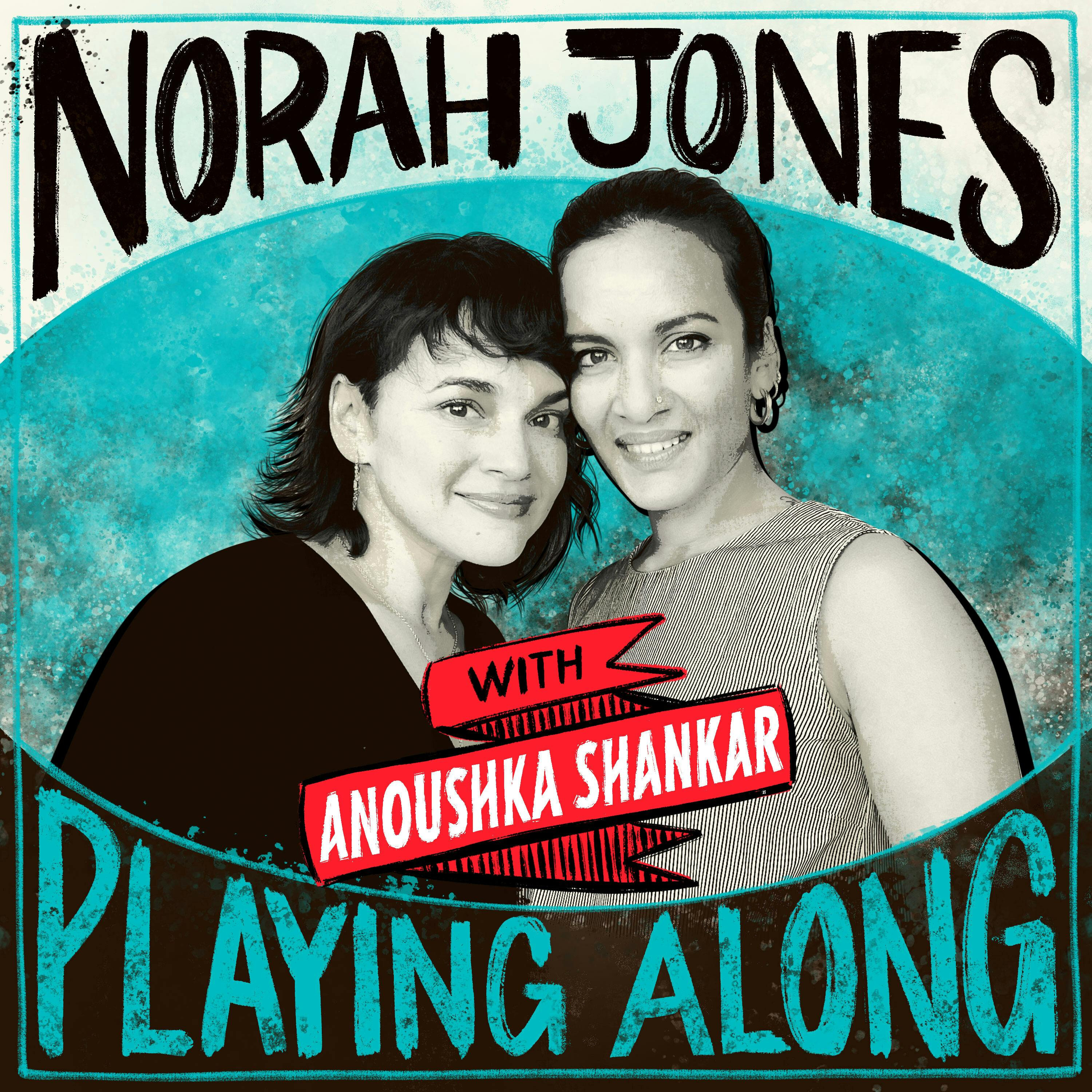
Anoushka Shankar
Today we speak with the brilliant, world renowned sitar player, Anoushka Shankar, who happens to be Norah’s sister! Tune in for stories of the teen years when they first connected, the unique history with their father, Ravi Shankar, through their current GRAMMY night pajama hangs. You’ll hear the harmonious pairing of sitar and piano as they duet on a couple of Anoushka’s songs, one of Norah’s classics, and you won’t want to miss Norah's impromptu introduction to a traditional Indian Raga! Recorded 2/4/23.
Learn more about your ad choices. Visit megaphone.fm/adchoices
See omnystudio.com/listener for privacy information.
Available Results
Generated results are saved to the knowledge database for reuse and search.
Extract Knowledge
Pick what you want extracted first. Model, scope, and chapter options appear after a template is selected.
Transcript
00:00:00
Speaker 1: Hey, I'm Norah Jones and today I'm playing along with a Nushka Shankar, my sister.

00:00:05
Speaker 2: I'm just playing long with you. I'm just playing lone with you.

00:00:18
Speaker 1: Hey, I'm Nora with me as always is Sarah Oda. Hello, Hello, welcome to the show.

00:00:24
Speaker 3: We have a very special episode today because we are keeping it in the family.

00:00:31
Speaker 1: Yeah, this is special. Our guest today is a Nushka Shankar. She's an amazing, brilliant, world renowned star player, and she also happens to be my sister. Yes, we are half sisters, and we have kind of an interesting story which we'll get into a little but we basically both grew up as only children and then we met when we were sixteen and eighteen. I was eighteen.

00:01:00
Speaker 3: Yeah, this episode was so cool because you know, I've known you for a long time, a long long time, and its like I know that your sister is a big part of your story, you know, and but I've only kind of gotten bits and pieces over the years, but like to hear you and her talk to each other about those early stories about when you first reconnected and everything is so special because you know, you each kind of went on your own path and then met in this way that's just so unique.

00:01:30
Speaker 1: It is unique to us. We've also been close since we've since we reconnected, and you know, we love each other a lot. I love her so much. Also, she is one of the most incredible musicians.

00:01:42
Speaker 4: I know.

00:01:43
Speaker 3: She's a virtue chuoso. I was gonna say she's virtuostic, but I don't think that's a word.

00:01:49
Speaker 1: That's so funny. Virtuostic virtuoso.

00:01:52
Speaker 3: She's a virtuostick sitar player.

00:01:54
Speaker 1: She's definitely a virtuoso.

00:01:56
Speaker 3: Yeah, she's a master.

00:01:58
Speaker 1: She's a master of the instrument and music in general. I get to ask her about something that we've actually never talked about, and that's when she started learning the instrument at a very young age from our dad, who was a very famous and brilliant sitar player. His name was Ravi Shankar in case you don't know that, So kind of hearing that story from her was special. But she also comes from a very different way of learning music. So we had some interesting talks about how we think about certain things differently. And I found it very interesting because I don't think I've ever completely understood the technique of Indian classical music, and so she really explained it well to me.

00:02:41
Speaker 3: She's a good teacher.

00:02:42
Speaker 1: I mean, she's an incredible musician, and we've got to play music a few times together on a few of her albums, but to sit in a room like this and just play was super fun.

00:02:54
Speaker 3: Yeah, this was like the first time you kind of did it that way in the strip. Yeah.

00:02:58
Speaker 1: Yeah, it was really special for us.

00:03:01
Speaker 3: She's also been nominated for nine Grammys and was the first Indian musician to perform on the Grammys, which she has done three times.

00:03:10
Speaker 1: Yeah. Yeah, she's She's definitely been there a lot, and we had fun on this trip. Actually, we were in La and part of the trip was coordinating with her if she was going to go or not. And I had not seen her since twenty nineteen, so for me to see her again and we spent maybe four days in La together, it was really an intense like power hang.

00:03:37
Speaker 3: Yeah, it was like a power glam hang.

00:03:40
Speaker 5: Yeah.

00:03:40
Speaker 1: It was like a girl girl time. We sat in the room and ordered takeout and our jammis and yeah, it was like.

00:03:46
Speaker 3: Half super glamorous and then half like in the jammis.

00:03:49
Speaker 1: Oh yeah, because we went to the Grammys, so we got all pretty top.

00:03:53
Speaker 3: I also love that she requested to do a song from your one of your early albums.

00:03:57
Speaker 1: Oh yeah, that was really fun.

00:03:58
Speaker 3: Which I'm not going to say what it is. Yeah, but we'll get to give it away, but it will be a treat.

00:04:03
Speaker 1: Yeah. I hope you enjoyed this episode. I love her so much. I was gonna say we love her so much, but I really love her so much.

00:04:11
Speaker 6: I think you love her now too.

00:04:13
Speaker 7: Yeah.

00:04:13
Speaker 1: Well, you spent a lot of time with her that week, so I feel like you finally got to know her. I did, I don't. I feel like you've met her a bunch but not.

00:04:21
Speaker 3: It's always quick and in passing related. Yeah, this is like a hang.

00:04:26
Speaker 1: Yeah, we had so much fun, and please enjoy the episode with the beautiful and the amazing anushkashenkr.

00:04:58
Speaker 4: This said there now nine years.

00:05:11
Speaker 8: The sun won't say.

00:05:19
Speaker 4: Than now nine years.

00:05:26
Speaker 9: Golden numbers spinning bend, The day is almost I wonder.

00:05:33
Speaker 4: How it falls the neatly evening, sir.

00:05:39
Speaker 5: Each sunset keeps me still.

00:05:43
Speaker 10: The tree, shets it sleeps our when the evening chill is hardest.

00:05:52
Speaker 4: See the sun won't say than now.

00:06:02
Speaker 8: Yeah, the sun wall said than now ninety.

00:06:21
Speaker 9: Sam bel all the trees starting to get close, holding on through change.

00:06:31
Speaker 4: During the day we go and this the morning.

00:06:39
Speaker 9: Far upon mahings, I wish tell you there it's always sunset and space, the sun.

00:06:56
Speaker 11: And now.

00:06:58
Speaker 8: Yeah, the suns.

00:07:07
Speaker 7: M h.

00:07:10
Speaker 4: I know, ny, then.

00:07:44
Speaker 12: The sun won't save.

00:07:52
Speaker 11: God.

00:07:52
Speaker 5: Now nice the son sad night.

00:08:34
Speaker 1: How do you feel about unresolving?

00:08:38
Speaker 6: Do you ready to do or not to d Is that what you said? The story of my life?

00:08:46
Speaker 4: Oh?

00:08:46
Speaker 1: My god, I thought that was really pretty.

00:08:48
Speaker 6: It was really pretty.

00:08:49
Speaker 1: I screwed up some of the phrasing, but I feel like I caught up.

00:08:51
Speaker 6: I was like, oh, she could have kept Yeah, she did it good because.

00:08:54
Speaker 1: I thought that was really pretty.

00:08:55
Speaker 7: Yeah.

00:08:55
Speaker 6: The fact that you did it meant that it was beautiful. That's jazz baby different.

00:09:00
Speaker 1: Okay, good.

00:09:01
Speaker 6: I thought that I liked that little ending I did resolve, though. Are you happy with the fact that I.

00:09:05
Speaker 1: Oh yeah, yeah, okay, I thought that was so pretty.

00:09:08
Speaker 6: It felt it to me. Yay, so hi, Hello, I love you.

00:09:15
Speaker 1: I usually end the podcast.

00:09:16
Speaker 6: With I love you, but start with it. You can start and end with it. I get I surely get a little bit more.

00:09:23
Speaker 1: I feel like this is so special for me to have you to play music with you in this way because we've recorded I feel like we recorded these songs how long ago twenty thirteen.

00:09:35
Speaker 6: I mean exactly ten years ago. Exactly ten years ago, yeah, exactly ten years ago.

00:09:39
Speaker 1: Yeah, And this was a fun session because we got to play together in the studio. It wasn't like an overdub added later or something.

00:09:47
Speaker 6: Yeah, no, I remember that, But that was funny because that was only ten years ago in another sense, and it was our first time sort of sitting in a room and playing. Yeah, it really was.

00:09:56
Speaker 1: And we and we hung out and wrote one of them together. Are kind of That was also fun. Yeah.

00:10:03
Speaker 6: I wrote words and you made them sound good.

00:10:06
Speaker 1: It was amazing, and the really emotional words, if I can, I mean, I don't remember remember one change that you made where I had been like so painfully literal about one thing, Oh, and.

00:10:17
Speaker 6: You were just really gently like, how about we just changed that word to this word, and then I met with this one instead, And I was like, yep, if I thought of that, that would.

00:10:24
Speaker 1: Have been we'll play that song later. Yeah, you'll have to remind me or maybe we can keep me scant. I don't know, that's so crazy. I remember. Do you remember the first time we met?

00:10:35
Speaker 6: I mean, yeah, I mean slightly significant.

00:10:37
Speaker 1: Very significant. And I just want to describe to you how I felt when I saw you. You were sixteen years old and I was eighteen, and of course we're meeting our sister for the first time.

00:10:53
Speaker 6: It was heavy. We don't have to get too heavy here, but I mean I'm already feeling heavy.

00:10:56
Speaker 11: I don't know.

00:10:57
Speaker 1: But you walked into the room you got you got home from school.

00:11:01
Speaker 6: Yeah, you were already there.

00:11:02
Speaker 1: I was already there. And you walk into the room and you had this gorgeous hair down to your butt.

00:11:10
Speaker 6: Almost yeah, where did that go?

00:11:11
Speaker 4: Oh?

00:11:11
Speaker 1: I know? And you had jeans on and like a T shirt, and you had blue eyeshadow, and you were so beautiful and like bubbly and sweet and you just came in and you gave me a hug, and I love you.

00:11:28
Speaker 6: I love you. Do you remember that before the day we met, we'd been speaking on the phone for like maybe some months, I don't getting to know each other before you came. And I remember one day being on the phone with you and kind of saying, I wonder what it would be like when we meet, Like would we hug or would we And you were like, I'm mad at you? Why would you even ask that? Of course, of course I would hug you. So then I felt so much more confident that day to be like, okay, I get time I'm mad at you. Like I'm mad at you.

00:11:57
Speaker 1: That's hilarious. Yeah, yeah, I don't remember.

00:12:00
Speaker 6: And you gave me a Doctor Seuss book that day. You gave me. You gave me The Places You'll Go. Oh my god, you.

00:12:06
Speaker 1: Found it recently. Ye sent me a picture that the little inscription was really sweet. I used to be thoughtful and sweet.

00:12:12
Speaker 6: I haven't had anything with your writing on it to me, and.

00:12:16
Speaker 1: I'm Heaven's I'm the worst birthday remember, as you know on the planet. I also don't care about my own birthday, So I think that's why I like.

00:12:26
Speaker 6: I'm like, oh my god, you just made it so selfish on my part. Now I know why I remember people's birthdays, because you care about I'm obsessed with my own. Yeah, I think that's how it is.

00:12:34
Speaker 1: I know some people say they're more givers than receivers, but do you think most people know you.

00:12:40
Speaker 6: And your birthday? Yeah? Yeah, Oh that's so sweet though, we were sweet.

00:12:46
Speaker 1: We were so sweet.

00:12:48
Speaker 6: I think we had to be so intentional about building our relationship that we kind of came very open heartedly towards each other to be like, Hi, I want you, I want you, choose you. Yeah, yeah, because we could have not stay.

00:13:02
Speaker 1: It's not like we were ever going to live together. And you're better at that than I am. But it's only because I'm bad at it, not because I don't want it, just because again that's my personality. I'm just flaky. Yeah, you have always been. I don't know, it's just so crazy. I think we both said to each other, I've always wanted a sister.

00:13:24
Speaker 6: Well, I always knew I had you and that i'd never met you. So maybe I don't know which came first, chicken or egg, you know, like maybe it's because I knew you were out there somewhere, or maybe it wasn't. But I was always obsessed with this idea that I had a sister, and like I used to think about it and be like, well, if I had a sister here, then this would be happening or if yah.

00:13:41
Speaker 1: Yeah, I think I didn't know about you till I was nine. Yeah, that was your story was just we have such a weird family story, and it's very personal to us and hard for other people to get right.

00:13:54
Speaker 6: But why I find fun. I mean, I want you to finish whatever you were saying as well. But I feel like so often I hear stories that are so much crazier than our.

00:14:01
Speaker 1: Oh totally too, it's mild compared.

00:14:04
Speaker 6: So sometimes I'm like, it's really crazy, and sometimes I'm like, yeah, it's not that crazy.

00:14:08
Speaker 1: It's just it's just specific.

00:14:10
Speaker 6: It's specific, and I think everyone's own story will have its own full feelings.

00:14:13
Speaker 1: So like, yeah, our joy.

00:14:15
Speaker 6: Was our joy, our pain was our pain.

00:14:17
Speaker 1: Yeah, and then our impressions of our own story are different from each other's. Yeah, Because like I didn't know about you until I was nine. Yeah, and then because I wasn't really around any of that part of the family, I think I didn't really let myself think about you that much. It was a little bit protective. Yeah, And so when it came down to it, I got I did get so excited. Yeah, but I hadn't really let myself go there when I was a kid.

00:14:42
Speaker 6: That makes sense. Yeah, Do you remember the first time I came to visit you?

00:14:46
Speaker 1: I remember the first time you came to New York.

00:14:50
Speaker 6: Yeah, and you had a bedroom that was pretty much the size of your mattress.

00:14:55
Speaker 1: Yeah, it was tiny.

00:14:56
Speaker 6: Yeah, and it was like for me, it was exciting because like I lived at home and it was like getting to visit my big sister in New York where she was like suddenly there making music and building a life. And it was yeah, super like exciting to me to come and see you there.

00:15:12
Speaker 1: It was really fun. We had a ball, We did all the things.

00:15:17
Speaker 6: We did all the things.

00:15:20
Speaker 1: Yeah, we were grown. We were grown women. So if we were not, we were very.

00:15:25
Speaker 6: Little, yes, but we felt like grown women. Yeah.

00:15:28
Speaker 1: That was the funnest time. Well, it's so fun to like talk and then play music.

00:15:36
Speaker 6: Talk and so let's play music. Which one do you want to do next?

00:15:39
Speaker 7: Well?

00:15:40
Speaker 1: Do you have an order of tuning.

00:15:42
Speaker 6: Between them all? Should we try yours? Yeah?

00:15:45
Speaker 1: Okay, I love that you wanted to do this.

00:15:47
Speaker 6: I was so you know what I mean. I just thought if I was coming into your space in this podcast, like I feel like it's awesome that you're always reaching out to play other people's music and you're so good at that. And then I was like, but I never quite challenged myself the same way with you. So I was like, let me just like, also try and play one of your songs. And I have fun always loved this song, so.

00:16:06
Speaker 1: I have too. I didn't write the song. This song is called those Sweet Words, and I actually didn't write it, but I do feel like it's my song.

00:16:14
Speaker 6: Well you make it your.

00:16:16
Speaker 1: Lee wrote it. Lee Alexander and Richard Julian you know them both well from the old days of Hanging. And they actually wrote.

00:16:25
Speaker 6: It for a movie.

00:16:26
Speaker 1: Did you know that.

00:16:26
Speaker 6: I didn't know that.

00:16:27
Speaker 1: They wrote it for a Rob Ryaner movie starring Kate Hudson, No Way and Luke Wilson, amazing called.

00:16:37
Speaker 6: You can do this insert later?

00:16:40
Speaker 1: Remember right, it's the second one is called Sarah. Can you google that and I'll insert it later.

00:16:45
Speaker 6: Yeah, my head's going to a lot of romantic comedies. But I don't think. Yeah, they wrote ones.

00:16:49
Speaker 1: They wrote it for that movie and it was in the movie, but then we re recorded it for the album.

00:16:54
Speaker 6: I didn't know that we did, like a different version for the album because it was on your second album.

00:16:57
Speaker 1: It was on my second album. Yeah, I love it, Yeah, And it was just a I think, you know, I think you picked it because you've always felt like it sounded a little Indian.

00:17:10
Speaker 6: There's something in there, there is.

00:17:11
Speaker 1: Yeah, and I think there is. So I don't know if it was from like Lee hanging out with you guys and us going to see you play that it felt like that or what, but it definitely has the virue.

00:17:22
Speaker 6: Well, I love it, Let's try it, Let's tune for it. Oh, you want to tune and to go major on a couple of things. Thanks, And that's why we do long songs. Cool.

00:17:44
Speaker 1: The tuning thing is intense.

00:17:45
Speaker 6: Tuning thing is intense for situations like this where I step out of like a more Indian raga context and I'm playing like three four minute songs. I really have to shape. If it's my own shows, I can really shape it in a way that makes sense for tuning. But otherwise it's like you can't be doing that yeah every three Yeah, it's different.

00:18:01
Speaker 1: Like when our dad would perform, didn't people clap at the tuning because they weren't sure that that was Yeah, it sounds.

00:18:11
Speaker 6: That's like the story right, mm hmmm. I think that's the concert for Bangala Dish recording that it's like on record that he said that where He's like, if you enjoyed the tuning so much, I hope you.

00:18:21
Speaker 1: I hope you like that's so funny, all right?

00:18:25
Speaker 6: Do I just start oh yeah, yeah, or or do you set tempo?

00:18:32
Speaker 1: I just want to make sure we're in the same age something like that. Cool cool? What did you say?

00:19:01
Speaker 4: And no, SI say?

00:19:06
Speaker 9: Man is one star ragon long enoughty?

00:19:13
Speaker 12: Those sweet words? What did you say?

00:19:21
Speaker 9: The end of the day?

00:19:24
Speaker 4: The hour head has smoke.

00:19:30
Speaker 1: Before the night stone.

00:19:34
Speaker 5: I just have.

00:19:37
Speaker 9: Those sweet words spoken lack mellowly.

00:19:47
Speaker 5: All you love.

00:19:50
Speaker 11: Is lost blue.

00:19:57
Speaker 4: Rise enough.

00:20:00
Speaker 5: Through the after?

00:20:06
Speaker 8: No tail let confed on the head of.

00:20:12
Speaker 6: B Come on he.

00:20:19
Speaker 12: Did you have a hard time sleeping.

00:20:24
Speaker 9: Because the heavy moon's keeping me awake?

00:20:31
Speaker 12: And all nooys I'm discribed to see? Okay, seem alone.

00:21:07
Speaker 4: That spoiled.

00:21:15
Speaker 12: Rising through.

00:21:20
Speaker 4: The after.

00:21:26
Speaker 11: And then you pe.

00:21:34
Speaker 4: What did you say? And no saw singing?

00:21:42
Speaker 11: But ma's a long.

00:21:45
Speaker 1: Stopping, long enough toy.

00:21:50
Speaker 9: Those sweet words spoken lack of mellowy. I just wanna oh sweet wood and just simple melody.

00:22:08
Speaker 12: I just swoan hee.

00:22:11
Speaker 4: Sweet wood.

00:22:25
Speaker 6: I love that.

00:22:26
Speaker 12: I know he yay.

00:22:28
Speaker 6: And also that way your song sounds like different for a reason.

00:22:31
Speaker 1: Yeah, And it's like it's like I love hearing you do more rhythmic stuff.

00:22:36
Speaker 6: Cool, that was so pretty. Thank you your song is so pretty.

00:22:39
Speaker 1: Oh well my song that I didn't write.

00:22:41
Speaker 6: Your song, but you didn't write but you make yours.

00:22:42
Speaker 1: But I make mine. Yeah, I think when I sing that.

00:22:51
Speaker 6: Yeah, it always really like I want to sing.

00:22:55
Speaker 1: Like like like lot that one guest, but I can't because I can't roll notes to save my life. I never have been able to.

00:23:02
Speaker 6: So I kind of you do in a different way, but I don't in the actual way, the Indian way.

00:23:09
Speaker 1: Yeah, even with R and B, I can't do those kind of roles either.

00:23:13
Speaker 6: Yeah. Well, whatever you do, it's working, So keep doing fake my way through those.

00:23:18
Speaker 13: Yeah.

00:23:18
Speaker 6: Yeah, but I love when you did that, even when you sang buppies are our dads. I'm missing you, and I feel like you hit a lot of those inflections but in a way that you made your own, which I find like more beautiful if you're going to do it. Yeah, it's nice to hear it as you you know.

00:23:34
Speaker 1: Thanks, Well, yeah that's the goal, right, But yeah, the way you Latchmi sings that, it's so beautiful and there's no way I could do it like her, so.

00:23:44
Speaker 6: Neither can I.

00:23:45
Speaker 1: Yeah, that was fun. When did you start playing?

00:23:52
Speaker 6: I started playing? I remember my first lesson was when I was seven, and it was with our dad. It wasn't actually the very first lesson was with our dad's student, gar of Mazoum there Oh I remember. Yeah, it's the sweetest sweetheart, And like I really remember like being out in the garden and being kind of called in because it was time to do my first lesson. So it's just set up badly, like from the beginning. I didn't want to do it because it was like, but I'm playing, you know, I'm playing on the playground. But I remember like just being shown like just the first octave and just where they were on the instrument. And I had learned like very basic singing from my mom from much before that, so I knew like what the notes were in the Indian Okay which like self pedio system so Studayisa, So I knew that octave. I knew those notes, but he was showing me like where where on the instrument that would be, So I think I may I don't remember. I may have had like a first just literally maybe three or four lessons with him to set that up. But then from there our dad was teaching me.

00:24:52
Speaker 1: But did you understand at seven the gravity of learning to play this instrument with with who your dad is.

00:24:59
Speaker 6: I wondered if subliminally, even that kind of slight resistance to like do I have to could have been a very normal kids resistant.

00:25:07
Speaker 1: Yeah, you don't really know.

00:25:07
Speaker 6: But also there was a way to it of some kind.

00:25:10
Speaker 1: You weren't sure what it was.

00:25:11
Speaker 6: I wasn't sure what it was, but if I look back, it was like maybe there were some like aunties or uncles or family friends around who would be like, oh, so is she playing it?

00:25:18
Speaker 14: Or oh, yeah, she playing You know.

00:25:20
Speaker 6: They weren't asking me about my math homework or my piano the same way. It was like, is she is doing this?

00:25:25
Speaker 1: You know? Yeah?

00:25:26
Speaker 6: So I think that did add a certain pressure or weight to it, as much as they tried not to have it be too bad.

00:25:33
Speaker 1: But you're so young. I just wonder how much of it sunk in.

00:25:35
Speaker 6: I think those first couple of years it was, you know, scales and songs and playing. And then as it got a little better at it, like as happened so often, I started enjoying it more as well. So I don't think I was like in any way contemplating it or serious about it until I was like ten or eleven twelve.

00:25:50
Speaker 1: But what a strange thing to have him be your teacher from such a young age.

00:25:57
Speaker 6: Well, I mean strange.

00:25:58
Speaker 1: I'd also like lucky. No, no, no, I don't mean it's strange in about way. I mean it's super lucky and incredible of course. But what I mean is like your dynamic as him being your dad, like also being your because in this kind of music, it's not just like casual. It's very respects oriented and teacher student hierarchy, isn't it.

00:26:21
Speaker 6: Yeah, there is. I mean there's a there's a sort of if you go back to like the more traditional setup, like there's a whole sort of philosophy and lifestyle or spiritual path even that comes along with learning from a group like a teacher. And that's why they call it your group guru. And so whether that's in my instrument or in another instrument or in another field, it's that same element of you, like you are learning something that's being passed on to you in an oral tradition. So it's like a living lesson that's being given to you from this person. So it's very precious, but biproxy, so is that person. So there is a kind of veneration or respect for that, and you.

00:26:54
Speaker 1: Should have that for your father anyway. Yes, but you know, I'm so casual in that way with my teacher in my parents, but I remember that.

00:27:02
Speaker 6: When you when you started coming around, because when you would come and stay with us, you just automatically had a different kind of immediacy and comfort level with him in the way you hung out with him, which would make me realize in turn that I'd absorbed some of that formality even though we were like super cleatly super close, But there was just something slightly different about the way I was with him then with my mom for example.

00:27:21
Speaker 1: Exactly, which yeah, to be which I think is is just very interesting.

00:27:25
Speaker 6: Yeah, it's fascinating. I think in that culture it's really common, like music or any craft is so often passed down from a teacher to their children, like to a point that it goes too far. Like I think a lot of people get really protective of their craft and their family business to their children only. Yeah, which luckily Boppy never did, like our dad never did that. But so I guess I had a lot of references of other people that were doing a similar thing.

00:27:49
Speaker 1: That's right. I remember some of those people.

00:27:51
Speaker 6: Yeah, and so I could talk about that with them a little bit sometimes. And also I think he like to give him credit. He also didn't want it to kind of ruin, Yeah, the father daughter's side of things. So he did put some effort into, like I'm sure building some boundaries around, like we're in the music room now, that's we're in the living room.

00:28:07
Speaker 1: Because I didn't know if he was conscious of that, but it never seemed I never felt any formality between you guys personally. I just I know that, like it's a strange dynamic for me to imagine. Yeah, yeah, strange, not bad, strange, just strange, just different.

00:28:25
Speaker 6: Strange, unusual.

00:28:26
Speaker 1: Yeah, strange can be a loaded word, that's cool. And then and then how old were you when you did.

00:28:33
Speaker 6: Your first show? Oh my god, I was thirteen and it was in front of like two and a half thousand people. Oh my god, it was horrific.

00:28:43
Speaker 1: So when did the idea start getting floated that you.

00:28:46
Speaker 6: With the context It was that it was our dad's seventy fifth birthday. Okay, so they started planning like a big concert to just celebrate that and like have a lot of his students from around the country like common perform. So they started rehearsing like this big ensemble pees and all the students that could be available to come came and so given that context, I was sitting right there next to everyone in the rehearsals, and I remember my mom kind of coming to me at some point, going, do you do you want to take part? Like are you wanting You're also his student, you're his younger student. And I kind of said yes with a bit of like wonderment and confusion, like yeah, sure, Wait what can I say? How what? So I kind of plugged into the group rehearsals and started playing the group songs that we were all playing together. But then they had everyone put their instruments down in the middle and I had like a solo because it was like my announced.

00:29:35
Speaker 1: Oh my god, it was like you're coming out party Jesus.

00:29:38
Speaker 6: Yes, it was very much like that.

00:29:41
Speaker 1: That sounds so stressful, but I was really stressful. So cool.

00:29:45
Speaker 6: I was so panicked, like beforehand.

00:29:47
Speaker 1: So you were you let all that stress was there?

00:29:49
Speaker 6: It was there. It was it was like the first time in my childhood that I remember that feeling of like I didn't know you could feel your own heartbeat, you know, it's like feeling like it's going to beat out of your chest. And I was like, Oh, is this what being really really nervous is?

00:30:03
Speaker 1: Yeah, that is kind of nuts.

00:30:06
Speaker 6: It was kind of nuts.

00:30:07
Speaker 1: And then after that, was it just sort of you were always playing with him?

00:30:10
Speaker 6: Or was it within the Over the next year, I did a couple more shows with him that were sort of convenient nearby, like near where we grew up, where I grew up in San Diego, so there was like an LA show in a San Francisco show. But then over the year that just felt really good, and I started doing all his shows with him.

00:30:28
Speaker 1: And did you get when did you start getting really excited about doing it through that process?

00:30:33
Speaker 6: Like I think for me, because it's such a it's such an improvised form of music, and also because it's taught from person to person, this stage ended up becoming like this beautiful extension of our of our lessons at home. So I was still learning, but I was learning in this kind of really heady and beautiful heightened context, right.

00:30:50
Speaker 1: And also to be sitting with him as a performer, there was.

00:30:54
Speaker 3: So much special.

00:30:55
Speaker 6: There was so much learning from being up close to him on stage.

00:30:57
Speaker 1: Yeah, really was.

00:30:58
Speaker 6: That was a huge part of made me fall in love with it totally.

00:31:02
Speaker 1: Like, yeah, like I hate rehearsing, but playing live it's like there's always something special happens.

00:31:07
Speaker 6: Yeah. So I didn't feel like practicing at home, yeah, exactly.

00:31:10
Speaker 1: So it was really with the tuner on. Yeah, And so like.

00:31:13
Speaker 6: That was a few years, you know, through high school, so leading up to turning eighteen like that, all those years I did almost all his shows and then I finished high school and it was like, well, I guess this is what I do.

00:31:24
Speaker 1: What I do, But you put out an album in high school?

00:31:27
Speaker 6: Still, right, Oh my god, Yeah I did. My first album was came out in my senior year. I think, oh my gosh.

00:31:33
Speaker 1: Yeah, was that exciting or was that kind of like, well it.

00:31:36
Speaker 6: Was whatever, super exciting. No, it was really exciting. I loved the idea that I was going to get to do that and make music and make a record. And also it was the nineties and things still happened a certain big record label kind of way. Yeah, it's still felt excited Yeah. It felt like being swept up into this amazing whirlwind, you know. And it was a.

00:31:58
Speaker 1: Straight Indian classicool.

00:32:00
Speaker 6: It was purely and that's all you did then. Yeah, So that and then the next two records were like purely Indian classical. But I remember like when it was coming out. Do you remember Blockbuster stores? So there was like a Blockbuster that was on the way from my house, I remember it to my high school, and so there was like a month or a week, I can't remember, but there was like some period of time where my face was like on the window of the Blockbuster that we would all see as I got to high school. And so that was like the first time that things my world's kind of collided, because up until then I just had my like normal public high school life. And then I disappeared now and then and go on tour. And then that year when the record came out, Everyone's like, why is your face on the.

00:32:41
Speaker 1: Did they even register? Or they like, I mean that that's cool.

00:32:44
Speaker 6: Both It was weird and cool. Yeah, but yeah, it was like things sort of clashed in a beautiful way and it was like, no, this is this is what I do it. It made it really real because I just kind of kept it really compartmentalized until then.

00:32:55
Speaker 1: Yeah, that makes sense. Yeah, sometimes I feel like that about my life. When I go on tour, it feels like unless my kids are with me, and sometimes you know, I go without them, I feel like it's a double life.

00:33:06
Speaker 6: Totally. It was just so different.

00:33:08
Speaker 1: Yeah, it's just such a different every day is just so different than being home and doing life totally. Yeah, Okay, and then and then I remember when you started kind of searching for different things.

00:33:27
Speaker 6: Yeah, I mean I saw a lot of you that year when I started making Rise, which was my fourth album, but it was the first one that I wrote and produced myself. So in a way, I sometimes forget to count my first three. I mean, I count that I know what you mean. That one felt like my first baby, you know.

00:33:44
Speaker 1: Yeah, it felt like your first baby. I mean, did you feel I feel like I'm My impression was that you had a lot of anxiety about trying to venture out on your own and not just follow exactly what you were taught. Totally right.

00:33:59
Speaker 6: Yeah, But I think whereas now, you know, obviously it's many years later, but like there's a certain comfort to just making music. However, feels like truthful to me.

00:34:08
Speaker 1: It makes sense now, but then then it is to kind of step.

00:34:10
Speaker 6: Out of the only context I'd been in. But know that, like as a person that wasn't the whole meet Like I grew up learning this traditional music that I loved so deeply, but I also was this whole other person that had grown up, you know, around the world and listened to all kinds of music and you know, went to music festivals and just had a lot of influences raves I went. I was a little psychedelic transhead, Like I spent my winters in go whenever I could, and I was at like crazy three day drouts parties, you know. So that was a big part of my life. And so I really did want to make music that reflected my soul and who I was a bit more. But it also felt really scary stepping out for the first time.

00:34:49
Speaker 1: Yeah, I felt that for you and from you. Yeah, And I was so excited for you too.

00:34:54
Speaker 6: You guys named that record, Do you remember?

00:34:56
Speaker 7: I do?

00:34:56
Speaker 1: I remember? I think lead is Yeah.

00:34:58
Speaker 6: I came to your house like the day at mastered it, and we came and listened on your amazing Oh yes, because once again I was audio fiah, but it was a very different context, like once again I'm visiting my big sister in New York and her like amazing more grown up life. But now it was like your whole new life.

00:35:12
Speaker 1: Yeah, because I have money.

00:35:14
Speaker 6: So it was this amazing place and this incredible music system, and yeah, I just got to sit and listen to the record with you guys, and I had like no time left to name it.

00:35:22
Speaker 1: That's right.

00:35:23
Speaker 6: And he was just leaning back, right, Lee was like leaning back and listening to music, and suddenly out of nowhere, he was like rise.

00:35:29
Speaker 1: Did he pick a word from a song?

00:35:31
Speaker 6: It wasn't any of the song names. He just said rise, and I will give you like that like a little like a Buddha. Yes, so yeah, thanks for that.

00:35:41
Speaker 1: Yeah that's so funny.

00:35:43
Speaker 7: Yah.

00:35:43
Speaker 1: Yeah, I loved whenever that was all happening. You know, it was exciting to watch. I think it's so exciting to watch young artists who you see at a young age, and it's so exciting to see them grow into who they become. And like you see that with these young pop stars sometimes they grow up to be like incredible artists that you just it's totally yeah, you just watch them become that before your eyes.

00:36:11
Speaker 6: In this last decade, where like the way people can reach with music, I feel like we see more people who just start that way where they're building their own identity in their room with their little true set up, and they can just come out kind of being themselves. And I admire that so much. But I also, like you say, like I love seeing people like break out, like whether it's the kind of the Disney stars or whoever exactly. So they're already successful, they're already making there's super talent, but you see the moment where they kind of find themselves within what they're doing and bring that and infuse it into what they're doing. It's really beautiful.

00:36:42
Speaker 1: I mean, it's just it's like it's like everyone growing up and becoming more yourself, even in life. But I just love it in music. I love seeing it happen.

00:36:50
Speaker 6: Well, you did it in a pretty brave way, I think, like, oh, really leaving school and going to New York and kind of making that decision for music.

00:36:58
Speaker 1: Did you know that I was? I don't know if you know this, you might tell me. I did two years of jazz college, right, and then at the end of the second year, I had to take eight or six semesters of classical piano.

00:37:16
Speaker 6: Is that when you play.

00:37:17
Speaker 1: I had not started yet until the end the last semester of the second year, and I had this awesome teacher. She was so cool and an incredible human, but I think she liked me a lot, and she knew that. She's like, you're gonna cram and really practice. When it got closer to the jury, right, I was like, yeah, totally, and I did not. I failed my classical jury. I didn't know that, and I think, I mean, that's not the only reason I dropped out of college, but I think it being faced with eight semesters of classical piano, which was just not what I was I'm sure it would have made me a better pianist, but it's not what my heart wanted to be focusing on. And I was already doing gig and stuff and I was so into this other kind of making music. I think that was a big part of it. I just knew I couldn't do it.

00:38:07
Speaker 6: I love that you share that because I just think for someone listening as well to know that, like someone like you, but you failed, and then like you found your music, You know what I mean. I think that's really beautiful.

00:38:17
Speaker 1: That well, it's funny too, because I'd never failed at music before, because it was always good at it, and I was always like, you know, the person who got the solo or like the person who could figure out the cord first.

00:38:28
Speaker 6: Maybe let me let me reframe what I'm what I'm thinking. I mean, which is that like, at least especially in the UK for example where I live now, like the education system for music just gets continually more and more formalized, more and more pedantic, more and more kind of uniform, and I just think it funnels people through this way that I think can be so disheartening. So I think to hear that someone like you like failed within that system because that wasn't the aspect of what you do, but still could find that, I think that's that's great.

00:38:55
Speaker 1: I mean, I think I think all of that has good, good value. It's not like I don't think that I just for me at that time, I could not do it totally. But it's funny. Yeah, So he went right, I failed, and I cried so hard, and my teacher was so sweet. She hugged me, and I think she was shocked. That I failed because she was shocked that I didn't practice enough. In the end, it was really just on practice. Yeah, I just didn't practice. Yeah, but yeah, So then I moved to New York and I try to figure myself out. Let's try Can we try traces? Yeah, i'd love to. I love this song.

00:39:34
Speaker 6: I don't know how we're going to do it as two people.

00:39:36
Speaker 1: I'll just like skip a few or something.

00:39:39
Speaker 6: I'm like such a linear musician that I'm like, I can be really good on my instrument with my two hands, doing something really precise, and as soon as I just need to say something like hello at the right time, I'm like, your time is off, my hand falls apart my tip. Yeah. Yeah, it's I always look at people like you and go, how are you doing like four things at the same time.

00:39:59
Speaker 1: Oh, I'm I mean that's why I had that restaurant gig in college. It was paid practice. It was coordination practice.

00:40:05
Speaker 6: I remember seeing you somewhere that was on like thirty third and third. Oh, remember that same first trip when I came to visit you.

00:40:11
Speaker 1: I'm staying at a wine bar and you came.

00:40:15
Speaker 6: Yeah, I remember, because I was going to go leave to see a boyfriend. I remember very well, and I thought that thirty third and third was really close to thirty eighth and eighth, and then I was just walking forever.

00:40:30
Speaker 1: I remember this, Yes, I remember those boots.

00:40:32
Speaker 6: Actually those boots were not meant for one.

00:40:35
Speaker 1: Oh my god. And then I remember it anyway, never mind, what was that Imber?

00:40:43
Speaker 6: I remember? Oh, I remember what you're not saying.

00:40:45
Speaker 1: Yeah, I'm going to say it, but we can cut it. I remember late at night, being home from my gig and having said goodbye to you, and you were hanging out with your boy.

00:40:54
Speaker 6: Fella anyway, mind in a little Korean hotel.

00:40:58
Speaker 1: That's right, you were hanging out and you'd realize you'd forgotten. Oh you had my house to Yorkey's and I didn't have them. Oh my god. That's so like young young lady in New York.

00:41:12
Speaker 6: Yes, that kind of thing.

00:41:13
Speaker 1: And I had to find you.

00:41:15
Speaker 6: Yeah, how did you find me?

00:41:17
Speaker 1: I don't know, because before phone yeah, it's not before cell phones.

00:41:23
Speaker 6: But I booked that. I booked that hotel by looking it up in the Yellow Pages.

00:41:27
Speaker 1: How did I know where it was?

00:41:29
Speaker 6: That's what I don't know.

00:41:30
Speaker 1: I think because I knew how far you'd walked and I knew the streets it was on.

00:41:33
Speaker 6: Or did I tell you where I was going to be? So if I got murdered, you'd know.

00:41:36
Speaker 1: I think you did.

00:41:36
Speaker 6: Yeah, I think I would have asked.

00:41:38
Speaker 1: I'm very protective.

00:41:39
Speaker 6: Yeah, you always were. Yeah.

00:41:41
Speaker 1: I had to go to your hotel like two in the morning and get the key. Oh my god. I just remember sweating in New York so much, Just like doing stuff like that and being drenched in sweat and so sexy. Yeah, all right, all right, So Traces of You. All right, this is from that album you made after our dad died, right yep. And so this whole all these songs are very touched by that.

00:42:07
Speaker 6: They're very touched by that. I think the ironic thing about this song Traces of You, is that to me, originally this one wasn't about him. It was more kind of universal or spiritual.

00:42:19
Speaker 4: It is.

00:42:19
Speaker 1: It's very much like.

00:42:20
Speaker 6: A and it's like a prayer song. But because he passed away while I was making the record, and then the other two songs you and I wrote together are about him, this one kind of ended up being in the same collection. In my fad after a while, I think so a lot of people heard it and listened to it as being very much about him, But for me, originally this song wasn't.

00:42:39
Speaker 1: It kind of reminds me. The sentiment reminds me of I Am missing you in that it could kind of be anything, but it's also kind of like a prayer. It is like a prayer, which is what I like.

00:42:49
Speaker 6: That's what I was writing about. Not to be too like about it, but I love that it was that connection.

00:42:55
Speaker 1: I've written more spiritual songs in the last five years than I ever thought I would.

00:42:59
Speaker 6: I know, watching you join me and hit you world up the last few years, I'm like, hey, Crystals, I feel like I want to write his gospel. You know that's beautiful. All right, let's see what happens. There's a lot of repeats, which actually makes me forget where things are. So I know, you mean, I'll try. It's tricky, tricky without that.

00:43:20
Speaker 1: Yeah, yeah, I feel like if you could play any more rhythm that might be helpful in the verse stuff, like just more aggressively.

00:43:28
Speaker 6: Yeah, okay, I'll do that.

00:43:30
Speaker 1: I'm like, I can't hear you enough, but I don't know. I don't want to get off. I mean, I do want to get off. That's what fun about your mom?

00:43:40
Speaker 6: Uh huh, your mom, not my mom.

00:43:42
Speaker 1: I think it's funny that we were like teenagers. We used to make all these your mom jokes because.

00:43:48
Speaker 6: We didn't have the same mom, because it was like your mom, yeah, your mom.

00:43:54
Speaker 13: Yeah, Okayists.

00:44:45
Speaker 11: Are like.

00:45:00
Speaker 9: Joy said h lingalagaing Drama, fresh Body.

00:45:15
Speaker 12: They beliod class sounds, body Lingalaica tin drama, like.

00:45:31
Speaker 9: Besbahart sa Fian they belied sounds, Body, Jasons being along to best Bonny babyl add choices, Oh Lame, the lago Vershaba, Hot seats for you play.

00:47:26
Speaker 12: With La Class.

00:47:32
Speaker 4: Sounds po.

00:47:41
Speaker 1: I loved your intro on that thank you.

00:47:44
Speaker 6: Yeah, there's a raga called which just has like those five notes.

00:47:53
Speaker 11: What is it?

00:47:54
Speaker 4: Yeah?

00:47:57
Speaker 6: Yeah, so no second and no fifth. I just think it has so much space for that's so nice. It's really yearning and like yeah, I just I love it. And it was so funny because when we wrote Traces of You, I actually wrote the whole melody on the cithar in that ruga, and then Nit then started playing guitar under and just suddenly was playing chords like really focused on the fifth and it just cracked me up because it works so well. But I was like, Okay, I guess we're not in that rug.

00:48:25
Speaker 1: I guess we're not gonna avoid the fifth.

00:48:30
Speaker 6: That's that's why my soul I'm like, oh, hang it, okay.

00:48:34
Speaker 1: Well, that's kind of what I like about that song is that it I couldn't figure out what he was playing first of all, and then I like how it just kind of cycles through stuff, but then you can change it and it's over the same thing.

00:48:45
Speaker 6: It's a weird one to teach a band. Yeah, every time you started to say, okay, so there's an A, then a B, and an A and a B. But then I'm playing the B and you're playing the A and it slops around cyclical but it's like, yeah, random, it just flips.

00:48:54
Speaker 1: Yeah. I liked that though. I love that kind of stuff.

00:48:57
Speaker 6: Deceptively simple, yeah, which which please is my complicated brain, because I'm like, we're pretending it's able, but actually.

00:49:05
Speaker 1: It's a very complicated. You do have a complicated brain.

00:49:09
Speaker 6: I have a complicated brain. I also over complicate everything. Oh, you're a really good at problem doing. I disagree. I think we have the same prop Sarah Sarah would disagree strongling with you. All I know is like all my tour manager friends say we're the best, like musical tour managed people.

00:49:28
Speaker 1: Well, we're very on top of things, yes, but sometimes it's we're so on top of it that we overthink the future and all the scenarios that may.

00:49:36
Speaker 6: Make it's keeping. But I think that comes from your ears of touring, like you're just I'm just automatically scanning and preparing for like this is going to not be there, So if I'm traveling for something, it'll be like what do I carry in my hand luggage for if my luggage doesn't exact arrive two citaris stuff I need in each citar box. Like there's just always planning.

00:49:54
Speaker 1: Like the terminator scanning your future.

00:49:57
Speaker 6: For Yeah, I literally say it, though it's like something complicated happens in life, like maybe there's like a lot to manage with two different kids diaries or whatever, and it's like I'm gonna dour manute.

00:50:06
Speaker 1: I bet your your home home calendar for the kids is very well thought out. It's beautiful.

00:50:13
Speaker 6: I bet it's color coded color.

00:50:15
Speaker 1: God, can you do one for me?

00:50:17
Speaker 6: Yeah? Maybe would you follow it?

00:50:19
Speaker 11: Though?

00:50:20
Speaker 1: No, I wouldn't make it. I wouldn't actually confession I own a laminator, a laminator, I bought a label maker maker, I never used it. I'm like that, like I'll think all of these things through, but then I'll end up not finishing.

00:50:36
Speaker 6: Yeah, that too. My kids use the label maker more to just stick things on each other's doors that should not be said. That's amazing. Yeah. What was that raga called goney?

00:50:48
Speaker 1: Is that one?

00:50:49
Speaker 13: You?

00:50:50
Speaker 1: Okay? So you know me, I really don't know anything. I still don't completely understand ragas.

00:50:57
Speaker 6: Are you gonna ask me to explain them?

00:50:59
Speaker 1: Yes, I am.

00:51:00
Speaker 6: It's actually really difficult.

00:51:01
Speaker 1: Well you don't have to. You can give me the cliff notes version.

00:51:03
Speaker 6: So the cliff notes version is that a rugga is a melody form that isn't a scale or a mode, or a set of phrases or a song. It's not any of those things. It can contain all of those things, Like a ruga is based on a scale, Like every rugga has a set of notes that it exists within, but you could have tons of ruggas within that same set of notes. So then you get into more detail, like different ruggas may have different ascending patterns and descending patterns that differentiate them from each other. Oh boy, but then also phrases, recognizable characteristics, and most importantly, beyond all of those things that you could write down, there's a particular mood or a feeling or an association with that rugga. So you might even have two ruggas that are almost identical, but one of them is played like in the morning, in a more solemn, spiritual way, and one is more romantic and performable with that, you know, So it's really about like learning the characters of them. And I remember when like our was teaching me, the thing that really helped me the most is he would always say, it's kind of like people, Like when you meet new people, sometimes they remind you of someone else. So at the beginning, when you kind of see that person, you're constantly thinking of the person you know really well, which could be that other raga. But the more you get to know that person, they start to exist like fully fleshed in their own Okay, can you stop thinking about the other person, So you kind of have to get to know them to know who they are. So there's like that's why it's so much an immersion. It's about playing, it's about playing along with learning from because some aspects of it just just can't be notated, can't be put.

00:52:33
Speaker 1: That's what makes it so mysterious.

00:52:35
Speaker 6: Yeah, I think yeah, I think so it can be really mysterious and elusive to people who are not coming from that tradition because it's so hard to step into it. Though I guess people who like come from there or grow up listening to it, like so many ragas would be like really recognizable to people really instantly, even lay people who don't play, they'll be like, oh, that's Pelu or that's the young uncommy.

00:52:55
Speaker 1: Because of certain melodies as well.

00:52:57
Speaker 6: Well, I guess yes, some have really recogniz phrases in melodais or some are just super popular and therefore a lot of popular songs that people grow up knowing or hearing are in those raugas so reference them.

00:53:11
Speaker 1: So it made its way into popular music or Bollywood.

00:53:13
Speaker 6: So just like Western classical music may have been a root for jazz for you know, folk music, and then you know, like all the kind of the commonalities that exist in Western music that like all have evolved from each other. It's the same in Indian classical music. So even though like Indian pop or film music isn't classical music, it's grown and evolved from that root. Okay, so you will hear raugas in film music all the time, but maybe they're used in a kind of lighter, more accessible way.

00:53:42
Speaker 1: Yeah.

00:53:42
Speaker 6: Yeah, Oh my.

00:53:43
Speaker 1: God, you're so smart.

00:53:45
Speaker 6: I just said a lot of words.

00:53:47
Speaker 1: You're so good at explaining things. You're so like well explained that. I felt really satisfied by that explanation.

00:53:55
Speaker 6: Good, thank you.

00:53:57
Speaker 1: That sounds really beautiful though, it's really good. I love the mood thing.

00:54:00
Speaker 6: Yeah, it's really beautiful.

00:54:02
Speaker 1: But you can still play a morning raga in the evening at a concert, for instance.

00:54:06
Speaker 6: That depends on who you talk to, I mean, interesting people can be very purist about that.

00:54:10
Speaker 1: Really.

00:54:10
Speaker 6: There's two main classical styles in India. There's the Hinduslani system that developed in the north and the Carnatic system in the south, and there are a lot of commonalities. But like in South India music, they don't have this time of day concept at all. It's just ragas have everything that I just told you, minus associations like that. So you can hear any rag at anytime Hinduslani music is really specific, Like there are sunset ruggas, sunrise rauggas. There's even like monsoon ragas, spring ragas, harvest ragas. You know, So there are certain things that if people really grow up with that it feels jarring to them. To some people to hear things at the wrong time. So that's why you Occasionally you will have like in music festivals, they'll do morning concerts or they'll do all night festivals where people perform through the night, so people stay up and listen to, like people perform at three am, four am music that you wouldn't hear.

00:54:55
Speaker 1: That's so crazy.

00:54:56
Speaker 6: It's pretty amazing.

00:54:58
Speaker 1: Now I'm thinking about being awake at one last night with you and being like, I'm so.

00:55:02
Speaker 6: Much I can't do this. I know, I can't think. Like the last time I was at an all night concert, I was a kid, and I think they just let me fall asleep on the scene.

00:55:09
Speaker 1: But it's so beautiful if you can, if you can stay up for it. And yeah, my mom told me about a concert she produced for our dad at the cathedral Saint John the Divine.

00:55:19
Speaker 6: Yeah, woah, was that the all night one that he did?

00:55:21
Speaker 13: Yeah?

00:55:22
Speaker 6: Yeah, and people still talk about those too.

00:55:24
Speaker 11: Me.

00:55:24
Speaker 6: People could come up and be like, I remember when your dad played like eight hours through the night, and I'm like, I can I can't even imagine. I think about like.

00:55:32
Speaker 1: Bruce Springsteen doing four hour concerts and that that just.

00:55:35
Speaker 6: Makes me tired. Yeah, I even doing that, even if I practice, like in rehearsals and stuff.

00:55:39
Speaker 1: Eight hours.

00:55:40
Speaker 6: I'm so impressed with myself. Yeah, I mean, I.

00:55:42
Speaker 1: Love music, but you have to just get into a zone. It's a meditation. I think it is right, very much so, and then you get carried by the energy of it.

00:55:50
Speaker 7: Yeah.

00:55:50
Speaker 1: I love that. I don't know if I'll ever be able to do it.

00:55:53
Speaker 6: We can love it from afar.

00:55:54
Speaker 1: Yeah, So what do you think is it sacrilegious for me to try to play oh my god not raga with you?

00:56:00
Speaker 6: Because not at all.

00:56:01
Speaker 1: I didn't know if it was a like a respect thing. But can you kind of help?

00:56:07
Speaker 8: Yeah?

00:56:07
Speaker 6: I think for me, I think so there are some ragas that get very very nuanced and complex with the things we were talking about, like really specific phrases or twisty ascending or descending lines, and I think when we start playing, we always start with the slightly more scale based drugas. So then it's really just about understanding what scale that raga belongs to and then finding finding our ways to improvise and be as variable as possible, but within that limitation, so you wouldn't like modulate or change out of that. So like there's loads of pentatonic rugas that are really just like That'shupi or there's Durga.

00:56:52
Speaker 1: And it almost sounds like it's in a different in g Yeah, yeah, exactly.

00:56:56
Speaker 6: And then there's another if we're still indeed, there's one called Hamsubun, which is really beautiful, which is.

00:57:06
Speaker 1: That's really free.

00:57:12
Speaker 6: The only thing within this draga that sometimes might happen is like a little focus on after anything you've played, like to kind of pause on that note and give it some stress and then to resolve. So just chuck a couple of those in.

00:58:06
Speaker 15: M's so pretty.

00:58:36
Speaker 1: I like country it up. Well, it's funny because like the thought of doing this, but I don't have Bendi's on.

00:58:43
Speaker 6: But you're so good at that, like.

00:58:44
Speaker 1: You you make I try to, but it's you know, I don't actually have access to those microtones on the piano.

00:58:52
Speaker 6: It's fascinating. There's some people like over the years, there's like definitely people who've kind of started bringing in Western instruments into Indian classical music. There's there's any credible cellist to play fully classical concerts. But of course that's a little easier. Yeah, as far as the Bendy's, Yeah, so I love our official term, by the.

00:59:08
Speaker 1: Way, Bendy's. I think I got that from Jackass.

00:59:12
Speaker 6: But yeah, on the piano, that's hard. But I have seen a few people who like really study and like just develop their style in a way to be as close to it as possible. Like the harmonium is a really common instrument accompanying vocalists, and they're crazy, like they just yeah, they just do like really fast trails.

00:59:29
Speaker 1: To Yeah, yeah I remember that.

00:59:32
Speaker 6: Yeah, it's fascinating watching that different technique.

00:59:35
Speaker 1: Like yeah, yeah, yeah, that's so cool. So it starts with a slow bit, which is called the lap.

00:59:43
Speaker 6: If you're playing in a classical it gets you'd introduce the ruga in an a lapse, so it's like solo rhythm free, just bringing out the character.

00:59:51
Speaker 1: Okay, and then when do you get to the fast burning stuff?

00:59:54
Speaker 6: Whenever you want? Whenever you want, Really, I.

00:59:58
Speaker 1: Really want you to play something, just show your range, because it's so insane how fast you can play.

01:00:05
Speaker 6: Oh, Carol, you got some chops. I like, I like playing fast. Well you're good now.

01:00:08
Speaker 1: I like playing I know you do, and you're really good at it. So I don't know that I can hang at all, but I could cover like droney bits, but whatever, I want to hear you do something.

01:00:18
Speaker 6: That's so funny because I was like, I'm at like Nora levels of like speed right now, I'll come to like the relaxed slow songs like love practice that sounded so much more insulting than I meant it, but like I'm not insulted by it. By being known for slow music, I know that about IMiD like melodic, relaxed songs.

01:00:37
Speaker 1: I know that about myself I have I mean, I failed my classical jury. Hello, I have no technique.

01:00:42
Speaker 6: Because by the way, can we stop that? Because you're amazing, Like well, I literally watch your videos with people to go like look at her like level of piano playing, like your voice is so amazing. I feel like people sometimes forget to notice how amazing you're playing is.

01:00:54
Speaker 1: Thank you. I think I've been able to play a lot more piano lately once they strip my band back to just bass and drum. Yeah, because I used to have like two guitar players in the stage, which was awesome for the music, but I didn't really you know, there wasn't a ton of room. Yeah, I've really been going for it.

01:01:09
Speaker 6: Like, yeah, I don't feel like there's that many people in the world that like play at that level as an accompaniment to their own singing. It feels like it'll usually be someone else there doing that, you know. Yeah, I think it's amazing.

01:01:19
Speaker 1: Well again, like I feel like I've grown into this thing that I think is unique in my own But I definitely don't have a lot.

01:01:26
Speaker 6: Of chaps that are fast.

01:01:27
Speaker 1: So I don't know how you feel, but I would love to hear something.

01:01:31
Speaker 6: Oh my god, she was sticking that rug up.

01:01:33
Speaker 1: Sure, okay, see, I mean I will barely play. I'm just going to stay out of your way. You can set it up.

01:01:41
Speaker 16: I'll just do like a drumcambers stress.

01:02:46
Speaker 11: Learnt.

01:03:03
Speaker 1: What did the hell that?

01:03:14
Speaker 6: I was scared all the time. I was like, I don't know what to do.

01:03:17
Speaker 1: Oh that's okay, Yeah, I was thinking about that. You did like a little thing on Instagram last month where you were doing this crazy counting thing.

01:03:26
Speaker 6: Oh yeah, like something like that. Okay, thanks, yeah, sorry, that's going to let's going to.

01:03:34
Speaker 1: Is it cool that I just drone under it like that?

01:03:35
Speaker 5: Yeah?

01:03:36
Speaker 6: Can I give you a different thing to do? Yeah?

01:03:38
Speaker 1: So actually I was going to ask about that if if you're emitting like the fifth from something, does the drone have to change? Then?

01:03:46
Speaker 6: I mean, within that context, the tonic would always stay the same. So even if you're changing you could move.

01:03:53
Speaker 1: No, what I mean, did they have to say?

01:03:55
Speaker 6: The dunstays the same. So the kind of tonic always stays the same. So when I'm playing with people, like in a band, will move chords to give it a shape and a feeling, but we're still staying within the notes, knowing where the drone is. Like we don't move the bottom if you know what I mean, Like I don't. I always think of sah in the same place within a song.

01:04:13
Speaker 1: Yeah, what I do?

01:04:16
Speaker 6: Can you give me actually, like a more of a focus on those notes?

01:04:23
Speaker 14: So we're still in deep, but we're going into like much come on, So it's.

01:04:35
Speaker 6: Like all the notes.

01:04:42
Speaker 1: I've heard you say this so many times and I've heard much.

01:04:45
Speaker 6: Yeah, this is now we're going to Laila.

01:04:47
Speaker 1: Right, yeah, yeah, yeah, now we do much. Yes, really bad impression.

01:04:55
Speaker 6: Every time you say something. He said, you put the accent on. It's really funny. Well he had sense, so do you.

01:05:03
Speaker 1: But he didn't have a traditional accent that I think of.

01:05:07
Speaker 6: He didn't really like softened that. It was softened in an accent. I guess you did.

01:05:11
Speaker 5: Yeah, right, stimulation think.

01:06:18
Speaker 11: On the community.

01:06:27
Speaker 7: When atty, Oh my god, that's hilarious.

01:07:15
Speaker 6: Yeah, I think you mean all that, like you love that stuff? Right then give to me. Yes, it's fine, thank you. I think I love just coming to do some relaxing signs.

01:07:52
Speaker 1: Sorry you're saying, yeah, I wanted.

01:07:54
Speaker 6: You to play fast. That's cute. I'll play fast for you.

01:07:57
Speaker 4: I love it.

01:07:57
Speaker 6: I'll play slow for you. I'll play medium for I love it.

01:08:02
Speaker 1: I've all that is so impressive.

01:08:04
Speaker 6: No, I just think this is the first time you've called me to play I know. Yeah, you know why why Because I've been wondering for years.

01:08:11
Speaker 1: Now, because this guitar has such a specific sound.

01:08:15
Speaker 6: You know what. That's actually been one of the biggest challenges.

01:08:17
Speaker 1: I was going to ask about that.

01:08:19
Speaker 6: That's something I think about really consciously, and I still feel like that's something I want to work on so much more because it's so embedded in like people's subconscious with the sound that our dads smashed through. Yeah, so he kind of created something which is so incredible, but that's just set the mold. Like people hear the citar and they think of like that popular culture phase.

01:08:40
Speaker 1: Yeah, and it's always used as like the incident music to a hippie.

01:08:44
Speaker 6: See, so it's like someone goes to India, or someone goes to like a tarot card reader or something, you know, insert whatever, and it'll be like, you know, magic carpet, incense, citar wafting, and it's like so as soon as people hear just just that first note and it's like we're just the sympathetic. It's just a synthetic strings and you're like, oh you know. So actually, like that's something I think about really actively, is like how to put it in different context. I feel like that's why I keep working with so many different band setups, Yeah, because it's like what happens when I place it there with an upright bass and a piano, or what happens when it's with a clarinet and a drum kit, you know, and I just feel like, just continuously putting it in these different spaces, it just kind of strips that exotic thing. Yeah, and yeah, I really enjoy finding that.

01:09:29
Speaker 1: Well, you're good at finding it. But I wondered if you felt ever frustrated by this sound being so not only like so generalized by people, but also just it's a very specific sound.

01:09:41
Speaker 6: It's a very specific sound. I feel like I really enjoy writing for other people as well because then I get to think outside of my specific sound. And obviously I've usually done that more in my own projects, but I would really love to develop more in that in that way, like you know, composing for other stuff. Yeah, and just getting taxs that.

01:10:00
Speaker 1: Do you ever play piano anymore? Because I know you've played for a long time when you were a kid.

01:10:04
Speaker 6: Yeah, I don't play, like play play, but I'll, you know what, randomly, when I feel stressed out, I'll like sit down and do hand and exercises or something so weird.

01:10:11
Speaker 3: I find it calming.

01:10:12
Speaker 6: I find it coming.

01:10:14
Speaker 4: You would, my friend.

01:10:17
Speaker 6: You totally would.

01:10:18
Speaker 1: That does not surprise me, you nut.

01:10:20
Speaker 6: Yeah, because it's right there and it's just easier to go and sit down and play the piano then to go and pick up my sitar and put my Yeah, you.

01:10:25
Speaker 1: Playing music is a release for stress, but doing hand and.

01:10:28
Speaker 4: Exercises is like.

01:10:31
Speaker 1: Yeah that one. Yeah, yeah, it's fun.

01:10:33
Speaker 6: I think that like my brain. There's just something about like the the clarity of that kind of thing, like scales, I find calming, like like I start slow and I you know, and then I'll and then I'll get a little faster, yeah, and then like that's just something so clear about it and progressive, whereas music in general is so open ended, like when did you When did you do a take that was better than the other take? It's so down to feeling and it's ambiguous, And with something like scales, I can just sit down and kind of go I played that scale. I started it and I finished it. I went from the bottom of the piano to the top of the piano, and then I get up and I can like feel like I did something I don't know that's crazy Ukra right like structure.

01:11:13
Speaker 1: Yeah. Yeah, And we didn't even get into the whole there's my whole therapy session in there about why the counting stuff too. Yeah, you have such a math brain. Yeah, and you and you, I mean you must also just from playing this music and playing in different time signatures all the time. And was it you that taught us that trick? There's a bunch of numbers tricks. I feel like I may have that you and then my dad taught us when which was we can't really get into three three against four? Yeah, it's like that's well, no, like this counting thing and then it always anyway, I don't know if we can get into it, but.

01:11:48
Speaker 6: Yeah, it's well, it's fascinating and this is just a tip. There was just that.

01:11:55
Speaker 1: Yeah, I think there's a there.

01:11:56
Speaker 6: There's so much in there. There's a whole universe in there. But I found it really because it's it's just coming from different places, right, And that's what I find so lovely about things like this, where it's like where do you meet in the middle? Like, first of all, what's the middle? Like are you coming more towards me? Or am I moving more towards you? So like on that very first song we wrote together easy on All Earthing Underwater, where you know, I think in a cyclical manner, in an absolute rhythm cycle, so like we may speed up or slow down. But if I've chosen that a song is in seven or it's in sixteen or whatever it is, that's what it's in. I can't help counting round and round. So wherever we move and start playing, I'm still thinking of like where the one is. And I don't know if you remember, like there's a phrasing you use in the middle of that song where you instinctively moved the one to hit where you're oh yeah, and it's like a change in the middle of the song where now this is the one, and I swear we stopped the recording and you and I were talking for like an hour, where in my brain I was like you can't you wha why and go like but it is here, listen, like there's a stress of that money. And we eventually went your way and I just got used to it and it feels completely right, are you? I think it was like as calm and like studies of an argument as it could be in a recording studio with like ten other people there.

01:13:04
Speaker 1: But don't remember that.

01:13:05
Speaker 6: Yeah, it was like a long word curse just because Curs did that album with me cal and he just was like, I'm just going to sit back on this one.

01:13:11
Speaker 1: Funny, so you guys decide, wait till you decide where one is. Yes, but that song we did earlier, those sweet words, yeah, is like that yee is always kind of movie.

01:13:20
Speaker 6: Which is why it took me a while to figure that.

01:13:23
Speaker 7: Yeah.

01:13:23
Speaker 1: Yeah, And I don't think i've.

01:13:24
Speaker 6: Written out like where I'm like and and and a bar and a bar and then and then I come in.

01:13:30
Speaker 1: Yeah, I feel like I feel like that stuff I find very easy when I'm not counting. And if I have to feel counting it, you can't remember it.

01:13:38
Speaker 6: Yeah, Yeah, which is also like a really correct and beautiful approach.

01:13:43
Speaker 1: It's just it's just funny. That's not where you come from.

01:13:45
Speaker 6: Yeah, so I have to like slip my brain across into like another way. That's what she said, slip my brain across. Really, it's never not funny.

01:13:57
Speaker 1: Oh my god.

01:13:58
Speaker 6: Yeah. What I love is that I'm always the one that does it. But right now you're the rude one.

01:14:02
Speaker 1: Right now, I'm the one doing it because you're trying. I'm busy doing your You're trying to stay professional.

01:14:07
Speaker 6: No, I'm just busy doing your mom Oh okay, my.

01:14:15
Speaker 1: God, that's so creepy on so many levels. I love you so much that I love you too.

01:14:24
Speaker 6: I knew this would be so fun with you. Well, I think it's dangerous, like when you do interviews with people, you know, because you just can't help being more. Yeah, through the filters.

01:14:35
Speaker 1: There's no filter here. So you want to try our last song? One said, So we're going to end with the emotional teacher. Thanks for teaching me the raga stuff.

01:14:55
Speaker 6: I don't know literally.

01:15:02
Speaker 4: You know what's.

01:15:02
Speaker 1: Funny is I remember when I was in India once with I don't even know if you were there, actually, I think it was. I was going through that weird time and I went when you came with your guitar. Yeah, yep, when you India with your guitar, with my guitar, only you're really teaching yourself to play guitar that trip. Yeah, I had already started. But yeah, I was really into guitar for a while and that was definitely the phase. And I remember our dad. I think I asked him to maybe like teach me something. I was a little shy to ask him, and he was probably shy to offer. Sure. I think that's it was just like so funny that we'd never sat and really done anything musical. And I was probably twenty eight or twenty seven at the time, and.

01:15:54
Speaker 6: Oh, okay, breakup trip. I was thinking of the one when you were twenty and came with your tar and stayed and I was there and you made write and come away with me and what am I to you?

01:16:04
Speaker 4: Oh?

01:16:05
Speaker 6: That was the that trip. Okay. So I wasn't there.

01:16:07
Speaker 1: No, you weren't there. This is a later trip where it was very like soul searching for me. So you were you were with him? Yeah, I was with him, and it was nice to have. I mean, I missed you, but it was kind of nice to just be forced to spend time with him in that way, because, as you know, it was hard for me to sort of get in there sometimes and just like my own stuff. And so we sat in his little music room and I had my guitar, which was very funny, nice, and I wasn't really trying to play anything specific, but I just had it, and he was trying to teach me a song. But I think I was a little rigid in wanting to be loose, and he was a little rigid in wanting to teach me properly. This song when I was like, hey, man, I.

01:16:59
Speaker 6: Just want to I just want to play and I just want to Yeah, I think I was.

01:17:03
Speaker 1: It was a little awkward, yeah, and it was really well intended on both of our parts. But it's funny because I wasn't really in.

01:17:10
Speaker 6: The place to be a pupil, right, and I don't think so you still wanted to connect that way.

01:17:15
Speaker 1: I wanted to use musically, but I didn't know how to sit.

01:17:19
Speaker 6: I know exactly what you mean, because I think you know in a way that is such a core of why he was so great at what he did. He was a teacher through and through, Like he just had this like passionate obsession with sharing his art and his music. So I feel like every collaborative experience he ever had, if you look through his career, was always about like teaching Indian music and putting it. It wasn't like a jam session. It wasn't like I'm going to play like I'm sow into like I'm going to play plumbing, go on this and there, I'm going to try and learn other words. He was coming from that place of let me introduce you to this thing which had never happened before. But I don't feel like he ever moved out of that so right to he was teaching. I totally get why that would have been an agy plug in between the.

01:17:58
Speaker 1: Two of you. It was like a near It was a good near miss, but I mean it was still a really nice memory. It definitely there was nothing. There was no like fighting, but it was funny and it was so nice to just be able to have you explain it in a way I could hang with you know. I love you. I love you too, Thanks for doing this with me. And it's funny that we're in La together, so happy to be here, and we're going to go to the Grammy store together and you're going to perform.

01:18:30
Speaker 3: Yeah.

01:18:31
Speaker 1: And twenty years ago we were both at the Grammys together.

01:18:34
Speaker 12: Yeah.

01:18:34
Speaker 6: I mean we've both been nominated in the middle a couple of times at the same time, but we've not been here together.

01:18:39
Speaker 5: Yeah.

01:18:39
Speaker 6: So twenty years ago when your world changed.

01:18:43
Speaker 1: Yeah, yeah, but you were there.

01:18:45
Speaker 6: You were nominated that year, and it was like, I remember, like through the night, we just kept going to the bathroom together and it was just like we'd.

01:18:51
Speaker 1: Be like, do you because I don't remember much.

01:18:53
Speaker 6: Because you must have been in job I was hungry too. Yeah, you were hungry. Yeah, and you drank a lot and you need to peel a lot going to the bathroom, and in the bathroom will be like, oh my god, what's happening. This is crazy. I didn't go back out there and it was like whoa. Yeah, it was a wild times see times.

01:19:10
Speaker 1: All right. So this is the song you wrote the lyrics to that I put music to and I changed what like one lyric?

01:19:17
Speaker 6: Yes, yeah, I wrote the words on the plane on the way to come see you.

01:19:21
Speaker 1: Really, and this is about a year after our dad died.

01:19:24
Speaker 6: Nope, thirty days Are you serious? I'm serious.

01:19:27
Speaker 1: I didn't realize that.

01:19:28
Speaker 6: Yep, I was on the plane twenty nine days after he passed away.

01:19:31
Speaker 1: I don't remember that that was that soon.

01:19:33
Speaker 6: Yeah.

01:19:33
Speaker 1: Oh so it was really raw, and I say it was wraw. Yeah yeah, okay, all right, now I think you started, do you do like a oh?

01:19:46
Speaker 6: Yes, you're right, I can't start. M hm.

01:20:19
Speaker 9: Love wasn't left unsaid, thank you? That was left unsaved. I know, maybe left unsafe. I don't know what.

01:20:47
Speaker 11: Said.

01:20:52
Speaker 6: My heart, my heart speaks to you.

01:21:00
Speaker 5: Your No.

01:21:04
Speaker 4: It was small, in true.

01:21:08
Speaker 10: In bady, blood and socking, I walked in long and.

01:21:21
Speaker 12: In shape, hard skin speak.

01:21:27
Speaker 11: When Lad.

01:21:29
Speaker 12: Skinned there was bald.

01:21:35
Speaker 17: I lost my chance word the things I should have done.

01:21:47
Speaker 9: It's too late now, Lad, your gold love wasn't left unsaid?

01:22:06
Speaker 12: Thank you? That was left unsaid.

01:22:13
Speaker 9: I see, maybe left unsaid.

01:22:22
Speaker 12: I don't know what was said.

01:22:31
Speaker 1: Fortune smiled on me.

01:22:36
Speaker 4: Man the chances not to say.

01:22:45
Speaker 12: In yoursy was loved.

01:22:50
Speaker 9: Live the world isn't once we left unsaved.

01:23:11
Speaker 8: Let you.

01:23:12
Speaker 11: I'm going.

01:23:29
Speaker 5: On like.

01:23:46
Speaker 11: A wo.

01:24:27
Speaker 12: Ah wow.

01:24:29
Speaker 1: That was so pretty Thanks for listening to this episode, Sarah.

01:24:34
Speaker 3: Hi Hi very meditative.

01:24:37
Speaker 6: Yea last one.

01:24:39
Speaker 3: It's so interesting that you reconnected with her later, but you've both developed your personalities and music and then come together. These songs are such like an encapsulation of like your two worlds together.

01:24:54
Speaker 1: Yeah. Also, from the moment we met, I think we felt connected or similar in some way, even personality wise, even though there's so many ways were very different. There's just something.

01:25:06
Speaker 3: Yeah, well, I feel like a family thing. You know. It's like discomfort and natural feeling.

01:25:13
Speaker 6: No, I mean it is.

01:25:14
Speaker 1: It's just a weird thing.

01:25:15
Speaker 3: You know, we could be It feels like there's an inside joke behind everything it does. Do and say it does.

01:25:22
Speaker 1: Yeah, I kind of feel like it does, but it's usually your mom joke. But who's mom exactly? Oh. I like how we kind of revert back to our teenage selves too, kind of when we got really close as teenagers. Basically, I love her so much.

01:25:43
Speaker 3: I also learned a lot about traditional Indian classical music, which you know, and just the sitar in general.

01:25:50
Speaker 1: It's such a different world.

01:25:52
Speaker 3: Yes, I mean training, her level of training is like an Olympic ast level.

01:25:57
Speaker 1: It kind of is. But then you still have to have the emotion and the heart.

01:26:01
Speaker 13: Oh god.

01:26:01
Speaker 3: Yeah, watching her play is like incredible.

01:26:04
Speaker 1: It's beautiful and if you if you have never seen her play live, please go check her out, check her her website or her socials because it's a it's a really special thing to see and I encourage you to do so. Yep, thanks so much for listening.

01:26:23
Speaker 6: Oh excuse me, Hey, I'm.

01:26:27
Speaker 1: Just playing a long dude.

01:26:29
Speaker 12: Weezy do do doo doo.

01:26:32
Speaker 3: Don't forget to subscribe to Nora Jones as Playing Along wherever you get your podcasts so you never miss a new episode.

01:26:39
Speaker 1: If you're wondering about the songs from this episode, the first song we played was called the Sun Won't Set from her album called Traces of You. The second song was Those Sweet Words from my album called Feels Like Home, and the third song we did was the title track from her album Traces of You. We did a traditional raga called Mama, and we also did another song from Traces of You called Unsaid. This episode was recorded at Golden Hour Sound in Glendale, California, by John Yeston, assisted by Eric Raczinsky, mixed by Jamie Landry, edited by Sarah Oda, Additional engineering by Greg Tobler. Artwork by Eliza Frye. Photography by Shervin Liniez. Produced by Me and Mioto,