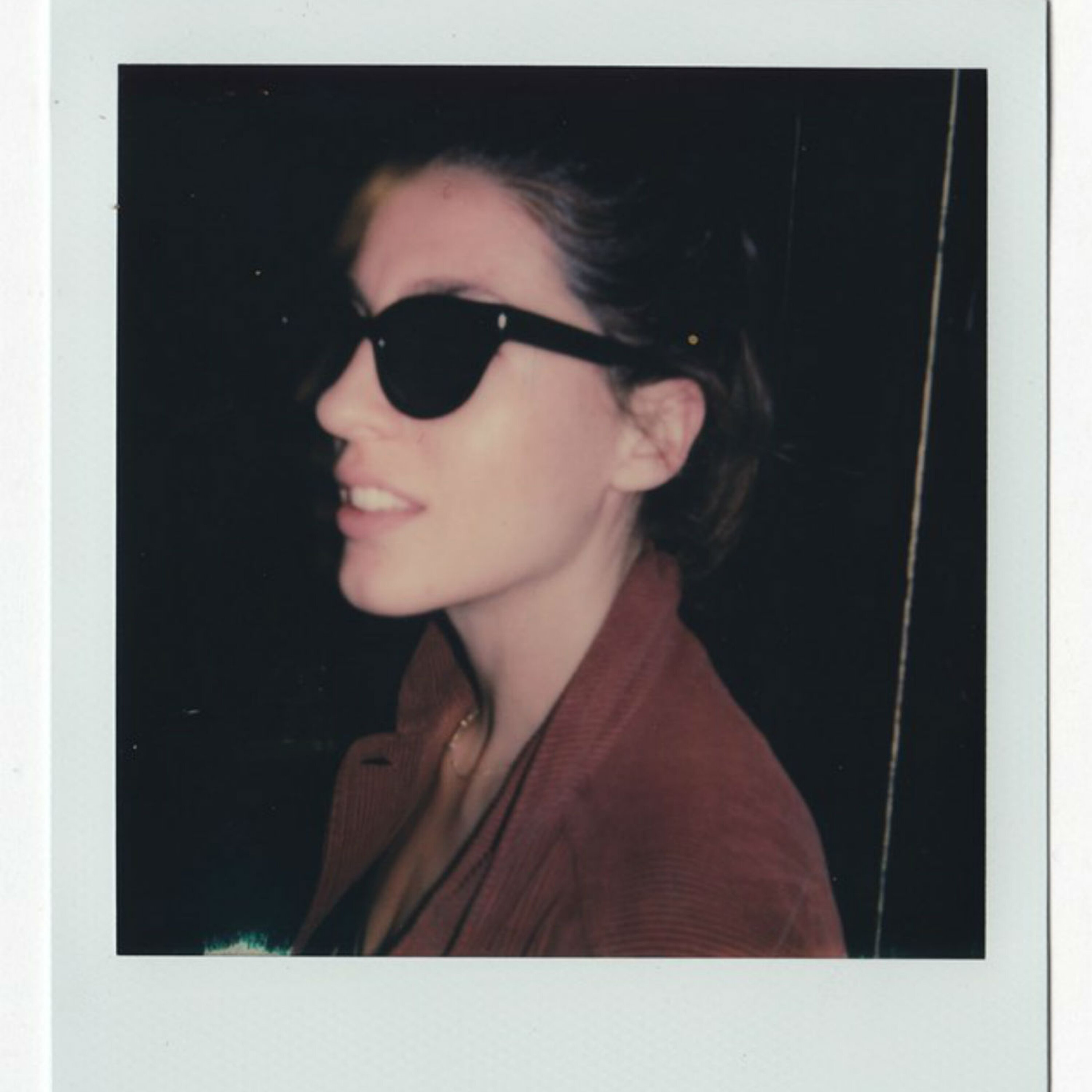
Andrea Petkovic
Professional tennis player, Racquet contributor and pod fashion correspondent Petko takes us inside her "chaotic mind" to discuss her favorite drunk accents, her controversial writing career and literature hotties from previous eras.
Hosted on Acast. See acast.com/privacy for more information.
See omnystudio.com/listener for privacy information.
2018-06-12
49 min
Transcript
Available Results
Generated results are saved to the knowledge database for reuse and search.
No generated results are available for this episode yet.
Extract Knowledge
Pick what you want extracted first. Model, scope, and chapter options appear after a template is selected.
Generated results for public episodes are saved to the knowledge database so they can be reused and searched later.
Transcript
00:00:00
Speaker 1: This feels strongly like a therapy session, and I hope you don't charge me.

00:00:22
Speaker 2: Hey, your Nick, how are you doing this?

00:00:24
Speaker 1: Great?

00:00:24
Speaker 2: Fantastic You and I have been playing tennis we have, which I.

00:00:28
Speaker 3: Really appreciate several times.

00:00:29
Speaker 2: Actually, yeah, So now you've seen the soul of the publisher of rack of magazine, and I've seen the caliber of a six time Green Slam champion, and we're a little different on the court.

00:00:40
Speaker 4: Well, I mean, it's called ten thousand ounce of what I did prior to you doing it. What I like so much about the idea of getting to know somebody's personality and their soul based on the way they play tennis really factors into the conversation we're about to have.

00:00:54
Speaker 2: We're talking to one of the sort of famously most introspective players on tour, one of the smartest players on tour, a mutual friend of IRUs, and someone I think we're both delighted to have as a guest of the Racket Magazine podcast, Andrea Pakovic.

00:01:05
Speaker 4: Indeed, I would say she's the most introspective, most interesting, smartest player that I've ever actually been around. As far as not singly tennis oriented, there's not one player that I can honestly say can sit down other than maybe Verazon Araba, who is very similar in some respects.

00:01:22
Speaker 3: But so well read.

00:01:24
Speaker 4: Loves filling her brain with the most interesting anecdotes, the most interesting stories, the most interesting people. It's probably one of the reasons why sometimes she doesn't win matches, because she actually is a little bit too smart for he own good gets her brain gets in the way. But she's absolutely one of my friends, one of my best friends, and a very good friend of yours as well, and we love it.

00:01:44
Speaker 2: She actually kind of connects our worlds. You know, I'm a journalist. I publish Racket Magazine.

00:01:48
Speaker 4: Therefore you have published now two of her stories in Racket Magazine.

00:01:52
Speaker 2: Exactly right, issue number two and are current issue number six. And I'm a decent tennis player I played in college. Indeed, my orbit would not usually include someone like you, a luminary of the court, six time grand time champion, tennis commentator, one of the greatest doubles players of all time. And yet she is somebody who's connected the two of us because she travels in Berth the circles.

00:02:14
Speaker 4: Yeah, I met her obviously a long time ago, when I was on tour. We became really close in the last three years, just because I retired, so I wasn't so obsessed with myself. I was a little bit more obsessed with having good time. And along came Petco as far as just somebody who I just found to be so fun to hang out with. And I think she enjoyed my company just because I see things a little bit differently as well. And we have good banter and we have good fun.

00:02:38
Speaker 2: And you're incredibly outspoken, which is why I wanted you to do this podcast.

00:02:41
Speaker 3: With me a little.

00:02:42
Speaker 4: Yeah, you and I meeting was because of her, And obviously you know, I find you too to be way smarter than me, so I always say, pick your lane. Mine is not to be the most the smartest person in the room, because I'm definitely not. But yeah, that's the case with the two of you.

00:02:56
Speaker 2: And I wrote Andrea two years ago to rate and to be thus far our only tennis player who is a writer who contributes to the magazine because I thought she was smart and she had something to say that would bring people into our world. And now here we are, and we're about to talk to Andrea in what I think is a pretty rollickingly good time interview.

00:03:15
Speaker 4: Yeah, i'd say so, And I mean we only scratch the surface of some of the stories and the fun that we are going to have in the future with our fashion correspondent to this podcast. But she is in France and playing in a Challenger which is sort of going down a rung on the WTA tour to get some matches. But you'll hear all about that from.

00:03:35
Speaker 2: Her, and if you love what you hear in this episode, please tune in every week because we are making her will be our fashion correspondent and so enjoy this interview with Andrea.

00:03:45
Speaker 5: Correct.

00:03:50
Speaker 1: Yes, I'm Andre Petkovich. I'm thirty years old, I'm a tennis player slash writer sometimes and I'm in the lobby of a hotel called No Hotel.

00:04:00
Speaker 2: Okay, first question, what is your default accent when you're drunk?

00:04:05
Speaker 5: Mine or.

00:04:08
Speaker 4: I'm going to take a guess on this one, and I'm going to say yours is English?

00:04:12
Speaker 6: Yes, Hello, I'm from London.

00:04:15
Speaker 1: That's my my go to what's my go to British accent? When I'm not just like normal? When I'm normal, I speak like this. This is horrible, but I really enjoy doing it. I'm already cracking myself up, which is the most important.

00:04:29
Speaker 2: That's a train wreck accent.

00:04:31
Speaker 4: I think you you you waffle between French Spanish and then you eventually end up realizing that English is your default drunk accent.

00:04:41
Speaker 3: Yeah.

00:04:41
Speaker 2: Do you think that's because you secretly want to be British?

00:04:44
Speaker 3: Is that?

00:04:44
Speaker 2: Is it a yearning?

00:04:45
Speaker 1: I want to be Cockne. I don't want to be British. I just want to be Cockne. I don't know, I just that's like my go to. I sent my my cousin had It was my cousin's birthday last week, and I sent her a message for her birthday and British accents.

00:05:00
Speaker 5: I was like, hell, and she's.

00:05:01
Speaker 1: Serbian, so we had so many languages to speak in, and I decided to go.

00:05:07
Speaker 6: Like, hello, I'm from London. Happy birthday from London.

00:05:11
Speaker 5: And I was in France.

00:05:12
Speaker 1: So this is like the most fun I have when I'm with myself alone in my hotel room.

00:05:17
Speaker 3: That's that's the.

00:05:18
Speaker 4: Most fun you have in your hotel room by yourself. That is I'm not sure if I feel sorry for you at this point.

00:05:25
Speaker 2: Renee's yours is German? Do you really speak young German.

00:05:27
Speaker 4: I've been known to speak a little drunk German at times.

00:05:30
Speaker 2: Why where did you learn German? How did you learn German?

00:05:32
Speaker 3: Because I probably know a little bit.

00:05:34
Speaker 4: I'm busy in German when I'm When I was hanging around Stephie quite a bit because I'd go to dinners with Steffi and her family and all I did was talk German, and so I picked up on I'm Bisian Deutsch.

00:05:44
Speaker 2: How's her German?

00:05:45
Speaker 1: By the way, and Renee always surprises me because she knows these weird words like stops naza for example, because we Germans have a singular word for a little nose, which is nasa, and Renee knows that.

00:05:57
Speaker 5: So she always surprises me with those words. Who does little.

00:06:01
Speaker 2: She's from the streets.

00:06:03
Speaker 1: Yes, but I'm really glad that we all know which language is your go to Caitlin, which is French?

00:06:09
Speaker 5: Do you care to elaborate on that?

00:06:12
Speaker 2: Well, first of all, I'm from Montreal, so it's like this great tragedy of my life that I don't speak fluent French, which is why I want to, which is okay? Drunk, I wish I did, And I kind of convinced myself that I do. And also I had this really mean French girlfriend, which is where I learned most of my friends.

00:06:26
Speaker 3: All that is not a good story.

00:06:27
Speaker 2: No, no, no not. It kind of begins and ends there. She was just mean and French, and of course I found this like limitlessly alluring, because that's what you do when she doesn't like you.

00:06:37
Speaker 4: Well, that's why I know Petko's little go to is English, because she seems to find herself these lovely English boys.

00:06:43
Speaker 2: Is that true?

00:06:44
Speaker 5: I love English boys, yes.

00:06:46
Speaker 4: Cockney, And I would like to preface by saying boys because you know, they have to be under a certain age, like under thirty. I didn't say under twenty, under thirty.

00:06:57
Speaker 1: Well, as long as they are really pale, really awkward, and really tall, it's okay for me.

00:07:02
Speaker 2: So the face of an angel and the body of a fifteen.

00:07:05
Speaker 4: Year old, but no, the body of a very emaciated rocker like Mick Jagger kind of look wow, yeah with the baby face.

00:07:14
Speaker 2: How would you explain this why?

00:07:16
Speaker 5: I really don't know. But it's like my it's.

00:07:20
Speaker 3: She likes to be in control.

00:07:22
Speaker 1: That's not true. I mean, that's not true at all. It's just I don't know. I listened to too much indie music when I was young, I guess, and especially Caitlin's favorite band, the Smiths. So christ that has called me for life.

00:07:41
Speaker 4: You said last week that you have actually found the German version of the Smith group of the smith Band.

00:07:46
Speaker 3: Is that true?

00:07:47
Speaker 5: Yes?

00:07:47
Speaker 6: I have.

00:07:48
Speaker 5: I have Tranza. He's amazing.

00:07:50
Speaker 1: He sounds exactly like the Smiths, just with German lyrics, which is pretty awesome. I wanted to send it to Caitlin, but for some reason she didn't want to hear about.

00:08:00
Speaker 5: I don't know why.

00:08:01
Speaker 2: I have a hard time with this mess, but I the conversation we were having earlier about all the famous literary figures. Yeah, it would be good in bed. I want to pick that up because it's actually a very nice transition into talking about your nascent career as a writer.

00:08:15
Speaker 5: So you want to say I'm good in bed or what is this?

00:08:17
Speaker 2: I want to say that I dispute the idea that all of these misogynist writers who you love would be good in bed, but Hemingway might be Hemingway.

00:08:26
Speaker 4: I want to I want you to explain that whole theory.

00:08:28
Speaker 1: Well, the premise is, when ever, Caitlin asks me, well, actually we talked about eras right, which era we would imagine ourselves to be in?

00:08:37
Speaker 6: And I really never thought about it.

00:08:39
Speaker 5: I just said I would.

00:08:41
Speaker 1: There are just a few writers that would that I would like to go back to hook up with, right, So Hemingway was one of them, and David Foster away.

00:08:48
Speaker 5: In a second.

00:08:49
Speaker 4: I just have to stop you here. She asked you what era you want to be in? Not what era of writer you want.

00:08:54
Speaker 3: To sleep with? Or was that the original question?

00:08:57
Speaker 4: What did you just you she talked about and you took it into the bedroom of being with a writer.

00:09:03
Speaker 3: Okay, carry on, carry.

00:09:05
Speaker 1: That's exactly my point. And I would still put my money on David Foster Wallace.

00:09:10
Speaker 5: I think he would be better than Hemingway.

00:09:13
Speaker 2: There's zero chance that's true.

00:09:15
Speaker 1: You know, the tortured soul kind of thing has something going for them.

00:09:21
Speaker 5: Sometimes in like very light moments.

00:09:24
Speaker 2: I hear a lot of caveats. I just think hygienically and in terms of generosity. I don't see him being able to be.

00:09:32
Speaker 4: Very satisfy, to live up to your standards.

00:09:34
Speaker 5: There you go, None of you know my standards. They are very low.

00:09:38
Speaker 3: This is very true, This is very true.

00:09:40
Speaker 2: But seriously, let's talk about writers and writing.

00:09:42
Speaker 5: Okay.

00:09:42
Speaker 2: I wrote you an email a couple of years ago asking you if you wanted to write for Racket, and you wrote back saying you were intrigued.

00:09:50
Speaker 5: Yes, let's start there.

00:09:51
Speaker 1: Well, when you wrote me that email, I was intrigued for a moment, and then I just totally forgot about it.

00:09:58
Speaker 5: For a year or so, right, was it a year? I think it was a year.

00:10:03
Speaker 1: And then I ran across that book The Art of Rivalry by an art critic sebastians Me and he had this four artist pairs and he described their rivalries and how they basically.

00:10:18
Speaker 5: Well profited from.

00:10:19
Speaker 1: Each other and how they would have never been or never would have become the artists they were without the other one, and that the breakthroughs and art sort of happened through these rivalries. And that really inspired me and sort of just made me think about rivalries and tennis and in sports. And so I wrote the first piece, or I contacted you first with that idea to write a piece about comparing those artists rivalries with Roger and Rafa, Right, yeah, do I remember correctly?

00:10:51
Speaker 2: Yeah?

00:10:51
Speaker 6: Yeah.

00:10:52
Speaker 2: You had actually a couple of ideas. It seemed like you had been getting into this mode, which is what I think is so interesting, because you told me you had kept journal. You've been writing. That's the stuff that I sort of want to get at.

00:11:03
Speaker 1: Well, that's an interesting thing because I have always been writing. I never had a time where I wasn't writing. I just never was writing to be published, right, So it was always more for myself. It made my thoughts clearer, and it was also just an exercise for my brain. I did a lot of fiction writing when I was younger, just to sort of explore out of my comfort zone and explore my creativity because I always felt a little contain in the tennis world. So I wanted to do something that was just comfort wise easy to access, right, which is your mind when you're on tour a lot and when you're alone in hotel rooms a lot. So that was always the easiest way, right. You always find a pen, you always find a piece of paper. And then later, obviously with computers and iPads, it was even easier to just sort of get into writing. So that was something I was always doing just to keep my mind entertained and just get out of my comfort zone every night and then so I just never thought about writing to be published, and when I got your email, that was the first time when I was like, I could actually write something so people will read it. Because I have never never showed any of my writings either to anybody. I'm just I'm trying to recall. No, I have never showed anybody anything. So that was like a wake up call for me to be like, Okay, let's polish everything you scribble down. Let's polish it and make it readable. Not only don't just write it down, but also make it readable for people to understand what's going on in the chaotic mind of Rapad.

00:12:42
Speaker 2: Well, it was more than readable. I think it was really excellent and people really responded to it that way.

00:12:46
Speaker 3: I thought the piece was great first of all.

00:12:48
Speaker 4: Secondly, I loved the bit at the end actually because I think one of the things that you and I urge everyone to read it because it shows it more bottled down really to a little bit of jealous you know, and what people want from one another really and not sort of seeing what they're already really great at and embracing that about themselves. And I love the bit at the end where Angie turned to you and said, I'll never be like you. As far as the press conference is concerned, I don't tell anybody too much because I'd love them to read it and rack it. I love that piece because you know, you're always sort of wanting something that somebody else has, but you don't embrace what you're really good at.

00:13:25
Speaker 3: And one of the things that obviously you're really.

00:13:26
Speaker 4: Good at is entertaining people, including me, and on the regular basis.

00:13:32
Speaker 2: And articulating your thoughts and expressing yourself. And she was looking at you sort of longingly and being.

00:13:38
Speaker 3: And vice versa.

00:13:39
Speaker 4: You were constantly wanting to be having her results, etc.

00:13:43
Speaker 3: Etc.

00:13:44
Speaker 4: But back to that mind piece, because you talked about the chaotic brain and your sort of chaotic mind.

00:13:50
Speaker 5: We know it.

00:13:50
Speaker 1: Well.

00:13:53
Speaker 4: Explain why that that's in some respects not great on the tennis court for you.

00:13:57
Speaker 1: Well, the thing is, I'm equally and rational a person, which might sound very paradoxic, and it turns into this whirlwind of emotion slash thoughts in my head that.

00:14:11
Speaker 5: Just sort of carry me away.

00:14:13
Speaker 1: And I've learned to deal with it better with age, with experience. But I think everybody knows that feeling that when you're at a weak point of your life, or when you're just not at your best, those old sort of devils come back to haunt you. Those old devils and demons that you thought you got rid of, they just come back to haunt you.

00:14:37
Speaker 5: And I feel like when I have weak moments, it's still.

00:14:40
Speaker 1: I still get back into that mind frame, even though I thought I've I've had it, I've had it all put away for a long time. But the interesting thing is about the jealousy part that you mentioned, Renee. What I always thought was very interesting about jealousy, I've never that term for me was never a negative thing. I think for me the negative thing is envy, when you wish something when somebody else has something and you wish they didn't have it. I think that's a negative emotion to have, But too long for something that somebody else has might just give you a push to do something better or to change something about you. So I never really concocted jealousy with a negative emotion. For me, it was always something, Oh look at that girl, she's awesome. I wish I could be that awesome, right. I think envy is a really negative emotion where you wish somebody who has something didn't have it so you feel better about yourself. And that was always something that I was very good at not having, thankfully in my life.

00:15:40
Speaker 5: I think because of the education.

00:15:42
Speaker 1: I had for my parents and I have a sister, so we always learned to share very early on. But I think that was very important for me in this piece to sort of make clear that people get carried away by jealousy instead of taking it and using it for a positive just making it into this or turning it into a negative energy and emotion that it really shouldn't be in my opinion.

00:16:07
Speaker 4: Yeah, well that's why you're a rarity because you do do that on a daily basis. I've never met anybody who compliments anyone more than yeah, Petco. I mean, it's kind of like overwhelming. And I sit back sometimes and I'm always like, every time I see her, she's like, you look amazing, and I'm like, I can't even say that there, And it's pretty much because Petco always looks amazing, but it's like it just comes out of her so naturally. I'm like, it is this abundance of like happiness even when you lose, and I know how much you hate losing, and sometimes you'll go into your room for about two days and not come out. But yet you would not know that because every time you shake a hand it is always with love for your opponent, and that it's such a rare quality onto us. So you're a rarity, let's put it that way.

00:16:48
Speaker 5: Yeah.

00:16:48
Speaker 2: I think you have, thank you very much, an empathy that comes across where you're actually genuinely interested in the people that you're meeting. I mean, I certainly felt that the first time that I met you, which is like, oh, you know, who are We were just some silly magazine people from and you know, having you come to one of our events in California and sort of like interact with the people who subscribe your magazine just as a person was sort of notable because I think a lot of people have guards up, and I want to sort of talk about that in terms of, you know, you have empathy, but also the admiration, so instead of jealousy even you could use the term admiration for Angela Kerber, you have an introspect that is rare. Yeah, And I think you know that sort of leads us into the next piece that you wrote for Racket, which was in the current issue that's at now, which is about musicians. Obviously you have a lot of admirations for your fellow players. You have admiration for writers, as we know also musicians. That's certainly something that you are drawn to. What sort of gave you the idea about going on tour because you pitched me. I wasn't going to catapult you into a tour experience, but you wanted to.

00:17:50
Speaker 1: Well, well, the thing is, I think Kaitlyn and I have this weird relationship of me texting you when I'm drunk at three in the morning with some weird ideas. So I'm like, you know what, I think I should go to Siberia because the Pussy Ride members are hiding there, and I think I should spend some time with them. And then Kaitline is like, oh my god, and it's like three pm in New York.

00:18:09
Speaker 2: That's a great idea.

00:18:11
Speaker 1: And she's with her kid, and then she's like it could actually work, and.

00:18:17
Speaker 3: You could have been with me at three am in the morning. That is possible.

00:18:21
Speaker 5: That is very possible.

00:18:22
Speaker 1: Yeah, So that was one of these ideas. I was again reading a book. I was reading the biography, The Autobiography by Carry Brownstein. In the singer of Sledo Kinney and now probably better known for her Portlandia acting and writing. She talks about this really interesting lifestyle about being on tour where you have this very mundane moments and this routine days where you just sit on the bus all day and you load and unload gear and you're just practicing and sound checking and everything is super boring. It's always the same people around you, and then all of a sudden, you have this one to two hours of high performance, pressure and intensity moment where all the emotions and all the adrenaline and hormones just hit you right in the face, and there are people out there looking at you expecting something out of you.

00:19:12
Speaker 5: And I felt a strong.

00:19:14
Speaker 1: Kinship to that, because I feel like that's what tennis, and especially the tennis tour is about very much, because we have all these routines every day and mundane moments every day, and spending a lot of time in hotel rooms every day, and then all of a sudden, you have this match and emotions just hit you, and nerves hit you, and hormones hit you, and you have to sort of function. And I wanted to get into that and explore that similarity and obviously the differences also and how musicians handle it and how musicians just deal with that, because I know how tennis players deal with that. But I wanted to have another perspective on the same thing that is yet different in its essence somehow.

00:20:00
Speaker 4: I guess I don't want to again get into like the crux of the story or the ending, but I think for me, the takeaway obviously was the friendships that are formed on tour, even when you're sort of going through the ups and the downs and the good performances the bad performances, But in the end, it's kind of like we're all a little bit of a traveling circus, and that's kind of how the tour is a little bit as well, and you kind of find your little niche group to hang out with the tour.

00:20:25
Speaker 5: Oh yeah, that's that's very true.

00:20:26
Speaker 1: And especially a lot of people ask me, a lot of journalists ask me what an interview is like, Andrea, do you have friends?

00:20:34
Speaker 5: Do you have real friends on tour?

00:20:35
Speaker 1: And I say, yeah, of course, we have real friends, and then they go like, but you have.

00:20:38
Speaker 5: Nothing in common? What do you even talk about?

00:20:42
Speaker 1: And then I always go like, well, these friendships are actually somehow stronger or more like different than friendships you actually pick by interest and by maybe common interests, because those friendships are like people.

00:20:57
Speaker 5: That you know from school, right, that you grew up with.

00:21:00
Speaker 1: Maybe you have totally different lives now, but it's like family when you see them, right, And that's what you have with tennis players, because you go through the same emotions, you go through the same troubles, through the same problems.

00:21:11
Speaker 5: And that forms a bond if you want it or not.

00:21:15
Speaker 1: And you might have totally different you might have totally different interests, but there is something that connects you on a deeper level, and.

00:21:25
Speaker 5: That's a bond that can be denied.

00:21:27
Speaker 1: And so I'm always there and I always say, yeah, I definitely have real friends on tour, even if we talk about I don't know the notebook for an hour or so, I have not seen the notebook.

00:21:39
Speaker 5: I just guess it's the Ryan Gosling.

00:21:41
Speaker 3: Yeah, yeah, yeah, right, right, right, right, right, pack up.

00:21:44
Speaker 4: I think one of the greatest moments on tour that we get is those moments in rain delays at Wimbledon. Can you give us a little insight because I know I've been there with you in the locker room at Wimbledon when it rains, because it's the moment where sort of everyone's at the highest of highest of highest performance areas.

00:22:03
Speaker 3: Right, You're at Wimbledon, at.

00:22:04
Speaker 4: A Grand Slam and it rains. Everybody, you know, is all in the locker room. Everyone's on a match, going to a match, or is sitting there waiting for a match, like and it could be five to ten hours before you get on court.

00:22:17
Speaker 2: And I can't imagine it's very bigger. People are still on top of each other.

00:22:20
Speaker 4: Yeah, I mean at that stage because everybody is in the locker room at the same time, right, So because everyone comes in and you get that moment where it's a heavy deluge and the loud speaker comes on and says, ladies and gentlemen, ladies and gentlemen, the rain forecast is crap. And we they don't say that at Wonoland, but you know, you can imagine it's like it it seems that are we going to have hours of rain? So everybody in the locker room, all the players have this moment where they have this physical and emotional like downturn where they're not switched on. So now the natural sort of personalities come out and everybody because now it's entertaining time, right, So Andrea.

00:22:58
Speaker 3: Is quite good in those moments.

00:23:00
Speaker 4: Petko, tell us a little bit about those moments and nose because I've been there with you, and explain that because people have no idea what goes on in the locker. Remember I thinks everyone's just a bitch and no one talks to one another.

00:23:10
Speaker 3: But explain those moments.

00:23:11
Speaker 1: Obviously, when people are focused and concentrated on their match, they might be more introverted and just more for themselves. But as you said, when the tension sort of goes away for a brief second, the true colors show, and then actress Andrea comes upon comes upon us all, and I like.

00:23:31
Speaker 5: To tell stories.

00:23:32
Speaker 1: I'm a storyteller, I guess, and so I start to tell stories about well, we all have those stories a rotus lives and matches and whatnot. And then everybody starts to tell their stories. And it's always a lot of fun. But sometimes when it gets too long. I think, Renee, you've seen me in Wimbledon, I think was two years ago when it didn't stop raining and you came in from your broadcasting and I was in I was like, I'm just thinking if I should hang myself in the bathroom or I'm from court eighteen on my head, it's actually happened to kill myself.

00:24:04
Speaker 3: Yeah, that was with the actual exact words.

00:24:06
Speaker 4: Well, it was because you were waiting to play mixed doubles or was it doubles at that stage.

00:24:10
Speaker 1: Yeah, it was so bad, and we got canceled literally every day for five days in a row, and I was just sitting and we would be scheduled the first match on at eleven thirty, so I was on site at ten and then we got canceled at like six pm. And I have and for people who don't know it, the locker room and wimbledoness in the basement, so you have no daylight.

00:24:31
Speaker 6: Yeah.

00:24:33
Speaker 1: So I was just sitting in the basement for like five days, eight hours a day.

00:24:37
Speaker 4: But it also explained the nature of maybe not wanting to play tennis sometimes when you're done with it emotionally, mentally at the end of the year.

00:24:45
Speaker 1: I don't want to say it's like every other job, because there are a lot of emotions involved when you play tennis, and I think some people underestimate what emotions do to people and when you have this whole year where you constantly go through highs and lows, and even if it's a great year year, sometimes a great year can take.

00:25:01
Speaker 5: Away more energy from you than a bad.

00:25:04
Speaker 1: Year because you're on a constant high and no brain can really take being on a constant hid.

00:25:10
Speaker 5: It's like being on drugs.

00:25:11
Speaker 3: For sept Sirene, she can handle it.

00:25:14
Speaker 5: For yeah, she can have.

00:25:16
Speaker 1: But she was born She's different, you know, she was born to do that sort of and I think the highs don't necessarily feel as high for her as maybe for us for us mortals.

00:25:46
Speaker 4: Of speaking of mortals, I mean, you're top for the top ten right semi finals of the French Open, and you rock up.

00:25:52
Speaker 3: Where are you this week?

00:25:54
Speaker 4: Explain to people what happens when sometimes you have to claw your way back into that top thirty stratosphere and what you have to do on weeks like this, And explain who you were supposed to play yesterday, who also is going through the same thing that you are in some respects. I mean, how difficult and how interesting what people don't know about what happens on the tour.

00:26:12
Speaker 3: Where are you?

00:26:12
Speaker 5: Well, Well, I'm in the south of France.

00:26:16
Speaker 2: Well, that's so south of can we hear your franchise? Actually the response with.

00:26:24
Speaker 5: Missus bonsou and this is what all French people do.

00:26:28
Speaker 3: I feel that's what you do when you're drunk.

00:26:29
Speaker 2: It sounds a lot like my drunk French acse that actually go on.

00:26:33
Speaker 5: That's actually true.

00:26:34
Speaker 1: So I'm in the south of France in a little village called Canye Surer, which is actually beautiful. I'm playing one hundred thousand, so I opted to play a smaller tournament this week to have a few matches and get back on track and get my confidence back on track. And on first round I draw Ginny Bouchard, who also.

00:26:55
Speaker 5: Had a wildcat. Yeah, I got a wildcard and she got a wild card.

00:26:58
Speaker 1: And we do each other, which is fun because we both opted to play this tournament to have matches, and then we were supposed to play each other. Genie got injured so she had to pull out. But you know, sometimes it's just not in your hands.

00:27:10
Speaker 3: Explain the difference of this tournament.

00:27:13
Speaker 1: Well, well, the difference is basically, we practice four people on the court. We get half an hour of practice sessions a day. We get only three balls and no new balls. There is no water anywhere. Yeah, there is no water. You have to either buy even so you have to either buy your own or you have to bag at the tournament office to give you. I speak French, so i'm and i'm I can be charming if I want to. I can only be charming in French, unfortunately, so it has never worked for me in any other language and any other country.

00:27:47
Speaker 5: But so that's what you know. It's just it's just different.

00:27:52
Speaker 1: You the courts are obviously they only had three cords, so when when qualities and matches start, there is no no practice at all, and it's just very different obviously, but I actually enjoy it.

00:28:08
Speaker 5: It's back to the roots.

00:28:09
Speaker 1: It reminds me of where I started and where I came from, and it really captures the essence of tennis. Everybody is fighting for their life and literally fighting for their life because you don't get paid as well obviously as on the WTA tournament. And if you don't do well, you cannot pay your coach, you cannot pay your expenses, and you lose money day by day. So it's it's really well, it's true, and it's really a different type of tennis. When you when you when you see it, and it has been very interesting for me to watch, and actually it's been it's been good for me to be part of this way.

00:28:43
Speaker 2: Is it actually more intent on the court? Are the points more are people? Is it very cognizant that people are scrapping harder than maybe a first round at a Grand Slam or or something like that, Like, can you is it palpable?

00:28:54
Speaker 1: Well, the thing is it's at the same time more and less professional, if that makes sense. So what I mean by less professional?

00:29:04
Speaker 2: Just like the three balls?

00:29:07
Speaker 5: Do you have bull kids only on center court? Wow?

00:29:10
Speaker 3: Okay, so there's another one.

00:29:11
Speaker 5: Yeah, so they are less professional?

00:29:13
Speaker 1: I mean exactly those things like having a massage after the matches, stretching, training, working out like off the court. A lot of players I see here don't work as much out off the court as the w as like the higher ranked players.

00:29:27
Speaker 5: Right.

00:29:28
Speaker 1: For example, just one example yesterday, when Ginnie pulled out, the lucky losers that could have been could have gotten her spot forgot to sign, so there was no lucky loser to get in and that's why I.

00:29:40
Speaker 4: Got Well, they saw they were going to play you, that's why.

00:29:42
Speaker 3: So they said, what's the point.

00:29:44
Speaker 5: I don't know if that's true, but you know.

00:29:45
Speaker 1: But then on the other hand, when you watch the matches on court, the girls are fighting their hearts out. There is crying, they are throwing themselves into the clay.

00:29:56
Speaker 5: It's really amazing to watch the intensity.

00:29:58
Speaker 1: It's so much different because you know, the thing on the water is you get paid good money even if you lose, and if it's not your day, you're kind of like, a fuck, this is not my day. I'm going to try next week and I might do better. It's not that life depending right, but here it is. So everybody is working so hard and fighting so hard, and the intensity is really palpable. It's it's very different. I think it's very different. I mean the same thing when you go around Grand Slam's qualities.

00:30:25
Speaker 5: If you have ever watched this, it's.

00:30:26
Speaker 1: Very different energy and very different atmosphere than once you get to the main draws.

00:30:31
Speaker 4: I think it's kind of perfect for you, actually, because that's kind of you who you are. I think, switch the brain off and become doggedly determined, clail over you, you know, the whole thing. So this could be I feel like this is your tournament.

00:30:42
Speaker 5: From your mouth to God's ears.

00:30:44
Speaker 3: I believe in it. I believe in you all the way over here.

00:30:47
Speaker 2: Okay, So now we're going to sort of do We're going to try out a segment that we're going to call I don't know what we're going to call it. Stubs you. No, I'm not going to be going to say that out loud. We're going to sort of ask the same people the same couple of questions with the idea that we're going to try to get to some philosophical ponderings and one of the best ones. And I'm going to ask it because it's Renee's question. The way she would phrase it is, there's a good lane and a bad lane on a tennis court. I think we all know what happens when you're in the good lane, But what do you, in particular do when you're in the bad lane? What's your response?

00:31:16
Speaker 4: What's your default mechanism, default mechanism that's not.

00:31:20
Speaker 5: Good when things are going badly? Yeah?

00:31:22
Speaker 4: I like, basically, when you're on the court and you know things are getting tough, what's your bad trait that you have to stay away from?

00:31:31
Speaker 1: Well, except for crying and praying to God to help me out of the situation. I think the worst part that I do, or that works least for me, is I get really into my head because I feel like I can control things with my thoughts, so I really think about what I like, literally think about what I would have to do, which is the worst thing you can do in tennis, because you have to sort of go with the flow and feel it and just get free of thought and be in the moment. And I think that's something that I do, like, I really think about what I could do better, and that's that's not good in my experience. I don't know what's your experience, Renee.

00:32:11
Speaker 4: Well, mine was to get a little bit crazy and sort of blame you know, the umpire or the book if somebody in the crowd made a noise or you know, I'd have an excuse or there would be a reason for me to have lost, you know, and so rather than sort of just let it go and just move on to the next point, I was similar to you, but mine came out. My reactions were outwardly, you know, obvious to everybody. Yours is not obvious to people because you were introspective. You're going inside your brain and I was going outside.

00:32:42
Speaker 3: Of my brain.

00:32:43
Speaker 4: So so how do you change that? Like, what's an optimum place for you on a tennis court?

00:32:48
Speaker 1: Well, the optimum place And this is really difficult because, especially for somebody that is as intense as I am on the court. I tried to find a good balance between being powered up and intense but still sort of calm, so kind of like an intense relaxation if that makes sense, because I get if I get too intense, my muscles tighten up and I get really short, and my swings and my strokes and my ball tends to land flat and short into the court. And when I'm too relaxed, I sort of have no focus and no intensity and I play And the way I play is I have to grind somebody out point by point. So if I keep my level up for every point, eventually the others will will break down. That was my strategy how I win matches.

00:33:37
Speaker 5: And if I'm too.

00:33:37
Speaker 1: Relaxed, gift one point there, I play one mistake there, then I play a fine point. But that's not who I am. So this is the most difficult part for me to find the exact middle ground of intensity and relaxation.

00:33:50
Speaker 4: Yeah, I see, I think, I think I find you so interesting because you have such a creative mind. So, yeah, you're a very pragmatic person. So the worst place for you to be is overthinking on the court. Yes, but yet then the creativity sort of bored human being.

00:34:05
Speaker 2: Well no, because if you're a smart person, you want variety.

00:34:08
Speaker 4: Yeah, so you like all of a sudden, your brain starts clicking over because you're actually thinking about other things and not really what you should be thinking about on the court, which is actually to stay loose. So it's like you have this like dichotomy on the court with your own brain, whereas one is overthinking and the other one is over creative, whereas you almost need to I always say to you, take your head off your shoulders and just throw it away for about a couple hours and just play with your physicality.

00:34:33
Speaker 1: Right?

00:34:34
Speaker 2: Does that ever work? Do people listen when you give them that sort of advice?

00:34:37
Speaker 3: Most do, but you know I never do. Pat Co is a little bit of a tough one to get.

00:34:43
Speaker 2: Okay, we're gonna let you off the hook. Related question, do you think people sort of philosophically show you who they are when they play? Oh yeah, like their personality, their core being for sure? What can you tell by somebody's playing stuff?

00:34:55
Speaker 3: And give us an example.

00:34:56
Speaker 1: Oh, you can tell so much. Well, my favorite thing is when you can tell most by Now it's a little different on the professional tour, everybody has a poker face on, but you can tell the most about the person that you just met. If they have never played tennis and you take them to a tennis court, you can tell so much.

00:35:13
Speaker 5: You can tell how determined they are, how.

00:35:16
Speaker 1: Proud they are, because pride shows a lot when you get Tennis is a difficult sport. Rarely every ever, somebody just picks it up and plays well. Right, So it's a very difficult sport for beginners, and you can tell so much. It's like the most fun I have when I meet a person to bring them on the tennis court for the first time.

00:35:34
Speaker 4: Have you played tennis with Caitlin?

00:35:36
Speaker 2: Where's this going?

00:35:37
Speaker 5: I have not know.

00:35:38
Speaker 1: I saw her play with Dave, But what type of person is she on the tennis court?

00:35:45
Speaker 7: I'm just going to say a little, a little, a little hectic, okay, a little very aggressive, wanting to come into the net, which is, you know, great as far as I'm concerned, because that was my gig but listens very well, takes information in very well.

00:36:02
Speaker 1: Well, she's will sounds, but that sounds like a real New Yorker. She's a neurotic freak that wants to learn and evolve. So that's like basically New Yorker on a tennis court.

00:36:13
Speaker 3: Yeah, he just wants to get better.

00:36:15
Speaker 1: Yeah.

00:36:15
Speaker 4: I think that's such a great I agree with you one hundred percent. You take if you're a professional like you are and like I was, and you take somebody who has never been a professional, and you take them onto the tennis court. In half an hour, I can tell you exactly what their traits are.

00:36:30
Speaker 2: Yeah, and you know what, should we do.

00:36:32
Speaker 3: That for dating? Should we do that for dating?

00:36:34
Speaker 4: Like take the prospective part.

00:36:36
Speaker 2: Sounds allowed to date? I'm going to say, this is the only married person in this conversation. Neither of you are allowed to date anyone without first striking a few tennis balls across the net. That is going to be your proervisit? Can you handle that? Both of you? Ladies?

00:36:48
Speaker 1: Well, I was just going to say the most interesting part for me is when you take a man to the tennis court for the first time and they play, and you really see even like the guys that I go for that unnecessary necessarily, like the typically a well not the like typical matcho manly guys, but the like the masculinity comes out in them, they get they are super proud.

00:37:11
Speaker 5: And they get pissed off if they can't.

00:37:13
Speaker 1: Do it, you know, and then the man comes out and I always laugh at them.

00:37:17
Speaker 5: I'm like, dude, you look like a twelve year old girl. Why are you behaving like a man right now?

00:37:24
Speaker 2: And then you keep dating him after that? Or is that like end of course of course.

00:37:30
Speaker 5: For four to six weeks, four to six weeks.

00:37:32
Speaker 4: Well, your German article that you released apparently says that you're not dating at all, so we feel sorry for you.

00:37:39
Speaker 3: Can you want to go?

00:37:41
Speaker 4: Do you want to just you know, tap out the end of this little conversation by telling everybody that you have no problem meeting.

00:37:47
Speaker 6: People after Well, I'm wait.

00:37:49
Speaker 2: Back up a second. You are now a pretty well known columnist in Germany. Yes, you're writing for one of the biggest newspapers. How what is the gig? What are you doing?

00:37:59
Speaker 1: Well, this newspaper approach approached me and asked me if I wanted to write a column or actually they asked me if I wanted to talk to one of their reporters every week and he would write something down for me.

00:38:11
Speaker 5: And I was like, wait, wait, wait, hold on, hold on, hold on on, do you know who I know?

00:38:14
Speaker 3: But yeah, I'm published.

00:38:16
Speaker 6: Who are you talking to right now?

00:38:19
Speaker 5: Wait?

00:38:20
Speaker 1: And so I told them, let me write this thing, and I said, so, I sent them a few like text boom we call it in Germany, where it's like just a few test drives, and they looked at it and they were like, Okay, we're going to take this. And so they decided that they wanted me to talk about myself and pop culture, so, which.

00:38:38
Speaker 5: Is a really weird sort of.

00:38:43
Speaker 1: It's difficult to describe because the column is about so much. It's mostly about traveling, hotels and bars and how pop culture saved your life when you're alone all the time.

00:38:53
Speaker 2: Right, It's a good premise.

00:38:55
Speaker 1: So yeah, And so it's supposed to be every column. The anchor of the column is a film that I talk about in the beginning, and then I sort of make a connection to my own life and the introduction to the column. I was supposed to write an introduction to the column, and it was supposed to be like, why films? Right, So I was supposed to explain, because people know me as a tennis player, why would I write about films.

00:39:18
Speaker 5: All of the sudden.

00:39:19
Speaker 1: I'm not a film expert, right, So the road I went down was like, well, it's not always easy as a tennis player, and we need and every person needs an escape strategy, and my escape strategy is films. So the original sentence that I wrote was following, So it's not always easy for tennis players with escape strategies because alcohol is not an option because recovery gets slowed down. Then drugs is not an option because we are under strict jopping controls. And sex, well, sex technically is an option, but it's actually not that easy to get to as people might think on the road. I think that was the original sentence.

00:40:01
Speaker 5: So this huge.

00:40:02
Speaker 1: Gossip magazine took out that sentence and they made it into and the headline was Andrea Petkovic has no sex.

00:40:10
Speaker 5: And literally, in the first three.

00:40:13
Speaker 1: Hours after the headline appeared, my Instagram exploded into freaking maniacs writing me direct messages like I have no sex either, maybe we should get together. And you know what the worst part about this is in my native idealism.

00:40:30
Speaker 5: I thought, well, look at this, people really like.

00:40:33
Speaker 8: My column until my press guy sent me a screenshot of the headline of this huge newspaper that had featured the quote, and then I.

00:40:47
Speaker 5: Was like, well, off you go, Idealism. It was not my column.

00:40:51
Speaker 1: It was just one sentence that I accidentally put in there. And that's how my life got destroyed and went down the drain in the course of two hours.

00:41:00
Speaker 4: In the course of two hours, or maybe let's say a day, you got just take a ballpark figure of how many guys fifty tried to no, no, no, no said no no, tell.

00:41:11
Speaker 2: Us, no, no, tell us.

00:41:12
Speaker 1: Okay, So I had I turned off my phone because it got so bad for two hours, and when I turned it back on, I had nineteen nine plus direct messages, so they couldn't even count it anymore. So I just blocked all and then I called Renee to rant about this fucking newspaper and how they destroyed my social media for the next five days, and we talked for thirteen minutes.

00:41:37
Speaker 5: I have it on record.

00:41:38
Speaker 1: We talked for thirteen minutes, and in those thirteen minutes, I had eighty six new messages on my Instagram.

00:41:45
Speaker 4: So basically you are now officially like as far as match dot com or bumble or Tinder or rya celebrity whatever. Bottom line, I don't even know about it. You don't need it. You just need to write an article in Germany. And you apparently could get laid every day for the rest of your life by these guys.

00:42:02
Speaker 1: Oh, every day, every day. If I wanted to, I just have to. I just have to respond to go on my Yeah, I just have to go on my direct messages and pick one, just like throw an arrow and pick the first one that comes out and be like, hey, do you want to get together because we both have no sex?

00:42:22
Speaker 5: And then he would they would be like, OK, okay.

00:42:24
Speaker 4: For the record, for the record, you know, because I know you've wanted to square this away. But for the record, have you had enough sex that we don't need to worry about you.

00:42:35
Speaker 5: I just want to say I'm fine. I just want to say it.

00:42:38
Speaker 1: I'm not lacking in any aspect of my life. But I also want to say the funniest thing is when I told the sentence the original sentence to Renee, her first reaction was.

00:42:49
Speaker 6: Like, that's not even true. You do two of the three things.

00:42:52
Speaker 5: Every time you listen, like Rene, it's a okay.

00:42:57
Speaker 3: You don't do the drugs part.

00:42:58
Speaker 4: I know that for a factist because you can. But as far as the alcohol and the extracurric extra curriculum activities with the opposite sex, I can attest for fact that you are completely fine.

00:43:12
Speaker 2: Now she's never going to come on our podcast again, Yes she will, she will.

00:43:15
Speaker 1: You know what the worst part is people were like pitying me, you know, they were like, ah, poor you.

00:43:22
Speaker 5: You just can you?

00:43:25
Speaker 1: And I was like, okay, okay, I'm doing fine, don't worry about me. But no, this feels strongly like a therapy session. And I hope you don't charge me for this.

00:43:39
Speaker 4: No, no, no, not not considering you have pretty much given me therapy for about five months.

00:43:44
Speaker 3: That's that's far.

00:43:45
Speaker 4: But we won't get into that right now.

00:43:47
Speaker 2: Well, listen, Andrea, good luck this week in the south of France. I can't wait to speak some French with you drunken or not.

00:43:53
Speaker 4: Hopefully leave me out of the French conversation.

00:43:56
Speaker 2: You can speak German, and please come back on our show, because we didn't even get to what you've promised both of us which is that you're going to be our fashion correspondent.

00:44:05
Speaker 5: Can I please be a fashion actually give.

00:44:07
Speaker 2: Us like your best met Gala outfits?

00:44:10
Speaker 4: I have a good one, but go ahead, but I'm very curious to hear your thoughts.

00:44:14
Speaker 5: Well, I really like Blake Lively. I have to say, she always nails it, doesn't.

00:44:18
Speaker 2: She and I just you have gone immediately into fashion fashion contra She's like, well, let me let me actually just start. Yeah.

00:44:26
Speaker 6: Well, on the men's side, cha Chadwick Boast what's his name?

00:44:29
Speaker 5: I cannot Chadwick?

00:44:30
Speaker 2: Those men he looked amazing.

00:44:31
Speaker 5: He looked amazing.

00:44:33
Speaker 1: I really appreciated his book, and also I liked how Rihanna really went full on with the Catholic Heavenly Bodies team. And I also have to say that I found the theme to be quite controversy controverse, controverse, controversial, controversial, that is the word catholic. I mean really nowadays.

00:44:56
Speaker 4: Mine was Lena Waite. Of course he wore a big rainbow flag to speaking of not being a man, you got to get up.

00:45:03
Speaker 3: Yeah, she gate it up, like have you seen her picture?

00:45:05
Speaker 2: She gate it up.

00:45:05
Speaker 3: She gate it up.

00:45:06
Speaker 4: Was like a big, big, big rainbow blanket over.

00:45:10
Speaker 3: I thought it was great.

00:45:11
Speaker 2: Well, we haven't talked about my favorite because I'm a child of nineteen eighty and my so called life. Jared Letto.

00:45:17
Speaker 5: Oh really, Oh my god. He looked like Jesus Christ.

00:45:20
Speaker 2: I mean he definitely has a Jesus Christ.

00:45:21
Speaker 4: Well, he kind of does look like Jesus, but he looked amazing.

00:45:23
Speaker 2: He's bringing a gold crown. He sort of looked like very regal.

00:45:26
Speaker 5: I mean, he went full on, full on Jesus Christ.

00:45:29
Speaker 1: He was like, sorry, I didn't bring my mother Maria Magdalena to this.

00:45:33
Speaker 4: I did love Tom Brady and Giselle Bungcheon of course, Like I mean those two.

00:45:37
Speaker 5: Uh, I don't know they should respect that.

00:45:39
Speaker 4: They just they just want to put themselves on top of that trophy, don't they.

00:45:42
Speaker 2: They're so gross.

00:45:43
Speaker 4: Yeah, they're grossest his slick back hair.

00:45:46
Speaker 5: I don't want people that's perfect in my life.

00:45:49
Speaker 4: You're talking to two of them, Caitlyn and I took such offense to that comment.

00:45:54
Speaker 2: Okay. And then lastly, this is sort of unrelated, but it is on the fashion tip. Did you see the female members of the con jury and how they immaculately they were dressed it's Leah se Do, Kate Blanchet.

00:46:06
Speaker 9: Okay, oh, I saw that, Kirstin Stewart, Kirsten Stewart, ganay, and I believe singer whose name I don't know, yea, and then some men and like the fact that the men were such an aftertho and not even in the pictures kind of makes it because those women looked amazing.

00:46:21
Speaker 4: Well, Kate Blanchett, they looked amazing.

00:46:22
Speaker 5: Well, they are just twenty minutes from me.

00:46:24
Speaker 1: They are twenty minutes away from me, and can can is so can write.

00:46:31
Speaker 2: Very apparently yes, yeah, yeah, well they look amazing.

00:46:36
Speaker 1: But I know I wanted to be like a weekly feature on the podcast as a fashion expert. Fine, but I just want the people to know that Caitlyn didn't want me to be that person. And so that's all I'm going to say about it and my emotions, my feelings were maybe.

00:46:55
Speaker 2: Editing all of this out because it's not true. I accidentally sent you a text to my best friend. You interpreted that as I don't want you to talk about fashion, when the reality is I want nothing more than for you to talk about fashion every week. Now we're going to talk fashion because you have to say in that German way fashion fashion.

00:47:12
Speaker 4: We haven't told this story, but we have to get this in there some way. But Andrea, when you are stopped at you know, the border control of any country in the world, and someone says to you, what do you do for a living? What do you answer them? You know, because and now my question. When I played, I would say, I'm a professional tennis player. I'm here to play an event, blah blah blah. Now it's I'm a TV commentator, an analyst. I work for ESPN, blah blah blah. Caitlin would say, you know, I'm a publisher, I'm a writer, I'm smart, I'm like, you know, I've got great feet. I've got great feet. What do you say when someone asks you, why are you in New York?

00:47:54
Speaker 1: Well, the guy that asked me this year, yes, like, what's the purpose of your visit?

00:47:58
Speaker 5: And I said, I played?

00:48:00
Speaker 1: And then he laughed at me, and I said, that's a real job, sir, and then he said, whatever you say, man, and I just went on my business.

00:48:11
Speaker 4: So Petko doesn't say I'm a professional tennis player, which is what you should say. She says, I play well, I.

00:48:17
Speaker 5: Do, and I have glorious eyebrow.

00:48:20
Speaker 2: We know, Andrea. Thank you for joining us on our inaugural episode, ay, and thank you in advance for being our weekly fashion correspondent.

00:48:29
Speaker 4: Fashion correspondent, and I would like to say to you feelin dunk, mina friend, Mina Freud, Freud, no friend, and.

00:48:37
Speaker 2: Let's get her present. See if you can pull this off, Dunk. And that's it for this episode of the Racket Magazine podcast. Thanks for listening. Our host is Renee Stubbs. Our co host and producer is me Caitlin Thompson. Music by internationally renowned DJ Stretch Armstrong. Thanks to Tim Or, Jerry Taylor Dalton and the team at ACAF. Find us at racketmag dot com, slash podcast, and subscribe to us at any of your favorite podcatchers
Chapters
No chapters available.