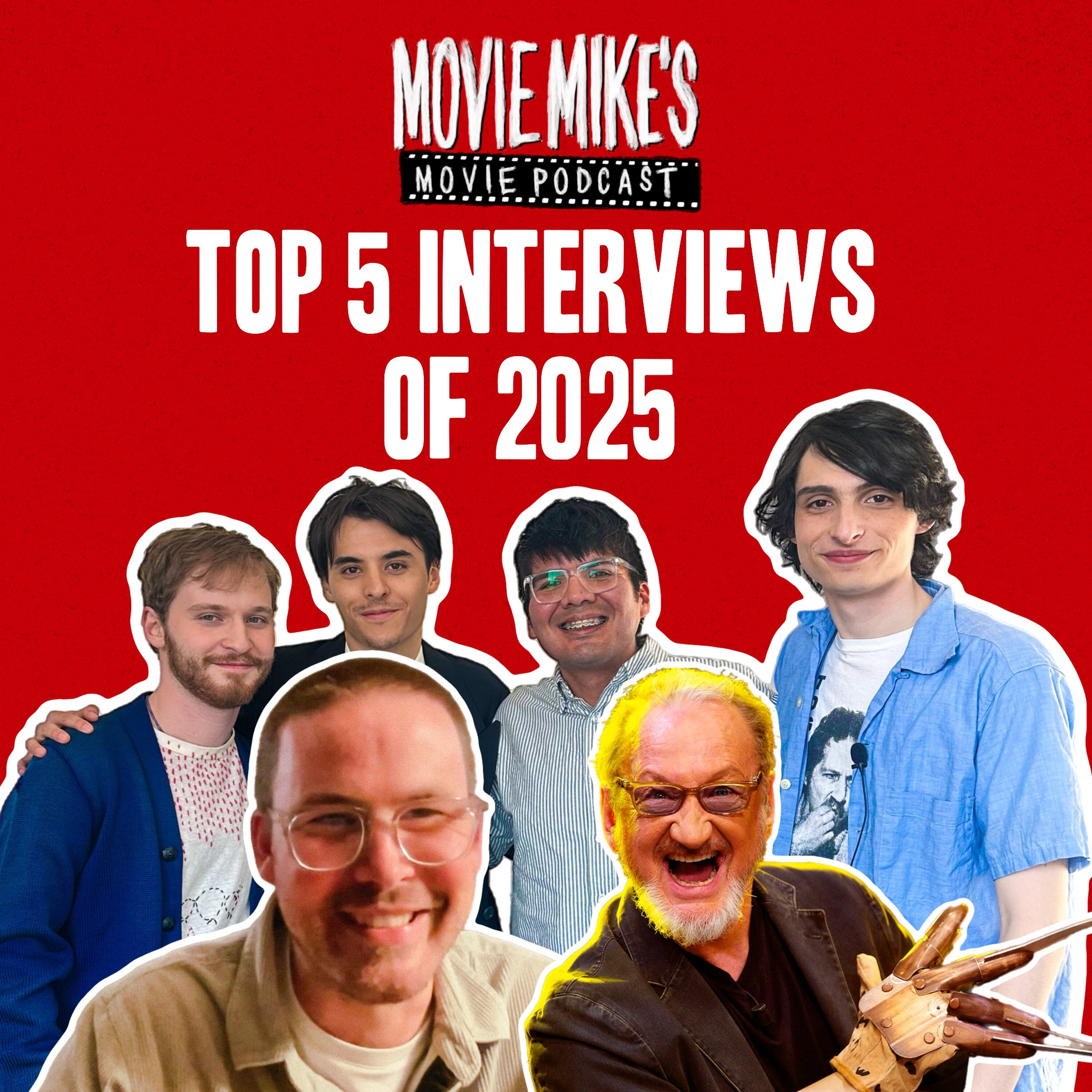
Top 5 Interviews of 2025: Finn Wolfhard of Stranger Things, Weapon’s Director Zach Cregger, Sinner’s Director Ryan Coogler, and more!
It’s been a fun year of conversations, movie making stories and behind-the-scenes secrets! In this special year-end episode, Movie Mike counts down his Top 5 Interviews of 2025 that include everyone from Robert Englund talking about playing Freddy Kruger, Finn Wolfhard from Stranger Things making his debut behind the camera, director Zack Cregger on having one of the biggest movies at the box office this year with Weapons and more!
Watch on YouTube: @MikeDeestro
Follow Mike on TikTok: @mikedeestro
Follow Mike on Instagram: @mikedeestro
Follow Mike on X: @mikedeestro
Follow Mike on Letterboxd: @mikedeestro
Email: MovieMikeD@gmail.com
See omnystudio.com/listener for privacy information.
Available Results
Generated results are saved to the knowledge database for reuse and search.
Extract Knowledge
Pick what you want extracted first. Model, scope, and chapter options appear after a template is selected.
Transcript
00:00:00
Speaker 1: From the dust Trolle Podcast Network. This is movie Mike some movie Podcason.

00:00:06
Speaker 2: Hello, and welcome back to movie Mike's movie podcast. I am your host, Movie Mike. We've done it, folks. The end of another year. Twenty twenty five is in the books. What a year for movies. About to get into my top five interviews of the year. But before we do that, let's look back. It's now been six years of doing this podcast. Started to back December twenty nineteen, and what a way we've come. I remember being so nervous to sit down to record my first episode.

00:00:35
Speaker 3: I did so much prep.

00:00:37
Speaker 2: Probably sounded like I was talking a mile a minute on that first episode. At times I still do that. I was on an interview, speaking of interviews I've done this year. Somebody was like, man, you are talking so fast in this and I don't realize I'm doing it, but I get so excited and so behind the scenes on that. I do a lot of press junkets where I go in and there are a bunch of other people in this zoom waiting room, all waiting in line to go and talk to these people who are probably talking to at least when I do them two hours worth.

00:01:12
Speaker 3: Of people or so.

00:01:13
Speaker 2: So when you get in there, you only have five sometimes, if you're lucky, ten minutes with him, and I'm very appreciative of that time I do get with him, but I know I have to go in. I have to establish a quick who I am and what I want to get out of it is some good stuff for you guys. And when I only have five minutes, I'm like, I got to waste very little time getting this question out and just rocket. But I remember that person being like, man, you are talking so fast, and that flashed me back to when I first started this podcast, where I felt I just needed to get so much information. And I think over the years, if you've been here from the beginning, hopefully you've heard me get better at this. And I think a lot of that is me just caring less as far as being so worried about how people are going to judge me, which I cared a lot about early on. But now I know, if you've been here for this amount of time, you are rocking with me. You're part of the movie crew. So thank you for that. It's been a really interesting six years of doing a podcast. Looking back right before twenty nineteen, I thought, man, movies are gonna be this good forever. That was the last really great year in movies, and then boom twenty twenty everything shut down. And to think I started this podcast right before movies were taken away from us. I still remember that last movie I went to go see March of twenty twenty onward, pretty mid Pixar movie, but that was the last thing I ever experienced, and then had to shift how I did this podcast. So a lot of that growth was for me not having new movies to talk about and learning how to do these movie history episodes. And hopefully you enjoy the format that I really feel works the best because we go past present in future a lot of movie history in that early segment depending on what it is, or we recap all the movies we've seen in the last month, and then we had the as with the movie review and of course the future with the trailer park.

00:03:03
Speaker 3: So hopefully you enjoy that.

00:03:05
Speaker 2: If you think maybe we should change things up a little bit, or some things you want to hear on the podcast, let me know. I always want to know what you want to hear, because that's why I do this show, So hit me up. On any socials or the old school way moviemke d at gmail dot com. But I just wanted to say, because I really mean it to anybody who makes this podcast a part of your week, no matter when you listen, if you let episodes build up and then run through them, or if you go back every single Monday on the feed and hit play, I appreciate you. And I do these interviews because I want to learn more about the things that I talk about every single week, because a lot of it is just my perceptions of things and my feelings on things. But I enjoy actually getting to talk to the people who make this art that we consume. I love talking to directors because I believe they are the next real rock stars that are going to be so essential in the era of movie making that we are going into with all these things with AI and all these companies being fought in this world of uncertainty where I feel like celebrity status isn't what it used to be, that just because you have a big name doesn't mean that movie is going to do well. I think where the industry is really going to evolve is with having visionaries who know how to make a movie that is a spectacle and know how to create something, whether it's a moment, whether it's a story, whether it's a character that people are really going to connect with. I think it takes a great director now to really drive home a great box office hit that is significant and noteworthy. Aside from that, the movies that are going to do well are big animated movies, which if you look at the last few movies this year to earn over a billion dollars, they've all been animated movies.

00:05:01
Speaker 3: So you either have to have.

00:05:02
Speaker 2: A great director, and oftentimes when you look at your favorite movies from the year, it is going to be movies with a really great director. So it's either that or you have an animated movie, which I love as well. But that is why a lot of the times when I do these end of the year episodes, it's conversations with directors. But let's get into the list now. At number five, not a director Robert England aka Freddy Krueger, who I did get to talk to for the first time last year, and I will never pass on an opportunity to talk to Robert England because even though he has been living with this character for decades now, he is still so passionate about it and appreciates everybody who tracks him down on the street to get a selfie with him because they love a Nightmare on Elm Street. And he just talks about these movies still so passionately, which somebody like him could be sick of this and not want to talk about a movie he made back in the eighties. What else can you talk talk about? But every time I've talked to him, he's been so warm and generous with his time. He always gives great insight to the making of those movies. So at number five, I have Robert England ready. Makeup took about four hours each day. I wonder, what did you listen to while you were sitting in the chair? Did you get like music going to hype you up?

00:06:18
Speaker 4: Like?

00:06:18
Speaker 3: What did you do?

00:06:19
Speaker 1: Well?

00:06:19
Speaker 4: You know, when we began the series, I wasn't the star of the series yet. I was just the guy under pounds of foam latex and colostomy bag glue. So I had to surrender to my makeup men. And so that was David Miller in the in the early years, and then Kevin Jaeger, the great Kevin Jeger, and then the KNB crew, who now of course have done you know, have oscars for Chronicles of Narnia and created Walking Dead many other things. So I was sort of I had to suffer a lot of heavy metal in those early days. Those guys raw headbangers, So there was a lot of heavy metal in the makeup trailer.

00:07:02
Speaker 2: Did that help you at all to get into character during that process, like the heavy metal going Is that when you kind of start to like, okay, I'm sinking into this character now, and then you're immediately able to film right after that, or there's some other process that psyching yourself up.

00:07:15
Speaker 4: No, you know, I think that the aggravation of the cold, the cold glue in the morning on my face, and the time you know, spent in the makeup chair and getting poked with those old makeup brushes that had become kind of crusty over the weeks, you know, of use. Those guys were cheap skates, you know, they would get to like pull a tooth to get a new brush. So when they touched me up, they I was getting poked a lot, and you know you kind of feel that, especially around the eyes. So I wasn't in the best of mood, and so that would make me slightly profane, and I would tease those guys or threaten to spit in their coffee, things like that. And I could see myself all the time in the mirror because we were using a big makeup mirror, and I would see myself in the mirror, and sometimes I would slip into a voice that I would eventually settle on as Freddy's voice, you know, you know.

00:08:16
Speaker 3: Like damn it, Kevin or or David, get that brush.

00:08:19
Speaker 4: Out of my face. And it just worked, and I knew that that I could live in that voice. You have to remember back in those days and on all the films, I didn't have a lot of dialogue every day, maybe one or two lines a day until later on. You know, Freddie got more verbose as the as the franchise went on, and I did some narration in parts in Freddie versus Jason. But that's sort of how I found Freddy in the makeup chair, you know. And then that began back with David Miller at his studio out in the San Fernando Valley on the original one. You know, I really sort of found the voice there in those hours of experimenting with David Miller and creating the makeup.

00:09:00
Speaker 2: Looking back on the movies, I realized how physical the role of Freddy was. Was that kind of surprising to you how physical it actually was to become Freddy Krueger.

00:09:10
Speaker 4: Well, you know, I was an athlete, you know, I surfed all my life. I surfed it well into my sixties. And I'd been a gymnast in middle school, and I'd been on the swimming team, you know, in high school and lettered, and so i was an athletic actor and I'd used a lot of those skills in the theater as well. But with Freddie, what was fun was when I had that makeup on, it sort of made me more or less inhibited, and I was able to kind of dance him a little more and move move him differently than I would move as Robert England without makeup. I wasn't afraid to explore the physicality of the care the stunts. I just did as many of them as I could. That's just sort of a you know, a misguided actors macho that we all succumb to on the set, you know, where we try to do as much as we can. And you know, when when I when there were big fire stunts. That's not me. I did some fire stunts, but the big ones isn't me. And when you see Freddie flying through the air on fire and things like that, that's not me. But you know, you know I did a lot of my stuff, you know, I you know I did, and you know, everything from fire stunts to underwater stuff. So uh, it was fun, you know, to have a little bit of that legacy that I could bring up, you know, and during happy hours somewhere for bragging Wace.

00:10:44
Speaker 3: But thank you so much for the time, Robert. This is awesome, all right, thank you.

00:10:47
Speaker 1: I'm by Mike.

00:10:49
Speaker 3: At number four.

00:10:50
Speaker 2: I have the cast of Hell of a Summer that include Fin wolf Hard, who you would know from Strangers things, which at the time of recording this, I cannot wait until those episodes drop. Maybe I've already seen it this point when you're hearing this, and oh man, I cannot wait for the ending of that. He co directed it with Billy Burke, who was also in the movie, and Fred Heckinger is in it, who was also in gladyat or two earlier this year sat down with them at the Bell Court Theater here in Nashville to talk about how they made this movie. It is available to watch on Hulu, so let's get into it now. The cast of Hell of a Summer. I think the thing to me that I really stuck out about this movie that I don't see a whole lot now is a good quotable movie. Like I found myself thinking, like I started thinking of whenever your character is kind of like sad that he's not the one being killed because he's like, no, it's probably just killing at random, right, So how did that go? From writing everything and then seeing it translate on screen? Like how is this still funny? That's a good question, goes It's still funny because you write it and then you're totally directing it, and then you're seeing all the edits, and then you're thinking, like now that people are seeing it, like how can you think like is this even funny tony to us everybody else?

00:12:06
Speaker 5: I mean, it's a good question, and you just have to trust that it was funny to you. And like obviously, when you see a joke a million times, it doesn't make you laugh every single time. So sometimes you have that instinct like can I push this further? Do I try to make this funny? To me every time I'm watching it. But in my opinion, it's kind of a dangerous game to be playing, where it's like, if this really made us laugh as we're writing it, and we feel like this is the most sort of most grounded version of this performance, the read of this line that we think worked best, we have to trust it. And then as we screen it for people and get other eyes on it, it's really helpful to see sort of what they're laughing at. And I'd say more often than not, the stuff that we thought was the funniest, like our instincts were right, So I don't know, it's funny, Like I try not even to think about it as funny all the time.

00:12:50
Speaker 6: Yeah, and the edit, I mean yeah, And then in the production side of it, we were just talking about that the other night, where you this the script that these is real. It was so it was so funny and in such a grounded, character driven way, and there was you know, just every scene is quite intentional in that sense, and there is a thing once you start doing the scenes you kind of have to everyone who's in it is also so funny, and I feel like we would play and explore, but at the end of the day, Like the movie ends up being kind of like ninety five percent or something of the of the actual script from the get go. So there is a sort of trust element that Billy's talking about that I think maybe you're asking about in terms of if we found this funny at the outset, like it, you know, it won't always be the shiny thing, but focus on it, Yeah, because it really is. It is the intentional thing here.

00:13:46
Speaker 2: I love what you said about the movie being sell character driven, because I think that's also what set out to me, is like I could buy into everybody's personalities and I know how Jason is going to react to something because he's a guy who loves his job. Like that's kind of what I took away from this, Like this is somebody who just wants to do his job to the best of visibility, and that is what he's kind of here to do. And then you have your character Bobby, who's just like, I gotta be good looking to these guys. So what's the how do you write really well rounded characters?

00:14:14
Speaker 5: You write every character is if you're gonna play them in the movie.

00:14:18
Speaker 7: Yeah, exactly.

00:14:18
Speaker 3: So is this movie a lot of like what you guys are like in real life a little bit.

00:14:22
Speaker 8: Yeah.

00:14:23
Speaker 5: I like to think that we're a little more self aware than our characters, and that's sort of why we're able to make fun of certain aspects of our personality. But I mean there's definitely I would say that Finn and I when we were just sort of joking around, would fall into these caricatures of ourselves, which i'd say sort of became Bobby and Chris, and like it's a send up of our dynamic and sort of our own personal I don't know, I don't want to say like insecurities or something, but like there's elements of Bobby for sure that come from my own life that I just find funny and like I'm not fully committed to, but the fact that I can very easily think like that is concerning to me. Like it's too little, too easy to fall into that sort of mindset. But then I'm not even actually joking about the like writing every character, like writing every characters if you'd play it, And I think that's thing helpful about being an actor and a writer. As we were writing versions of the script, it's like we would do a pass with each character in mind, being like yeah, I were to be sent this character, what would excite me most about playing this part? What would I want to see? And then we'd try to add that so every character sort of felt fleshed out and had something real and sort of had like a life behind them, even if they're a character who gets killed off very quickly. So it was kind of like a funny, soft way of being like.

00:15:37
Speaker 9: Yeah, I think it's also just like, you know, just thinking about you know that there's a lot of young actors out there, and ninety nine percent of stuff that gets sent out just like I don't know, just doesn't feel right or you know, it doesn't feel like it has you know that the character that's you auditioned for maybe had everything that you want or you know, the arc that you want. And it was one of those things where we were kind of approaching it from an actor's perspective.

00:16:06
Speaker 2: And then coming from the horror element of the movie, which I love. What were some of those movies that you went back and studied and thought, I want to take a little from this movie. I want to take a little from that movie and put it into this.

00:16:19
Speaker 5: We watched the thing, We watched a lot of the John Carpenter films, just because of the blocking of those films in the way that he sort of is able to block and represent group dynamics and like the thing specifically this idea of group that sort of splintering, splintering and turning against each other. So that was a reference the First Halloween obviously, but a lot, like most of our sort of stylistic references were from comedy movies or from movies that that weren't in the horror space. Do you have any that you're.

00:16:49
Speaker 9: Yeah, I mean, you know, like Sean of the Dead was a huge one that we looked at. And then you know, as far as even just like visual visual stuff, I mean we looked a lot about you know.

00:16:58
Speaker 1: At like uh uh the Howling or.

00:17:02
Speaker 9: Like uh like Dean Kundy's stuff. It was like the DP I guess of the eighties and even just like even though nut like it is nothing like any that's like we would just watch like movies that we loved and like grew up watching and like loved the look of and you know, for whatever reason, and this like I watched Indiana Jones in the Last Crusade like five times, like in the year that we wrote this and it has nothing to do with the movie in the slightest, but like, I don't know, there's some kind of adventure in that movie that I just love so much, and and in that era as well, like late eighties, early nineties, and then you know, yeah Scream obviously, so like a lot of different influences coming from kind of all angles. A lot of like Coen Brothers stuff too, raising Arizona One too. But then yeah, like even with movies like that, there's they're like visually they're so energetic with Debt or Seanda the Dead, and we didn't want that this movie to feel like that. So it was like, what can we chase styles these without feeling like we're doing those movies because it didn't feel right for the script.

00:18:05
Speaker 2: But yeah, Fred, what did you love most about playing Jason? Because he's a character who's so endearing you root for him the entire time, and I feel like you really brought that role.

00:18:13
Speaker 3: Tolive, what did you love about that role?

00:18:15
Speaker 6: I really loved how two wrote him. I loved that in this story, every single character kind of once the killing starts in the movie, they don't like just magically transform into different heroic people. They can only react and figure out their their issues by being themselves and their most kind of eccentric and uh sometimes stubborn ways. Uh And so I yeah, I just I think some like you play people that you find also genuinely inspiring. Like he's someone who is uh, he's like gets he's in on the he gets that people. He gets that he can be a joke to people, but also is funny himself and also not a joke to himself at the same time. And I felt that those things all together you meant something to me and h and felt, Yeah, resonent of a lot of people I know and how I feel sometimes. So I really liked that call. I liked that he was like in on the joke but also not at the same time. I thought that that was like a yeah, there's there's so there's so many qualities to him that I really admire and loved playing.

00:19:40
Speaker 2: I have one final question for you, guys, what did it feel whenever you first started to have success, Because Finn, I remember you when you were in pop music videos, like I'm huge into punk rock, Canadian punk rock, and I remember seeing you in those way back then.

00:19:53
Speaker 3: Like, what does it feel when you just.

00:19:54
Speaker 2: Start like getting those first roles, getting those first projects, and you just feel like this actually might be a reality my dream.

00:20:00
Speaker 9: Yeah, we got to talk about Canadian punk rock after this, but I would say, I mean that's kind of I was just happy doing that, like even as like a little kid, being able to be a part of these cool indie projects like music videos for cool bands that I loved and student films, and like I just loved doing it and being on set and it just kind of snowballed and all those sets inspired me to direct and want to direct. And I feel like, you know, we made this film all together and specifically when me and Billy started writing it, and like that feeling. Even though we made it, you know, with with like a bigger crew and it wasn't like a student film, it still had that energy, Like it still had that sort of vibe that I could feel when I was that young on set and just looking at all these amazing kind of young artists like starting their careers and me, that's what I'm always chasing. And sometimes you find it in every I feel like you find it in every set in some way. So but it was definitely felt great, Like I loved doing all those videos.

00:21:12
Speaker 2: Well, this has been great. It's also confirmed my feeling that you guys are all like real friends in real life, because that comes across in the movie. So I hope everybody goes to see it and can feel that as well.

00:21:21
Speaker 3: Thanks so much, Thanks for the time, guys.

00:21:27
Speaker 2: At number three, I had the cast of The Ballot of Wallace Island, which I believe is one of the most underrated movies of the year. And I'm not just saying that because they did this interview with me, but Tom Bazden and Tim Key are so great together. And the movie is about Tim Key's character, who is a guy who wins the lottery uses his money to reunite his favorite folk band to come out to his island and play a private concert for just him, nobody else, just him and Carrie Mulligan is the other member of the indie folk duo. They haven't talked in a really long time, and this is them reuniting to make a little bit of money. There's a lot of drama, there's some heartfelt moments, there's some comedic moments, there's music.

00:22:07
Speaker 3: It has all the things that I look for.

00:22:10
Speaker 2: In a small independent picture that felt like it was just made to put a smile on your face and maybe a couple of tears depending on your level of emotion. But let's get into this one. The cast of The Ballad of Wallace Island.

00:22:24
Speaker 3: Does it feel.

00:22:25
Speaker 2: Weird to you guys that I feel like I know each of you after watching this movie?

00:22:29
Speaker 10: I think that's terrible because my character is quite specific.

00:22:33
Speaker 2: How much how much of yourself did you put into each of your characters at all?

00:22:40
Speaker 10: Well, I'm Zara, but I think.

00:22:44
Speaker 11: There's a huge amount of Tim and Charles and there's a fair bit of me and how I would say.

00:22:50
Speaker 10: He was asked this last night and I thought we haven't talked about this, but that was an incredible insight when he said that his character is seventeen year old himself and my character is his mother at the time. And I think it's I know his mother, love his mother's pieces, but yeah, I can see there's a lot of his mother in my character.

00:23:14
Speaker 2: You guys both have a background in comedy, which I have toured doing stand up. The thing about doing stand up is you get an immediate reaction. You know, if a joke is good or not based on how the audience responds. When you put out a movie.

00:23:26
Speaker 3: What is that like?

00:23:26
Speaker 2: Now, when the movie's coming out, people are starting to watch it, you're starting to hear rumblings of reviews. How is that different from that instant comedy approach.

00:23:35
Speaker 10: It's totally different and kind of mind blowing. We did the first time we saw the film was in sun Dance, and I think with any kind of new stand up show, it just starts as a tiny acorn in front of thirty or forty people and gradually grows, and you gradually work out what works and what doesn't and improve it and get it better and better. By the end of it, you might be playing to quite a big room, but with complete assurance that everything sort of works. Whereas with this we didn't have any screenings at all. We didn't know what exactly we had. We knew we liked it, but we didn't know, you know, exactly how much would sort of grow to be more affectionate of our own movie. It's the first time we saw it was in front of fourteen hundred people, and it's kind of petrifying because you know, if you could be city, it could be a very long hour and a half. You know you're waiting in that first ninety seconds to see whether this movie can create any kind of a connection with an audience. You hope it will, but yeah, that is the difference. There's no you get everything all at once, right at the end, when all of the work has been done and you're just sort of praying that people will like it.

00:24:42
Speaker 2: And how does that feel watching yourself back for the first time at Sunday and seeing like, oh, like that's my performance. I'm seeing people reacting here like, are is this emotion going to come across?

00:24:52
Speaker 11: I mean it's yeah, it's really exciting, and I mean I just found it very moving when I was watching it.

00:24:57
Speaker 7: Sunnames. I don't like watching stuff that I men very much.

00:25:03
Speaker 10: If you see his body of work, isn't that weird?

00:25:06
Speaker 1: Though?

00:25:06
Speaker 2: In the creative space where it almost feels weird to take in your own work, something you work so hard on well, and you're like, if I sit around listening to my own jokes or watching my own movies, it feels like I'm self absorbed here.

00:25:17
Speaker 1: But it's like I'm proud of it.

00:25:18
Speaker 7: But I don't know if it's self absorption.

00:25:19
Speaker 11: As much as you just want to sort of you just want to focus on the thing that you're working on. In a way, and once you've done it and you've finished it, it's lovely to talk about it, and it's lovely to sort of see people enjoying it. But in a way, it can be quite torturous to watch stuff and go, oh, that could have been a bit better, or I could have done that there, or I could have you know. And I think that's what's funny about when we watch the film now, because we've both come from comedy, I think it's actually a really good thing that we didn't watch it with audiences at a point where we had the chance to go back into the edit, because I think we'd have put some jokes back in.

00:25:49
Speaker 7: It's the truth.

00:25:50
Speaker 11: I think when you watch it with an audience and they start laughing, you go, oh, they would have loved that joke, and they would have loved that joke that we can't, and you forget that Actually, what you're doing is you're crafting a store that's got to be sort of coherent, and it's got to have a certain pace and rhythm to it. And if you start cramming it with jokes, because you can tell that they audiers like certain jokes you then you unbalanced the whole thing. So actually, I'm very glad that we didn't get the chance to fiddle with the film after people had seen it.

00:26:17
Speaker 10: We might have been quite greedy and self sabotaging. But our director is very he's got a very good eye for it and a very good he's more, he's wiser than us and sort of knows that actually, if we get to a certain point in the movie by you know, eighteen minutes, then that would just be much much better for the movie. And so it doesn't help if us two were saying it'd be great to have a decent joke about a vacuum cleaner after five minutes.

00:26:43
Speaker 2: So going in like the filming process, talking about like, oh we would have changed some things. Was everything that's in the movie exactly what was on the page?

00:26:52
Speaker 10: No?

00:26:52
Speaker 11: No, But but you know, a fair bit of it. I think there's obviously, you know, you can tell watching it. I think that there is a fair of improv particularly in that first act between Herb and Charles. You know, there's scenes where they go quite loose and they and we and we sort of play around a bit. But a lot of it is pretty you know, it's pretty tightly written, and we wanted to kind of we wanted to be able to sort of drive the story on at certain times in the film and didn't want it to feel loose at all.

00:27:21
Speaker 7: So you know, in the edit you're.

00:27:23
Speaker 11: Kind of trying to calibrate when when you want little periods that feel quite meandering and feel quite characterful, but nothing's much is happening, and periods when suddenly you go through the gears and a lot happens in the space of five or ten minutes.

00:27:36
Speaker 10: I'd say most of the improv is. A lot of the improv is instead of a little interaction that's two lines long, those lines might just get chopped into five bits and just happen really really quickly, like more and more, like what a conversation would be like. So you get I think, yeah, if it was written like that, it would be so weird on the page. I think, so we know exactly what we want to say, and then after we've done it a couple of takes, it then becomes a little bit more detailed.

00:28:02
Speaker 7: I think that's true.

00:28:03
Speaker 11: I think I think it's it's like a blueprint for us that we stick to pretty closely.

00:28:07
Speaker 7: But we couldn't.

00:28:09
Speaker 11: Other actors couldn't do it because it's not like we say the exact words as they're written, because it just wouldn't kind of feel right.

00:28:15
Speaker 10: But then when the other actors come in, they can do it because that was really good. It's not like Carry mulligan is kind of going, how on earth are you doing this?

00:28:26
Speaker 3: That brings me to my next question.

00:28:28
Speaker 2: With the scenes with Carrie and you figuring out the songs, you know, rewriting after all this time, how much of that was actually you two learning those songs for the first time.

00:28:40
Speaker 7: I mean, you're very perceptive, like.

00:28:44
Speaker 10: It hadn't you prepared for that scene?

00:28:47
Speaker 7: We hadn't. We hadn't had a lot of time.

00:28:50
Speaker 11: The mad thing was that that Carrie turned up the evening before she started shooting, and she brought her baby, who was a few weeks old, maybe seven eight weeks on, and you know, and as soon as she was there, she threw herself into it, and we you know, was very happy to kind of talk through character and rehearse some stuff and try out the songs and all these things. But we didn't have a lot of time, and we just had to kind of go with our gut a little bit and what felt right and just you know, as you say, hope that you can organically create an atmosphere as two actors that feels very very close to what the two characters are doing. And I think I think we did do that. But it's it's a risk, you know, you don't quite know what you're going to get. But that's that is what's sort of lovely about it, I think for us, and was particularly nice during the shooting was it was it was a genuine surprise to all of the crew and to Tim, like when we started playing songs in front of him, You've never heard us play songs before.

00:29:49
Speaker 10: No, that's so there's that's that first time you see my character listening to their music. That's also the first time my nature's character my character in real life.

00:30:00
Speaker 12: Yeah, yeah, I.

00:30:04
Speaker 10: Heard it as well.

00:30:05
Speaker 2: That is the moment that hit me the most emotionally seeing you react to your love. Yeah, in the in the first moment when you hear it, and then also at the concert performance, where where do you go to there? Because I could feel the backstory of your character come out of what's what he's been through. But where do you go to as an actor to get that performance.

00:30:23
Speaker 10: Yeah, well, I don't know. I mean, actually that first time, well, where I see them around the dinner table, I think there's a lot going on. I feel like for me and Tom that the we are we are quite kind of passionate about this project. It's taken a long time to come to fruition. I think all of that is going into it. So when they're when they're singing, I loved hearing them sing. But also there's a slight pinch yourself moment that that you're the movie is being made and that Carry mulligan is in front of you singing with your pal and the music's so nice, And I think it was a real moment for all of us where the crew were really invested. We were shooting it really quickly, probably only did that take about that scene about two or three times. And Griff the director is like behind the camera just you can see that he's kind of like welling up. It's kind of a moment for all of us. So, yeah, there wasn't really a great deal of acting. It's just sort of this is It was quite a moving moment. I wasn't I wasn't I wasn't drawing on other times where you know, beloved folk duos had sung to me, and I was just like, this is insane that this is happening. So it kind of came. I think if it was hard to draw emotion, I think I'd struggle. It sort of came quite naturally.

00:31:38
Speaker 2: Can you guys speak on that a little bit, because I don't think people realize not only how hard it is to get a movie greenlit, how hard it is to get a movie made, but to get a movie in theaters, and to be here sitting here today talking about that, like hearing you reflecting on that moment on the set, which is huge. Yeah, Like how important is it to support a movie like this?

00:31:57
Speaker 1: Oh?

00:31:57
Speaker 7: Well, I think it's it's vitally important.

00:31:59
Speaker 11: And I think it's been so lovely for us to go to screenings this last week and see these full cinemas of people just really enjoying it but also genuinely, you know, surprised by this story that they knew nothing about, and going into a cinema completely blind, you know, not seeing a reboot or a sequel or something that they kind of know what it is. After five minutes, they're seeing a completely new story and and just going with it, just being taken up by it and being carried along by the other people in the room. And there's something that's just just magical about that. And you know, I'm quite greedy for it. I think, having seen it, you know, experienced it the last few days, I just feel like I just I just really want to want everyone to see it that way.

00:32:41
Speaker 10: Yeah, yeah, I think I think we don't take it for granted. And I think, you know, we do lots of different things in lots of different areas live and TV, and I think you sort of know when you're doing this one that we've kind of something is connecting. And I feel very lucky that, I mean, this could not see the light of day. We could make a Obviously, the first thing is no one could have filmed it because no one likes the script. Once it's filmed, there's a chance it's a movie which not many people see. So to see it playing in a cinema is kind of I don't think we take it for granted. No, I don't think we do take.

00:33:13
Speaker 7: It for grant.

00:33:13
Speaker 10: Of course, you know, it may never happen again for us.

00:33:16
Speaker 2: Something else that stuck out was the wardrobe. I feel like wardrobe gets overlock, like nobody gives love to the.

00:33:22
Speaker 3: Wardrobe, But for actors, does that put.

00:33:25
Speaker 2: You in the mindset of your character of like when you put on the clothes they're wearing, the kind of transform into them.

00:33:31
Speaker 7: Yeah.

00:33:31
Speaker 10: The first time we did it was with the short film, which we've seen like several times over the years, and yeah, that's definitely my dad's cardigan where I must have gone home for the weekend right before shooting and just raided his wardrobe basically, So it kind of feels like, yeah, sort of sentimental watching that one and this one. They had seen it the wardrobe department that short film, and then they just created Yeah beautiful. I mean, weirdly, my child's costume is so herbs costume for the majority of the film because he gets wet and has to go into my clothes, So it's kind of a sea of these yeah Charles Heath clothes and it looks Yeah, I agree when you Yeah, they've done a really great job on the costume.

00:34:15
Speaker 7: Yeah. I think you're right, though.

00:34:16
Speaker 11: I think that people often focus on costume when it's like sci fi or something, or like Wicked or something where it's just like completely otherworldly kind of costume as opposed to character for costume, which is just just clothes that exists in the world, but they're just selected in such a way they tell you so much about the character. Yeah, and I love that about particularly Charles's costume, and it's the kind of you know, the cardigans with the whale embroidered into.

00:34:41
Speaker 2: Say, I saw your green cardigan, I'm like, I gotta find the like I want to wear that.

00:34:45
Speaker 10: Yeah, that first the first shot of that, when you see Charles for the first time facing away from camera putting the record on. That's a pretty spectacular Cardigan's a whale on the back.

00:34:55
Speaker 2: Yeah.

00:34:56
Speaker 10: There was talk at some point of that being much.

00:34:59
Speaker 7: So I'll look that exact one, or getting loads of them.

00:35:04
Speaker 10: I mean, merch can't just be getting loads of them, is right. The bedrock of merchandies.

00:35:12
Speaker 2: Was Maguire and Mortimer, based on any real duo, because I have an affinity for anything twenty ten's like that was when I was in college. That's like the music I go to when I need to feel comfort. Was it based on the specific being?

00:35:24
Speaker 11: I mean, I'm the same, I'm sort of very much you know, sometimes in my head I still think it's kind of twenty ten, and I forget in terms of a lot of the music that I was sort of you know, it's kind of glued to my brain.

00:35:35
Speaker 7: It's sort of from that period.

00:35:37
Speaker 11: No specific bands, I think, but people like maybe Gillian Watch and Dave all into that kind of like Double Act and you know, I don't know, really a little bit of David Crosbian and Roger McGuinn kind of like you know, those kind of groups where there was a sort of falling out Buckingham Nick's a little bit, you know what I mean, like that kind of bands who were together and then fell fell out again. But yeah, in terms of the kind of sound, certainly sort of that I don't know, sort of Ryan Adams kind of like twenty ten, so period that kind of imp must be quite a lot of things.

00:36:12
Speaker 2: Well, I love the movie. I hope everybody goes to watch it. I really appreciate the time. It's been really great hanging out with you guys.

00:36:18
Speaker 3: Thanks so much.

00:36:19
Speaker 10: Thank you.

00:36:20
Speaker 2: A number two I have director Greg Hillman and retired FBI agent Walter Lamar. They were a part of a Netflix documentary that came out earlier this year called Oklahoma City bombing, American terror And before this, I hadn't really talked to a lot of people who made and were a part of a documentary, just because I focus on stories that are not real. But I thought maybe this could be something that people could connect with, and it ended up being one of my favorite conversations I've ever had. And it was so much different to handle because normally, when I talk to people about their work, it's all fictional things. You can ask them anything about any character or any ideas behind why you put this in. But when it comes to documentary films, it is so much different because you were talking with people who were actually involved and in this case, a really traumatic event. And the reason this documentary came out is because it was the thirtieth anniversary of the nineteen ninety five bombing of the building in Oklahoma City, which was one of the deadliest acts of domestic terrorism in United States history, and Walter was a part of that. He was a part of the rescue and Greg did an amazing job of highlighting the story, highlighting the heroes, not glorifying the villain, and getting that real human reaction and being very cautious of the fact that you were talking to people who witnessed probably the worst things ever, and for a lot of these people, including Walter, was the worst day of their life. And I think I had to go about this interview a little bit differently, knowing that some of these things may be hard for him to talk about. So even gets emotional in this interview. If you've not seen it on Netflix, maybe missed it earlier this year, but it is called Oklahoma City Bombing, American Terror.

00:38:08
Speaker 3: Let's get into this interview.

00:38:10
Speaker 2: I was completely moved by the documentary. And I was born in Texas in nineteen ninety one, so I really don't remember a whole lot as a kid. For me, watching this documentary was learning all the details in full, from beginning to end, and it was really powerful to me.

00:38:27
Speaker 3: So Greg, I'll start with you, why.

00:38:30
Speaker 2: Do you think is so important right now, about thirty years after it for people to watch this documentary and learn about it.

00:38:37
Speaker 12: You know, I'm gonna throw to what was there, when it was when it happened. He was an FBI agent in Oklahoma City, and he did some extraordinary and heroic things that day, and well, yeah, go ahead.

00:38:50
Speaker 13: Well thanks Greg. The timing of this documentary is important, and it's an important because of the messages that the documentary conveys a powerful graphic reminder of the consequence of hate. And when you think about those that are consumed by hate, they lose trust in everything. They have no trust in anything or anybody. And when you have no trust, the enemy is around every corner. So we have to be very mindful of that and paying attention to the messages of this documentary that the consequence of hate, the importance of having trust, right, But the more important message is the power of coming together. And Mike that you mentioned having previewed the documentary, so you know exactly what.

00:39:40
Speaker 1: I'm talking about.

00:39:41
Speaker 13: I think that message was loud and clear throughout the documentary. I think Gregan has teamed it an amazing job conveying that all important message.

00:39:51
Speaker 2: I think that is something I take away from watching it is sometimes I struggle with anything that is true crime or something focused on a situation when are lost. I find it hard to view that as entertainment, and it's hard for me to say that this documentary was entertaining. But it's so powerful in a way that it's not the subject matter that I'm entertained by it's the fact that there was so much humanity that happened that day, and so much that I saw how people reacted to it. That was really inspiring for me to see.

00:40:19
Speaker 12: Well, it makes me happy to hear, you know. I think it's certainly a dramatic story, you know, and there are thousands of ways you can tell the story because unfortunately, so many people were impacted by it, you know. So our job was to find a handful of people who were hopefully involved in the kind of the moments that were most intense over the next seventy two hours, and we were really fortunate to do that. You know, we found several people who were right in the heart of what was happening all through that next three days. Was one of those guys, you know. And what's amazing to me about a lot of the people that we met and talked to, And this thing is, you know, you could understand most people just running away from a building that's just blown up in the middle of your city, in the heartland of America, you know, but there's so many people in Oklahoma City that day who did exactly the opposite. They turned around and they ran right to the building. You know, there was a nurse, Rebecca Anderson, thirty seven year old woman who ran into the building to try to help people, and she actually wound up dying because it was so dangerous in there. Something fell and hit her. You know, the whole building was just in shambles that nobody knew if it was going.

00:41:24
Speaker 1: To fall over.

00:41:24
Speaker 12: You know, as Walla says in the documentary, he doesn't know if he's going to see his kids again when he goes into that building.

00:41:29
Speaker 1: To try to help people.

00:41:30
Speaker 12: All these people kind of discovered this hero inside them that they may not have known was there unless they'd face something like this. And I found it really inspiring to hear all of those stories.

00:41:42
Speaker 1: Walder.

00:41:42
Speaker 2: Can you talk about that because in the documentary you say that you saw it on TV, you saw the smoke, and then immediately went into action. Can you take us back to that day of you watching it first on TV before you went there, you know.

00:41:54
Speaker 13: Mike, and you know, I'm sure that you recognize that that folks like myself that were there that day that have been impacted by this. Uh. And I've thought about it because when things like this when we are there. I was at the branch to video and stand off at Waco, Texas to day that the compound burnt down. I was there, surrounded by the smell of burnt flesh, seeing skeletal remains that were just hours before were human beings and now they're so those things are all put away, and they're put away in a box. Try to put them back here so you can continue to function, You can continue to work, you can continue to do your job. So being interviewed for the documentary, that box had to be taken out in every detail had to be talked about. So it was it was pretty tough. And even setting here today with you, I have to tell you and it's and it's kind of a tough thing to say. I'm onto Virgitiers even talking about it right now and having just previewed the documentary and seeing stuff that that day. You know, when we're looking back at that footage from that day that Greg and his team pulled together and brought there to take us back to that day, I was right there and some of the things that I saw in that footage, my mind focused down and blocked out so that I was able to continue to do what I had to do. And that was to go in the building and looking for survivors. But that morning, I was fifteen miles away and I felt and heard to blast. I went in immediately into the house. And you're much too young to remember these days. But when we had sonic booms and they were pretty frequent and prevalent, I thought maybe it was a sonic boom. So I asked my wife, I said, did you hear that? She said, I did. I felt it and heard it, turned on TV, saw the plume of smoke, got my car and headed downtown. But it's only dawned on me just within the past couple of days. When I left the house that morning, my entire life was going to change that day. And when you try to try to quantify what that really means, I mean, I continue to function, I continue to live, I continue to be a husband and father and so on, and do my job at the FBI. But there there was there was change and that and and I thought about that. When I went back home at four o'clock in the morning the next morning, I realized what that that that my life had been changed, just like all the rest of the people that were there that day, every person that was there, every person that was impacted by this, and now even the people that will see this documentary, it will change them in some way.

00:44:51
Speaker 2: I really appreciate you being so vulnerable there. I can hear it in your voice, I can see it in your face, and I think that was really what I learned about your story by watching this documentary was the bravery you had that day. I can only imagine how that is looking back, even just have memories of it, but having to see the actual footage from that day, I imagine that's super powerful.

00:45:10
Speaker 3: So I really appreciate you sharing that with me.

00:45:12
Speaker 12: It's interesting because it's not just bravery back then, but it's also the bravery that all the people that we talked to in the documentary had to come and sit down with us. Yeah, well, just describe. You've got to go back into that moment. You got to open it up and you know, re experience it. And some of the people that we talked to, like doctor Carl Spengler, who was ann emergency room resident who ran right to the building right after it happened, and you know Renee More who lost her six month old baby in the building, they never really talked much about it to anybody in the media, you know, and so it was really a gift for them to like sit down with us and go back to those moments and share that with us. And yeah, it's incredible to watch people do that.

00:45:49
Speaker 2: Greg, how do you manage that as a filmmaker of wanting to do this story justice but also being respectful to everybody involved, because, like you said, some people just don't want to speak about these things or go back and remember some of this stuff.

00:46:03
Speaker 12: And we talked, you know, we definitely talked to folks in the build up to shooting who had amazing stories to tell but didn't want to go on Cameron do that and I completely get that, you know, we totally respect that. And even when people sat down with us, my job is to, especially in a thing like this, is to just help them tell their story the way they want to, you know. And other than that, I'm not pushing. I'm not trying to get them to tell me something in a more dramatic way. I'm not trying to get them to share something that they don't want to share. I think it's just important to let people tell you their story.

00:46:39
Speaker 2: Walter, I'm curious at what age did you decide that you wanted to get into law enforcement. And what age did you know that you wanted to eventually be in the FBI.

00:46:48
Speaker 13: You know, Well, I'm an American Indian, I'm Blackfeet and witch Ta, so we don't have an Indian country. We don't have a lot of role models that are FBI agents. So we don't have Uncle Ben who's an FBI agent, Aunt Susie who's an FBI agent, somebody in our community who is. So that thought had never even really entered my mind. My mother's father was in law enforcement. My dad was in law enforcement for a period of time. And I was a school teacher on the Blackfeet Reservation, teaching high school shop and I went to a conference and there were two Native FBI agents there and they said, hey, have you ever thought about this? Well? I hadn't. Well you should, and I did. And it's kind of a kind of a long twisted story. But I'm at the FBI academy and I have a total, total, and complete lack of confidence because I'm a high school shop teacher, Native American. The rest of my class are attorneys, and one guy's a rocket scientist and on and on, and I felt so small in that classroom. But once I got through the FBI academy and I was at my first office, I realized that it was the job that I was meant for, and it was a job that I was made for. I think when Greg mentioned that the bravery and such, well, it's it's not. I guess there is a certain amount of that that's in there, but it's about doing your job. You know what your job is to do. You go and you do your job, and you don't think about it being an act of bravery or anything else. You just go do what you're supposed to do. And I feel like that FBI job was what I was supposed to do. And one thing that I will say, and I've mentioned this to Mike, having gone through these interviews now thirty years later in my seventies, so you start looking and reflecting on things a bit differently. But one of the things, and I think I'm probably absolutely not alone in this, but and Mike, you mentioned it on the very front end when you talked about the kind of the dichotomy here of entertainment and information that it's And so I came to the realization that there is an inner conflict and there has been for thirty years since the bombing, and that conflict comes with the fact that you are not able to tell yourself that you did good. It's hard to pat yourself on the back and say I'm proud of the person I was that day because of exactly what you mentioned, the tragedy that's involved in that, the things that we all saw that day, the things that we all had to do that day, and to be able to say good job, it just hasn't been able to come. So, you know, and I'll thank Gregg and the rest of the team the way they did work us through the interviews, how we were allowed space and place in those interviews, and then subsequent to interviews, that realization finally came to me. And that's something that I'm going to work on. As silly as it sounds, but to be able to just say to myself, you know, you did good.

00:49:50
Speaker 2: Well, it sounds like it's hard for you to take credit for some of your efforts. And as you see me standing or sitting in this studio right now, you might see I'm a big superhero fan and when I think of the greatest superheroes, the greatest superheroes don't do the job because they need it. They do it because the people need them. And that is what I see in you.

00:50:07
Speaker 3: Alter.

00:50:07
Speaker 2: You have something inside of you that wants to help other people. And you're doing it not because you want to do it to be praise or renowned. You do it because I feel like there's something inside of you that this is. I know this is the good thing that I need to do and I need to help people. So just know that I just by talking to you watching in this documentary, I can feel that, and I have just met you and been talking to you, and I feel like super proud for you.

00:50:34
Speaker 10: Right.

00:50:34
Speaker 13: I'll also say that, and Greg dis saluted it to a bit ago. My story is but one of a thousand stories. My story is but one of a thousand stories. And those other people that I know that were in the building, that rushed to the building, people that I know that experience that you know, my wish would be that their story, all of their stories could be told because there is there was no one hero that day. There was everybody. And that's what I said earlier, the power of coming together. Everybody came together and everybody had a contribution. And those stories are just incredible and they're amazing and the stories that Greg and his team were able to tell, but just a few of those. But I'm hoping that people want they see the documentary that they recognize how many other stories are there.

00:51:24
Speaker 2: I thought you handled that really well of not glorifying him in any way, but using his voice just throughout what was most chilling to me, how he had no remorse about anything, and I'd never heard his voice, and I think having that there was important. But again, like we've been talking about how we struggle with finding things like this quote unquote entertaining, I felt like it was important to include that to tell the full story good.

00:51:48
Speaker 12: And I think so too. You know, we didn't want to given a platform in the grave kind of thing, you know, but it's and it's only a slight piece of you know, that material, so you just kind of get a tiny sense for who he was. But I think what we have in there is very indicative of who this cat was. You know, he was a very sad, empty human.

00:52:04
Speaker 2: There were a lot of things I learned about his capture by watching this documentary that when he was captured, that they didn't know that it had any connection to it, and it was all because of the license plate that he was driving around. He didn't have a license plate. Could you talk about that a little bit.

00:52:19
Speaker 12: Charlie Hanger has told that story many times, and I think he does a good job for us, you know, just that he wanted to go downtown like everybody else, you know in law enforcement, you know, in the five hundred mile radius, and he was told, no stick in your area. You're an Oklahoma State trooper, you know, and do your thing out there, and fortunately he did. And then he came up on mcvay's car without a license plate, pulled him over, started talking to him, and when he asked for mcvay's driver's license to McVeigh reached for his pocket. He had a windbreaker on pulled tight across his chest, and that's when Hanger solid he had a pulster. And there had just been just a couple of weeks earlier shooting of a state trooper in Oklahoma, so he was on high alert and that's why he reached out grabbed a gun and from there, you know, McVeigh was in trouble. Nobody knew that he'd done the bombing, but you know, he was driving without a license plate on his car. And he now had an unregistered gun, so he was going to go in and sit in jail for at least twenty four hours at that point.

00:53:14
Speaker 13: You Know, one thing I'll say about Trooper Hanger pulling him over that day is one of the things that I learned working in the FBI, working with a lot of law enforcement agencies and police officers. I call it cop eyes, that they developed cop eyes, or they have cop eyes, and it's based on instinct and intuition. They see things that we don't always see. And sometimes they see things that they don't recognize overtly, but it's their instinct and intuition. And I think that day wasn't just happenstance that Trooper Hanger pulled him over. I think his spidy senses and his cop eyes recognized that was that there was something afoot and pulled him over.

00:53:54
Speaker 3: Wealter. What do you hope you are remembered for?

00:53:58
Speaker 1: Question?

00:54:00
Speaker 13: You know, Yeah, Mike, that's a damn good question what I would probably most hoped to be remembered for. And I wasn't always you know, And I even thought about this when I was thinking about the documentary. When I left the house that morning, my kids were still asleep. I came home, I was a different person. I didn't get a chance to tell them again that I loved them. And that's why I said that in the documentary that I just when I was in there, I honestly goodness wasn't sure that I was going to come out, and I just had this desire to be able to tell my kids just one more time that I love them. So what I would like to be remembered for. I'd like to be remembered as a good dad and a good pap up.

00:54:39
Speaker 2: I love the documentary. I hope everybody sits down to watch it and really takes all those messages in. I hope everybody learns from all the stories. And I really appreciate the time getting to talk to you guys.

00:54:50
Speaker 12: Thank you very much, Mike. We appreciate it.

00:54:52
Speaker 13: Well, Mike. Yeah, and I too appreciate having an opportunity to visit with you and your viewers.

00:54:59
Speaker 3: Thank you so much. An honorable mention.

00:55:05
Speaker 2: Before we get to number one, director Ryan Kugler, who this year had a smash hit on his hands with Sinners. Like I was talking about earlier, he is a true visionary and somebody now that can make any movie he wants, because he's had so much success with Sinners, with the first Creed movie, Black Panther one, and Black Panther two. On the horizon, we are looking at Black Panther three. I put it as an honorable mention because I only really got to ask one question. But here we go, Ryan Kugler, you're Ryan.

00:55:36
Speaker 3: You're one of my favorite directors. And I think not only for directing but writing.

00:55:41
Speaker 2: And I think something that you're gonna be remembered for is the representation.

00:55:44
Speaker 3: I think that was huge for me.

00:55:46
Speaker 2: Like in Black Panther two, having the first major Mexican character in the MCU was like amazing. Was that something that you set out to do early on or something that kind of developed over time? The power of representation.

00:55:57
Speaker 8: It's something that I shot out to do early on, but it also wasn't something that I consciously thought about. Man Like I grew up in Oakland, California, like in the nineties when it was just an incredibly diverse city. Man, I wasn't able to travel because I didn't have the money too, but I felt like I had the whole world right outside my door. You know, people from all parts of the world were there, and they were proud of their cultures. You know what I'm saying. They share, We would share with each other. We were over each other's houses, eating each other's food, and listening to each other's music. That was how I grew up and when I got enough enough means to travel, and I discovered that Oakland really prepared me for what the world. What the world was man, you know what I mean. I got dropped off in Hong Kong. I never forget, and I was like, Yo, this is like being It's like being downtown San Francisco, you know what I mean. I almost knew my way around, you know. And for me, if I have this ability, it's blessing to be able to have a camera and write things that that people are going to have an opportunity to go see. I do fill up a responsibility to do my best to present the world as it is, you.

00:56:57
Speaker 6: Know what I mean?

00:56:58
Speaker 8: And all is fine. That rewarding when I'm watching a movie when the world feels like that. So I feel like that's my responsibility to continue to give out to audiences. So it means a world few to share that with me.

00:57:08
Speaker 2: Bro And at number one, I have director Zach Kreiger, who also had a smash hited the box office this year with Weapons. Before this, his directorial debut was Barbarian. Next year, he's coming out with a Resident Evil movie. Back in the day, he was part of a comedy troupe and TV show called The Whitest Kids. You know, as soon as I just got on the interview to talk to him, I felt like we had been friends for ten to fifteen years. And maybe it's because he has roots in punk rock, and I think when I meet other people who are also fans of the music that I grew up with and grew up probably in a similar way because of our love of a style of music that you kind of had to be weird to be into. Maybe it was a little bit of instant connection there. But he is somebody who has so much attention to detail, and Weapons was a movie that really moved me, had a cultural impact this year. Taught us a new way to run. If you haven't seen Weapons yet, it is also on HBO Max, So let's get into that now Here is Zach Kreiger. What is it like when you wake up and realize you have the number one movie in the country.

00:58:14
Speaker 3: What is that feeling like.

00:58:16
Speaker 1: It is surreal? It doesn't. It doesn't feel like I think maybe somebody might expect it to feel, because it's you're still in your bed and your skin in your room, and it's you know, there's no there's no news, pixie dust sprinkled in the air.

00:58:31
Speaker 5: You know.

00:58:31
Speaker 1: It's you can look at your phone and kind of reinforce that that's happening, and then you put your phone in your pocket and you're still just in your house. So it's it's a weird thing, you know. It's I'm happy. Don't get me wrong, I don't. I don't mean to be, you know, pooing anything, but uh, you're still you.

00:58:51
Speaker 2: So so yeah, I think I understand that because I in my life, I've lost one hundred pounds and I was really proud of myself when I was really proud of myself when I did that, and I thought once I did all the work and lost the way that I would be suddenly happier. And then I woke up when nan I realized I did it. I don't know if I feel any happier. Is it kind of that same way where you're like, I thought this was going to solve all my problems. This is what I wanted to achieve as a filmmaker, and now that I have it, it's like, okay, cool, this is it.

00:59:19
Speaker 1: Okay, Well I think there, I think maybe, but I think there's something deeper under the surface that that we have in common. Right now, you did something really hard and and you are reaping the benefits of that because you probably have more energy, and you probably probably have some self esteem rise from that, right And I think that so even though my moment to moment is largely similar than as it was before, I do have like there is a sense of accomplishment that I think kind of is an underlying vibe that that I can I can recognize as being as being different. Do you feel that. I know when I got sober, I felt that way, you know, I felt like, oh, like things still bother me, but like I have this like cushion of self esteem that I've never had before, and I only got that after I got sober. So maybe maybe we have that.

01:00:08
Speaker 3: And yeah, yeah, feeling the self esteem is a big part of it.

01:00:12
Speaker 2: I guess I just thought that once I lost all the weight, that suddenly all my problems would fix and I'd find a girlfriend and I'd be like, okay, now I get the job.

01:00:20
Speaker 1: Would like come storming into your living room and like somebody would.

01:00:23
Speaker 3: Just give you a raise exactly.

01:00:25
Speaker 1: Oh yeah, the world doesn't work out well.

01:00:27
Speaker 2: And I think with you in the creative field, that you're always kind of chasing that thing, and then sometimes when you have you're like, oh man, was this really what I wanted the whole time?

01:00:35
Speaker 1: Well that I don't know, because I think I've wanted to be a filmmaker since I was like six, and so so I you know, there's always maybe a fear that you're going to be like the dog that catches the mail truck and like, you know, is it gonna monkeys pop? And by the way, maybe it will. I don't know it. You know, this is all very new, so I could I could be singing a different song in two years. But but right now, you know, I'm I'm in Prague and I'm making a new movie, and you know, my wife and I are good and I'm doing okay, So I'm alright.

01:01:04
Speaker 2: So I'm a huge fan of post Malone. I had the chance to meet him. I posted a picture of him in my Instagram story and later I saw that he watched my Instagram story, Like that's cool post Malone watch my Instagram story. That was almost cool then meeting him in some weird way because I don't know. I think we're all just like fascinated with social media and who watches our stuff?

01:01:22
Speaker 5: For you?

01:01:23
Speaker 2: As a filmmaker, do you ever during the process of making a movie, think, man, I wonder who the most famous person is going to be that has watched my movie?

01:01:31
Speaker 3: No, who would that be?

01:01:33
Speaker 12: For you?

01:01:33
Speaker 4: Though?

01:01:34
Speaker 2: Like, oh man, I really wish they would watch my movie, Like I love this person. Maybe since I was a kid, I'm a huge fan of them now, Like if this person watches Zach Craiger movie, I mean, I.

01:01:43
Speaker 1: Don't know, Brad Pitt, I've always been a giant fan. That would be pretty cool. You know, there's so many people you admire and I could give you a hundred names right now that would blow my mind if they saw the movie. I don't know. It's funny, like the idea of being on set and being like, all right, I'm sitting up a shot and one day person, ye, Barack Obama's gonna watch this.

01:02:07
Speaker 3: And I'm really gonna impress them. With this one.

01:02:09
Speaker 1: I do not think that way.

01:02:11
Speaker 3: For Barbarian.

01:02:12
Speaker 2: You said you learned to prep the shoot and shoot the prep. What did you learn from Weapons?

01:02:17
Speaker 1: Great question. I think I learned to and I'm still learning it. I learned I need to learn to just like relax a little bit more. Everybody I'm surrounded by is really good at what they do. The movie's not gonna collapse. You know, we're gonna get it.

01:02:34
Speaker 5: You know.

01:02:34
Speaker 1: Here's what I learned. My cinematographer said during prep, you know, we're not playing a win lose game here. We only win. And I was like, are you allowed to think that way? Do you think that way? Could I think that way? And like, yeah, that's the attitude, man, Like I don't need to freak out that if I forget to say something in prep, suddenly everything's gonna burn to the ground and production and the movie will be broken. Like, no, the movie's gonna win, you know, because it's a good idea and I have talented people and it's gonna it's we're gonna get everything we need to get. And I think when I was making Weapons, I had this fear that that wasn't true. But I think that is I'm allowed to live in that mindset now.

01:03:15
Speaker 2: I think one of the most surprising things that I wasn't expecting when watching the movie and even rewatching the movie were the moments of comedy where it was kind of unexpected. It was maybe Josh Brolin saying line like what the hell?

01:03:26
Speaker 3: Like what theF for? What's going on here?

01:03:28
Speaker 2: And there was just these moments that kind of popped in the theater where I was like, Oh, if you cut this movie differently, do you think it could be a comedy?

01:03:35
Speaker 5: Oh?

01:03:35
Speaker 1: I wonder. I don't know, but I'd love to see someone try.

01:03:40
Speaker 2: Why is it that people who have maybe roots in comedy like you kind of translate to horror so well, like a Jordan Peele I'd even put like a John Kazinski in there, going from having this background in sketch comedy where people know them for that and now suddenly have such success in horror.

01:03:56
Speaker 3: Why do you think that is?

01:03:57
Speaker 2: How do those two genres kind of have some similarities?

01:04:00
Speaker 1: Because I think you have to have an ear for timing, and I think you have to be good at surprise. I think every joke is a surprise, every single one, every joke. Everything you've ever laughed at follows a recipe in a formula, like an algebraic formula. That formula is this, an action with an expected outcome yields an unexpected outcome. Okay, So it's basically just saying, you do this, you think you're gonna get that, and you get a surprise. And I promise you there's not one thing you've ever laughed at in your life that doesn't sort of follow that. And and try me if you ever see me on the street and you think you have one that doesn't follow that for me, come up to me and tell me, and I bet I can, I bet I can beat you, because it just does and and and so that is someone who's kind of good at that surprise, that like anti rhythm or that that little like pop is probably going to be good at scaring you, because scares are follow the same anatomy, you know, where it's like you're subverting in expectation and and I'm not sure if it's the exact same, but it's very similar. So it's the same muscle group, is what I'm trying to say. It's like, it's like you're good at the same instrument. Maybe is the way I think about it. That was a really mouthful bullshit to describe it a simple question.

01:05:15
Speaker 2: But yeah, one of my favorite things about you is that you were in a punk band back in the day where you said you would just basically get on the floor and just scream until they totally had to stop. But you grew up in the DC punk scene, which I'm a huge band of punk rock. If you had to create a Mount Rushmore of punk artists, who would be on that Mount Rushmore?

01:05:35
Speaker 3: Your top four?

01:05:36
Speaker 1: Wow? Okay, I'd go bad brands first and foremost perfect for DC. Yeah, I would go Fugazi probably, I would put you know what a great question, dude, I might have to say the Misfits, Oh love it, huge Misfits, early Misfits when Danzig was in the band.

01:05:55
Speaker 2: I don't even consider them the Misfits after Danzig lev It's like it's just dancing.

01:05:59
Speaker 1: Yeah, yeah, And then like, I don't know, I mean, oh god, that's so hard. That's such a hard one.

01:06:06
Speaker 3: Fourth, Well, and what do you got there?

01:06:07
Speaker 1: Maybe maybe Dead Kennedy's I don't know.

01:06:10
Speaker 3: I feel like that is a classic punk rock list right there. That is tough, I know.

01:06:13
Speaker 1: But now I'm madimiself. Those are all like obvious. You know, I could get like really like narrow a niche and say like born against and his zero is gone and like keep going down that path. But I don't know.

01:06:23
Speaker 2: But melt Rushmore is the people who are gonna be remembered forever. You gotta have dantic space up there. The Crimson ghosts up there is that kind of I would probably put. When I got into punk rock was late nineties, early two thousands, so I'd put Rancid, No Effects, Blink on eighty two, and Green Day.

01:06:41
Speaker 1: These are all pop punk bands.

01:06:43
Speaker 3: Dude, you don't consider those punk bands too?

01:06:45
Speaker 1: Green That all every band you just named is like pop punk.

01:06:49
Speaker 2: Okay, So I'll go punk rock. Then I would go Ramones. Can I take the Ramones? Yeah, of course, yeah, I'd go See then I do feel basic kind of like you did, because I'd go Ramones, Misfits.

01:07:03
Speaker 3: And Prop Ransom. Would you consider Rancid pop punk?

01:07:07
Speaker 1: Not not? Not as pop punk? Is like Blink what I did too?

01:07:10
Speaker 2: Wow, you consider rancid pop punk, that is, I said, not as the other You're like, you're commercial tasting music, Okay, for that's probably got black flag though that's cool.

01:07:20
Speaker 1: I meanp Ivy was like that was like the band that was my gateway drug, you know, and that's basically you know, that's rancid practically. So so I I get you. I'm not, by the way, I'm not giving any shade at all. I'm just saying like they were all very similar. They're all kind of living in that same kind of kind of like you know, time and space, you know, no effect screen day and you know so that that dude, No, no, no problems here. But I'm just saying, like you made.

01:07:45
Speaker 2: Me feel so basic, now, Zach, that's not what I meant. Well, I really appreciate it's been awesome to get to talk to you. You are one of my favorite directors, so this is an honor.

01:07:54
Speaker 1: Thanks Mike. It's really fun to talk to you too, dude. Don't don't hold that against me that I asked you.

01:07:59
Speaker 3: I thanks man.

01:08:00
Speaker 1: All right, buddy.

01:08:02
Speaker 2: So that is it the Top five interviews of twenty twenty five. Coming up later on the podcast, we're gonna have Kelsey do her top ten books of the year. So if you are looking right now at books for twenty twenty six, maybe you're making the new year's resolution of reading more, Kelsey will have her top ten that she recommends. After that, we'll start out the new year with my top ten movies of twenty twenty five. I always like to wait until the year is completely done because I hate having any kind of carry over. If a movie comes out in twenty twenty five, it has to be on my twenty twenty five list. But you have all these great movies coming out on Christmas that I haven't seen yet, So it feels wrong for me to make a full list that embodies the year when there are big movies I haven't seen yet. So if you're wondering why that episode hasn't come out yet, I always wait until the next year starts, so.

01:08:55
Speaker 3: Have that to look forward to.

01:08:56
Speaker 2: But until next time, go out and watch good movies and I will talk to you later.