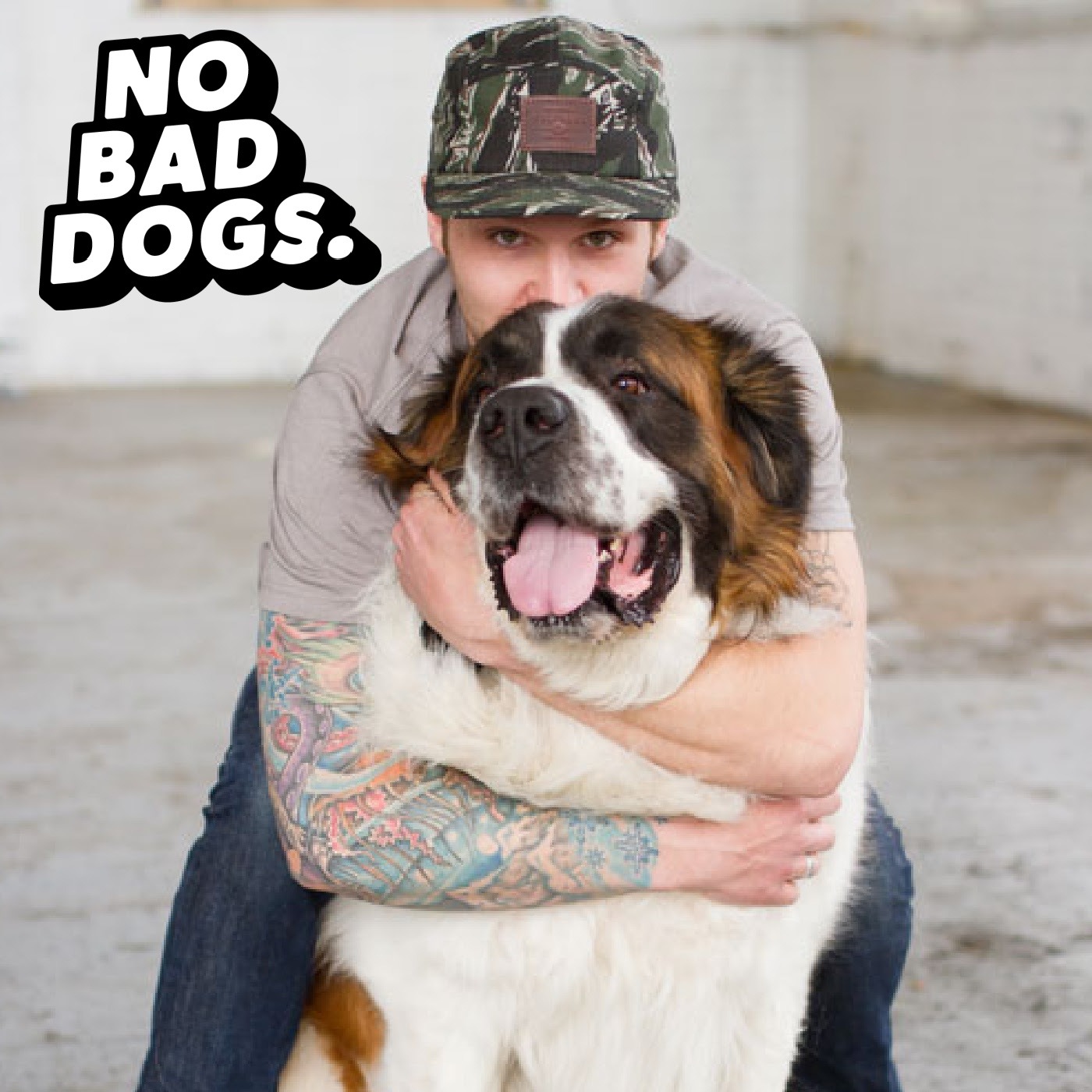
E351- The #1 Mistake Dog Owners Make (And Why It Costs Them)
Tom talks about the biggest mistake dog owners make and why it cost them money and time AND their relationship!
Want to try We Feed Raw? Save 50% off first meal plan with this code!
https://wefeedraw.com/?promoCode=NBD50
Advertising Inquiries: https://redcircle.com/brands
Privacy & Opt-Out: https://redcircle.com/privacy
2026-03-11
20 min
Transcript
Available Results
Generated results are saved to the knowledge database for reuse and search.
No generated results are available for this episode yet.
Extract Knowledge
Pick what you want extracted first. Model, scope, and chapter options appear after a template is selected.
Generated results for public episodes are saved to the knowledge database so they can be reused and searched later.
Transcript
[SPEAKER_00]: Hello everybody welcome back to the no bad dogs podcast and slash and or my second youtube channel however you're listening to this if you guys hear Farts and scratches and mones and snoring and all the stuff that's my dog burly and he is a big pig and he is in here with me so
[SPEAKER_00]: Forgive me if you hear some of that stuff.
[SPEAKER_00]: Today we're going to be talking about the biggest or one of the biggest mistake that dog owners make.
[SPEAKER_00]: Now, as a professional dog trainer who has been working with thousands of dogs and helping people all over the world for over a decade, this is one of the biggest mistakes that dog owners make full stop.
[SPEAKER_00]: And before we get into that, I just wanted to give a big shout out to my friends at WeFeedRaw for sponsoring this podcast.
[SPEAKER_00]: You guys know I talk about nutrition and diet and longevity a lot.
[SPEAKER_00]: It's something I personally am really, really interested in.
[SPEAKER_00]: And I've been diving deep with specialists and doctors going over dog health as well.
[SPEAKER_00]: And as you know, a...
[SPEAKER_00]: a super processed diet for your dogs every day is not as good as a minimally processed raw food diet and you know that's just that simple and you guys can get fifty dollars off your first order right now by clicking the link below or using my discount code all the information is in the show notes now let's get into that that thing right and that thing is waiting for a problem to start training
[SPEAKER_00]: I specialize in behavior modification.
[SPEAKER_00]: So what that means is dog owners will bring dogs to me or their dogs to me or rather.
[SPEAKER_00]: And they say, hey, I am, I need my dog to stop doing this.
[SPEAKER_00]: And typically it's aggression, it's biting people, it's attacking other dogs, it is not listening to them, it's being reactive on the leash, et cetera.
[SPEAKER_00]: A lot of times people don't come to me and say, hey, I need a better heal.
[SPEAKER_00]: I need my dog to come off.
[SPEAKER_00]: I need my dog to come back off leash better.
[SPEAKER_00]: I mean, those are definitely things that I work with regularly, but the real high ticket and why people hire me and come to me from all over the country is because they have a reactive dog and that's something that I specialize in.
[SPEAKER_00]: And one of the biggest mistakes in why some of the reactivity happens outside of genetics,
[SPEAKER_00]: is people not doing and having a good foundation.
[SPEAKER_00]: Like that's it.
[SPEAKER_00]: So many people, they get a dog.
[SPEAKER_00]: They wait for the dog to be typically eight to 14 months and then the dog starts to become an adult, right?
[SPEAKER_00]: So for the first six to eight months, they don't do any foundation with the dog.
[SPEAKER_00]: And what I mean, let's define that.
[SPEAKER_00]: What do I mean by they don't do anything?
[SPEAKER_00]: Well, for me as a dog trainer, what that means is,
[SPEAKER_00]: they don't do the foundation.
[SPEAKER_00]: Let me talk about the foundation.
[SPEAKER_00]: Okay, what in my opinion like what is the five or six things that all dogs should know very well by six months if not advanced?
[SPEAKER_00]: It should be heal which is walk nicely next to me break.
[SPEAKER_00]: Okay, now you don't have to walk next to me and the break can be applied to any behavior.
[SPEAKER_00]: place and what you to go to your bed and what you go to your place and what you hang out there until I release you.
[SPEAKER_00]: Recall.
[SPEAKER_00]: So come back when I tell you to come back.
[SPEAKER_00]: Stay, which is, you know, an implied place if you're, if you're doing that.
[SPEAKER_00]: And leave it.
[SPEAKER_00]: Those are my, like, I kind of vary, but usually five to six basics, like those are the, these are the things, these are the levers that you're going to pull every day, right?
[SPEAKER_00]: So these are the things that are really
[SPEAKER_00]: Mesh and mold and fit into your life like a glove, right?
[SPEAKER_00]: So for an example, I want to bring the dog for walk.
[SPEAKER_00]: Hey kids, you want to go for walk?
[SPEAKER_00]: Yeah sure.
[SPEAKER_00]: Does your dog drag you around the neighborhood?
[SPEAKER_00]: Yep, well, that sucks.
[SPEAKER_00]: Therefore, I don't really want to bring the dog for a walk.
[SPEAKER_00]: Or, hey, let's just go around the cul-de-sac once and come back.
[SPEAKER_00]: So now the dog isn't getting what they want or what they need.
[SPEAKER_00]: And then it perpetuates, right?
[SPEAKER_00]: It starts to compound.
[SPEAKER_00]: Well, the dog doesn't get walked a lot because now the dog pulls you down the neighborhood or whatever.
[SPEAKER_00]: And now the dog is getting worse at whatever else things.
[SPEAKER_00]: Now, we're chewing more.
[SPEAKER_00]: We're barking more.
[SPEAKER_00]: Acting out inside the house.
[SPEAKER_00]: We're doing zoomies inside the house tossing the kids up in the air because we're knocking them over, etc.
[SPEAKER_00]: Everything compounds.
[SPEAKER_00]: Same thing with leash reactivity, right?
[SPEAKER_00]: Your dog is reactive on the leash because you don't have a leave it and you don't have a heel
[SPEAKER_00]: So you're going out with your dog and they don't know nothing from nothing.
[SPEAKER_00]: I don't know if that's politically correct, but they don't know nothing from nothing, right?
[SPEAKER_00]: You're out for a walk.
[SPEAKER_00]: Your dog is pulling you.
[SPEAKER_00]: Your dog is dragging you.
[SPEAKER_00]: Your dog is on a flexi.
[SPEAKER_00]: Your dog is on a harness.
[SPEAKER_00]: Your dog is disengaged.
[SPEAKER_00]: Your dog doesn't care that you exist.
[SPEAKER_00]: Your dog loves you.
[SPEAKER_00]: Your dog will pay attention to you and you have food.
[SPEAKER_00]: And this is real talk.
[SPEAKER_00]: This is probably going to offend some people, but I'm going to tell you what you need to hear not what you want to hear.
[SPEAKER_00]: I always say that, but it's true.
[SPEAKER_00]: You're going for a walk with your dog, your dog is completely disengaged.
[SPEAKER_00]: But the minute your dog wants to do something like react to another dog or react to another person, and it doesn't always mean that they're reacting out of aggression.
[SPEAKER_00]: It just means that they're pulling their lungy and they're barking because they want to see the other dog.
[SPEAKER_00]: They want to see the other person.
[SPEAKER_00]: Well, all of that can be compounded because of the lack of foundation.
[SPEAKER_00]: So a lot of people, let's say we get an eight week old puppy.
[SPEAKER_00]: Oh, it's cute, and they are cute.
[SPEAKER_00]: And we love them, and we all do.
[SPEAKER_00]: And they start to grow up, and we don't do any training.
[SPEAKER_00]: The only training that we do is paw, which is absolutely pointless, has no utility whatsoever.
[SPEAKER_00]: We teach them how to sit, but they actually don't know sit.
[SPEAKER_00]: they only know the cue of if the food is out, their butt gets on the ground.
[SPEAKER_00]: The reason why I know this is because I asked dog owners to put their hands behind their back or put their hands straight down on their sides and if you're watching this, you can see me do this, right?
[SPEAKER_00]: And I say, ask your dog to sit, they say dog sit and the dog doesn't know sit.
[SPEAKER_00]: Now I say, okay, take your treat, hold it up in the air and ask tell your dog to motorcycle and they put their butt in the ground, right?
[SPEAKER_00]: So again, most dog owners teach their dog
[SPEAKER_00]: Silly stuff that doesn't have any utility in real life has absolutely zero purpose.
[SPEAKER_00]: And then we go outside, we walk our dog.
[SPEAKER_00]: They disengage from us.
[SPEAKER_00]: They don't listen to us.
[SPEAKER_00]: They never pay attention to us.
[SPEAKER_00]: They're pulling on the leash the entire time.
[SPEAKER_00]: So not only is that, and you guys, I don't mean to be a negative Nancy, but this is something that really frustrates me because so many dog owners can spare their time and their money and their energy by just understanding these principles, which is why I guess it's just passion coming out.
[SPEAKER_00]: my clients come in and they have all these issues and they don't have anything right so the so what happens is is the dog pulls on the leash and then they're like I don't really care about this I'll just hang on and you know maybe my husband will hang on to the leash or something like that because I can't because the dog's pulling me down or you know hurting my shoulder you know the kids can't walk the dog or whatever and now we're now we're at a point where the dog doesn't know anything
[SPEAKER_00]: The dog has never been engaged with us, and now the dog is starting to react.
[SPEAKER_00]: Now the dog is starting to be suspicious.
[SPEAKER_00]: Now the dog starts maybe barking at other people, barking at other dogs.
[SPEAKER_00]: Now, also again, other things, people come in the house, the dog is jumping all over them.
[SPEAKER_00]: The dog is barking at my kids' friends.
[SPEAKER_00]: The dog is barking out the window.
[SPEAKER_00]: When I drive my dog around and they're in the car, they're barking out people outside the car.
[SPEAKER_00]: All of this, and I mean all of it.
[SPEAKER_00]: is a product of lack of foundation.
[SPEAKER_00]: It's not doing the basic foundation principles.
[SPEAKER_00]: Now I'm not saying if you started your dog off on training that they're never gonna do these things because that would be crazy.
[SPEAKER_00]: That's not what I'm saying.
[SPEAKER_00]: What I'm saying is is now you don't have, excuse my language, a pot to piss in because now you've done nothing with your dog except a silly shake and a fake sit.
[SPEAKER_00]: And now you have behavioral issues, then you sign up for training.
[SPEAKER_00]: So I just want to give context to dog owners out there and even dog trainers, hopefully this is relatable to you as well.
[SPEAKER_00]: You call a dog trainer, you say, hey Tom, my dog is, you know, I, for an example, the reason this is what inspired me is I had a consult with these lovely people yesterday.
[SPEAKER_00]: Beautiful Rotweiler came in and they go we're starting to have some issues.
[SPEAKER_00]: He's starting to grow at us.
[SPEAKER_00]: Snap at us.
[SPEAKER_00]: Actually try to bite us When we ask him to do things he doesn't want to do.
[SPEAKER_00]: This dog is pulling all over the place zero engagement zero obedience zero control So and this is and and and I was explaining to them you guys could have saved so much
[SPEAKER_00]: frustration, so much time and so much mula, if you would have just and and more than likely, you would have avoided all of this behavioral issues, right?
[SPEAKER_00]: So getting back to what I was saying before is we're not going to be able to necessarily tell these dogs not to be dogs, don't bark at people when they come over, don't bark at people, don't want to pull in the leash, all this stuff.
[SPEAKER_00]: That stuff's going to happen.
[SPEAKER_00]: However, now when the dog is fully mature, six months to eight months, there anywhere from 20 to 100 pounds, and they've already been doing this stuff for a long time.
[SPEAKER_00]: That old saying, you can't teach a dog new tricks.
[SPEAKER_00]: Well, it's not that that's 100% true.
[SPEAKER_00]: It just means it's harder, right?
[SPEAKER_00]: Because now the dog has been doing and their dog years, a quarter of their life, doing all the things that some point you're gonna start to care about until I'm not to do.
[SPEAKER_00]: And this is a gigantic mistake that dog owners make, which is why I wanted to excuse me, which is why I wanted to make this podcast.
[SPEAKER_00]: Excuse me guys, I'm not gonna cut that out because I don't like cutting, I like my podcast and I like all these videos to be as natural as humanly possible.
[SPEAKER_00]: And that's barely knocks over the camera like he did one time then I cut it out.
[SPEAKER_00]: But anyway, so this is an accumulation of something I see and I'm not just saying this for my own benefit.
[SPEAKER_00]: For an example, these rot, the rot-weiler owners waited until a year old to start going like, hey, we should sign it for training.
[SPEAKER_00]: I'm like, you guys have a rot-weiler, a big male rot-weiler.
[SPEAKER_00]: Why would you, and again, this isn't me talking negatively or badly about these people at all.
[SPEAKER_00]: They're lovely people.
[SPEAKER_00]: They're in for training.
[SPEAKER_00]: We're going to get everything figured out and everything's going to be great.
[SPEAKER_00]: But I don't want people to wait.
[SPEAKER_00]: That is a mistake.
[SPEAKER_00]: We have to do the same training that I would do with an eight week old puppy, right?
[SPEAKER_00]: I'd be like somebody bringing in their adult son or daughter and saying, hey, my kids ready for school now and they don't know ABCs, they don't know A's for Apple, but B's for boy, the sky is blue, they know nothing.
[SPEAKER_00]: So now we have an adult,
[SPEAKER_00]: doing adult things, feeling adult emotions, feeling adult emotions and things, but they don't know how to communicate.
[SPEAKER_00]: Think about that.
[SPEAKER_00]: Now you might be thinking like holy crap, that would be so difficult, and that would be so backwards, and nobody would do that.
[SPEAKER_00]: We would never start to teach an adult how to live a life with the family when they're already an adult.
[SPEAKER_00]: Why?
[SPEAKER_00]: Because it makes no sense.
[SPEAKER_00]: So why do we do this with puppies?
[SPEAKER_00]: I don't know.
[SPEAKER_00]: And again, I think the moral of the story is people wait for there to be problems to find solutions.
[SPEAKER_00]: And that is backwards.
[SPEAKER_00]: And I urge people if they want to save money, they want to save time.
[SPEAKER_00]: And they want to avoid serious behavioral issues,
[SPEAKER_00]: with their dog.
[SPEAKER_00]: Don't wait.
[SPEAKER_00]: Start training immediately.
[SPEAKER_00]: Have that all be proactive.
[SPEAKER_00]: Have that foundation.
[SPEAKER_00]: Have those skills already ready to go baked in to your life and your life will be much better.
[SPEAKER_00]: Your dog will be better behaved.
[SPEAKER_00]: You'll be happier.
[SPEAKER_00]: Your family will be happier.
[SPEAKER_00]: Your dog will certainly be happier because they have clear, consistent boundaries.
[SPEAKER_00]: and what they need to do and what their purpose is.
[SPEAKER_00]: And a perfect example, guys, let me, so you might be thinking, like, okay, this makes sense, what are some examples?
[SPEAKER_00]: You get up in the morning, your dogs are excited.
[SPEAKER_00]: Hey, you're up, I love you.
[SPEAKER_00]: Aw, cool, buddy, I love you too, good morning.
[SPEAKER_00]: Petum, love up on him, kiss their face, like I do with my dogs.
[SPEAKER_00]: We get up, take a stretch, right?
[SPEAKER_00]: Maybe get ready to, we grab our leash.
[SPEAKER_00]: The dogs are excited.
[SPEAKER_00]: Are they jumping?
[SPEAKER_00]: No, they're not jumping on me because they know that they can't jump on me.
[SPEAKER_00]: I've taught them that that's inappropriate.
[SPEAKER_00]: And I don't want dogs jumping on me or other people or my kids.
[SPEAKER_00]: I'm gonna put the leash on, I'm gonna open the door.
[SPEAKER_00]: Are they flying out the door?
[SPEAKER_00]: Nope, because my dog's no better.
[SPEAKER_00]: I've worked on thresholds since they were eight weeks old.
[SPEAKER_00]: They do not walk out that door unless they need, or I'm sorry, unless that they get permission and they get a break.
[SPEAKER_00]: Now a lot of times, honestly,
[SPEAKER_00]: uh... my master is in a downstay in my shepherde open the door and i send her out on her way she never really has to wait mainly because she's not a gorilla and she's not gonna knock me or my kids over break my knees right but most importantly guys
[SPEAKER_00]: as an adult dog and as the dog is big and as the dog is strong, both of my dogs have a shepherd and a mastiff.
[SPEAKER_00]: I don't have to say, okay, now I need to handle this.
[SPEAKER_00]: Now I need to work on this.
[SPEAKER_00]: They already know.
[SPEAKER_00]: I tell them the down.
[SPEAKER_00]: I tell them the stay they stay they down, right?
[SPEAKER_00]: No corrections, no payment, no rewards, no treats, nothing.
[SPEAKER_00]: They just listen to me because some day one, I taught them
[SPEAKER_00]: So now we're outside.
[SPEAKER_00]: The dogs are excited.
[SPEAKER_00]: We're going to go for walk on.
[SPEAKER_00]: Yeah buddy, let's go.
[SPEAKER_00]: I tell my dog heel.
[SPEAKER_00]: I heel him to the call the sack.
[SPEAKER_00]: I heel him to a big pile of snow and they pee and they go potty.
[SPEAKER_00]: I give my dog a break.
[SPEAKER_00]: We break for about 20 seconds to a minute.
[SPEAKER_00]: They're sniffing their peein, getting all the things out that they need to, we're waking up.
[SPEAKER_00]: I tell my master of the heel.
[SPEAKER_00]: I put him into a heel, I let my shepherd go.
[SPEAKER_00]: I say, break, she goes 20 to 50 feet ahead of me.
[SPEAKER_00]: I see a car, I tell my shepherd, come back.
[SPEAKER_00]: She zips back to me, she stands right next to me at my heels.
[SPEAKER_00]: My dog, my master on the leash, I tell him to sit as the car passes.
[SPEAKER_00]: The car passes.
[SPEAKER_00]: I tell my shepherd break.
[SPEAKER_00]: She runs back out in front of me.
[SPEAKER_00]: I tell my mast of the heel He walks really nice me on a loose leash.
[SPEAKER_00]: I can check my phone.
[SPEAKER_00]: I can send emails.
[SPEAKER_00]: I can Text my family.
[SPEAKER_00]: I can I can text my employees I could do anything I want because I have good I can drink a cup of coffee if I wanted to that would be brave But I cuz he's not perfect.
[SPEAKER_00]: I could drink a cup of coffee if I wanted to I have a control
[SPEAKER_00]: Now, I'm not at eight months old to six months old, to even three months old, trying to do all this stuff at once.
[SPEAKER_00]: I'm not waiting for my my master to become reactive as a huge protective dog.
[SPEAKER_00]: Nope, he's going to be.
[SPEAKER_00]: He's going to be protective.
[SPEAKER_00]: He's going to be reactive.
[SPEAKER_00]: He was at eight weeks.
[SPEAKER_00]: I need to make sure I can handle these situations.
[SPEAKER_00]: If my shepherd is off leash, oh, here comes another car.
[SPEAKER_00]: Lakota's stay.
[SPEAKER_00]: She stops exactly where she's at on the side of
[SPEAKER_00]: until I break her or until I get close to her and I release her, right?
[SPEAKER_00]: Oh, so I'm telling you this because this is like our daily thing, right?
[SPEAKER_00]: Like, these are, this is my morning routine.
[SPEAKER_00]: I, I have had this morning routine since they were puppies and now I'm just conditioning.
[SPEAKER_00]: You get into the best shape of your life, aka your dogs get trained, off-leash, fully advanced, and you're conditioning, just because you're getting the best shape of your life doesn't mean you can't not go to the gym, you can't not eat right still, you still got to stay, the hard work is pretty much done.
[SPEAKER_00]: Now all you got to do is stay conditioned and stay in shape, right?
[SPEAKER_00]: So it's very important for dog owners to know.
[SPEAKER_00]: If you have a dog, if you have a puppy, if you're getting a puppy, if you know somebody you get to puppy, remind them.
[SPEAKER_00]: Dog training is not just for dogs who are misbehaving.
[SPEAKER_00]: It's not just for dogs who have problems.
[SPEAKER_00]: Dog training is for every dog out there.
[SPEAKER_00]: Every single dog, every single dog on our listening and watching this can benefit from putting their dog into training because it conquests in,
[SPEAKER_00]: Expectations, clarity, relationship building.
[SPEAKER_00]: It gives you the opportunity to communicate with your dog at a fundamental level.
[SPEAKER_00]: So you have a happy, healthy, good, good, great, communicate, communicate with your dog forever.
[SPEAKER_00]: And so don't wait.
[SPEAKER_00]: Don't, don't, don't, do what these.
[SPEAKER_00]: So the Rottweiler people had to come in and drop 1500 bucks in training.
[SPEAKER_00]: Excuse me.
[SPEAKER_00]: because they had to do the highest package with me because they have a behavioral issue and they don't have foundation.
[SPEAKER_00]: So now we have to do two different things.
[SPEAKER_00]: We have to teach this dog foundation.
[SPEAKER_00]: We have to teach them leash manners, leash skills, leash pressure, reward schedules, corrections, boundaries.
[SPEAKER_00]: Once that's done,
[SPEAKER_00]: after six months, then we have to go and then tackle the behavioral issues and try to work that out.
[SPEAKER_00]: You don't have to be that person.
[SPEAKER_00]: You can get to a point where you have really good communication.
[SPEAKER_00]: For an example, this dog is snapping and growing at them when they try to remove the dog from the bed.
[SPEAKER_00]: Let me show you what would have happened and go over a consult if they brought the puppy in at two months, three months.
[SPEAKER_00]: Hey Tom, we have a rockweiler that we plan on keeping intact and the breeder, which is true.
[SPEAKER_00]: The breeder said that this dog is very, very, very pushy and is going to be a very pushy dog.
[SPEAKER_00]: I would say, hey, make sure we don't let the dog on furniture because that's going to be an issue.
[SPEAKER_00]: Also, we need to immediately start on recall and place.
[SPEAKER_00]: Great!
[SPEAKER_00]: So at six months old, the dog never would have got on the bed, and the dog would have known even if they did get on the bed, we would have had a really good recall, and we would have had a really good place.
[SPEAKER_00]: And the remote collar would have been in place already, so we don't have physical conflict with the dog.
[SPEAKER_00]: That way, I don't have to go over and touch the dog's collar to create conflict with the dog.
[SPEAKER_00]: I simply say off or come, the dog says nope, I can easily hold the dog accountable without physically having an altercation with the dog, the dog gets off and we're off to the races.
[SPEAKER_00]: all these things could have saved time, money, and their relationship with their dog is honestly on the line.
[SPEAKER_00]: That's what's at risk here, because now they have to physically fight their dog and there's some serious stress involving that.
[SPEAKER_00]: So, I could go on all day about this, which is what I do in a lot of my other podcasts.
[SPEAKER_00]: So, make sure if you guys are watching this on YouTube on my second channel, you subscribe to my second channel, Tom Davis canine education, because we're gonna solely post all of our podcasts here from now on, and we're not gonna collaborate with my bigger channels, so you might not see this again.
[SPEAKER_00]: And if you're listening to this on any audio podcast platform, make sure you follow or you like or you do whatever you can, so you don't miss an upload.
[SPEAKER_00]: And watching and following and hopefully this was helpful again.
[SPEAKER_00]: It's a no BS approach as always I just tell it.
[SPEAKER_00]: I just want you guys to know from experience what you should be doing so you can avoid a lot of heartache a lot of costly Expendables.
[SPEAKER_00]: I think that makes sense.
[SPEAKER_00]: Expendables.
[SPEAKER_00]: Yeah In frustration.
[SPEAKER_00]: So thank you guys talk to you in the next one.
[SPEAKER_00]: Peace
Chapters
No chapters available.