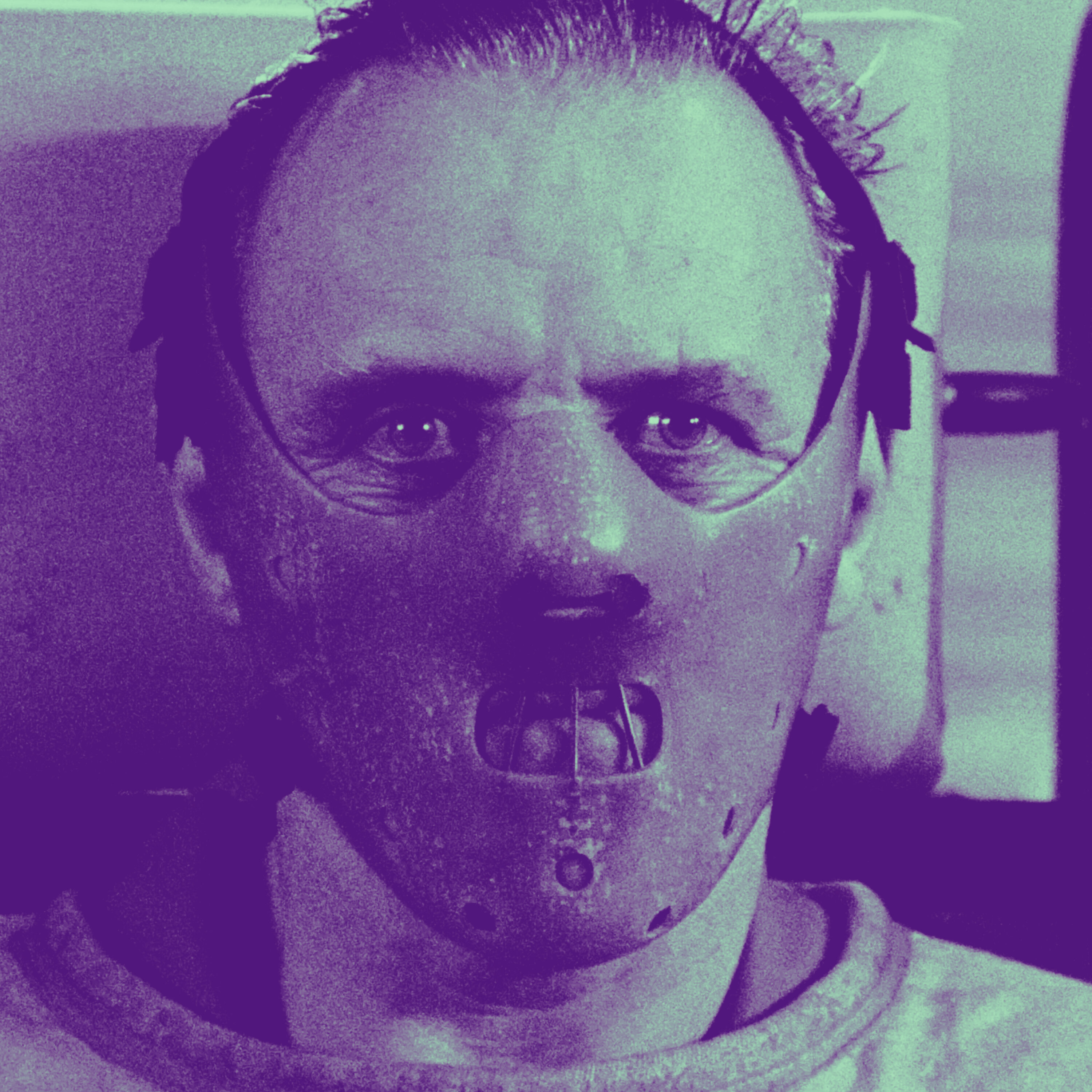
The Silence of the Lambs Review | Archive
THE SILENCE OF THE LAMBS hit theaters 35 years ago this month, winning the Best Picture Oscar (along with Actor, Actress, and Director) a year later. Adam and Josh revisited the film for its 30th anniversary in February 2021.
For full access to the show archive, Filmspotting Discord, monthly bonus episodes, and more, join the Filmspotting Family.
LINKS
-"30 years in, The Silence Of The Lambs’ Jame Gumb still deserves better" | The A.V. Club
https://www.avclub.com/30-years-in-the-silence-of-the-lambs-jame-gumb-still-1846252158
See omnystudio.com/listener for privacy information.
Available Results
Generated results are saved to the knowledge database for reuse and search.
Extract Knowledge
Pick what you want extracted first. Model, scope, and chapter options appear after a template is selected.
Transcript
00:00:21
Speaker 1: Film Spotting is presented by Regal Unlimited, the all you can watch movie subscription pass that pays for itself in just two visits. See any standard two D movie anytime with no blackoutdates or restrictions. Sign up now on the Regal app or at the link in our description and use code film spot twenty six to receive fifteen percent off.

00:00:42
Speaker 2: We're gonna keep things going, Josh with these archive drops, our four week series leading up to the Oscars, all conversations about Best Picture winners. This week it is the Silence of the Lambs, released thirty five years ago. We talked about it five years ago for its thirtieth anniversary.

00:01:03
Speaker 3: Five years ago. I have no memory of this, Adam. This is what I love about our archive drops. Right is refreshed. Do you think? Do you think we both liked it? Still?

00:01:13
Speaker 2: I'm pretty sure we both liked it. But that's all I remember as well. Okay, we can all be surprised. Cue it up, listen find out what we had to say, even if you listen to it back in twenty twenty one. February twenty twenty one, to be exact, here's that conversation. Our review of the silence of the.

00:01:32
Speaker 4: Lambs, Oh, agent Starling, you think you can sect me with this blond little tool.

00:01:37
Speaker 5: No I thought that your knowledge.

00:01:40
Speaker 4: Are so ambitious? Sons, you do you know what you look like to me?

00:01:44
Speaker 6: With your good deck and your cheap shoes.

00:01:47
Speaker 4: You look like a robe, a well scrubbed hustling, a robe with a little taste. Good nutrition has given you some length of bone that you're not more than one generation from poor white trash?

00:02:00
Speaker 6: Are you, agent Styling?

00:02:02
Speaker 4: And that accent you've tried so desperately.

00:02:04
Speaker 6: To shed pure West Virginia?

00:02:07
Speaker 4: What is your father do?

00:02:08
Speaker 6: Is your call? Miner does a stinkable lamb? You know how quickly the boys found you, all those tedious, sticky fumblings in the backseats of cars, while you could only dream of getting out anywhere, getting all the way to the end.

00:02:26
Speaker 2: Hello, Joshua, Oh boy, you know what you look like to me? With your fancy socks and brightly colored pants. You look like a critic, A well read, hustling critic with a little taste. Good watching has given you some length of perspective.

00:02:47
Speaker 1: But you're not more.

00:02:48
Speaker 2: Than one generation from the three Stooges, are you? Joshua? And that accent you've tried so desperately to shed pure south suburban Chicago. What is your father? Is he a cop? Does he stink of gun oil? You know how quickly Debbie found you all those dates to the movie theater while you could only dream of getting out, getting anywhere, getting all the way to the Chicago Sun Times. One of those dates was on Valentine's Day nineteen ninety one, you took your girl to see the hot new Jonathan Demi movie. Everyone was so titillated by your parents, who saw it first, found it so lurid, so depraved. They precluded you from entering. But you lied. You disobeyed, didn't you, And you've disobeyed again in preparation for this Sacred Cow review. Sacred Cow, by the way, very tasty. I recommend eating it with some fava beans, and only fava beans.

00:03:57
Speaker 3: You still wake.

00:03:58
Speaker 2: Up sometimes, don't you. You wake up in the dark and hear your parents warning. Now that you've rewatched it with adult eyes, tell me what do you think it was about the silence of the lambs that so unnerved your parents?

00:04:12
Speaker 1: Were they right?

00:04:14
Speaker 2: Do the thrilling performances from Jodie Foster and Anthony Hopkins and those Demi close ups lens by ten Fujimoto where the characters seem to be burrowing deep into your restless soul, conveniently disguised what is really just dressed up shlock.

00:04:34
Speaker 3: I'm undone, I'm unraveled scene psychologically, I'm now naked before you. Yes, yes, the silence of the parents. So if only, if only I could ever have achieved that, I would have grown to be a healthy adult. Really, critics critics were colored pants. I didn't know that was as well. The one I'm looking at does well done, sir, Oh my goodness, where to start? I don't I still don't know what it was they have objected to. I mean, take your pick. When I rewatch this movie, it is so much grizzlier that I that I remembered. For one thing, it starts when we're in Crawford's office. It puts it right there in your face. At the beginning, we see his evidence photos of Buffalo Bill's victims, and you kind of know, like we're not gonna though. It became a Oscar obviously, you know, Oscar contender and winner and sort of a It became a prestige picture but for sure the movie itself is going to tell you right away that doesn't mean this is not a grizzly serial killer thriller. So it could have been that, it could have been. I don't know. I mean, really, it's there's a lot in here that you could understand why they say maybe go go find yourselves a romantic comedy for this date you two kids. But you know, I've been revisiting it probably at least once since then before we did for this show. You do understand. I think you do understand the elements that elevate it beyond the normal serial killer thrillers that we would get to the point of winning all those Oscars. And I think for Oscar voters, right, it was the acting. I think that was kind of the thing they could point to and say, we don't always get acting like this in genre pieces, genre material like this. And at the same time, it's very well crafted. I mean, this is an astonishingly crafted film, and in the ways you've talked about already, with the cinematography and the editing too. I believe the editing was nominated for an Oscar and you know, but for me, it's the one thing you touched on that does ultimately elevate the signs of the Lambs, and it is that DEMI touch It is that the searching for the humanity and inhumane material. He seemed like a poor match for this material at the time, and even in retrospect, even looking at his filmography, it still stands out. And I think what he does is bring an emphasis on the people on the screen and their emotional the emotional registers that they're experiencing. And let me give you just kind of a throwaway scene that I think is actually a defining example of this. It's when Starling and Crawford go to the funeral of one of Buffalo Bill's victims yea, and Crawford, you know, does one of these chauvinistic power plays and tell Starling to wait. He's going to go talk to the men, you know, the cops there, and they're going to talk this out.

00:07:52
Speaker 2: He says later it was a smoke screen. He does, doing it for effect.

00:07:55
Speaker 3: He does. And that's and one of the great sort of I don't know if you could call it feminist, but again humanist moments is when Clarice responds to him and says, but it matters, you know, it matters that you acted that way in front of those men. I love that little exchange. But when he leaves her there in this funeral parlor, she steps forward to a door and kind of peers through and sees the young woman's grieving family, and she spends a few minutes just watch them. Now, she's observing for as part of her job right as collecting clues, but she's also connecting with the pain. And I think you see that later when she's in another victim's bedroom. She's taking clues, but she's connecting with the pain too. And at that point, Demi's camera is Clarice's point of view. It's looking for the humanity in that moment. Again a throwaway thing, but a throwaway moment. But I think you get that sensibility in so much of the movie. Often it is in those close ups, those Demi close ups, which are given to Crawford, they're given to Lecter even in moments, and they're mostly given to Starling, so that we understand the again, the emotional experience she's going through. Where we get that in some you know, not genre pictures aren't always devoid of that, but it is very much at the forefront in the Silence of the Lamps. For me in this revisit, that was the thing that probably stood out to me.

00:09:14
Speaker 2: Yeah, No, that's a great point about Demi's humanity and how we see it displayed on screen. I will go back and say that if the Silence of the Lambs is indeed shlock, And like you, I had forgotten just how grisly it was. I forgot how kind of absurd it all is, and the register that it's kind of played at. But you know what, it's well made, really effective schlock, where even now thirty years later, and I watched it with my daughter Sophie, who is sixteen, and we were both sitting in a heightened state of anxiety virtually from start to finish. And I will get into a little bit more detail here in a moment about the start of this film, because I think even the very beginning plays into it. Obviously, it applies as we really get into the plot and we meet Lecter and we never fully feel safe with him, even trapped behind the glass or strapped in however tightly he might be. Those exchanges with Clarice that are unnerving, and then when we actually do see him inventively killing people and escaping and all the Buffalo bill stuff, especially of course at the end. Yes, you are tense throughout, but the big discovery for me here, and I think it ties back to what you're saying in terms of it being about the people and it being about their humanity. I knew, or I remembered, that Lecter toyed with Clarice not just as a trainee but as a younger woman, an attractive woman, but I had no sense of how baked into every frame of the movie Clarice's awareness of her femininity is and the trigger that causes and maybe I should actually reverse it, the awareness of the effect her femininity has on every man she meets. And that scene you mentioned with the cops at the funeral parlor might be the most kind of hilarious display of that right in a couple instances, one that moment with Jack where she is put in the awkward position of being sort of put off to the side and marginalized because she's a woman, but also when all of the eyes turned to her in one scene, and we'll talk more about that, because that's maybe the most common effect we see here in the film. The way Demi uses the camera to train it on Clarice in particular, but every one of those cops, kind of almost in unison, turns and looks at her, like, what are you doing here? You don't belong here. And then later the thrill, the anxious thrill of her banishing them all from the room, her getting her revenge, if you will, even though that's not really what is on her mind. And you can see how kind of tenuous the whole thing is and how shaky she is, but she still asserts herself and says, you know what, all of you men, get out of here. We've got it from here. But I go back to the very beginning of this movie, and I was struck by the choice to show Clarice running through the woods. If you've seen the movie, you know that she's an FBI agent. You know that she's young, and she may be a little naive, but she is very smart, and she is well trained, and she can take care of herself, and you're not really fearful for her. But I tried to detach myself for a second, Josh and pretend that I was just watching it for the first time, and it almost felt that way because I didn't remember this scene at all. It could be kind of a throwaway scene, but it's just her for at least a minute or two, running through the woods, and I don't think you can see the FBI logo really on the shirt or the sweatshirt she's wearing, so you don't know anything about her, and you almost get the sense that maybe she's being chased, or maybe as a woman alone in the woods, she's in some kind of danger. And I swear to you, as soon as I was thinking all of this, Sophie sitting next to me, goes, oh, she's going to get kidnapped, that's what she thought. She immediately went to, oh, this is a damsel in distress. And I think Demi there signals to us that I'm going to play with this throughout the entire movie, including the way that scene ultimately ends, where a man, a single man, an imposing man, does show up, but it turns out, of course he's really no threat to her. But even the way it kind of does close as she goes off to meet with Jack Crawford, the man kind of ominously stares at her as if he might be thinking, what were you doing out here all by yourself? Girl? So it's even there in those interactions, even though nothing is being verbalized at all along those lines, And then of course the wonderful, hilarious moment we get I don't remember if it's right then, Joshua, if it's later in the film, but doesn't she get into an elevator, and I felt like I was watching the beginning of promising Young Woman again, where it's just like dudes in polos and khakis and she's the only woman crowded into that elevator, and the way throughout every guy she meets, from the obnoxious chiltin to the bug guy, the bug expert, everyone is either hitting on her or eyeing her, or not trusting her or not trusting her capabilities because she's a woman, because she's a young woman, sometimes because they perceive her as an attractive woman, and that she has to reckon with that in every single moment of her day, in addition to trying to find the killer to do her job. One of the elements, yeah that Johnathan Demi obviously chose to emphasize. Maybe it's there in the book. It probably is, but visually Demi decided to make that a focal point.

00:14:39
Speaker 3: Crawford's very clever. Isn't he using you?

00:14:42
Speaker 5: What do you mean, sir, pretty young woman to turn him on?

00:14:47
Speaker 2: I don't believe Lector has even seen a woman in eight years.

00:14:50
Speaker 5: Oh are you ever his taste?

00:14:53
Speaker 4: So to speak?

00:14:54
Speaker 5: I graduated from VA doctor.

00:14:56
Speaker 4: It is not a charm school.

00:14:57
Speaker 1: Good then you should be able to remember the rules.

00:15:00
Speaker 3: I would be really curious to hear if that is in the Thomas Harris novel the elevator shot that's at FBI headquarters. So yeah, she's in the elevator with all these burly agents who are wearing I think running gear as well. And the opening running scene is absolutely a red herring. This is a movie that has a couple of very crucial red herrings in it, and so it makes sense that it would start with one. I think Foster's performance is key to this lens to watch the film through as well, because she is starling is She's got these killers on one side of her that she's trying to deal with, manage or catch, and then she has these chauvinists colleagues on the other side and she is and so the camera is there to kind of reclaim the dignity, reclaim dignity for her and then Foster's performance is to project that that at least Clarice's has this firm sense of self that I think she does communicate all the time. I mean, Foster I think of as just, you know, an actor of extreme intelligence. That's what she seems to communicate first and foremost. It's a natural role for her here. You know, this recruit that's kind of rising quickly in the ranks, and you could see her mind is racing in every scene behind those eyes, her mind is racing. It's when she's being challenged by Lecter, but it's also, as you said, when she's negotiating the sexism and the skepticisms I'm surrounding her. She's juggling that without losing sight of the case as facts. So I think it's a really nice balancing act that Foster gives because you get her resilience. But then in that defining scene where she shares the memory that the movie gets its title from, you also see her fragility and you see how this extreme competence is this bulwark that she's built up against the trauma of her past. So yeah, it's an incredible performance that is having to balance both of those things.

00:16:50
Speaker 2: At once, right, because you do see that frigility in her as well, and maybe hypocrisy way too strong of a word. It really is her humanity that she herself despite that bulwark, despite how strong she is, you see little cracks. You see her succumbing to the sexual politics, I think in her own way, especially in the tension between her and Scott Glenn as Jack Crawford.

00:17:16
Speaker 5: See double major cycing criminology. Graduated magna summer internships through Risinger and it says here, when you graduate, you want to come to work for me in behavioral science, Yes very much.

00:17:27
Speaker 4: Sir, very much.

00:17:29
Speaker 2: It seems as if maybe he's aware of the fact that he could be playing the older sort of father figure love interest to her, but also he's trying to manipulate her in his own way so he can get her to help him solve this case. But you occasionally see in Demi's camera as well, when it's trained on Foster in some of these interactions, and her smiles, her uneasy smiles, that she kind of seems to really enjoy the attention from Jack Crawford. Maybe it's because she's ambitious, that's certainly part of it, and she knows that the more she plays the game and the more she does well, and the more pleased he is with her, the better it is for her career. But there's a door that's left open there. And I love the scene, and I know we may talk about some of the editing here a little bit in more detail. I love the scene where they're talking on the phone and he's on the plane and he says, none of this could have happened without you. We've got it all figured out, and you'll be remembered for this. And you see how pleased she is with herself for getting that praise from him, and she says something. I don't remember the exact line, but she says something back to him, and Demi cuts to the plane just doing like a maneuver. He's clearly gotten off the line, like he told her exactly what he needed to tell her to make her feel a certain way, but then as soon as he said it, he just hug up the phone and left her hanging.

00:18:54
Speaker 3: Yeah, there's a lot of layers to that relationship. And you know what's the word that Lecter uses when he says what Starling has. It's not ambition, but it's something like that, like that's kind of the key to unlocking her on one level for Lecter is that she has this sort of ambition, So I think that is definitely the driving force in her relationship for Crawford. But the performances are subtle enough, and we get moments like that where it does allow other possibilities to which just makes it that much more interesting. So the editing, Yeah, Craig McKay was nominated for an Oscar for the editing, and you know, I it's more of a showy sequence, but I love the climax, the back and forth, the parallel fake out that is it's almost criminal in it's duplicity in how that is used to It's the kind of thing where I, even as it was coming, I just wished I could have wiped it from my memory because I remember the confusion, but it wasn't bad confusion the first time that happened, and I was trying to put together now, wait, where is Starling, where is Crawford? Who are they talking to? And the editing there is just so duplicitous in this way that you, even as you're being fooled, you're just kind of in awe of And it's not just one cut. It's a it's a handful of them back and forth that's slowly lifting the veil from our eye in a way that is torturous as a thriller should be, and just so effective even when you know what's coming. It's still effective.

00:20:29
Speaker 2: Yeah, no, it really is. I still was completely sorry to use the cliche on the edge of my seat, and I think that beyond it being nice cinematic trickery like you alluded to, it's so perfect because it fits back into the scheme we've been talking about, which is throughout the entire movie, it has been about how people, how men look at Clarice. So I'm getting into the actual mechanics of that showdown at the end with Buffalo Bill and him putting on the night goggles and stalking her. That's what we've seen the entire movie is men watching and stalking her. So of course, in that moment, seeing that all play out from his perspective and his view of her, it is just so appropriate to the film overall. And I'll give you another edit. I like, that's really subtle, and maybe it stands out to me as well because of the line that's set and I'm really zooming in on this notion of watching. It's when she goes to meet Lecter for the first time, and she is now gotten through the bars. She's talking to the attendant. I never had noticed before, Josh, that demi so perfectly. As soon as she gets on the other side, the color changes to red, and it just takes you as you're watching it as a viewer, It subconsciously makes you completely on alert and scared.

00:21:53
Speaker 3: Can I add something to that? The thing I noticed this time, which is brilliant, speaks exactly to that. Before those red security lights turn on, they come down. It's like a basement dungeon that he's imprisoned in old fashioned prison bars. They have to wait for a few moments at Did you notice how bloody red those bars are painted? So this is an element of production design. It makes no real sense, like why would they need everything else in that dungeon prison is like stone gray, brown, moldy old. But this set of buyers that she stands before bright bloody red, and we notice that it jumps out at us, and then that security light goes on and the whole screen turns red. It's it's just, yeah, such a perfect touch.

00:22:36
Speaker 2: And after those bloody bars finally do close, and she's on the other side. The whole time we're watching that exchange. It's a fairly traditional kind of shot reverse shot, and we fall into a little bit of the comfort zone of that as she's talking to that guy. But as soon as he says I'll be watching, you'll do fine on the word fine, the cut goes to a straight on shot from down the hallway of Clarice, and it is unnerving because now, just in that one subtle cut, it has broken up the comfort of that shot reverse shot of that conversation, and in addition to that, it's as if something is waiting for her down that hallway. Right, it's not deep down the hallway, but just by moving it to that side, to that plane where we are, where the camera is, we're waiting. And now she has to actually leave the safety of that world and she has to come down the hallway towards us. It's so great.

00:23:33
Speaker 3: Yeah, And the cinematography in a later confrontation between them in that space where you get that just beautiful haunting shot of her looking in at Lector's cell through the glass. She's facing the camera, so she's looking at us and then Lecter comes up from behind to be closer, and his reflection just sits nicely. You can see through it. It's ghostly right next to her face. So they're having this conversation in tandem, both sharing the frame, so that you know tech Fujimoto's work. It's interesting you said you were surprised at how I forget what word you said, but not over the top, but heightened something like that the movie was, and I think that's true. I think the cinematography kind of strikes this nice balance of a lot of the scenes have almost a bureique austerity to them. You could almost be watching like a TV cop show, a well shot a TV cop show. But that's kind of what's being emphasized. Then we get these moments of operatic intensity that I had forgotten too. I associated those with some of the more, you know, completely over the top sequels that we would get. But there is an element of that here, you know, probably most notably in the murder sequence, after they have their confrontation in the courthouse where he's been moved and he's in this cage now, and this was this was a top five Demi scene for you, Adam. And then the aftermath of that, when he murders the security guards, that is this operatic intensity I'm talking about where the lighting is streaming through we get more red. So I just like the the two modes that Fujimoto is working here in this film that I think. I think the effect for me is it does make it scarier because as insane as some of the imagery gets, we then get yanked back into these settings that are lit like real life and that right, and then that brings it closer to where I am and makes me more nervous.

00:25:29
Speaker 2: Are you close to catching somebody?

00:25:31
Speaker 5: You think, yes, we may be.

00:25:37
Speaker 1: Did you take over this place after missus Littman died?

00:25:42
Speaker 5: Is that right?

00:25:45
Speaker 2: Yeah?

00:25:45
Speaker 5: I bought this house served two years ago.

00:25:50
Speaker 3: Does she leave any records, any business records, tax forms, list of employee?

00:25:58
Speaker 5: Oh, nothing like that at all, says the FBI learned something the police around here don't see. As the first cloth.

00:26:10
Speaker 2: I'll also say, as we're talking about some of the visual strengths of this film and the editing, that good editing is, and of course always about an actual cut or how cuts are use. It's also in the camera movement, the decision not to cut, and in the blocking, so you get a moment, for example, that might be the single scariest one in the whole movie Josh actually in its own way, which is that introductory scene I think with Lecter, whereas she comes around, he's just standing there in the middle of the cell, looking at her, waiting for her. The stillness of it, right, the fact that that camera and her point of view comes around and we see him there waiting. Whereas anybody else in the real world you go to have a meeting with someone, they're doing whatever they do, they're going about their day. You walk in and you then strike up a conversation, but no, he's standing in that awkward place, awkwardly. And every time she meets with him, even in that cell, notice that he's always in a different part of the cell, right, and sometimes he shrouded in darkness differently or more visible in the light. And they play with that too in terms of sort of veiling with the characters, where I noticed this time that you don't really get a full look at who Buffalo Bill is Ted Levine playing that character until Josh Demi has actually given us more information about who he is. I'll try to explain that we don't get a glimpse of him as a full figure. It's always his head just around a corner, or it's his face and his body while he's at night moving that couch. That whole ruse to get the woman in the van with him, But we don't really feel like we know who this character is. The whole movie is about Buffalo Bill. Every interaction between Clarice and Hannibal Lecter is about Buffalo Bill, and Demi is restrained, he withholds. He doesn't show us who he is, what he really fully looks like, and how imposing or not imposing a figure he is until we have finally had some conversations between Lecter and Clarice about who he really is and what his pathology is. And it's like almost on cue. After Demi does that, we then see him putting on the makeup and we see his whole body, and we see him be himself, or at least the vision of himself he wants to be.

00:28:41
Speaker 3: I did want to say about the Buffalo Bill character Jamie Gumm played by Ted Levine, You know, especially because I brought up this whole issue of humanity, you could argue, and you know, people have been arguing this, especially a transgender community since the film came out, that the sense of humanity does not extend to this character. And I think you can agree that because his gender is kind of wrapped up. Basically, it's unavoidable that the movie uses his gender issues to freak the audience out. And I know Demi has spoke to this and expressed some regret to some degree. It's a very complicated topic, but I think is one worth considering, and I was really glad to see, rather than speak on it myself, the av Club ran a really informative, helpful article by Harmony Colangelo. I think it was just this week, maybe the week before because of the thirtieth anniversary, that traces the history of these complaints about the film and really some of the nuance about what might be questionable about the depiction here. So we'll link to that in the show notes because I think it is important, especially in this context of how much humanity there is in the movie, because it does you know, those camera angles are given to Lecter that I was talking about, those extreme close ups, and it's debatable whether Jamie Gumm gets that sort of treatment. Now he's the villain and a serial killer thriller. But we've talked about how the Silence of the Lambs has elevated above the genre in many other ways, and maybe this is one way it doesn't.

00:30:11
Speaker 2: Yeah, maybe not, And I will admit that I have not read that article yet or really wrestled with this topic, though I am definitely aware of it. I feel like the movie at least tries to get itself out of that debate or tries to cover itself whether or not you buy it or not. And again, this is nineteen ninety one when this movie is coming out, but it says that you know, of course he's not really a right, Yeah, that's not who he is. It's more that his pathology is all cut up in this complete distortion of who he really is and what his identity is. He only thinks he is or perceives himself as transgender, which covers them a little bit.

00:30:52
Speaker 3: Maybe, Josh, Yeah, while watching it knowing this was in the back of my head, I made note of that too, And Colangelo's piece directly addresses that sort of self protection and maybe what the movie was trying to do and where that might fall short too. So yeah, I definitely recommend reading that so we haven't really talked about Hopkins.

00:31:10
Speaker 1: And I'm hoping to bring it up.

00:31:12
Speaker 3: Can we save it for our top five Anthony Hopkins top five, or at least save most of it, because he's definitely going to be on my list. Obviously it's a strength. That's what I said. You could see why Oscar voters saw. You know, this is a way into honoring a movie like this when you get a performance like this. I'm sure there's tons of things we can say, So maybe I don't know, you want to touch on at least one and then we say the rest.

00:31:36
Speaker 2: You know what, let's table the Hopkins talk. We're gonna have plenty of it over the next week or so. Here on the show. Silence of the Lambs is currently available to rent on most platforms. You might also find a DVD copy in some really creepy abandoned storage unit. Good luck with that search. If you see it and agree or disagree with our takes, email us feedback at filmspotting dot net.

00:31:58
Speaker 4: Spook easily Storlingty.

00:32:03
Speaker 5: He's pasted the others.

00:32:04
Speaker 2: The last sell I'll be watching.

00:32:07
Speaker 5: You'll do fine.

00:32:09
Speaker 2: Access to the film Spotting archive. Josh is just one of the benefits one of the main benefits of being a Film Spotting Family member. What else do you get?

00:32:19
Speaker 3: Bonus shows? Who doesn't want a bonus show once a month? I mean, come on, weekly newsletters from producer Sam and he puts a lot of work into those, so those are well worth receiving. You also get early access to events and more. So yeah, why not join film Spottingfamily dot com.

00:32:38
Speaker 4: This conversation can serve no purpose anymore. But Barne