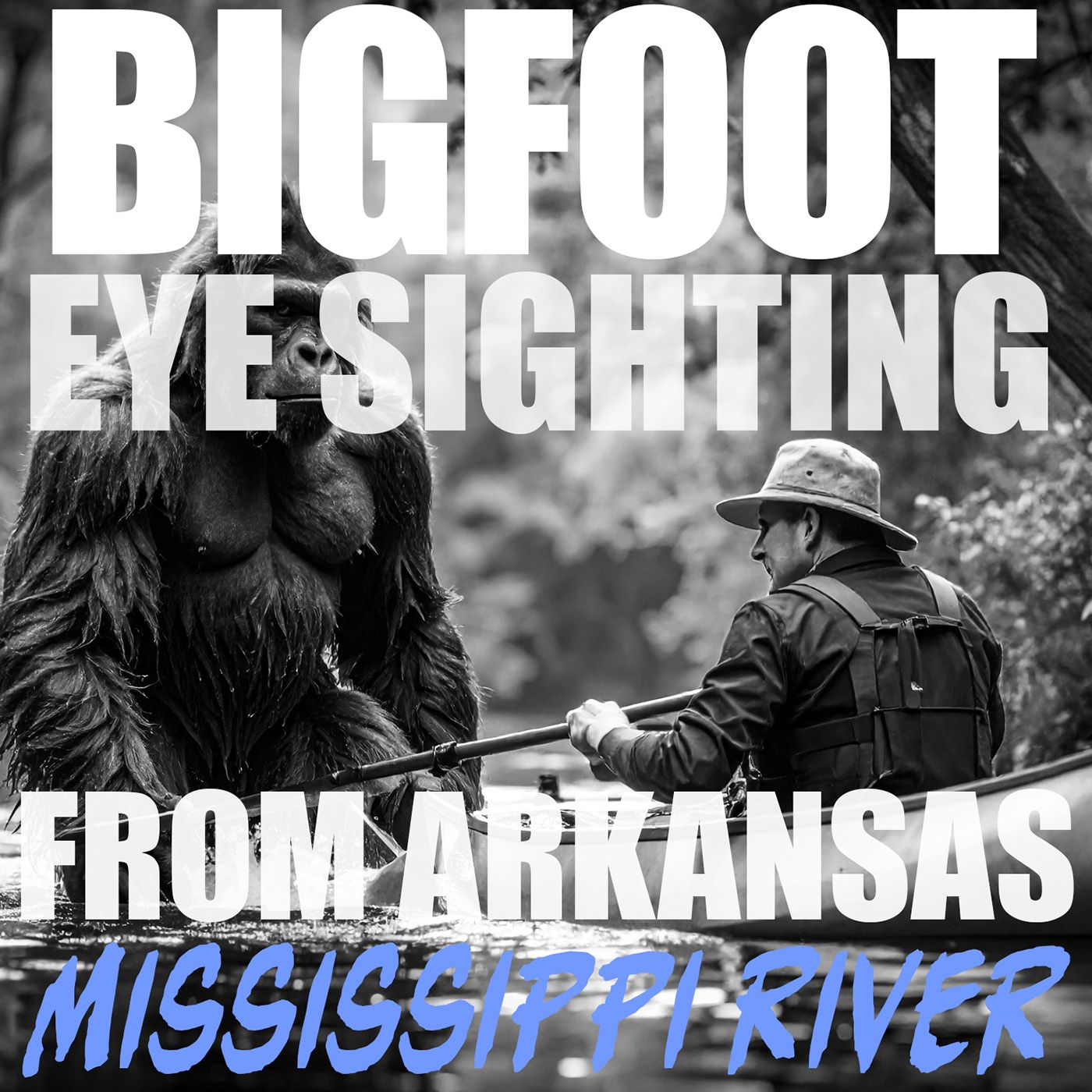
A BIGFOOT EYE SIGHTING ENCOUNTER FROM ARKANSAS | CANCER DOCTOR ENCOUNTERS BIGFOOT BY THE MISSISSIPPI
On this Sasquatch Theory podcast, I interview Rusty from Louisiana. He was canoeing in Arkansas near the Mississippi River east of Memphis Tennessee. Rusty and the people with him witnessed a primate-like creature on the bank of the river. He is certain that they saw Bigfoot. We discuss the theories and data that explain how these beings follow the waterways! Have you had a Bigfoot or Cryptid encounter before? If so, please get in touch with me at sasquatchtheory@outlook.com. Thank you everyone for the support!
Join this channel to get access to perks: https://www.youtube.com/channel/UCxoEnj_MmdmaZn39_lYQMfQ/join
SEND YOUR ENCOUNTER | GET IN CONTACT AT: (sasquatchtheory@outlook.com)
********* - LINKS TO MY ENCOUNTERS IN MISSOURI - ******** https://youtu.be/zDtyqKJmLyE https://youtu.be/VbtgzID3PS8 https://youtu.be/KSiCzaz2YI8 https://youtu.be/qs977Jd-BWM https://youtu.be/wWaZVGVRME8
**** DONATE LINK BELOW **** (HELP SUPPORT THE CHANNEL) AND NEW FUTURE VIDEOS: PAYPAL LINK BELOW https://www.paypal.com/donate/?hosted_button_id=RYCHYZKPGX8DY
YOU CAN ALSO SUPPORT THE CHANNEL BY PURCHASING A T-SHIRT OR MERCH -LINK BELOW https://www.youtube.com/channel/UCxoEnj_MmdmaZn39_lYQMfQ/store
SPOTIFY PODCAST - https://open.spotify.com/show/3qf8hAlYduQXH4ZnzUgSua
APPLE PODCASTS - https://podcasts.apple.com/us/podcast/sasquatch-theory/id1757327783
IHEART RADIO - https://iheart.com/podcast/195559529
INSTAGRAM - https://www.instagram.com/sasquatch_theory/
FACEBOOK- https://www.facebook.com/Sasquatchtheory
PAYPAL- https://www.paypal.com/donate/?hosted_button_id=RYCHYZKPGX8DY
TIKTOK- https://www.tiktok.com/@sasquatch.theory
TWITTER- https://twitter.com/sasquatchtheory
SOUNDCLOUD- https://soundcloud.com/sasquatchtheory
SASQUATCH THEORY WEBSITE - www.sasquatchtheory.com
Join this channel to get access to perks: https://www.youtube.com/channel/UCxoEnj_MmdmaZn39_lYQMfQ/join
SEND YOUR ENCOUNTER | GET IN CONTACT AT: (sasquatchtheory@outlook.com)
********* - LINKS TO MY ENCOUNTERS IN MISSOURI - ******** https://youtu.be/zDtyqKJmLyE https://youtu.be/VbtgzID3PS8 https://youtu.be/KSiCzaz2YI8 https://youtu.be/qs977Jd-BWM https://youtu.be/wWaZVGVRME8
**** DONATE LINK BELOW **** (HELP SUPPORT THE CHANNEL) AND NEW FUTURE VIDEOS: PAYPAL LINK BELOW https://www.paypal.com/donate/?hosted_button_id=RYCHYZKPGX8DY
YOU CAN ALSO SUPPORT THE CHANNEL BY PURCHASING A T-SHIRT OR MERCH -LINK BELOW https://www.youtube.com/channel/UCxoEnj_MmdmaZn39_lYQMfQ/store
SPOTIFY PODCAST - https://open.spotify.com/show/3qf8hAlYduQXH4ZnzUgSua
APPLE PODCASTS - https://podcasts.apple.com/us/podcast/sasquatch-theory/id1757327783
IHEART RADIO - https://iheart.com/podcast/195559529
INSTAGRAM - https://www.instagram.com/sasquatch_theory/
FACEBOOK- https://www.facebook.com/Sasquatchtheory
PAYPAL- https://www.paypal.com/donate/?hosted_button_id=RYCHYZKPGX8DY
TIKTOK- https://www.tiktok.com/@sasquatch.theory
TWITTER- https://twitter.com/sasquatchtheory
SOUNDCLOUD- https://soundcloud.com/sasquatchtheory
SASQUATCH THEORY WEBSITE - www.sasquatchtheory.com
2025-06-22
47 min
Transcript
Available Results
Generated results are saved to the knowledge database for reuse and search.
No generated results are available for this episode yet.
Extract Knowledge
Pick what you want extracted first. Model, scope, and chapter options appear after a template is selected.
Generated results for public episodes are saved to the knowledge database so they can be reused and searched later.
Transcript
<v Speaker 1>Hey everyone, and welcome to another Sasquatch Theory podcast. On
<v Speaker 1>this episode, we have Rusty from the state of Louisiana
<v Speaker 1>and he had a bigfoot is sighting encounter in the
<v Speaker 1>state of Arkansas. His bigfoot encounter happened right across the
<v Speaker 1>Mississippi River, not too far away from Memphis, Tennessee. So
<v Speaker 1>these things are all over the Mississippi River and they
<v Speaker 1>are following the waterways, and it really makes sense. A
<v Speaker 1>lot of the reports that I get on the channel,
<v Speaker 1>people always mention a certain waterway and being nearby, even
<v Speaker 1>if it's a small creek behind their property. I like
<v Speaker 1>to think of the Mississippi and the Missouri River like
<v Speaker 1>a huge interstate and all the creeks that connect to
<v Speaker 1>it are like state highways and county roads. If you
<v Speaker 1>have a bigfoot encounter that you would like to share
<v Speaker 1>with me here on the channel, please contact me sometime
<v Speaker 1>at Sasquatch Theory at outlook dot com. And if you
<v Speaker 1>guys can like this video, subscribe to the channel and
<v Speaker 1>comment down below. Please be sure that you are still
<v Speaker 1>subscribed to the channel. And I would really appreciate that
<v Speaker 1>I am purchasing a new drone. I took a loan
<v Speaker 1>out from the bank as a business loan. So if
<v Speaker 1>you guys can please make a donation through the PayPal
<v Speaker 1>donate link or through the thanks button, but I prefer
<v Speaker 1>the PayPal donate link because YouTube is kind of altering
<v Speaker 1>the numbers. So I really appreciate the support and it
<v Speaker 1>will really help me out with the research and being
<v Speaker 1>able to keep up with everything going on with the channel.
<v Speaker 1>With all that being said, let's dive straight into Rusty's
<v Speaker 1>Bigfoot encounter from the state of Arkansas. Rusty, Welcome, Sasquatch Theory.
<v Speaker 1>How are you doing today, sir.
<v Speaker 2>I'm good. Thank you very much for having me. Yeah.
<v Speaker 1>Absolutely, it's a pleasure to have you on the show, Rusty.
<v Speaker 1>If you would tell me a little bit about yourself,
<v Speaker 1>where you're from, and your bigfoot encounters and experiences from
<v Speaker 1>the very beginning, please.
<v Speaker 2>Sure. I am a now retired cancer surgeon actually and
<v Speaker 2>grew up in the area of Memphis, Tennessee, and my
<v Speaker 2>encounter actually was in Arkansas, just across the Mississippi River
<v Speaker 2>from Memphis, although I've lived in the New Orleans, Louisiana
<v Speaker 2>for many years since in but this actually took place
<v Speaker 2>in eastern Arkansas, just across the river from Memphis. So
<v Speaker 2>the story is I was twenty or so years old
<v Speaker 2>at the time. This was the summer of nineteen eighty
<v Speaker 2>and if anybody who was there at the time, we
<v Speaker 2>recall that summer was one of the hottest on record
<v Speaker 2>in that area. In the Memphis, Tennessee area. We had
<v Speaker 2>something like thirty five days in a row with temperatures
<v Speaker 2>above one hundred degrees, which had never been recorded before.
<v Speaker 2>So I kind of set the stage. I was working
<v Speaker 2>that summer. I was in college, and that summer I
<v Speaker 2>was working as a lifeguard at a small lake in
<v Speaker 2>eastern Arkansas, just across the river from Mississippi. Our front
<v Speaker 2>across the Mississippi River from Memphis, about a forty minute
<v Speaker 2>drive from Memphis or so. And this was a small
<v Speaker 2>natural lake that was an old run of the Mississippi
<v Speaker 2>River where it changes its course and left the lake behind.
<v Speaker 2>People would swim or fish, or picnic or camp and
<v Speaker 2>that sort of thing, so it's a sort of little
<v Speaker 2>mini resort. Anyway, I worked as a lifeguard at the
<v Speaker 2>resort with another guy who was a buddy of mine
<v Speaker 2>from college, and we would be the light guards during
<v Speaker 2>the day and then in the evening when the swimmers left,
<v Speaker 2>we could pretty much do whatever we want. We frequently
<v Speaker 2>went fishing. We had a boat that we'd take out
<v Speaker 2>and go fishing on the lake from you know, whenever
<v Speaker 2>the fish oh got the swimmers left until we got
<v Speaker 2>too dark to city basically. So then this was actually
<v Speaker 2>one day in June, so that the days are very long.
<v Speaker 2>We went fishing as usual after we got off lifeguarding,
<v Speaker 2>and we got on in our boat, and we were
<v Speaker 2>had a trolling motor on the boat. So we're moving
<v Speaker 2>very slowly about ten yards or so out from the shore,
<v Speaker 2>moving parallel to the shore, trying to catch fish. And
<v Speaker 2>so everything was quiet until all of a sudden, at
<v Speaker 2>the bank opposite us, like I said, ten yards so
<v Speaker 2>away from us, we heard like this rustling or crunching
<v Speaker 2>in the bushes and the trees. And if you ever
<v Speaker 2>been around there, the undergrowth is very thick. It's almost
<v Speaker 2>like a jungle up and down there. And so we
<v Speaker 2>looked at the shore and suddenly we saw what appeared
<v Speaker 2>to be a very large hidden shoulders of something between
<v Speaker 2>a man and a gorilla. The face was, like I said,
<v Speaker 2>more I think more human like than gorilla like. It
<v Speaker 2>clearly wasn't exactly human. It was very big, although we
<v Speaker 2>could only really see it from about old chest up,
<v Speaker 2>I guess because of the underbrush. It was like standing
<v Speaker 2>behind the brush, so it peeked up and over the
<v Speaker 2>brush so we could see its head and shoulders and chest.
<v Speaker 2>It had dark brown to black fur over head, the shoulders,
<v Speaker 2>most of the chest. Didn't have hair on its face.
<v Speaker 2>Though it looked at us at that point, when it
<v Speaker 2>realized we were there, looked at us, and we looked
<v Speaker 2>at it for maybe ten seconds or so something like that.
<v Speaker 2>Seemed like a lot longer at the time, but about
<v Speaker 2>ten seconds or so, and we didn't say anything. It
<v Speaker 2>didn't make any sounds, at least vocal sounds, and then
<v Speaker 2>it turned and ran away up into the brush, and
<v Speaker 2>we heard it for another maybe twenty thirty seconds, running away,
<v Speaker 2>and never saw it again. We did not hear any
<v Speaker 2>thing we would call a vocalization from it, only the
<v Speaker 2>noise of it, you know, running away. We didn't smell
<v Speaker 2>anything at that point. He and I quickly left the
<v Speaker 2>area went back. We had a cabin like down further
<v Speaker 2>down the lake, so we quickly left there. In the
<v Speaker 2>boat went down the cabin, locked ourselves in the cabin,
<v Speaker 2>loaded all the guns because we didn't know exactly what
<v Speaker 2>to do, and we were we were pretty scared. Any rate,
<v Speaker 2>We did not hear or see anything else that evening
<v Speaker 2>or ever again after that at that location. The we
<v Speaker 2>we talked about it a lot in detail that day
<v Speaker 2>that night, uh, and later after that we decided just
<v Speaker 2>that we couldn't tell anybody because we thought, what are
<v Speaker 2>we going to say? You know, there's a monster running
<v Speaker 2>around the lake, you know, and we just didn't know
<v Speaker 2>how to pitch that, because I can guarantee what would
<v Speaker 2>have happened is the owners if we'd said something about this,
<v Speaker 2>is that all you've boys been drinking again, you saw
<v Speaker 2>a cow or this or who knows any right, So
<v Speaker 2>we just out just not to say anything about it
<v Speaker 2>again for many years. And there's that, and said he
<v Speaker 2>think about it many years until, like I said, many
<v Speaker 2>years later, the internet had come to be a thing,
<v Speaker 2>and just cruising around on the internet, I stumbled on
<v Speaker 2>the BFRO or Bigfoot Research Organization, and they had a
<v Speaker 2>website where you could actually submit your your sighting and
<v Speaker 2>put in a specific location on a map and I
<v Speaker 2>did that then and then started hearing from people who
<v Speaker 2>had who were interested in or wanted to talk about it,
<v Speaker 2>And that's kind of where we are today. That was
<v Speaker 2>probably fifteen years ago that I posted on BFRO, and
<v Speaker 2>I've talked to handful of people about it, including you. Unfortunately,
<v Speaker 2>the guy who was with me died probably fifteen forty
<v Speaker 2>years ago, so I'm the only one live who knows it.
<v Speaker 2>And that's that's really all the story, all.
<v Speaker 1>Right, Rusty. I really appreciate you for sharing that with me.
<v Speaker 1>And that sounds like an intense encounter. What do you
<v Speaker 1>think this creature was doing in that moment?
<v Speaker 2>You know, looking back on it, I think we probably
<v Speaker 2>surprised it as much as he surprised us. I think
<v Speaker 2>he or she was probably coming down the little like
<v Speaker 2>I said, it was so hot that year, coming down
<v Speaker 2>the lake to get water. Maybe you're jumping and cool off.
<v Speaker 2>Who knows, and was the only thing he or she
<v Speaker 2>was thinking about was I got to cool off somehow,
<v Speaker 2>So he wasn't thinking to look out into the water
<v Speaker 2>for two guys in a fishing boat slowly passing in
<v Speaker 2>front of him until we actually saw it. So that
<v Speaker 2>would be my guess.
<v Speaker 1>Yeah, very well could be. Did the facial expression ever
<v Speaker 1>change on the creature.
<v Speaker 2>Not really. It looked at me us intently. It clearly
<v Speaker 2>saw us. It's we were a little all, you know,
<v Speaker 2>in a sense or looking shorty in each other's eyes.
<v Speaker 2>There really was not much change though, not like there
<v Speaker 2>was like surprise per se or Anything's like I said,
<v Speaker 2>it's just a stone face looking as seeing we were there.
<v Speaker 1>Yeah, that is interesting, and it makes me wonder what
<v Speaker 1>the creature was up to. Perhaps it was looking for food,
<v Speaker 1>maybe some fish, some frogs, or just doing its daily routine.
<v Speaker 2>Yeah, exactly. It might will have been looking for food,
<v Speaker 2>you know, as well as you know, wanting to get
<v Speaker 2>in the water. Who knows.
<v Speaker 1>Yeah, that's probably the most obvious answer, that it was
<v Speaker 1>looking for water. And it does sound like these creatures
<v Speaker 1>follow the waterways. You always hear researchers say that that
<v Speaker 1>you will find sasquatch by the water, and in this
<v Speaker 1>case it's true.
<v Speaker 2>Seems like you know, we I have been watching ever since,
<v Speaker 2>and then there's been one or two other reports from
<v Speaker 2>that area over the past, you know, forty fifty years,
<v Speaker 2>so I don't think they're common there. I think maybe
<v Speaker 2>they just travel through for half. Maybe they go up
<v Speaker 2>and down the Mississippi River, because the river at least
<v Speaker 2>between certainly between Memphis and New Orleans is mostly forested.
<v Speaker 2>All you said, I mean there's breaks where there are
<v Speaker 2>cities at the river, but there's lots of delta in uh,
<v Speaker 2>you know, unforested delta territory property along either side of
<v Speaker 2>the river, so it could easily hide and move up
<v Speaker 2>and down. So they may maybe they use that as
<v Speaker 2>a way to it like a highway kind of or
<v Speaker 2>how to pass through without being noticed.
<v Speaker 1>Yeah. Absolutely, I would agree with that. There's a ton
<v Speaker 1>of bigfoot reports here in Missouri off the Mississippi River
<v Speaker 1>and on the Illinois side, and that's what I think
<v Speaker 1>they're doing. I think they're following the waterways, and there's
<v Speaker 1>many rivers that pour into the Mississippi, and then there's
<v Speaker 1>a bunch of creeks that connect to those rivers. So
<v Speaker 1>you just have like this giant web or system of
<v Speaker 1>what these creatures use to travel, if that makes sense.
<v Speaker 2>Sure, absolutely, I mean it's just the entire Mississippi Delta
<v Speaker 2>from top to bottom potentially as accessible by you know,
<v Speaker 2>the the rivers or Lake River. Yeah.
<v Speaker 1>Absolutely, how large was this creature from arm to arm
<v Speaker 1>or shoulder to shoulder? Should I say?
<v Speaker 2>Yeah? That That's always been the tricky thing because, like
<v Speaker 2>I said, I'm not really sure whether we saw it
<v Speaker 2>standing up, are kneeling or what, because, like I said,
<v Speaker 2>we didn't really see the feet or legs, so we
<v Speaker 2>can only make an estimate kind of from of the
<v Speaker 2>head and from the shoulders. The shoulders clearly were much
<v Speaker 2>larger than myself or my friend probably. You know, it's
<v Speaker 2>it's hard to estimate that. And I thought this many times.
<v Speaker 2>How big do I think it? How big are my shoulder?
<v Speaker 2>I don't even know how big across my shoulders are.
<v Speaker 2>I would say it was easily double the si the
<v Speaker 2>width of an average man's shoulders, and the head was
<v Speaker 2>proportionate to that. I couldn't really say that I saw
<v Speaker 2>much of a neck because the black hair was kind
<v Speaker 2>of dangling down, So it was even if he had one,
<v Speaker 2>he by not being able to see it because there's
<v Speaker 2>so much here in the way.
<v Speaker 1>Yeah, that makes sense. We'll just go with three feet plus.
<v Speaker 1>And it could have been bigger, it could have been smaller.
<v Speaker 1>Do you think this was an adult creature a juvenile
<v Speaker 1>what would you say it was?
<v Speaker 2>Yeah, it was my guess that it was an adult.
<v Speaker 2>I don't know that I can really point to much objective,
<v Speaker 2>you know, information to prove that other than just looking
<v Speaker 2>in the face. It was kind of wrinkled. It was
<v Speaker 2>kind of, like I said, kind of stone faced. It
<v Speaker 2>just struck me as an adult. Whether that's true or not,
<v Speaker 2>that was the impression I had.
<v Speaker 1>Yeah, that makes sense. And can you describe what the
<v Speaker 1>face looked like? Did it have like a conical shaped head,
<v Speaker 1>was it round like a football helmet? And what other
<v Speaker 1>details can I remember?
<v Speaker 2>Sure? You know the head was more round, kind of
<v Speaker 2>like a football helmet, you say in others, I did
<v Speaker 2>not see the kind of conical shape that some people
<v Speaker 2>report from from that are in you know, in gorillas,
<v Speaker 2>So which is why I say it's somewhere between. It
<v Speaker 2>looked like something between an ape and a man. But
<v Speaker 2>maybe you know, in some places it looked more like
<v Speaker 2>a man. Somebody's more like an ape. So like if
<v Speaker 2>you look at the the nose, for example, in the mouth,
<v Speaker 2>I would have said that was more like a gorilla
<v Speaker 2>or an ape had very would appeared to be grimacing
<v Speaker 2>type lips. If you can imagine rund memia where they
<v Speaker 2>can move their lips very aggressively, or they really didn't
<v Speaker 2>do that with me. It just kind of look that way.
<v Speaker 2>The nose was very broad and the nozrils were upflared
<v Speaker 2>like a ape would be. The eyes were pretty much
<v Speaker 2>proportional to the rest of the face, and were you know,
<v Speaker 2>there was nothing distinctive I guess about the eyes. They
<v Speaker 2>seemed dark. What else I said it was? The skin
<v Speaker 2>was dark itself, maybe not not not as dark as
<v Speaker 2>the hair, but kind of a dull gray black. And
<v Speaker 2>what else you know that that that's pretty much it. So,
<v Speaker 2>like I said, I guess this way to summarize it,
<v Speaker 2>it's somewhere between a eight some eight white teachers, but
<v Speaker 2>some human white teachers.
<v Speaker 1>Yeah, that makes sense. And what color did you say
<v Speaker 1>the creature was?
<v Speaker 2>You know, I think the skin, which you can only
<v Speaker 2>really see, at least I could only really see on
<v Speaker 2>the face, was sort of a dull gray to black,
<v Speaker 2>almost even maybe with a little silver tinge to it.
<v Speaker 1>Okay, that gives me a better idea of what this
<v Speaker 1>creature looked like. How fast was this reach or whenever
<v Speaker 1>it took off?
<v Speaker 2>It was real quick turning around, you know, but it
<v Speaker 2>wouldn't have taken you know, more than a second and
<v Speaker 2>two even for a human because the brush is so
<v Speaker 2>thick there, you know, as soon as you're turn away,
<v Speaker 2>it was gone. I mean, we couldn't see it anymore.
<v Speaker 2>We could hear it, and you could hear it stamping
<v Speaker 2>through the brush and the trees and stuff. So we
<v Speaker 2>heard it for another like I said, twenty thirty seconds maybe,
<v Speaker 2>And you could tell this the legy ship was at
<v Speaker 2>the bottom of a levee, so you could hear it
<v Speaker 2>climbing back up the levee basically crashing through trees. And
<v Speaker 2>then by the time they got to the top of
<v Speaker 2>the levee and on the side of being we couldn't
<v Speaker 2>hear it anymore. So, like I said, maybe maybe thirty
<v Speaker 2>seconds to get to the top of the levee, which
<v Speaker 2>would be very quick for a human to crawl through
<v Speaker 2>that levee itself, being probably twenty ei feet high.
<v Speaker 1>Yeah, that sounds pretty quick. And you have a good
<v Speaker 1>point about this creature looking human like and like a gorilla,
<v Speaker 1>because whenever I had my encounter, I found I'm this
<v Speaker 1>photo on Pinterest that looked very similar to what I
<v Speaker 1>had seen, and I showed one of my friends from
<v Speaker 1>Minnesota and I said, man, I think this thing looks
<v Speaker 1>very primate, and he said, I disagree. I think it
<v Speaker 1>looks more human. So some people, from their perspective, they
<v Speaker 1>think it looks more human to where others think it
<v Speaker 1>looks more primate. So it's kind of hard to say.
<v Speaker 1>I mean, when you look at a primate, you can say, man,
<v Speaker 1>that thing looks so human.
<v Speaker 2>Sure, well, you got to imagine, you know, this thing.
<v Speaker 2>If you think like I do, that this is truly
<v Speaker 2>a biological or flesh and blood animal, then there has
<v Speaker 2>to be variation in you know, each creature, you know what.
<v Speaker 2>In other words, one creature doesn't look just like another creature,
<v Speaker 2>just like one human doesn't look like another, So you
<v Speaker 2>would expect, you know, there to be some degree of variation.
<v Speaker 2>There are probably some I would guess that look more
<v Speaker 2>purely ape like, and maybe some that look even more
<v Speaker 2>human like than what I saw. So you know that
<v Speaker 2>doesn't really I guess surprise me bothered me about it?
<v Speaker 1>Yeah, I would agree with that. And you've gone through
<v Speaker 1>life and you've learned so much through your studies. You
<v Speaker 1>became a cancer surgeon, and how did this encounter change
<v Speaker 1>your perspective on how you perceive life?
<v Speaker 2>You know, I thought about that a lot at the time.
<v Speaker 2>Like I said, I was only twenty years old, and
<v Speaker 2>you know, at twenty most of us at least are
<v Speaker 2>like me, didn't think much about you know, the nature
<v Speaker 2>of life and things like that. We were mostly confused,
<v Speaker 2>scared college students. You know. It took longer for me
<v Speaker 2>to kind of put it in perspective. In other words,
<v Speaker 2>I didn't I didn't know what to think about it
<v Speaker 2>right then, and didn't just because we went back to
<v Speaker 2>school or you know, we didn't think about it anymore,
<v Speaker 2>so it was out of my mind. It took two
<v Speaker 2>years later, actually, probably when I started noticing stuff about
<v Speaker 2>it online, for me to really kind of re reevaluate
<v Speaker 2>that experience and try to get an idea of and
<v Speaker 2>I think of anything. I would say it made me
<v Speaker 2>more open to looking at are looking into things that
<v Speaker 2>might not really are. There are things we cannot prove.
<v Speaker 2>That's that's the best way to put it. So it
<v Speaker 2>made me more willing to at least, you know, hear
<v Speaker 2>the stories of listen to the stories of read the
<v Speaker 2>data of concepts or ideas or our experiences that we
<v Speaker 2>can't actually prove objectively, you know, and who knows, maybe
<v Speaker 2>somebody we will prove Bigfoot objectively and you know it
<v Speaker 2>will be ables's solve this and we don't have to
<v Speaker 2>do podcasts like this anymore, I guess. But I think
<v Speaker 2>basically that's it. It's that it made me more willing
<v Speaker 2>to look at subjects that are maybe not not fully
<v Speaker 2>accepted by mainstream science.
<v Speaker 1>Yeah, that makes sense to me. And when you learn
<v Speaker 1>or when you encounter a creature like this, you know
<v Speaker 1>that there's so much that we're not being told. And
<v Speaker 1>I don't know, I guess this is kind of off topic,
<v Speaker 1>but I've heard that, you know, the powers that be
<v Speaker 1>have the the cure, the treatment for cancer, and they
<v Speaker 1>don't want to give it up because of money. Do
<v Speaker 1>you think that's true? Have you ever wondered that whenever
<v Speaker 1>you were doing any procedures on people that man, maybe
<v Speaker 1>they have the cure for this, but they don't want
<v Speaker 1>to tell ally.
<v Speaker 2>Yeah, yeah, I heard the same thing. I mean, you know,
<v Speaker 2>that's it's that that's there's lots of talk about that
<v Speaker 2>these days. And I don't think that's precisely true, But
<v Speaker 2>I don't let the powers that be off the hook
<v Speaker 2>that easily. Either. I'll tell you what I think is
<v Speaker 2>that the quote powers that be, and I think in
<v Speaker 2>terms of particularly in terms of cancer, the powers that be,
<v Speaker 2>honestly are the pharmaceutical companies because they currently are putting
<v Speaker 2>the vast amount, the vast majority of funding into cancer research,
<v Speaker 2>much more than for example, a national Cancer Institute or
<v Speaker 2>any other, uh you know, federal or nonprofit organization. So
<v Speaker 2>as a result, the drugs that they develop are going
<v Speaker 2>to pre The reason they're developing those drugs is not
<v Speaker 2>to cure cancer per se or even the help cancer.
<v Speaker 2>It's to make the pharmaceutical company money. And that's just
<v Speaker 2>the nature of the beasts. You know. The pharmaceutical companies
<v Speaker 2>are for profit businesses, capitalists society. Their number one goal
<v Speaker 2>to their shareholders are a responsibility to their shareholders is
<v Speaker 2>to make money. It's not to the general public to
<v Speaker 2>cure them of cancer. You know, that's what they give
<v Speaker 2>work lip service to doing, but that's not really what
<v Speaker 2>they're doing. Hopefully, you know, there's enough integrity among enough
<v Speaker 2>of us humans left on the planet that you know
<v Speaker 2>that that they won't sell out completely. But there's no
<v Speaker 2>doubt in their mind that the quote powers that be
<v Speaker 2>are less honest than they would like us to believe.
<v Speaker 1>Oh yeah, absolutely. There's several times in my life where
<v Speaker 1>I've had to take medication for something and it never
<v Speaker 1>fixed the problem. It just put a band aid over it.
<v Speaker 1>And it's like, man, this thing has ten side effects.
<v Speaker 1>I'm trying to fix one problem and I'm experiencing four
<v Speaker 1>or five other things? What do I do? And it
<v Speaker 1>does seem like it's just something that they have to
<v Speaker 1>make money, and it's sad. But yeah, I kind of
<v Speaker 1>I agree with you that the pharmaceutical companies are making
<v Speaker 1>money off of this. Corporations are making money, and I
<v Speaker 1>think that's the main answer to what's going on with
<v Speaker 1>all these hidden secrets, whether it's Bigfoot, UFOs, I mean,
<v Speaker 1>whatever it may be. I mean, I truly feel like
<v Speaker 1>if a scientist wanted to prove the paranormal, they could
<v Speaker 1>easily do it. But I think it's just something they
<v Speaker 1>can't control, and it's not something that you can have
<v Speaker 1>like this controlled experiment and it's going to happen. But
<v Speaker 1>I do believe that let's say you got five scientists
<v Speaker 1>to go into this controlled building and they played with
<v Speaker 1>Wuiji boards and did all this thing, like all these
<v Speaker 1>things and documented everything. I think they would have things happen,
<v Speaker 1>maybe not in that moment, but probably when they went
<v Speaker 1>home or throughout their life. And it's just like something
<v Speaker 1>you can't prove, but at the same time, I think
<v Speaker 1>it's possible.
<v Speaker 2>Yeah, you know. I actually I've had a very similar
<v Speaker 2>discussion of that with doctor Jeff Meldrum. He may have
<v Speaker 2>heard of He's you know, he's all over the map
<v Speaker 2>on Bigfoot. He's actually a professor of anthropology at Heidaho
<v Speaker 2>State in Puncatel, a lot of it, and I went
<v Speaker 2>up there a couple of years ago and talked to
<v Speaker 2>him in his lay about various things, including obviously lots
<v Speaker 2>of Bigfoot related stuff, and I kind of answer him
<v Speaker 2>that question, you know, if you got it together or
<v Speaker 2>if you had enough funding, so if the UNCI or
<v Speaker 2>NIH or whoever took it seriously and really wanted to
<v Speaker 2>fund to fund Bigfoot research in the way that they
<v Speaker 2>do you know other things, do you think we can
<v Speaker 2>make a difference? And he was unsure to you know,
<v Speaker 2>to his credit, he did not say, oh, yeah, absolutely,
<v Speaker 2>we can do this. You know, he says it's it's
<v Speaker 2>a if it exists, it's a very elusive, relatively intelligent,
<v Speaker 2>and relatively uncommon animal. In other words, there's not that
<v Speaker 2>many of them. They know pretty well how to hide,
<v Speaker 2>and they hide in places that you know, humans don't
<v Speaker 2>really like to go that much. So could we find
<v Speaker 2>them if we put an infinite amount of money into it?
<v Speaker 2>He actually honestly answered, I don't know, and I don't either,
<v Speaker 2>you know, I think that's one of those great mysteries.
<v Speaker 1>Yeah, that's a great question. And I have a lot
<v Speaker 1>of respect for doctor Jeff Meldrum. And people say that
<v Speaker 1>Sasquatch isn't real, it's a bunch of bs, it's a
<v Speaker 1>fairy tale. But nobody has put in billions or even
<v Speaker 1>trillions of dollars to research this, And if they have,
<v Speaker 1>I'd like to know who it is, because from what
<v Speaker 1>I've seen, it's just regular researchers. Maybe there's like a
<v Speaker 1>TV crew that's put a lot of money into it,
<v Speaker 1>but they're still using the same equipment that let's say,
<v Speaker 1>you know what I would use as far as like
<v Speaker 1>audio recorders, thermal devices, night vision. But who has actually
<v Speaker 1>put in millions or billions of dollars into this, and
<v Speaker 1>maybe they used thermal satellites and military grade equipment. I
<v Speaker 1>don't know of anyone, but I'm sure the government has
<v Speaker 1>or secret projects.
<v Speaker 2>It's you know, coming up from the bottom money, it's
<v Speaker 2>not coming from above. In fact, doctor Meldrum told me
<v Speaker 2>something interesting along that line. So not only is it
<v Speaker 2>very difficult to get funded to do that kind of research.
<v Speaker 2>You know, if you're at a research in research in
<v Speaker 2>university as faculty, one of your big goals is to
<v Speaker 2>get funded. You know, you want to pay your way there.
<v Speaker 2>That that's what they you know, that's the way the
<v Speaker 2>whole system is based around. And it's been a real
<v Speaker 2>detriment to his career that there's no way for him
<v Speaker 2>to try to get funded because nobody wants to put it.
<v Speaker 2>There are no government agencies, there's no official nonprofits. There
<v Speaker 2>are very few official nonprofits that wants you fund that
<v Speaker 2>kind of research. So it's actually been a hardship for
<v Speaker 2>his career, which I thought was interesting.
<v Speaker 1>Oh yeah, absolutely. Even if you're an artist, Let's say
<v Speaker 1>you have this awesome song and it's just you singing
<v Speaker 1>with your acoustic guitar, there's no way to get this
<v Speaker 1>label or go big without letting someone else control your
<v Speaker 1>music and completely change it from whatever style you had
<v Speaker 1>to like pop music, and they'll just completely butcher it
<v Speaker 1>and keep all the money. So it's like anything in
<v Speaker 1>this life. If you really want to go big with it,
<v Speaker 1>it's all going to be controlled.
<v Speaker 2>Seems that way sometimes.
<v Speaker 1>Yeah, it certainly does. You just have to do it
<v Speaker 1>on your own and believe that that it's pop possible.
<v Speaker 1>I'd like to get with doctor Jeff Meldrum and do
<v Speaker 1>some research. I always knew that if if I found
<v Speaker 1>Bigfoot tracks, I would send them in to Jeff Meldrum
<v Speaker 1>just to see what he has to say about it.
<v Speaker 2>Oh yeah, no, I looked at many of the tracks
<v Speaker 2>in his collection. It was just fascinating. He unfortunately has
<v Speaker 2>recently had some health problems, so I'm not sure how
<v Speaker 2>much longer he's going to be doing this, So you know,
<v Speaker 2>keep in your prayers.
<v Speaker 1>Yeah, I absolutely will. This is another off the wall question.
<v Speaker 1>Do you think the sasquatch can get cancer?
<v Speaker 2>Oh? Yeah, absolutely? What you know? Why not? I mean
<v Speaker 2>almost any umm alien species on the planet can get
<v Speaker 2>cancer of some kind, so why not?
<v Speaker 1>Yeah, I would agree with that. What do you think
<v Speaker 1>is something that causes cancer the most.
<v Speaker 2>You know, there's a lot of exposures that for sure
<v Speaker 2>calls cancer, and it's the predictable ones, you know, tobacco exposure,
<v Speaker 2>sunlight exposure, you know, certain of the facts that we eat,
<v Speaker 2>are diet, and then even more important probably are genetics
<v Speaker 2>in others. What what you inherit from your parents that
<v Speaker 2>put you at risk for certain cancers? And it's typically
<v Speaker 2>most cancers are typically some combination of your inherited susceptibilities
<v Speaker 2>and the elements that you are in contact with are
<v Speaker 2>consumed or somehow get you know, get near you on
<v Speaker 2>a regular basis, and somehow that is that very complex
<v Speaker 2>interaction is what results of the cancer. Now, others you
<v Speaker 2>can be and we've proven this many times, say, are
<v Speaker 2>in tobacco smokers, not all of them are going to
<v Speaker 2>get lung cancer. Even some of the heaviest smokers for
<v Speaker 2>years and years decades will never get lung cancer. Well,
<v Speaker 2>why is that when others do? Well? You have to
<v Speaker 2>have the right combination of the right genetics that you
<v Speaker 2>were inherited to make you susceptible to tobacco smoke. Now,
<v Speaker 2>it's tobacco being one of the most parcinogenic things out
<v Speaker 2>there more people tend to have those susceptibilities than do
<v Speaker 2>most other things. But it's got to be some combination
<v Speaker 2>of what you're born with and what you've lived through.
<v Speaker 1>Yeah, I agree, there's probably a lot of factors to
<v Speaker 1>why people get cancer, whether it's too much sun exposure,
<v Speaker 1>nicotine stress, I don't know, eating food from a microwave
<v Speaker 1>too much, and like you said, genetics. I think possibly
<v Speaker 1>the sasquatch have less of a chance of getting cancer
<v Speaker 1>because they're eating natural food out in the forest as
<v Speaker 1>far as like deer, squirrels, whatever vegetation. They can get
<v Speaker 1>natural water, but it's hard to say because there's a
<v Speaker 1>lot of pollutinants out there as far as like streams.
<v Speaker 1>A lot of the fertilizers from farms drained into creeks
<v Speaker 1>and they drain into the rivers. So maybe they're getting cancer,
<v Speaker 1>and its possibility, you.
<v Speaker 2>Know, I'll tell you're right in the sense I think
<v Speaker 2>that says quash probably get fewer click cancers than humans do,
<v Speaker 2>but that may be largely because of lifespan. You know,
<v Speaker 2>in general, humans didn't get cancers until are very few
<v Speaker 2>until the Industrial Revolution, and that's because they weren't living
<v Speaker 2>long enough in others, when your median life expectancy is
<v Speaker 2>under fifty. We know most cancers in the US occur,
<v Speaker 2>you know, over fifty in people over typically over sixty.
<v Speaker 2>So if you're not living long enough to get cancer,
<v Speaker 2>then it looks like, you know, your instance of cancer
<v Speaker 2>is very low. Well, do we have no idea what
<v Speaker 2>the bigfoot life expectancy is? What? I can't imagine it's
<v Speaker 2>going to be a very large creature like that. I
<v Speaker 2>can't imagine it's gonna be something like, you know, fifty years,
<v Speaker 2>very large time made in the wild. So you know,
<v Speaker 2>maybe they're not getting many cancers because they don't live
<v Speaker 2>as long as we do. On the other hand, maybe
<v Speaker 2>they get different cancers. I mean, other animals get different
<v Speaker 2>kinds of cancer. I have a cat that had a
<v Speaker 2>cancer on its ear and having respected actually, so we'd
<v Speaker 2>like to say we have a cancer survivor in our house.
<v Speaker 2>But it just gets different, you know. You presumably we'll
<v Speaker 2>get different kinds of cancers than the human species would.
<v Speaker 1>Yeah, that makes sense, and yeah, humans are living to
<v Speaker 1>be you know, they're living to a longer age in life.
<v Speaker 1>But at the same time, we have these five G
<v Speaker 1>cell phones that we have up to our head constantly.
<v Speaker 1>We're watching TV and a lot of that stuff is
<v Speaker 1>kind of newer. You know, no one has really in
<v Speaker 1>the history of mankind watched Netflix for seventeen hours straight,
<v Speaker 1>but you know it's something new. Yeah, we're living longer,
<v Speaker 1>but we have more problems, I guess, is what I'm
<v Speaker 1>getting up.
<v Speaker 2>We have more chronic diseases. I think that's the way
<v Speaker 2>I would look at it. Now, are some of those
<v Speaker 2>diseases results team from some of the exposures we put
<v Speaker 2>ourselves to go?
<v Speaker 1>Oh yeah, probably, yeah, absolutely. And where you encountered this sasquatch?
<v Speaker 1>Did you ever go back to the area to investigate
<v Speaker 1>to see if you can possibly see another one or
<v Speaker 1>find some tracks.
<v Speaker 2>You know, Like I said, we were living there that summer,
<v Speaker 2>so we hung around there all the you know, this was,
<v Speaker 2>like I said, in June, so we were there through August.
<v Speaker 2>We never saw or heard anything again that, it would
<v Speaker 2>absolutely swear was unusual. I never saw any any footprints.
<v Speaker 2>We heard, you know, screens at night sometimes. Well we
<v Speaker 2>knew we had matlins in that area, so they make
<v Speaker 2>a screen and coyotes and they make screams like that.
<v Speaker 2>So there's nothing we could absolutely swear, you know that
<v Speaker 2>that was unusual. Since then, I've only been I've only
<v Speaker 2>driven by a handful of times. So the ownership of
<v Speaker 2>the property changed hands, and now I don't even know
<v Speaker 2>who owns it. The family that owned it when I
<v Speaker 2>was there is long gone, so you know, I don't
<v Speaker 2>even have any access to it anymore.
<v Speaker 1>Okay, yeah, I appreciate your honesty. And have you ever
<v Speaker 1>encountered anything paranormal in your life? I mean, during that
<v Speaker 1>time frame that you've seen the Sasquatch or maybe whenever
<v Speaker 1>you were doing a procedure, have you ever experienced anything
<v Speaker 1>unusual that you can't explain?
<v Speaker 2>You know, they're certainly I'll put this away, but certainly
<v Speaker 2>every cancer physician will tell you that there are things
<v Speaker 2>that have happened in their experience they can't explain. Be
<v Speaker 2>it something as simple as a patient who has a
<v Speaker 2>very extensive disease and you would swear he's not going
<v Speaker 2>to live out, you know, the week maybe, and then
<v Speaker 2>ten years later they're alive. And well, all of us
<v Speaker 2>who have been in the business any length of time
<v Speaker 2>have experiences like that. You know, I think that's as
<v Speaker 2>worthy of being called paranormal as anything. I have no
<v Speaker 2>idea why, you know, something with a wide person with
<v Speaker 2>a widely ministhetic cancer who is appears to be on
<v Speaker 2>their deathbed suddenly has a go away and stay away
<v Speaker 2>when we really did nothing that made any difference. So
<v Speaker 2>you know, in my mind, that's paran orlean in of itself. Now,
<v Speaker 2>having said that, I have we have a history, I
<v Speaker 2>guess in that. Like I said, we live in and
<v Speaker 2>have lived in New Orleans, Louisiana for many years. We
<v Speaker 2>owned a big house in uptown New Orleans that was
<v Speaker 2>built in eighteen eighty by a retired Confederate general, and
<v Speaker 2>the general has been reported to be seen in the house.
<v Speaker 2>All of myself and my family have never seen it.
<v Speaker 2>We were watching, But I don't know whether the general
<v Speaker 2>moved on after a while, or you know, maybe we
<v Speaker 2>were boring to him, he just left. I don't know,
<v Speaker 2>but that was a story about our house.
<v Speaker 1>Yeah, yeah, that's terrifying to know that. And whenever you
<v Speaker 1>are doing these procedures your line of work, how did
<v Speaker 1>you combat the stress? Like did it ever get to
<v Speaker 1>you seeing these people that were somewhat hopeless and going
<v Speaker 1>downhill rapidly?
<v Speaker 2>Oh? Yeah, all the time, that's you know, one of
<v Speaker 2>the things that we we work on with our trainees
<v Speaker 2>constantly is how to you know, how to keep yourself
<v Speaker 2>from being affected by that. And one of the ways
<v Speaker 2>we do that is we actually tell our trainees that
<v Speaker 2>you have to make some kind of professional distance from
<v Speaker 2>the patient. Even in people who you really like, you know,
<v Speaker 2>you just you're attracted to them as you would be
<v Speaker 2>somebody on the street. You know, just a nice person
<v Speaker 2>and you'd like to be nice to them. You have
<v Speaker 2>to maintain some kind of distance or what will happen
<v Speaker 2>is when they get sick and die, you're going to
<v Speaker 2>feel even worse about it. So and that's tricky to do,
<v Speaker 2>and you're not always going to be successful in it.
<v Speaker 2>And certainly some there are patients that I've tried to
<v Speaker 2>maintain that distance from that I'm not have not been
<v Speaker 2>completely able to and their illness and death have been
<v Speaker 2>particularly difficult. But that's one of the things we teach
<v Speaker 2>is to help help young physicians try to do to
<v Speaker 2>manage those circumstances. And not all of them can do it.
<v Speaker 2>You know, there are a lot of physicians who who
<v Speaker 2>simply won't do oncology because they don't want to put
<v Speaker 2>themselves in that situation, so hopefully it's sort of a
<v Speaker 2>self selective thing.
<v Speaker 1>Also, Yeah, absolutely, I imagine it's extremely difficult to deal with that,
<v Speaker 1>especially whenever you gain this relationship with the person and
<v Speaker 1>you know, you try to tell yourself it's not going
<v Speaker 1>to affect me, and later down the road, you know,
<v Speaker 1>it hits you and you just can't control it. But
<v Speaker 1>I guess you have to learn how to accept it
<v Speaker 1>and move on and being professional about your your line
<v Speaker 1>of work.
<v Speaker 2>Oh yeah, you know. I think the ones who who
<v Speaker 2>that I would even struggle with would be the pediatric
<v Speaker 2>oncologists who deal with, you know, with young children with
<v Speaker 2>life threatening illnesses. I would find that I think even
<v Speaker 2>more troubling or challenging. I don't think I would want
<v Speaker 2>to do that.
<v Speaker 1>Yeah, no doubt about that. And that's the thing about
<v Speaker 1>the Bigfoot topic is like there's just no answer to
<v Speaker 1>why this is going on. You hear all these theories
<v Speaker 1>that you know, it's it's a primate, you know, it's
<v Speaker 1>a living species out there, and then you hear these
<v Speaker 1>bizarre stories where you know, people seeing orbs around the
<v Speaker 1>sasquatch or they just vanished, And I think That's one
<v Speaker 1>of the keys to life is that sometimes there isn't
<v Speaker 1>an answer, but you know it's truly happening. And you know,
<v Speaker 1>why why would this little kid who's done nothing wrong
<v Speaker 1>get cancer and die? Like why does he deserve that?
<v Speaker 1>But this murder is living this life and yeah he's
<v Speaker 1>in jail, but you know he's still getting fed and
<v Speaker 1>getting taken care of and he just you know, you
<v Speaker 1>wonder about these things and it doesn't make sense.
<v Speaker 2>Sure, just one of those those things we can't understand.
<v Speaker 2>You know. It's just like you said, it's kind of
<v Speaker 2>the same thing with Bigfoot. I mean, I will admit
<v Speaker 2>I think if that, if that creature, whatever you want
<v Speaker 2>to call it, exists, then it is in fact a
<v Speaker 2>flesh and blood primate, maybe even a hominid that descended
<v Speaker 2>from other hominids, maybe you know from hundreds of thousands
<v Speaker 2>of years ago. You know, there's the so called Gigantopithecus
<v Speaker 2>theory about a very large dominant that was in Asia,
<v Speaker 2>you know, and could that have migrated across the Bearing
<v Speaker 2>land bridge with early humans? Sure, and then it's developed
<v Speaker 2>into what we know today, as saysquatch Uh, Yeah, I
<v Speaker 2>think that's possible. Now just as you say, though, I've
<v Speaker 2>heard plenty of people who have told me some of
<v Speaker 2>the more extreme, parent normal things about it, you know,
<v Speaker 2>like the bigfoots can cloak themselves, or they can you know,
<v Speaker 2>they can uh do telepathy, they can contact you in
<v Speaker 2>your mind, or you know, the ores and those things
<v Speaker 2>like you mentioned. You know, I don't make fun of anybody.
<v Speaker 2>You know, if if you think that's that's what you
<v Speaker 2>solved and that's what you saw, you know, you just
<v Speaker 2>have to take it at face value. And and then
<v Speaker 2>you know, with for me, I take I accept that,
<v Speaker 2>say yeah, okay, thank you, and then in my own
<v Speaker 2>mind I kind of set that aside and think, okay,
<v Speaker 2>what is real? You know, here's my my thought about that.
<v Speaker 2>It would be very difficult for me to try to
<v Speaker 2>solve a mystery with another mystery. In other words, the
<v Speaker 2>mystery bigfoot. Oh it's an alien, but but aliens are
<v Speaker 2>a mystery, you know. I mean, that doesn't solve anything.
<v Speaker 2>So that's just kind of the way I go. And
<v Speaker 2>I don't make fun of anybody. I'm certainly open to
<v Speaker 2>anybody telling me what they think about it, and I
<v Speaker 2>will be respectful of that. It's just you know, I
<v Speaker 2>don't look at it that way.
<v Speaker 1>Yeah, I agree, and I guess anything is possible. Do
<v Speaker 1>you think that the Sasquatch are possibly able to find
<v Speaker 1>cures for their illnesses? I've heard with elephants in Africa
<v Speaker 1>that they're hardwired within their DNA to seek out certain plants,
<v Speaker 1>and then they consume certain plants and it kind of
<v Speaker 1>mixes in their stomach. And I've even heard scientists say
<v Speaker 1>that they possibly know the care to cancer.
<v Speaker 2>You know, I think it's possible, and I've heard variations
<v Speaker 2>on that, you know, uh, scattered around for many years.
<v Speaker 2>And why not. You know, if a creature learns way
<v Speaker 2>back in its evolutionary past that if you eat this plant,
<v Speaker 2>that it'll make you feel better basically, and then that
<v Speaker 2>becomes a part of their both first their oral tradition
<v Speaker 2>and then eventually their genetic tradition. Sure, that's possible. You know.
<v Speaker 2>I don't know that I would say I know of
<v Speaker 2>any any specific instances of it now, but it certainly
<v Speaker 2>seems theoretically possible.
<v Speaker 1>Yeah, anything as possible. What do you think is the
<v Speaker 1>main reason that we're not being told about Bigfoot?
<v Speaker 2>Hmmm? You know, I I here's what I will say
<v Speaker 2>about that. I do think most law enforcement agencies that
<v Speaker 2>have been involved with the phenomena are are are genuine
<v Speaker 2>in their simple disdain. I think most of them don't
<v Speaker 2>really have any secret knowledge. You know, if you talk
<v Speaker 2>to the sheriff of your county that then somebody cames
<v Speaker 2>comes up to him and claims he's seen a bigfoot.
<v Speaker 2>You know, the sheriff's the guy you've known for twenty years.
<v Speaker 2>He's very stable, good guy, he has no motivation and
<v Speaker 2>you know, and trying to maintain some great conspiracy. I
<v Speaker 2>think most of the most of the law enforcement are like that.
<v Speaker 2>They don't really have any They're not trying to kind
<v Speaker 2>any secrets. They just don't. They just hold the whole
<v Speaker 2>topic in disdain in a sense, I don't want to
<v Speaker 2>hear about it because I think it's silly and that's it. Now.
<v Speaker 2>Are there some cases of potentially government or other agencies
<v Speaker 2>that know more than that? You know? I think I
<v Speaker 2>have to say that's possible. You know, we found out
<v Speaker 2>a lot of things we didn't know about the government
<v Speaker 2>in the last few years anyway, not necessarily bigfoot, but
<v Speaker 2>that things that the government is doing that we don't
<v Speaker 2>necessarily know about so again, I think it's theoretically possible.
<v Speaker 2>I don't think the majority of law enforcement people are
<v Speaker 2>quote in on it. I think most of them just
<v Speaker 2>look at it, look down their nose, kind of at
<v Speaker 2>the whole phenomena, and just kind of get a laugh
<v Speaker 2>out of it.
<v Speaker 1>Yeah, I agree, And I've even interviewed in sheriffs who
<v Speaker 1>have encountered these creatures, and you know, it's really changed them.
<v Speaker 1>And there's not really much you can do. I mean,
<v Speaker 1>you can't go to the chief or whoever's in charge
<v Speaker 1>of the supervisor and push it. I mean, it's something
<v Speaker 1>that you saw and it's unexplained and you have to
<v Speaker 1>move on to the next case.
<v Speaker 2>That's exactly right, you know. That's why you know, you
<v Speaker 2>think about Jeff Malgrm, why has he been stuck in
<v Speaker 2>is you know, he is at his academic profile for
<v Speaker 2>so long. It's because he's willing to say those things
<v Speaker 2>to the balls who probably doesn't have any stake in
<v Speaker 2>the game but just thinks it's kind of silly. It's
<v Speaker 2>you know, we really don't want to mess with that here,
<v Speaker 2>so it can be a detriment, you know, to speak
<v Speaker 2>to authorities about it. I don't see certainly why people
<v Speaker 2>would not want to.
<v Speaker 1>Yeah, absolutely, I mean I think it's worth studying. There's
<v Speaker 1>so many people that have encountered these creatures. There's been
<v Speaker 1>tracks that have been found, unknown hair samples, DM nay,
<v Speaker 1>and strange videos. I think it's worth a shot. If
<v Speaker 1>some scientists wanted to get together and possibly find the funding,
<v Speaker 1>I think it'd be worth it. But then again, there's
<v Speaker 1>the risk of spending your entire career and not finding anything.
<v Speaker 1>There's a lot of researchers out there that have dedicated
<v Speaker 1>their life to Bigfoot and just never seen one. And
<v Speaker 1>I've heard it several times that I've spent my entire
<v Speaker 1>life looking for Bigfoot and I've just never seen it.
<v Speaker 2>Oh yeah, no, I get it, and that would be frustrating,
<v Speaker 2>you know. I think the answer, in terms of funding,
<v Speaker 2>it's going to have to come from the private sector.
<v Speaker 2>You know, There've been a handful of individuals over the
<v Speaker 2>year who were wealthy enough to be able to fund
<v Speaker 2>you know, big expensive expeditions of various times, and I
<v Speaker 2>think that's the only way it's really going to be
<v Speaker 2>that we're really ever going to get any significant funding
<v Speaker 2>for that At that of the Satisquatch area of research.
<v Speaker 1>Yeah, I agree. I mean far as getting a group
<v Speaker 1>together that has thermal satellite cameras and military equipment, I
<v Speaker 1>don't think that's going to happen. And even things that
<v Speaker 1>happened in the military, you know, they're told to keep
<v Speaker 1>quiet about it, even if it's something that's not that
<v Speaker 1>huge of a deal. You know, they're just not allowed
<v Speaker 1>to talk about it. And you know, if you're in
<v Speaker 1>the military, you kind of see that that they control
<v Speaker 1>you and you don't really have any control over your
<v Speaker 1>own independence. So that's just how it is.
<v Speaker 2>Yeah, and I think that's uh, you know, Yeah, that
<v Speaker 2>contributes to the the reticence of many people, including myself
<v Speaker 2>to some degree, to try to bring the tales forward
<v Speaker 2>or the experiences forward that they that they've had.
<v Speaker 1>Yeah, that's certainly all we can do, and we can
<v Speaker 1>just try to learn from each other and try to
<v Speaker 1>obtain a bigger picture. Yeah, I think that pretty well
<v Speaker 1>answers most of my questions. Rusty, and I really appreciate
<v Speaker 1>you for being a guest on the channel and for
<v Speaker 1>taking the time to talk about your Bigfoot encounter. And
<v Speaker 1>I believe you, you know, I believe that you encounter this
<v Speaker 1>creature and it's just always going to remain a mystery
<v Speaker 1>until it's not.
<v Speaker 2>Oh, absolutely well, listen, I appreciate it very much and
<v Speaker 2>I've just been a pleasure to be on with you.
<v Speaker 2>Thank you so much.
<v Speaker 1>Yeah, thank you so much. And if you ever encounter
<v Speaker 1>anything else in the future, feel free to reach back
<v Speaker 1>out to me.
<v Speaker 2>You bet, I will you take care, all right, you
<v Speaker 2>have an excellent day.
<v Speaker 1>All right, Rusty, thank you very much for sharing your bigfoot.
<v Speaker 1>I cite an encounter from the state of Arkansas, and
<v Speaker 1>it really makes sense that these creatures are following the
<v Speaker 1>waterways and that's where the Native Americans chose to live
<v Speaker 1>back in the day, so it makes sense why the
<v Speaker 1>sasquatch creatures are found around water. And Doug Hijack calls
<v Speaker 1>them water apes, and I believe that that is true
<v Speaker 1>because all life needs water. And yeah, I have I
<v Speaker 1>had to ask some off the wall questions because I've
<v Speaker 1>heard a lot of theories that elephants will eat certain
<v Speaker 1>plant life and get a certain mixture in their stomachs,
<v Speaker 1>and they talked about how they possibly could have the
<v Speaker 1>cure for cancer, and I believe that's true. I feel
<v Speaker 1>like nature is hardwired to know what they need to consume,
<v Speaker 1>and humans they're losing touch with nature, and in turn,
<v Speaker 1>we are seeing a lot more diseases and illnesses taking
<v Speaker 1>place nowadays, even though humans live longer. I don't think
<v Speaker 1>that's necessarily true either, because the Bible talks about people
<v Speaker 1>like Moses or even Noah that live to be hundreds
<v Speaker 1>of years old, and you hear that a lot in
<v Speaker 1>the Old Testament. And also there's stories of old timers
<v Speaker 1>even today, people that live to be over one hundred
<v Speaker 1>years old, and they didn't have the treatment that we
<v Speaker 1>have nowadays. And like I said, there's a lot more
<v Speaker 1>illnesses today than what there was back then. So I
<v Speaker 1>think people back in the day live long because there
<v Speaker 1>was a lot more natural things going on in the world.
<v Speaker 1>But I don't really know. If you guys enjoyed this video,
<v Speaker 1>please like, subscribe, and comment down below, And if you
<v Speaker 1>have a bigfoot encounter you would like to share, please
<v Speaker 1>feel free to get in touch with me. All right, guys,
<v Speaker 1>you take care and until the next one, be safe
<v Speaker 1>out in the forest.
Chapters
No chapters available.