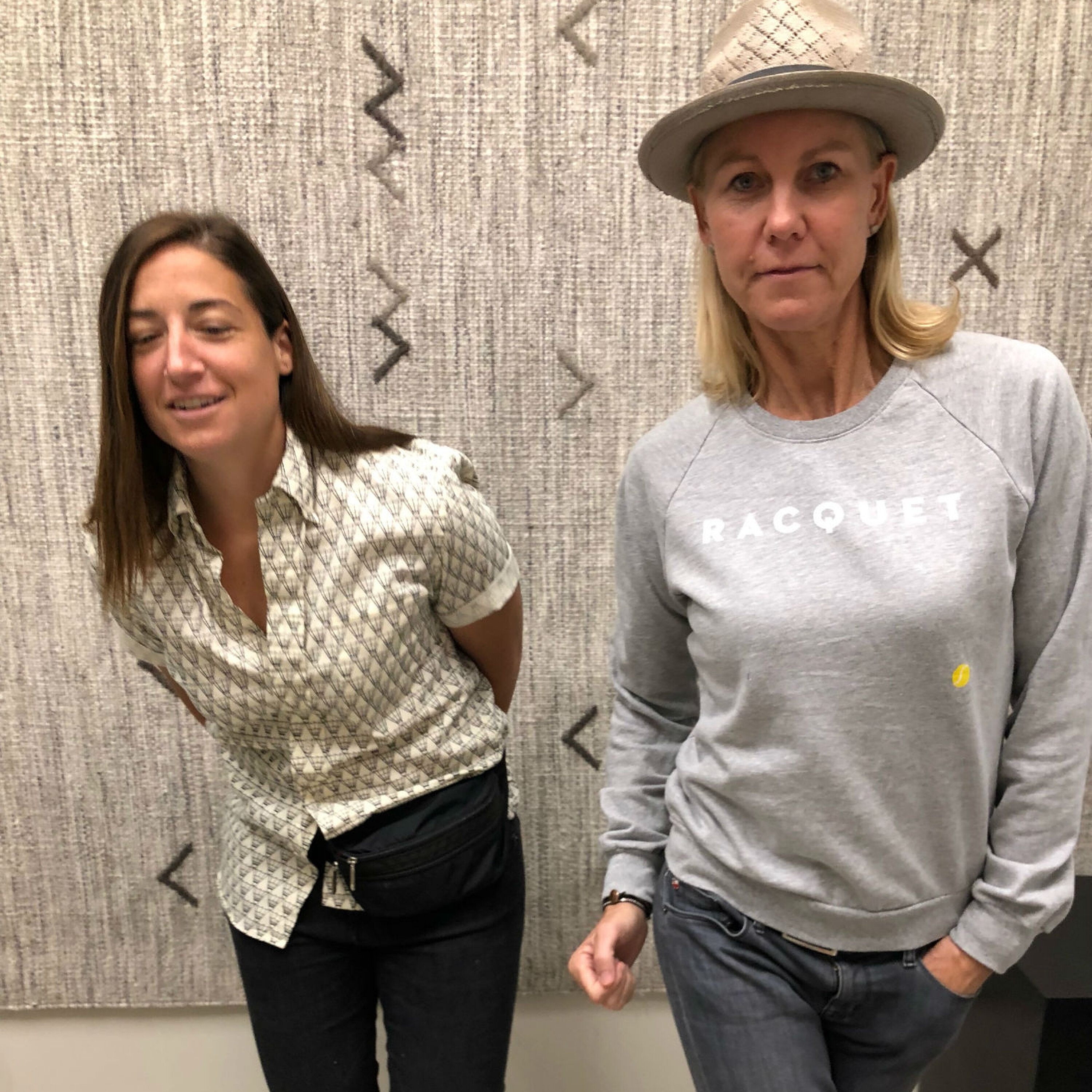
Fixing Tennis, Fixing Ourselves
Rennae and Caitlin recap the scintillating US Open Series, preview what's to come for the rest of the year—and of course, use the debacle surrounding the women's final to make some bold proposals for improving the sport.
Hosted on Acast. See acast.com/privacy for more information.
See omnystudio.com/listener for privacy information.
2018-09-14
49 min
Transcript
Available Results
Generated results are saved to the knowledge database for reuse and search.
No generated results are available for this episode yet.
Extract Knowledge
Pick what you want extracted first. Model, scope, and chapter options appear after a template is selected.
Generated results for public episodes are saved to the knowledge database so they can be reused and searched later.
Transcript
00:00:01
Speaker 1: Well, you know, plenty of notes, so get on that. I was sick and I got larynchitis, and then I kept going out on the New York club scene for a week having to yell out over people's voices. And then I was like, hey, now I've permanently damaged my vocal cords. Cool, good for me, Yeah, because I don't need them at all in my industry.

00:00:32
Speaker 2: Yeah, exactly.

00:00:32
Speaker 1: So one thing I was a little scared. Actually, I thought I had nodules, but I didn't go into get it checked out anyway, back didn't have to last question the serious thing.

00:00:40
Speaker 2: It's coming together. It's called Game It's called Game Change. I love that, yeah good, and love that really good. Yeah.

00:00:45
Speaker 1: We did a whole thing on Serena so the nineteenth that it will be coming out, I ran into Sandra bernhut oh and Judy Gold. Yes, so you've never heard Judy Gold. You know Judy Gold issue commedian, comedian. She's fucking I feel like she did a bit at the Lpack event for us. She was out closing act. Oh my god, I peed my pants. Although I did tell her yesterday she's got someone she wants to set me up with and so I texted her and I said, yeah, you know when you're doing a stand up because I'd like to come because the lpack piece you made me piss my pants. Although I'm forty seven, so it might be blade of leakage, but it's a fifty to fifty chance it was you.

00:01:17
Speaker 2: See there, you or I'm incutinent, so she gonna help here. It was somebody.

00:01:20
Speaker 1: Yeah, she's already on the works.

00:01:21
Speaker 2: Oh we're teaping.

00:01:22
Speaker 1: Oh great, sure, yeah, yeah, yeah.

00:01:27
Speaker 2: Can I use any of that?

00:01:28
Speaker 1: You can use all of it.

00:01:29
Speaker 2: You're the best. You're the best Renee stubs. It's nice to see your face in person.

00:01:32
Speaker 1: Hey, nice to see your face.

00:01:33
Speaker 2: You survived the US Open series and the US Open.

00:01:36
Speaker 1: I did, and it's been a long summer.

00:01:38
Speaker 2: It has been a long summer. I know we have seen each other, we've had we've raised some glasses together, but we haven't actually taped an episode.

00:01:46
Speaker 1: No, we haven't, not for a while. You know. I had this feeling that I was going to grab all these players at the US Open and have you know, loads of podcasts downloaded for everybody and all our listeners. But instead I was working like fourteen hour days and was unable to grab forty five minutes with anybody that I wanted to, including Darren Kle But we're going to get to him at some point. Yeah, I might grab him in China.

00:02:07
Speaker 2: Good you, Just so everyone knows we're both doing your normal duties. For ESPN, which were the highest rated I saw for years and years.

00:02:15
Speaker 1: Yes, the highest rated for a long time. But the women's final got over three million viewers and the men's got two million.

00:02:22
Speaker 2: And for the men, don't worry, we're going to get to that in a bit. And also I got a text from my friend Don. Among the myriad of people I met at the US Open, he told me that they love our podcast and they love you, and you know a lot of them love me.

00:02:34
Speaker 1: Obviously I need more people to love me in other ways. But Caitlin, that's a whole different podcast.

00:02:40
Speaker 2: That's our relationship podcast coming soon.

00:02:41
Speaker 1: What is that called We're going to Love School okay.

00:02:44
Speaker 2: With our friend Andrea Pekovich. Yeah, a very very strange adventure through romance and advice. But a lot of people, including my friend Don, said that you were their favorite commentator.

00:02:53
Speaker 1: Oh well, thank you, Don, I appreciate that.

00:02:55
Speaker 2: In addition to that, you were coaching.

00:02:57
Speaker 1: I was coaching. Yeah, I got called up a Carolina Pushkova literally at the airport at LaGuardia flying to Montreal to work for ESPN. She just said, would you finish out the year with me? Basically and my obviously my commitments to ESPN and not wanting to sort of cross pollinate with other players and not have any players being basically pissed off at me because I'm supporting one player over them and I have to interview them and I have to analyze matches. So it's a slight conflict that I don't want to really, you know that I can't really avoid at the moment, but I really want to help her through the year, and so we'll see where that goes and hopefully ESPN. I understand that I'm trying to do what I love as well, which is coach. I feel like I coach when I commentate. So yeah, so do. We're going to finish out the year together and we'll see if I can get her back on track a little bit, get her confidence up.

00:03:48
Speaker 2: Well, you're not the only commentator who coaches, obviously. Lindsay Davenport on the Tennis Channel coaches from time to time Madison Keys. Darren Cahill, your ESPN colleague, does a lot of coaching, is the main coach for Samona Halp, although he comments on men's matches.

00:04:00
Speaker 1: Yes, that's you know, that's sort of where they can get around a little bit. He works with the men and obviously works, you know, works commentates the men and works with a female player, So it doesn't really it's not really that bad. So for me, it just you know, have this little bit of fine line and making sure that all the players understand that I still respect them and appreciate all that they do and not try and you know, make it uncomfortable for them.

00:04:24
Speaker 2: Well, you're bringing an objectivity that I think serves you well as a commentator too, which is that you're seeing the game in a way that is super super instructive, especially for those of us watching along at home, like your doubles commentating in particular, which makes me just so excited to watch more and more doubles, is super super useful because that's what most people play recreationally, and not that many people watch doubles, but you call doubles in a way that you know, very very few people can where it's both I'm expot you're involved.

00:04:53
Speaker 1: I'm fully involved. I'm like dissecting the match and seeing what I would do in those matches, the US Open finals, fabulous match seven six and the third it was match points galore for both teams. So one of those teams was always going to be disappointed. And in the end it was ash Party who and Coco vanderwa who won their first Grand Slam title ever together beating Miladanovich and Babos who had won these Strain Open earlier this year. So they would have been disappointed because they really they had a set and had two match points in the second set, and then they had I believe a match point in the tiebreak as well, so in the third. So it was an unbelievably entertaining match. And the great thing about it was it had backed up right into the men's final. Was it the final? Yeah, the men's final on Sunday, so they had an enormous crowd, which is such a great feeling. That happened to me. Actually the first year I won my first Grand Slam in Australia, our final took almost three hours, so it had backed up into the men's semi final at this train Open, so it was an absolutely packed crowd. So for me, that moment of winning my first Grand Slam in front of my hometown that would have been for Coco, in front of this full stadium was amazing because we you know, sadly don't get to have that opportunity. And they loved it. The crowd loved it, and I'm sure people watching at home loved it as well.

00:06:03
Speaker 2: So well, yeah, I sat and watched birth Babo shim Ladanovitch as well as a lot of the men's doubles matches, and truly, truly in addition to advising people who whenever they can should just go and sit and watch elite tennis, whether you've heard of the player or not, but also make time to watch doubles. It's so great. It's so fast, and the crowd really does get into it because you can see, you know, all these different tactics and speed and hand you know, it's it's most cumunic cadible and communication and teamwork.

00:06:29
Speaker 1: The mixed doubles was fun, obviously. Beth and Noumadic Sans coming back from that knee, massive knee injury last year at Wimbledon, came back and one another Grand Slam title with Jamie Murray, and Jamie lost in the finals of Wimbledon in the mix and then was also the defending champion of the mixed doubles at the US Open, So back to back wins for him. So that's a great continued story for the Murray family and also for Bethan pneumatic sants to come back and have that exposure to another Slam title. So the US Open was very exciting, the doubles and the mixed and of course the singles. But we're going to get to that.

00:07:00
Speaker 2: We're going to get to that, okay. So leading up to that, let's go through the US Open series. Last time we checked in, you were up in Canada.

00:07:07
Speaker 1: I was in San Jose. Then I went to Canada, and then I went to Cincinnati to coach Carolina, and then I was in New Haven, Connecticut, and then eventually onto the US Open. So it was a very busy summer for me. San Jose was won by Busenesque and then sadly for her, the following week she rolled her ankle terribly in Montreal, so sad to see that happen. After rising, I believe into the top twenty for the first time, and then the Montreal tournament was incredible, as it always is your hometown, my hometown where they freaking love their tennis. It's amazing how much support they get there.

00:07:42
Speaker 2: Given that you can only play it outside for about two months a year, they really get excited about it. Maybe that's why.

00:07:46
Speaker 1: Yeah, there's no umbrellas, there's no hats. They're just like love in the sun.

00:07:49
Speaker 2: They'reirking up and it was bloody hot.

00:07:51
Speaker 1: But anyway, Simona Hallett played Sloan Stevens in the final. That was a great absolutely one of the best matches I've seen totally the entire year. It was probably top three behind Hallop and Kerber the Austrain Open and the Hallop was Aniaki final Theustrain Open. This match was unreal. I mean, you know when I sit courtside and do these matches and I want to stand up and clap, I know it's a good match. Yeah, because I sit and watch a lot of fringing tennis.

00:08:17
Speaker 2: What I loved about it is obviously it was a replay of the French Open final where we had Halop and Sloan and Sloane, I mean, she's unbelievably athletic and skilled and turns offense into defense and defense into you know, you can't quibble with anything she does on the court. But sometimes people, I think, who I've talked to you have a hard time getting behind her because it doesn't feel like she is emotionally invested. Whether or not that's true. You felt it in Montreal. She was in that match.

00:08:43
Speaker 1: Oh, I think I've seen that since she won the US Open. I saw a change in her when she came back from her injuries through the summer last year, and then obviously the US Open. I think she won every match at the US Open, I believe, in almost three sets except the final she won comfortably. You're talking aout last year again last year at the US Open. Yeah, and then obviously she's had you know, she had some tough times after that, losing I believe six or seven first rounds, including this Train Open. But then when she digs her heels in, she becomes this different person. And I saw that at the French Open. At the beginning of the tournament. I did pick her to get through and she did. And then you know, she ran out of steam in the third set against Helop because help just tortures you literally torches you. Andrew Pekovic just said, it's like fucking hell playing her, you know. And then in Montreal again upper set. You know, sorry, lost the first set, and I thought, well, this will be interesting to see what happens. And she dug in again and dug in so tough in the second set, and then again in the third set, and it was it was up and down and you didn't know who's going to win. So for me, that was one of the great matches I've seen all year. I please pray God that they're in many Grand Slam semis or finals in the coming years, because they're both young and man, they play some great tennis. Their matchup is really it's awesome. I would have loved to see that anytime through the summer. So then New Haven was excuse me, Arena Sabolenka, who had an unbelievable summer. Her this girl came back from She's freaking Lazareuth. She came back from match points down, left, right and center against was Niyaki Plishkov uh because I had to watch that Garcia shit, I can't remember. There were so many there were so many matches that she won down match points.

00:10:24
Speaker 2: What was it? Montreal Quarters, Cincinnati Semi's New Haven victory? Y right?

00:10:29
Speaker 1: I mean.

00:10:31
Speaker 2: Tops players something left and right. I love her. I just want to say I have loved her from the jump from last year's fed Cup. From last year's Fed Cup, I was like, who is this kid? She put all of Belarus on her back. Not to discredit Sasinovich, who did a pretty bloody gat job, who did a great job as well, but just you know, who is this kid? She looks like Athena.

00:10:50
Speaker 1: It's it's like her and Sasanovich is so different though, Becauseasinovich looks like she just she's just walked off the street. And who is this kid? She's like a little bit of a an and she sort of doesn't change her facial expressions. And one of the funniest people you'll ever be into. She is quite the quick sense of humor. I saw her get to the finals after getting through qualifying in Brisbane earlier this year, and I thought, who's this kid? And I remember talking about these guys to Lisa Raymond, who's the coach of the Fed Cup team for the US, and I said, the Americans are going to win so easily in the final, they played nobody and she's like, none, Honestly, these girls are really good. I'm telling you you'll be You're going to be surprised. And man was I surprised. But Sabalanka sort of put herself on the map and this crowd, and I thought, who is this chick? She does look like Zena. She should be in Bloody wonder Woman. She could be the next wonder Woman totally. But her coach refers to her after she beat Carolina in Cincinnati. I walked by him and he goes stuff to beat her when she goes into beast mode beast and I was like, oh, that is so totally.

00:11:50
Speaker 2: And she's got this massive tiger tattoo. I ran into her in the parking ladder and I love that because you guys we did. Yeah, we compared tattoos and she was like, oh, yes, I go to Minsk. It is because I hear the tag around. I was like, well, that's really cool and I like it. You know, racket, I have a giant owl on my arm.

00:12:06
Speaker 1: What is it?

00:12:07
Speaker 2: Our symbolized my grandmother who's cool and taught me how to play tennis. Ship Yeah, thanks thanks a lot. No, but she and then she's like fierce and six feet tire and comparing tattoos, and then she was like, thank you, it was nice to beat you. And I was like, what, yeah, I was excusing sir.

00:12:23
Speaker 1: I think she's going to be like, get away from me. Thank you so much. I mean, she's sweetheart.

00:12:29
Speaker 2: I'm super pumped for her. Her ascendance on the WUTA tour means great things.

00:12:32
Speaker 1: Well, the best match of the US Open was the Osaka Sablenka by a mile quarterfinal. Was unreal and I think if Sablenka had won that match, wending her the US They have the same lack of fear, the two of them, and it was just like we when we saw that they were playing each other, the ESPN crew. Sadly we didn't get to see a lot of it on the TV because Jokovic was playing at the same time, and you know, the powers that be wanted to see Jokovic. You know, he's a bigger name and so for numbers and all that sort of stuff. I understunded from the TV side, But were the women, particularly at the ESPN were fucking jammed up, going this is going to be the match of the tournament. These two are so awesome and they're young, and this is the future of women's tennis, and man, they gave us exactly what we expected. So look out for Saberlenka. She'll be my dark horse, has no doubt about it.

00:13:20
Speaker 2: She's going to get a Grand Slam in the next two years. I mean, right, I hope that we get that matchup time and time and a game, and I feel like we will.

00:13:28
Speaker 1: We'll get like you know, and this is what we have to start talking about. On the women's side. We have Zabalenkas and those Soakas and you know, now Sloan Stephen solidifying yourself as a contender, Hallop, all these players that you know, once Serena is retired, I mean, we do have to start looking at these next superstars.

00:13:44
Speaker 2: And the tourist in good hands, I think. I mean, honestly, these kids, variety, personality, background, in terms of awesome geographics here I mean twenty and when they were twenty, I know, it's great.

00:13:54
Speaker 1: I mean, think about Serena and Vena still playing there, you know, mid to late thirties. Yeah, I mean, I don't know if these guys, well, he's so big, but.

00:14:01
Speaker 2: It's an embarrassment of riches on the women's side.

00:14:03
Speaker 1: Yeah, I'm awesome.

00:14:04
Speaker 2: Jacked about it. Honestly, when of people ask me about my favorite tennis players, I have to remember that there's a men's tour. But let's get to the men's tour, because I know we're gonna have a lot to talk about with Serena and I do want, you know, people who feel like this is a real bad fest to get the sense that we at least do occasionally care about men's tennis, which I do occasionally.

00:14:20
Speaker 1: Do we what happened?

00:14:21
Speaker 2: I don't know, it's just kidding, ha ha.

00:14:22
Speaker 1: Well, Djokovic, you know my guy Delpo, I love him.

00:14:26
Speaker 2: Just don't we all looking hot? Don't we all?

00:14:28
Speaker 1: I just I picked him to win the tournament. I put pressure on him when I saw him in the whole way, said the US Open every time. Yeah, it's like you might pick you know, don't let me do good? And he's like, I will try.

00:14:39
Speaker 2: Yeah.

00:14:39
Speaker 1: He's just the biggest giant of a love fist as well.

00:14:42
Speaker 2: And if anybody doesn't know anything about one Martin del Potrow, the Tower of ten deal, they call him Chloe Cooper Jones. He's a writer for GQ. Did an amazing story about him and his sort of spring in summer, coming back from years and years of being sidelined with injuries, both terrible size of his wrists. He won the US Open in two thousand and nine, beating Roger Federer kind of shockingly to a lot of people, went away for a while with injuries, came back and made it to the finals of the Olympics in Rio in twenty sixteen and fell just short of Mandy Murray winning the silver, and you know, reignated everyone's love affair with him again. Went away with injuries, and then one Indian was.

00:15:19
Speaker 1: This here, Yeah, we love it handily number three in the world I don't know if he'll move up after the US Open, but you know, Djokovic is just sort of solidified himself after winning Wimbledon and the US Open now as he is well and truly back.

00:15:31
Speaker 2: I mean, delpet was in that match, maybe for a game or two in the second set, but it was a Djokovic yeah slaughtery.

00:15:37
Speaker 1: So now the question has to be asked of who's going to be the guy who's going to have the most Grand Slams at the end of their career, because a lot of people in Djokovic, but a lot of people feel that now Djokovic is sort of starting to climb back those numbers in the Slam title and he's still so young. Yeah, and you know Roger, Roger struggled and he hasn't played well since winning the Aussie He's really struggling. And now you have to start asking the question does age become a factor now? He was really affected by the heat, which is very unusual. It's the first time seen him ever sweat in his life. And he's dying and I noticed that in the match before he did the postmatch interview and he was very short of breath doing the interview, which was I was like, what is going on there? Thirty six years? I was like, well, what's going on there? Because you know, normally it's just so pristine and perfect. So that's the question obviously, Rafa, you know, the hard court season, how much can.

00:16:28
Speaker 2: He pay on that? That's tough.

00:16:30
Speaker 1: The knee, it's tough for him. That's why clay is such a good surface for him. It doesn't he doesn't get that same pounding on the knee. So listen, we've counted those two out before I have Yeah, sure, so don't be surprised if they're back in the Strain Open.

00:16:42
Speaker 2: Yeah, but Novak has a winning record against all of them, all of them, and a shockingly lopsided winning record against Andy Murray and Delpo, who are less likely to retire probably at least given age, than than Nadola and Federer. Like he's what's going to start him? I don't know, Yeah, not these young guys.

00:16:58
Speaker 1: I don't think much now. I think he's got his confidence back, and he's got that.

00:17:02
Speaker 2: What's what's the word impenetrable?

00:17:04
Speaker 1: Thank you?

00:17:04
Speaker 2: Yes, that's why I'm.

00:17:06
Speaker 1: Not even hungover today. Wall back, you know where he doesn't miss. So when he gets that, he gets the confidence, the service back because the elbow problems have now been fixed apparently, then he's going to be really hard to beat in Australia because he loves that tournament.

00:17:20
Speaker 2: So let me ask you'll be the one last question about the men's because you have declared Novak Djokovic the favorite. Ferrazi, I don't see any reason to dis believe that he'll probably win the tour finals. What do you think about we've kind of already discounted the generation that came after Rafa and Roger you know your Dimitrov's your songas you know, these guys are done. I can't right. What about the team?

00:17:43
Speaker 1: Yeah, team is definitely Team will one hundred percent win the French Open within the.

00:17:46
Speaker 2: Next three years. Tim team came very close.

00:17:51
Speaker 1: Once Nadal's gone, Yeah, once Nadal's gone, somebody else will win the French Open and it will be dominqu team. I mean, no question about it.

00:17:58
Speaker 2: I like his odds on clay, certainly hard court. Yeah, grass, it seems.

00:18:02
Speaker 1: Like that's a grass order, no chance. But if he does well done, that means he's changed his thought process and he's standing more up in the court and all that.

00:18:10
Speaker 2: But what about like sav and Sarah for sure, but Vera has to Why can't he break through at these faces? I don't know.

00:18:16
Speaker 1: I think listen, I think getting Yvonne on his team is going to make a huge difference.

00:18:20
Speaker 2: This is a Yvonne Lundell, he of the incredible fashion during the eighties that.

00:18:25
Speaker 1: You love his fashion. You may still have my shirt of his.

00:18:28
Speaker 2: I do I have that shorts as well? I do. Wow, I'm a creepy lesbian.

00:18:32
Speaker 1: Who do you even brought out your poor wife Claire she can't get rid of those feeler shorts that you brought out.

00:18:38
Speaker 2: Those borg shorts. Yeah, yep, she's trying to throw them away numerous times, and monumental claim claims me wearing them as vulgar.

00:18:45
Speaker 1: Wow. Really, that's a big word.

00:18:47
Speaker 2: That's a success for us. You know, a marriage when you you countervail your wife's tendencies to throw at your clothing.

00:18:54
Speaker 1: Oh well, well, well, the rule is that if you buy something, you have to throw something out in your house. Correct.

00:18:59
Speaker 2: She is should like have a book and a philosophy and tour the world helping people get rid of their clutter.

00:19:05
Speaker 1: She should come to my place, because God knows, I'm I'm not. I'm not a hoarder or anything, but shit I have altho.

00:19:11
Speaker 2: There's a lot of trophies and like fed cup outfits. What's in your house is really cool?

00:19:14
Speaker 1: Yeah, that's true. I have a friend who is a little bit like that to my friend Joe who tends to buy ship and bring it into the apartment and doesn't tell her wife about three days until she says, is that new? I've had this for months? So you know, everybody has their issues when it comes to buying shit. And I'm one of those people.

00:19:32
Speaker 2: Let's leave that for our love advice.

00:19:33
Speaker 1: Yes, sorry, god, we totally subject off men.

00:19:37
Speaker 2: Yeah, are we going to get to it?

00:19:38
Speaker 1: Yeah, let's go.

00:19:39
Speaker 2: Here we go. Yeah, let's fine, Here we go. Serena Williams, how much backstory do you think Racket Magazine podcast listeners need? Do we need to go break by break through this? Do we assume that they've seen it?

00:19:59
Speaker 1: I think that. Let me give you the quickest you know, what do you call it? Cliff notes h Serena got her warning for coaching. Her coach was seen gesturing with his hands forward, which is pretty innocuous, Caitlin, I know, we.

00:20:16
Speaker 2: Keep her.

00:20:17
Speaker 1: And so the umpire saw that and decided to give up coaching warning, which what the fuck? Uh, we're going to get into that. And so she of course heard this, and I could tell that straight away she went back to return serve and I could tell that her brain was going, fuck, no, I'm not letting this go. I did not see any coaching. I'm not going to take this. This is now now you're attacking my character. You have to remember something. We have w T A. On the w T two, we have allowed we allow a coaching visit every set. Serena Williams, I believe, has never used that need She doesn't believe in coaching during matches. She doesn't rely on coaching in matches, or she would have used the coaching in the on the WT two. So she's never done that. She's never used it. It's obviously, you know, as an umpire, you also know as an opponent. There are certain players that you play against, and there's certain players boxes that you have to keep your eye out on, okay, that coach consistently, and there are a lot of top players that will remain nameless that have coaches that coach non stop from the stands okay, and do not get coaching warnings because the umpire kind of just goes, oh, how egregious is it?

00:21:25
Speaker 2: You know, well, and let's just let's just let's bring put her hat on this.

00:21:28
Speaker 1: You are a coach, yeah, and I there's no question I say stuff that would be deemed possibly as coaching. You know, but how much can they hear, how much can they see?

00:21:38
Speaker 2: You know, you actually affect?

00:21:39
Speaker 1: You know, coaches got signals. I mean I remember when I remember when Lisa Raymond and I were together and she would play matches and I swear to God, I would like touch my right ear serve it out wide. I mean, there are signals. It's like baseball, so umpires don't even know what the signal is. You could have wiped your brow and that could be you know, chip and come into the net. I mean, there's so many signals that coaches can do. Tony Nadahal coaches all the time, all the time. Everybody knows it. He even admits it.

00:22:07
Speaker 2: The same umpire in fact called Nadal not only in the past they've had a lot of dust ups, but also in this tournament for coaching.

00:22:14
Speaker 1: But you know, it happens all the time. He never gets called on it.

00:22:18
Speaker 2: He does get called once no, no, no, no, all the time, and he got called in this tournament. I'm going to just fact check a few things that are widely.

00:22:23
Speaker 1: By the same umpire, same umpire. Okay, all right, so okay, So, but he is notorious at doing it, right, So good for him for calling him on it, right. I would say that Serena's not notorious for doing it. I know her well. You know Patrick, what he did. The signal he did was pretty innocuous.

00:22:41
Speaker 2: It was so you were surprised.

00:22:43
Speaker 1: In other words, I was surprised that he was given a warning for that. And secondly, at the time ESPN showed the split screen, she wasn't even looking at him at the time, So I know that's not the rules the way it's written. If you see the coach coaching, you have to give a warning.

00:22:55
Speaker 2: So technically a violation, however, something that most people get away with, that's seems clean. Like most people, most people have interpreted this chain of events as it was a stratchrivikal.

00:23:06
Speaker 1: Yeah, and he should have said to Serena. I think he should have given Serena the chance, knowing Serena, knowing that she's not one of those people most of the time to say, Serena, tell Patrick to watch himself, and that happens often. I would say that happens more than actually calling a coaching violation.

00:23:22
Speaker 2: Okay, so let's get into what happened next, just to get people.

00:23:24
Speaker 1: Break of racket.

00:23:26
Speaker 2: Now, two games later, she breaks her racket, automatic code violation. Nobody disputes that if you break herracket you get a coach.

00:23:31
Speaker 1: Soon as she did it, I went, oh my god, that's a point penalty. Yep. Oh shit. Okay, so you have to remember two games prior to that, when she's having the conversation with him at the chair, she's pleading with him that I didn't see any coaching. I do not get coach, et cetera, et cetera, et cetera. And he said, I understand, you know, and he's trying to please her and say diffuse, diffuse the situation, and she's like, okay, we're on the same page, right, so you're you understand me, right. I really think in my heart she thought she thought he'd rescinded the warning.

00:23:58
Speaker 2: But in not to take sad because I think it's clear what sides we're both one of this, which is, yeah, tennis, you can't take a I know that, nobody can take it. I know that.

00:24:09
Speaker 1: And that is the one question I want to ask Arouna. Did you think that he rescinded that warning?

00:24:12
Speaker 2: Ye?

00:24:13
Speaker 1: Because because why would you throw your racket knowing you're going to get a point violation at that time in the match. It's not a good time throw.

00:24:18
Speaker 2: Your racket, right, So, because most people when they do get a warning, make a decision Okay, I'm gonna cool it, or I'm gonna antagonize this further, like Benoi Pere, for example, broke three rackets incurred you. You know, if you know you're gonna go there, you're gonna go there.

00:24:32
Speaker 1: I had a point violation at these train open in my first round the year I won these train Open and I'd had a warning and it was Pascal Marie was the umpire, and he and now I now have talked about it, and we're friends, and I'm friends with I would say all the umpires that I've yelled at and because most of the time I was right. But anyway, he asked in the first game. My doubles partner Lisa Raymond had achilles problems from time to time, and she said, oh shit, I think I've just hurt my achilles. And I was like, oh my god, we need the trainer. I turned around in the middle of the game. So the first game a third set, and I turned around to him and I said, can you get the trainer? No, it's juice. It's a huge game, all right, and he's yelling out to us, but I need to know for what I go, No, you don't just call the trainer, right, and we're trying to win this game. Can you stop talking to us?

00:25:16
Speaker 2: You know?

00:25:16
Speaker 1: So anyway ensued, I walked up to him and I said, he goes, Rene, I need to know for what. I go, No, you don't. You just need to call the umpire. Now I'm getting super mad, right because I'm like, he's antagonizing me, which is kind of what happened the other day.

00:25:27
Speaker 2: And you're as.

00:25:30
Speaker 1: Stress, you know, so anyway, call him a French brick and a French a French prick?

00:25:35
Speaker 2: Was he French? Yeah?

00:25:36
Speaker 1: And he gave me a warning now on top of that had a point penalty. Now Lisa is grabbing my shirt literally because he's now going back and forth to me, and I'm like, you're so wrong in this circumstance to antagonize me and keep going. You just needed to call the trainer and shut up. That's it, right. So I got, you know, so amped, and Lisa literally grabbed me. If I had one more back then it was point game, it's gone done, see you later. And that year we won these strain open. So I can understand Serena's angst and anger to being accused of something that she really in her heart feels like she's not.

00:26:10
Speaker 2: And by all accounts she nobody knows nobody, She doesn't exchange signals that there are men there to do.

00:26:16
Speaker 1: But she walked after she got that point penalty and what and she knew she had a second code or didn't know she had a second code, and walked to the first court. She didn't she should have walked to the love fifteen or fifteen love, But she walked to the and she said, what what are you talking about? Yeah, and he goes, that was your second code. So now in her brain she's like, you didn't rescind it. Oh, now you're calling me, you really are calling So now that escalated everything even more because she's like, you've you you know. So she's going out of her mind now right now taking a point from me. And I believe did she break that game that she.

00:26:48
Speaker 2: Was down when she was down three to two, she came back three h Yes.

00:26:52
Speaker 1: And I think that here's the biggest problem with this is where I have a little bit of a problem with Serena. And I love Serena, But when it got to three, all she was back, the crowd were on her side. She had everything going for her, and she played a fucking terrible game at three all, she double folded, she missed her back end down the line, she missed balls that she shouldn't have. I believe she may have even double folded twice, or she made errors. Naomi was like, what is going on? She was totally overwhelmed at that moment, and Serena lost her serve. Now she's so pissed at herself. Okay, and now all the stuff that's happened prior is now coming back, and the umpire is going to get it now. She should have given it to herself at that moment, because at that moment she given it to herself.

00:27:35
Speaker 2: She should have.

00:27:35
Speaker 1: Controlled herself at that moment, okay, and sat down and realized that really the onus then was on her because when it got to three all it had nothing to do with the umpire. Now it was all about how she was playing, and she did not play a great game at three all. So when she sat down, she took her anger and her up being upset out on the umpire and wanting an apology and kept going and belabeling that issue.

00:27:58
Speaker 2: And of course and then called him iron by when being called a layer in a cheat, which by the book, people are like, oh, well, she didn't curse at him. Actually, the rule is not if you curse an umpire. The rule is if you question the integrity of an umpire. So technically, again a question of application of rules certainly valid a question of what the rule is black and white. If you question their integrity, calling them a thief for a layer, it is worse in fact than using f BOMs totally. But in your mind, is that justified that he takes a game from her?

00:28:26
Speaker 1: No, because I think at that moment, you have to understand as an umpire, you're you're the only one that can settle that situation. At that moment, Serena could have There's no doubt. I truly think that she made a huge mistake there of belaboring the issue with the point penalty, the coaching. She should have let it go. But she also, I know her, she didn't drop the F bomb. I know you're saying it's part of the yeah, but you know she didn't get to the point where she's like, you're a fucking life, fucking cheat. You know that would have been done.

00:28:54
Speaker 2: So in your mind, she was exercising restraint, she was trying her best.

00:28:57
Speaker 1: Okay, So when she got up from that I think you have to under stand as an umpire, you're umpiring a US Open final. It is a set in four three and it's a break. You got to stay away from that. You've got to let that go. You've got to let that go and let the players be the ones that end up deciding that match. And I think that that was a massive mistake from him. I think he overstepped by giving the coaching warning, I really do. And then I think he just kept it going. And that last one to give a game penalty was huge because Naomi Osaka probably would have got up held serve and been not five three, and we wouldn't have had this. We wouldn't have had this over. It was already a problem. But she had that in nine against you know, Kim Klis's with the footfold and the you know, going to shove this ball downhood. We've had that, we had in four, the shit with the line calls. We had twenty eleven against Sam Stozo with the come on and the point, you know, the warning there, and she's had her problems on that court. That was a moment to say, I'm going to swallow my pride here. It may not be the right thing as an umpire because she has question in my integrity. But do I really want to insert my elf in this match now? That is going to be obviously huge, right, And that was a mistake from him, the thing that and it took away in the end, it took away from Naomi's victory.

00:30:10
Speaker 2: I agree that Naomi's victory was overshadowed. From my perspective. She was going to win that match no matter what.

00:30:18
Speaker 1: But here's the problem, Well, we don't We'll never know, right, that's my problem.

00:30:24
Speaker 2: But I don't think we'll never know because.

00:30:26
Speaker 1: Well, she lost a service game that one before.

00:30:29
Speaker 2: Fine, but she beat Serena now granted a more diminished Serena out beautifully at five four, twenty years old, first grandson final, playing her idol with the crowd lustily, oh yeah, booing at this time. It was terrible, terrible. The crowd has absolutely like nothing.

00:30:47
Speaker 1: But no, it's terrible.

00:30:48
Speaker 2: Everybody's like to do they should And I have friends who were in there who were booing, partially because they were confused, but also we can get to that. To me, what happened was you saw a player who was losing, who was getting beaten, beaten, not question handily beaten. Everything Serena had to throw at her was getting thrown at her question, and Naomi was handling it beautifully and being a really really big Naomio Osaka fan. To me the question of and I have and I will continue to sort of give every benefit to the debt of what it is to be a woman, what it is to be a person of color, who which I don't understand and I can only guess. And just cataloging the myriad ways that these William's sisters, both Serena and Venus, but especially Serena, has have been policed through their whole career. What anger, how much other people related to that anger and why and how it's been you know, stuffed back inside and policed by typically male authority figures. You know, I have spoken about that, You have spoken about that. We can talk about that more. But in this moment, what I was thinking was she's pissed, she's losing, She's trying to make the match about something else more than anything else. Was it a fight for women or people of color? I don't know. I think it was a fight for herself because she was on the ropes, taking the officia, eating out of it, which you can't do. But in the context of knowing how Serena is as a competitor, and you know better than I do, so maybe this won't ring true. But I saw a player who was trying anything. Is that fair?

00:32:11
Speaker 1: No, I don't think she was trying. I don't think it was I don't think it was gamesmanship. I think it was her losing control.

00:32:17
Speaker 2: Yeah, and I.

00:32:18
Speaker 1: Think that Serena, you know, she has that personality. She'll admit it. I mean, she has a personality can sometimes go off the rails and get very angry and and get you know, sort of you know, protecting herself, which as you've already you know, for the reasons we under which reasons we understand about Indian World's episode still to this day is the second worst thing I've ever seen on tennis court with the crowd doing her playing against Kim Cleisters. So and you know, she's gone through years of playing at the US Open. I remember commentating a sideline match and I did a postmatch interview with her and I literally said to her, how does it feel to have this crowd support? Finally I said those words to her. It was fantastic. Obviously, you know she replied great, and because there were years that she did not have support at the USO.

00:33:04
Speaker 2: And to be clear, the tennis establishment now treats her with reverence and the crowd and the crowd, and thank god that was not now many people forget that was not the way that she had been treated forever. I remember commentators who are famous now who played alongside the Williams sisters who had the rumors were that other people on the tour treated them terribly because they didn't basically want to make room for them.

00:33:29
Speaker 1: Well, I mean, listen, we can chronic go through a chronological order of the things that you know, have they've had to suffer through, and et cetera. The bottom line is, in this final, it was nobody won. And I feel like in the end I would have loved, loved to have see Naomiyasaka held serve at four to three and Serena holds serve to make it five four, and that kid serves it out the way she did without any question mark or asterix next to.

00:33:57
Speaker 2: That score line, nothing but cheers.

00:33:59
Speaker 1: Well, I mean, I don't know if she would have got cheers because it was quite obvious that the crowd was still going to be very pro serena, which they should be. I mean, she's, you know, one of the greatest female athletes we've ever seen in the world, and she's American and we're playing in America.

00:34:12
Speaker 2: I don't know. I tend to disagree with that. I feel like tennis should be always a plotted.

00:34:15
Speaker 1: Come on, go to Wembleo and when you're playing, and go to Australia. When you're playing in Australia.

00:34:19
Speaker 2: I think that's an expectation of my brain.

00:34:21
Speaker 1: You know, I mean, in Paris, good luck playing a French person. What a nightmare? Still hearing you know, French names in my head in Paris. But I mean that's just a parochial crowd of what you should get when you're playing at home.

00:34:34
Speaker 2: Home field advantage.

00:34:35
Speaker 1: But what happened is that, you know, that's a sad asterisk to that match. And I would have loved to have seen that kid earn her right throughout the whole match in holding serviant for three and holding servant five four, because I do believe she could have would have done that. But we there's still that question mark, and that bothers me as a competitor. That bothers me as a competitor. I'm like, everyone's going to question that for the rest of my life. Everyone's going to question that. And that freaking sucks. And I served out the match, there's no question. But what about that little extra help to get to five to three. He should have not given that opportunity for an asterisk, and he should have said, this is the game right now, this match is bigger than me and my ego, and I gotta let this one go, and may I may be make a mistake. We saw an umpire get out of the fucking chair and stand in front of a tennis player a week earlier to coherse him to try. That was awful.

00:35:27
Speaker 2: That to me, that was egregious, curious, should have been defaulted.

00:35:30
Speaker 1: That to me was the worst umpiring I've ever seen. Everyone's like, oh, he was trying to get you know, he's just trying to be a good guy. Don't you're an uphire. You don't get out of a chair, you say to him, if you don't start trying, I'm going to give you a warning. There's a code for that. He didn't get a code for that. He was tanking. He was tanking balls in the net. Now, I don't I like Nick, so it's nothing against Nick, and if he wants to throw that match, let him throw the match. But it's not your job as an umpire to get out and encourage him. You're not his coach.

00:35:57
Speaker 2: I would have been what about that furious? If I appear Ubert who lost the match, just winning the match changed the course of the match.

00:36:04
Speaker 1: That is grgious. What he did was, in my opinion, I've a stepped the line to not understand the big picture of that moment of a final of a Grand Slam.

00:36:13
Speaker 2: Okay, so let me I disagree only in the sense that I don't think Nami Osaka gets that asterisk. I think there's no doubt in my mind she wins that hope not anyway, And I luckily for us, I think and I feel like we both agree on this. She's going to have lots of other Grand Slams.

00:36:28
Speaker 1: But she'll never have that first one, back that first moment.

00:36:32
Speaker 2: Let's talk about how we can sort of as a tennis community, use this scrutiny, use the things that Serena has brought up, whether they were applicable in this situation or not, about the way that women are officiated against about the calls, there have been very, very many sort of spirited pieces of evidence thrown at this debate. Well, men got more fines in this tournament, But look at what Federer got away with saying and curious got coached by Leani and the guy got out of his chair and coerced him to try. I would love to see and I think that this is a very doable outcome of this. Let's have data. When Gina Davis got a sense in her gut that men were getting awarded all of the opportunities to direct all the financing by Hollywood, everything that she knew helped the thumb on the scale towards keeping women down, she founded an Institute of Gender Studies, put numbers behind this stuff, and then thrust them in the face of anyone who would watch, and to her great credit, I think has been a large part of changing the tide and the conversation around women in Hollywood. What if we were to do something like that, I think that would be a fantastic outcome.

00:37:44
Speaker 1: Well, you know, plenty of notes, so get on that, because I think that's a great idea. I think that's a great idea, and we should do that. I know that Tennis Australia has got an email from Craig Tyler the other day from Tennis Australia and they're already looking at changing some things down in Australia, trying to get a full consensus from all the players. Are TV people, past players. I don't know what category are.

00:38:06
Speaker 2: Fully can you see what some of the yeah you're a leading luminary of the game category that you're falling.

00:38:12
Speaker 1: I'm old. They are looking at coaching.

00:38:16
Speaker 2: And allowing it, allowing it for men and women, allowing it for men and women, And do you think that that's good? Yeah?

00:38:22
Speaker 1: I mean, let's just just just get rid of the ambiguity great rule. It's bullshit and it's the only sport that doesn't allow it. And I hate coaching. Just let me just say I've always been against the on court coaching rule because I think for me as a player, I was smart, but I didn't have a big this or a big dad that was your advent service pretty good and my volleys were pretty good. But you know, I didn't have like massive game, right, but I had a good brain and I can analyze the match and I could go from plan A to Plan B to Plan C. Some players go, they just hit the ball big, and that was your advantage, and that was my advantage. So why are you taking my advantage away by giving it to somebody else to help somebody else get through a match. If I can control myself, my nerves or you know, my that should be that should be part of the game.

00:39:03
Speaker 2: Right.

00:39:03
Speaker 1: Okay, but we've thrown that out the door realistically, So if we're gonna throw it out the door, TV love it, the crowd love to hear it. Yeah, let's let's implement it in and get rid of the non coaching rule because it's just stupid.

00:39:14
Speaker 2: And I think it would actually really help commentating. I've said this before and I mean it. You're, to me one of my favorite commentators because you do a great job of actually explaining the game. It's not like, oh, he's feeling nerves. That doesn't mean anything to me. And I'm not singling out one commentator when I say that, all the way both and I am. What I like about on court coaching is it gives the analysts and the booth the chance to connect their thoughts and their read to what the coach is actually saying. And then changes that we're watching in the game. So not only does it help explain what we're watching, but it also allows people like me who are tennis players to take away something from the best minds in the game, who are coaching the greatest and who are talking with the greatest on the court. Win win win.

00:39:50
Speaker 1: Yeah. And now that we with you know, SAP, with the WTA and the IBM stats we have at the Grand Slams, we can also put the numbers and the hawkeye, the use of the hawkeye into this great debate as well of you know, the coaching and then this and here's the numbers and here the sal we can show. So we're only making the viewership much better for people at home. TA is also looking at, you know, maybe taking the lad out of the game. They're sort of trying to find out if that's something that players are for or against.

00:40:19
Speaker 2: Where do you fall on that.

00:40:20
Speaker 1: I want to get rid of let's no lets, no lets, it's part of a point. Why should it not be a part of a serve? And how many times has someone hit a great serve on a big point? It happened two years ago, I believe with Serena in this train open all three years ago, she had an unbelievable serve out wide and celebrates and leat and it's like nobody heard it except that stupid little machine that usually picks up just the vibration of the ball going over the net. The amount of times that's happened in mixed doubles, I'm like, what are you talking about? It was it didn't even touch it. It's just, you know, it sets off that stupid little thing. And it was like, what about the dead net cord on the match point? I got? When does that ever happened?

00:40:51
Speaker 2: Yeah?

00:40:51
Speaker 1: I mean, and you know what, and if it does well, then so be what about when you hit a crap ball and hits the net and drops over. What's the difference.

00:40:57
Speaker 2: Yeah, it's a good point. It's just I'm convinced.

00:41:00
Speaker 1: And it happens more that there's lets that aren't even heard or affect the serve that get called. And that's my problem. And I hit that great serve out wine, and I picked the right spot and she picked the wrong spot, and I've hit and it touched.

00:41:13
Speaker 2: The players aren't like over it getting a drop shot serve where they would.

00:41:17
Speaker 1: It happens in a point so who cares, like, let's so that one.

00:41:21
Speaker 2: What else?

00:41:21
Speaker 1: I'm actually two for two, Let's do this tennis. What's the other thing? Oh, the fifth set tiebreak? Obviously, what happened at Wimbledon is you know, it caused a lot of conversation, isn't and Kevin Anderson's epic five set match which just ruined them in the final. Nobody had a chance after that match. And you know when you see Kevin Anderson win the match and he's just like, well that sucks. You got to get rid of the extended set for the men, particularly in five. I don't see. I don't have a problem with getting rid of it, not getting rid of it in the women's best of three, but I think in best of five, let's end it.

00:41:56
Speaker 2: This argument has started to come back into favor because of the long Wimbledon semi final matches, both of them. Obviously, the isner Y Anderson match in particular stretched into the section day. It was like three matches in one five sets.

00:42:10
Speaker 1: Well, I've always been a proponent of getting rid of five sets all together. I mean, then you start and then you start to stop. The conversation of equal.

00:42:17
Speaker 2: Equal prize money becomes a moot point because everyone's playing three.

00:42:20
Speaker 1: Se Listen, a boring three set match at six two six three six two is an extendedly boring three set match.

00:42:27
Speaker 2: I mean, I argue the US Open final, but extended you're getting to the Djokovic. It's like, oh god, just put this up. Yeah, sorry, you have.

00:42:35
Speaker 1: The odd match that two sets down and people come back and win a great five setup. I'm like, listen, I've made this argument. Go and watch all the men's matches at the Olympics. They are phenomenal.

00:42:45
Speaker 2: They're phenomenal, and they're three sets real except the final three, but three sets is the norm for almost all the matches.

00:42:49
Speaker 1: And they're unbelievable. I mean, the Del Poco Roger Federer match at Wimbledon at the Olympics in London was unbelievable seventeen fifteen and the third it was great, Like, let's play extended third sets? Yeah, and play three sets. And everyone's like, yeah, but what about the great five setters? I go, is it the five setters that you remember? It is the fifth set.

00:43:07
Speaker 2: That you remember, exactly right, Nobody remembers I remember the ligatory, third and fourth sets. They're such a snooze fans.

00:43:12
Speaker 1: I'm bored, and I'm a tennis purist, and nobody just watching tennis or watches more tennis than me. But I watched the Nadal Roger Federer final Strain Open two years ago, where everyone.

00:43:21
Speaker 2: Was shitting at the fifth set is the only good set.

00:43:23
Speaker 1: They're like, oh, this is the greatest match. And I was like, guys, I left four times in the middle of that match to go get a drink because I was so bored, and I'm not an alcoholic and I'm not an alcoholic. Well, I'd spent two weeks working, so it was the first match I actually watched. I didn't I could drink, and you know, they extended five sets, made me drink, But I mean, it was the fifth set was the only thing that was really overly excited.

00:43:42
Speaker 2: Those guys did not play good tennis at the same time except for that one set. So really what they're talking about is one. It's a final set, agreed, that's all. We just want the final set exactly right. I want some urgency. I don't want to feel like, Okay, well, you know.

00:43:54
Speaker 1: I don't know if we're going to get that changed, Caitlin, but maybe hopefully we will one.

00:43:57
Speaker 2: Day, maybe these guys as parties.

00:44:01
Speaker 1: Yes for what exactly?

00:44:02
Speaker 2: So I have to watch a boring third and four it's out.

00:44:03
Speaker 1: Yeah, Mary Carrillo said to me, you know, you don't pay more money to watch a three hour movie over a two hour You just want to watch a good movie. And that's what we need to think about when we're talking about five sets of tennis, and that is you know, Wimbledon. Fuck five hours of sitting and watching the same man.

00:44:19
Speaker 2: I don't want to do anything. I'm bored, totally.

00:44:22
Speaker 1: I'm totally bored. If it's a three hour match and it's exciting that women's stuff at the Strain and Open with Hallup and Kerber and those guys, and oh yeah, three hours and forty minute times. Shit, that was like on tenter hooks the whole match because every point was important. I've seen guys throw throw sets because they're down to break in the fourth and they go, fuck it, let's just get to the fifth. Yeah, they've I saw it happened at the Stranger. So it happened at the French Open finals. Novak Djokovic was playing Nadal and everyone's going to write me and you know I'm gonna get blown up on Twitter for this, but he totally tanked the four set because he couldn't be bothered coming back, and I don't blame him. I'm not gonna blame him. It's the circumstance. Why would I try and come back. Let's just start the fifth in you?

00:44:57
Speaker 2: Why I used your emotional energy and physical energy?

00:44:59
Speaker 1: And what if if I don't win this set anyway, So let's just get to the fifth and let's go. Let's start from neutral. And that's what happens all the time in best of five and guys that don't admit to that alling so anyway, that's the integrity of the sport as well for me, and I have a problem with that.

00:45:12
Speaker 2: Okay, so we're going to change. We fix all the Yeah, fixed all the tennis rules.

00:45:16
Speaker 1: Call us commissioners.

00:45:18
Speaker 2: Yeah, commissioners. Come on our show.

00:45:20
Speaker 1: We should be the commissioner. We should get the commissioners on it.

00:45:22
Speaker 2: I agree. You know, we're available for consulting at the low lower rate of ten thousand dollars an hour. Oh thank god you said that. That's right, like five hundred dollars. Come on, I'm going to expense standards exactly. All right, setting all of the what has happened to side, let's briefly before we're done, touch on what is to come for the rest of the year. You're going to go to Asia.

00:45:42
Speaker 1: Are going to Asia with Carolina and hopefully get her qualified for the WTO Finals in Singapore, which is always a great event for everybody.

00:45:50
Speaker 2: Yes, you're going to interview a few more.

00:45:52
Speaker 1: I'm going to try and an interview as many folks as I can on the road in places like Uhan and Beijing. Wait, guess what, there's not a lot to do in Wuhan. Most people like to stay inside the hotel because the pollution level is atrocious. I'm sure the Wuhan don't even get me started on why we're playing in a place where you can't breathe and players are playing out there for three hours. Not good for the lungs. Great, and I mean you can hear mine, Yeah, you know, and I don't even smoke, which apparently you're stopping again.

00:46:20
Speaker 2: Is that it's a struggle. We're going to put this on the Love podcast.

00:46:24
Speaker 1: With now this is on the Health podcast.

00:46:26
Speaker 2: That's right, We're gonna have spinoffs. You know, we're human beings. We have our races, we have our proclivities. We're just trying to do better one day at a time, right, Renee, That's right.

00:46:33
Speaker 1: So anyway, I'm going to finish the year off there and then and then I'm gonna faint because it's been a long five It's been a.

00:46:40
Speaker 2: Long year, okay, So going into the last stretch of the year, we've kind of already previewed what's going to happen on the men's side. Hard to imagine Djokovic doesn't just clean up and end up winning finals. I mean, can anybody beat him? I mean yes, in a individual day, maybe Roger Indoors. Do you think Roger, given where he is with his season, is up for the task of taking him out one last time? And Shanghai?

00:47:00
Speaker 1: I think he'd like to finish the year off on something worthwhile and then and then for the Australian Open. Looking forward, I think that Serena's the favorite. I think if she can keep herself fit and happy and healthy. You know, this is a year into her really coming back. I mean, she only came back in March, so I think she was with her mind. What she's done is it's unredomenal, phenomenal, a joke. But the nerves have got the better of her in these finals and that's interesting for me. But I think in Australia she's always felt this incredible relaxed environment there and I think that if she's going to break this record, be ironic or equal, it would be ironic that if she did it in Australia next to the Margaret Cord Arena and the Rod Laver Arena.

00:47:48
Speaker 2: They should rename it Williams Arena.

00:47:52
Speaker 1: Fuck your your record's now been equaled and getting which.

00:47:55
Speaker 2: She wasn't in a record anyway because nobody went to Australia during all those years, so I don't know why it was even a thing anyway.

00:48:02
Speaker 1: Too che and that's correct, yes, But Serena, I think we'll be really ready to be prime to go there as long as you know she's up for the task physically. Seven matches is a lot and emotionally, but I think in Australia, I think at Wimbledon and the US Open, the emotions are a little bit higher for her. Wembledon is Wimbledon. Everybody it's just has this or around it.

00:48:21
Speaker 2: It's magic.

00:48:22
Speaker 1: The US Open, of course, for her being American and she hasn't won it for a number of years. Has always been a bit of an emotional struggle Robert of InChI for her on top of her finger trying to win the yeah, trying to win the Grand Slam that year against Robert of Inci. But I think in Australia she feels really comfortable and really at home and the tension is not quite as high there as it is at this at those particular other Grand Slams that she made a find. So she's my favorite at the Strain Open, and I think howp will be knocking on the door down there as well. And our little Sabolenka and Osaka, man they.

00:48:55
Speaker 2: Get through its super excited to watch them. Did they both qualify for Singapore? Do you think? Do think they will?

00:49:03
Speaker 1: For sure? After winning the Open? And Sablanca is on the knocking on the door. But there's a lot that are knocking.

00:49:09
Speaker 2: On the door. The future is here, Yeah, y it is.

00:49:12
Speaker 1: I'm excited. I'm excited get to talk about those two for a long time.

00:49:15
Speaker 2: All right, let's go to rehab and come back and do it again.

00:49:18
Speaker 1: Yeah, rehabsh okay therapy. Didn't you just come from therapy.

00:49:23
Speaker 2: I did.

00:49:23
Speaker 1: Oh, well done.

00:49:24
Speaker 2: Thank you give me that number. I will. And that's it for this episode of the Racket Magazine podcast. Thanks for listening. Our host is Renee Stubbs. Our co host and producer is me Caitlin Thompson. Music by internationally renowned DJ Stretch Armstrong. Thanks to Tim Or, Jerry, Taylor Dolton and the team at ACAST. Find us at racketmag dot com, slash podcast, and subscribe to us at any of your favorite podcatchers
Chapters
No chapters available.