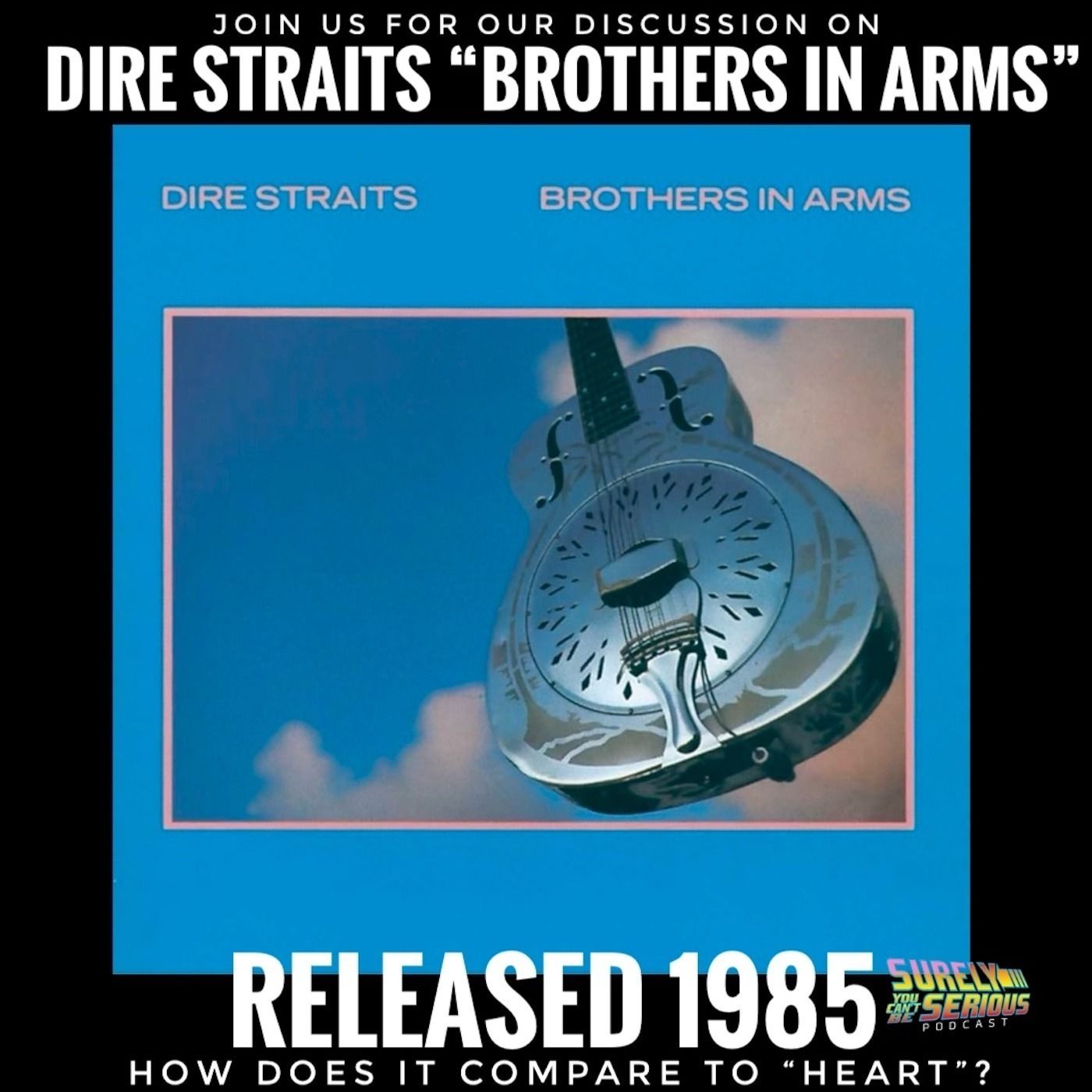
Dire Strait's "Brothers in Arms" (1985): Track by Track!
That ain’t workin’, but this is—Jason and Dee are back on the Surely You Can’t Be Serious podcast, taking a deep dive into Brothers in Arms, the 1985 masterpiece from Dire Straits that became one of the biggest-selling albums of all time—and the first CD to sell 1,000,000 copies! This week, we break down the history of the band, the genius of Mark Knopfler, and the stories behind legendary hits like Money for Nothing, Walk of Life, and Brothers in Arms. Plus, we’ll explore how the iconic AIR Studios in Montserrat helped shape this classic album.
2025-04-01
66 min
Transcript
Available Results
Generated results are saved to the knowledge database for reuse and search.
No generated results are available for this episode yet.
Extract Knowledge
Pick what you want extracted first. Model, scope, and chapter options appear after a template is selected.
Generated results for public episodes are saved to the knowledge database so they can be reused and searched later.
Transcript
<v Speaker 1>Welcome to Surely for Nothing, A dramatic reading. Oh look
<v Speaker 1>at those oakings. That's the way you do it. You
<v Speaker 1>create a podcast focused primarily on the nineteen eighties. No,
<v Speaker 1>that's not working. That's the way you do it. The
<v Speaker 1>episodes cost nothing, but the Patreon isn't free.
<v Speaker 2>All right, I'm super excited this week. I have been
<v Speaker 2>working all week on Brothers in Arms.
<v Speaker 3>That ain't working. That's the way you do it. You
<v Speaker 3>do your podcast and you call it Shirley.
<v Speaker 2>There we go.
<v Speaker 3>Welcome everybody back to the Surely You Can't Be Serious podcast.
<v Speaker 3>We are here live and in living color, covering dire
<v Speaker 3>Straits album Brothers in Arms.
<v Speaker 2>Yeah, and if you missed it, last week, we covered
<v Speaker 2>Heart's nineteen eighty five album. We are comparing these two.
<v Speaker 2>Do they have a lot in common?
<v Speaker 3>Maybe? I think they don't. Really. They're both a really
<v Speaker 3>big and nineteen eighty nineteen eighty five. Yeah, they're both
<v Speaker 3>celebrating their fortieth anniversary. How about that. That's it.
<v Speaker 2>Both hit number one in the fall of nineteen eighty five.
<v Speaker 3>Yeah, and they were inescapable if you were listening to
<v Speaker 3>top forty radio in nineteen eighty five.
<v Speaker 2>That's right, that's right.
<v Speaker 3>You know.
<v Speaker 2>The interesting thing about this particular album, Yeah, this is
<v Speaker 2>at the birth of CDs. Yeah, the incredible time when
<v Speaker 2>people were moving away from vinyl for sure, moving away
<v Speaker 2>from tapes and actually buying CDs, and it actually produced
<v Speaker 2>a sort of large uptick and money going to record
<v Speaker 2>companies and bands.
<v Speaker 3>Ultimately, Yeah, the record companies were probably more powerful at
<v Speaker 3>this stage of history than they had ever been before,
<v Speaker 3>and probably that they will ever be again because there
<v Speaker 3>was the downfall in the late nineties. Allah Napster and
<v Speaker 3>LimeWire and all that other stuff. But these albums are
<v Speaker 3>both they're both by bands who formed in the seventies.
<v Speaker 3>Art formed in mid seventies. Dire Straits formed in nineteen
<v Speaker 3>seventy seven. I mean they formed about a year apart really,
<v Speaker 3>and then had both had kind of lulls in between
<v Speaker 3>their debut albums, and then this nineteen eighty five album
<v Speaker 3>that they both had, so they get a little more
<v Speaker 3>in common than you might think.
<v Speaker 2>Okay, so before we dive into the history, yeah, I've
<v Speaker 2>got just a few overview facts I want to give
<v Speaker 2>you on Brothers in Arms. Okay, so number one, this
<v Speaker 2>is the first album to sell one million.
<v Speaker 3>CDs, cdsds in nineteen eighty five.
<v Speaker 2>In nineteen eighty five, wow.
<v Speaker 3>So like I didn't have a CD player I like
<v Speaker 3>in the household, like my brother bought my parents like
<v Speaker 3>a big gift of a CD player in nineteen eighty nine.
<v Speaker 3>I think service merchandise, by the way, if you remember that.
<v Speaker 2>Old store service merchandise, I love service merchant.
<v Speaker 3>By the way, Guys, if this is your first time
<v Speaker 3>here and you remember as a kid having a swatchwatch
<v Speaker 3>or a Cassio watch, then you're in the right spot.
<v Speaker 3>I gotta tell you. I was. I was at the
<v Speaker 3>pharmacy the other day and the girl is like checking
<v Speaker 3>my stuff, and she's got this little gold Cassio watch,
<v Speaker 3>and I was like, oh, whoa nice Cassio. And she's
<v Speaker 3>like thanks. All the older adults noticing, and I'm like, well,
<v Speaker 3>screw you there, taking my compliment back, ma'am. Right, But
<v Speaker 3>if you had a gold Cassio or a Cassio, maybe
<v Speaker 3>even a Calculator watch, you're in the right spot.
<v Speaker 2>Or a calculator uh well, forget that.
<v Speaker 3>You know, I had something that in nineteen eighty five,
<v Speaker 3>you might be able to tap into the flux capacitor
<v Speaker 3>and tend yourself back to the future.
<v Speaker 2>Yes, I had a mister calculator like a cartoon face that. Yeah. Okay,
<v Speaker 2>so this album first album, so one million CDs, right,
<v Speaker 2>I've been fourteen weeks at number one in nineteen eighty five.
<v Speaker 2>Yeah in the UK, seven in the US.
<v Speaker 3>It's still not bad. I mean it's killing it, right.
<v Speaker 2>Thirty million albums sold in nineteen eighty five. Do that
<v Speaker 2>is smashing it. And the company that owned the record label, Phillips,
<v Speaker 2>used this album as like a benchmark, saying you've got
<v Speaker 2>to get a CD player because technology and sounds like
<v Speaker 2>this will be soon coming out of your speakers.
<v Speaker 3>It was essentially their demo CD for the CD player.
<v Speaker 2>It's one of the reasons why it sold so many copies. Yeah,
<v Speaker 2>people wanted to hear this coming out of their new speaker.
<v Speaker 2>You got to have the benchmark CD.
<v Speaker 3>And I think once we've listened to a few of
<v Speaker 3>the songs, we can discuss the other possibilities on why this,
<v Speaker 3>of all albums, was such a big seller for CDs.
<v Speaker 2>Okay, let's dive into it, man, Let's do it.
<v Speaker 3>Man, I'm ready.
<v Speaker 2>Do we want to dive into the first song or
<v Speaker 2>do you want to go history?
<v Speaker 3>How do we want to do this? I would say,
<v Speaker 3>let's dive in the first song and I'll talk history
<v Speaker 3>as we go through it.
<v Speaker 2>All right. First song on the album is a song
<v Speaker 2>called so Far Away.
<v Speaker 3>M Tired of making out on the telephone. This song
<v Speaker 3>is fantastic, right, this is this is it's it's mellow,
<v Speaker 3>but it's got a groove. The sound you can hear
<v Speaker 3>the awesome sonic sound to it, and then the you know,
<v Speaker 3>it's I'm tired of having bone sex with you, honey,
<v Speaker 3>I want to I want.
<v Speaker 2>To see you for real.
<v Speaker 3>You're so far away from me?
<v Speaker 4>Yeah, so far I just so far away.
<v Speaker 2>So here's the interesting thing. I think. This album was
<v Speaker 2>released May seventeenth, nineteen eighty five. Okay, this was the
<v Speaker 2>first single released in the UK.
<v Speaker 3>Okay, but the.
<v Speaker 2>Third single released in the US. All Right, I don't
<v Speaker 2>really understand why they do that.
<v Speaker 3>Well, so their history is really interesting and I'll get
<v Speaker 3>into more of that later. But there's it's this. They're
<v Speaker 3>really I mean, they are a grassroots band from I mean,
<v Speaker 3>from the get go, they're just as regular a bunch
<v Speaker 3>of guys as you could ask for. They're all just
<v Speaker 3>guys who are barely scraping by until they happen to
<v Speaker 3>make it, which I'll talk about in a minute. But
<v Speaker 3>then once they did make it, like they I mean,
<v Speaker 3>making it is not an instantaneous thing. It's a it's
<v Speaker 3>a build. And so the first place that they had
<v Speaker 3>that they sent their album was the Netherlands because it
<v Speaker 3>was apparently a good gauge of how the album would
<v Speaker 3>perform worldwide. It depending on how it performed in the
<v Speaker 3>Netherlands did well, there wasn't doing so well in Germany,
<v Speaker 3>but they did some work in Germany, and then they
<v Speaker 3>started to catch popularity and became even more popular in Germany,
<v Speaker 3>and they were they were starting to it more and
<v Speaker 3>more popular in different countries in Europe, and weren't even
<v Speaker 3>that popular in the UK yet. And it's just like
<v Speaker 3>it's this kind of weird matter of how one country
<v Speaker 3>will have a different taste than another country. And you
<v Speaker 3>will hear over and over with these guys that everyone says,
<v Speaker 3>we thought you were an American band because their sound
<v Speaker 3>is an American z ound.
<v Speaker 2>Yeah, that's right. Yeah, I heard John Illsley yeah say
<v Speaker 2>that they sent the album to the Netherlands hoping to
<v Speaker 2>sell five thousand copies. Yeah, and when word came back
<v Speaker 2>that they had already sold twenty five thousand copies, yeah,
<v Speaker 2>they were like, we might be onto something.
<v Speaker 3>Yeah, it might be time to start touring, right yeah.
<v Speaker 2>Right, So this song in particular reached number nineteen in
<v Speaker 2>the States in April of eighty six. Yeah, I got
<v Speaker 2>your top five that week. Oh yeah, okay, and this
<v Speaker 2>is a Shirley top five. This is a strong top five.
<v Speaker 3>It's nineteen eighty five. Of course it's a Shirley top
<v Speaker 3>Well it's eighty six, but oh okay, right, yeah.
<v Speaker 2>So number five is why Can't This Be Love? By
<v Speaker 2>Van Halen, the first single with Sammy hay Right. Number
<v Speaker 2>four is Manic Monday.
<v Speaker 3>The Beautiful Bengalsana.
<v Speaker 2>Has number three West End Girls by the pet Shop.
<v Speaker 3>You couldn't I couldn't get enough of that banger, right yeah.
<v Speaker 2>Number two Addicted to Love by Robert Palmer YEP and
<v Speaker 2>number one Kiss by Prince Pretty solid right there.
<v Speaker 3>Yeah, Yeah, definitely great list.
<v Speaker 2>This album was recorded at George Martin's AI R Studios
<v Speaker 2>in Montserrat. Yeah, and I want to talk more about
<v Speaker 2>that later. Yeah, but I think already you can feel
<v Speaker 2>the influence of the island on this song.
<v Speaker 3>It does have. I mean this song especially has a
<v Speaker 3>very beach relaxed kind of feel to it. For sure.
<v Speaker 3>It's way to it. It's a groove you can you
<v Speaker 3>can almost see the palm trees waving in the breeze.
<v Speaker 2>No doubt. You know, I read that they had these
<v Speaker 2>songs all written and rehearsed before they got to the island. Yeah,
<v Speaker 2>but I still believe that the island impacted the sound.
<v Speaker 3>Of this this album, no doubt, no doubt.
<v Speaker 2>Okay, lovely So I love it. It's one of the
<v Speaker 2>I mean, top twenty hits.
<v Speaker 3>Yeah song, huge song, great, great one out of the gate.
<v Speaker 3>I wouldn't I'd say it's more than an appetizer. It's
<v Speaker 3>it's it's a solid appetizer.
<v Speaker 2>But oh my gosh, should we get to the to
<v Speaker 2>the meal.
<v Speaker 3>I mean, you can leave everything else behind just I
<v Speaker 3>I know what you're gonna do, like you're gonna start
<v Speaker 3>the You're gonna start the music right about here as
<v Speaker 3>I'm talking. Because it's it's a nice Yes, it's just
<v Speaker 3>a nice it's a nice bill. That's the understatement of
<v Speaker 3>the year. This is arguably one of the best builds
<v Speaker 3>in all of music history, and we didn't get it
<v Speaker 3>hot half of the time. Whenever we would hear the song,
<v Speaker 3>they would start after the build, right, And it's so good,
<v Speaker 3>it's so powerful, it's so perfectly timed. And to have
<v Speaker 3>sting just happen to be next door and hey, would
<v Speaker 3>you like to come and sing a little bit on
<v Speaker 3>this song? Build? Build, Build, And then you come crashing in.
<v Speaker 2>With one of the great guitar intros of all time.
<v Speaker 3>It's fantastic. And I mean, even if you skip that
<v Speaker 3>whole intro, that that boom of a guitar coming in
<v Speaker 3>with Mark Knopfler's incredible fingerpicking style, the unique combination of
<v Speaker 3>chords that he's got going on, it's just it is remarkable.
<v Speaker 3>It is overwhelming. I cannot say enough good about this,
<v Speaker 3>this intro and this song.
<v Speaker 2>So the genesis of the song is super interesting. But
<v Speaker 2>almost as interesting is what happened while they're recording this song. Okay,
<v Speaker 2>so the genesis if you don't know this, and you probably,
<v Speaker 2>I mean I know you do because you've studied. But
<v Speaker 2>Mark Knopfler was looking for the zz top sound for
<v Speaker 2>this right. Yes, he even reached out to Billy Gibbons. Okay,
<v Speaker 2>he's like, hey, Billy, I wanted to do this zz
<v Speaker 2>top sound. And Billy Gibbons later said, you know, he
<v Speaker 2>did a really good job it. Scenes how I didn't
<v Speaker 2>tell him a gd thing. But they had this happy
<v Speaker 2>accident when they were recording the song. Well, let me
<v Speaker 2>back up. The genesis of the song is Mark Knopfler
<v Speaker 2>was living in New York City and he was at
<v Speaker 2>a department store like I don't know where it was exactly,
<v Speaker 2>like Sears or something.
<v Speaker 3>Yeah, this probably was when they were recording their third
<v Speaker 3>album because they were at the power station recording it.
<v Speaker 3>That's when Dave ended up leaving the band was when
<v Speaker 3>they were doing their recording in New York City. So
<v Speaker 3>my guess is it was around that time.
<v Speaker 2>He's in there and he's buying a refrigerator okay, microwave oven.
<v Speaker 2>He's buying a refrigerator. He's standing there in front of
<v Speaker 2>this wall of TV's that's playing MTV and there's a guy,
<v Speaker 2>like a delivery guy who comes up and he stands
<v Speaker 2>next to him. He's like, that ain't working. What is
<v Speaker 2>that Hawaiian noises?
<v Speaker 3>So that little queenie, Yeah right, So there's there's obviously
<v Speaker 3>some language that has has not lasted things through the
<v Speaker 3>through the PC of time. Yeah, that's but you got
<v Speaker 3>to keep in mind this is he is, he's playing
<v Speaker 3>a part here. This is not These are not the
<v Speaker 3>words that he would use. I mean, I know these
<v Speaker 3>having studied these guys, they hung out with that type
<v Speaker 3>of folk all the time and would never use it
<v Speaker 3>on their own. But he's he's playing the part of
<v Speaker 3>this radio you know, refrigerator installer. Right. But the I
<v Speaker 3>think the most fascinating thing that we covered this a
<v Speaker 3>long time ago, the band that was that they were
<v Speaker 3>watching on all those TVs Smartley Kurz, I know.
<v Speaker 2>Right, how about that he's looking at them saying, that
<v Speaker 2>guy's a millionaire. Come on, what is this?
<v Speaker 3>I mean probably they were watching the Home Sweet Home
<v Speaker 3>video that you referenced in our top five of eighty five.
<v Speaker 3>I mean wow, I mean because because you know, you
<v Speaker 3>got the almost the top almost coming off. Look at
<v Speaker 3>her putting it in the camera. Man, the guys ain't dumb, that's.
<v Speaker 2>Right, that's right. Chicks for free.
<v Speaker 3>Yeah, So he.
<v Speaker 2>Was so impacted by this conversation he had with this
<v Speaker 2>delivery guy.
<v Speaker 5>Yeah, umps, Look at that Mama gonna limit camera man?
<v Speaker 5>What's that Hawaiian noises on the boosh away?
<v Speaker 2>That he went around looking for a pin? In a
<v Speaker 2>piece of paper he's writing down and I wrote down
<v Speaker 2>things that he got from this guy. Okay, yeah, so
<v Speaker 2>he actually got that ain't working, he got sticking in
<v Speaker 2>the camera. Yeah, and look at that f f yeah.
<v Speaker 2>Oh and also what are those Hawaiian noises? Which I
<v Speaker 2>think is a hilarious line.
<v Speaker 3>Right right, because there's not a Motley Cruise song that
<v Speaker 3>I can think of that has anything like a Hawaiian
<v Speaker 3>noise at all.
<v Speaker 2>It doesn't matter that ain't working. Maybe you get a
<v Speaker 2>blister on your little.
<v Speaker 3>Finger, maybe you get a blister on your thumb.
<v Speaker 2>So that's an interesting story to me. But really the
<v Speaker 2>fascinating part of this song is they're in Montserrat, which
<v Speaker 2>is British West Indies. It's an island basically of isolation.
<v Speaker 2>They move you there so you can concentrate on recording
<v Speaker 2>and they're working on this song and one of the
<v Speaker 2>ways that they get this incredible sound with the guitar
<v Speaker 2>and he's trying to mimic Zzy Top. They leave the studio,
<v Speaker 2>they come in one day and the microphones are all
<v Speaker 2>messed up. Do you hear the story? No, So they
<v Speaker 2>come in. One mic is pointing at the floor and
<v Speaker 2>one one's like moved out over here and there and
<v Speaker 2>kind of scattered, but it's making an incredible sound. And
<v Speaker 2>so they're like, don't touch anything. Wow, it's a they
<v Speaker 2>called the happy accident. It so literally they're like, somebody
<v Speaker 2>moved all this stuff around, don't touch it.
<v Speaker 3>Little microphone fairies came out of the night and right.
<v Speaker 2>Cray And so he's writing this song from the perspective
<v Speaker 2>of this guy watching MTV talking about how ridiculous MTV is, right,
<v Speaker 2>and they're playing too MTV and Mark Knopfler makes the comments,
<v Speaker 2>I'm sure wish Sting was here, Yeah, he'd be great
<v Speaker 2>to sing this party. And they're like, what are you
<v Speaker 2>talking about? Sting is here. Sting's windsurfing right now. They're
<v Speaker 2>like what. And so Sting was in Montserrat because he
<v Speaker 2>loved the island and had recorded Ghost in the Machine
<v Speaker 2>and Synchronicity and was just there hanging out on holiday.
<v Speaker 3>They had just finished with Synchronicity just a couple of years,
<v Speaker 3>I mean maybe a year too before this album was
<v Speaker 3>being recorded.
<v Speaker 2>He's windsurfing, just hanging out.
<v Speaker 3>Yeah, sure, we're not.
<v Speaker 2>So he came in and they invited him to come
<v Speaker 2>up to dinner. They played Money for Nothing for him
<v Speaker 2>and said, hey, what do you think He's like. The
<v Speaker 2>comment was you bustard, You've done it right, And Mark
<v Speaker 2>Knopfler's like, well, if you love it so much, why
<v Speaker 2>don't you sing on it?
<v Speaker 3>Well, if you love it so much.
<v Speaker 6>When she's singing right, so Sting is like, fine, I
<v Speaker 6>will uh huh right, and he sings the I Want
<v Speaker 6>my MTV line to the tune of Don't Stand so
<v Speaker 6>Close to Me.
<v Speaker 3>Now, listening audience, you must know, don't Stand so Close
<v Speaker 3>to Me is my favorite Police song. It is my
<v Speaker 3>favorite Police song. And this song is my favorite dire
<v Speaker 3>straight song. Sultan's have Swing a near second, but this
<v Speaker 3>one is top of the list. And not until you
<v Speaker 3>told this to me about a week ago that I go,
<v Speaker 3>don't stand so don't stand so, don't stand so close
<v Speaker 3>to me. I want my I want my I want
<v Speaker 3>my MTV. I was just like, wah, what yes, So
<v Speaker 3>there's so no problem. Sting said, you guys can use.
<v Speaker 2>It right, right, except the record company is like, no, no, no, no, no, no no,
<v Speaker 2>that belongs to us. They've got to pay us a
<v Speaker 2>percentage of their song. What a crock and Sting was
<v Speaker 2>very embarrassed by that. He's like, of course, saying, I
<v Speaker 2>mean just asked me to sing a line.
<v Speaker 3>I sang a line, right, And it's not like it's
<v Speaker 3>a super complicated melody right right, that's crazy.
<v Speaker 2>Rolling Stone goted this the ninety fourth greatest guitar song
<v Speaker 2>of all time, and a problem with that. Yeah, okay,
<v Speaker 2>so let's talk about the music video. Okay, yes, okay.
<v Speaker 2>Mark Knopfler hates music videos, but MTV is like, listen, dude,
<v Speaker 2>this song plays to us. We will love it. We
<v Speaker 2>want to play the heck out of it, but we
<v Speaker 2>have to have a great music video to make this work. Yeah,
<v Speaker 2>So they send some executives to go meet with him,
<v Speaker 2>and he's not receptive to it at all. They later
<v Speaker 2>go back a second time, but this time his girlfriend
<v Speaker 2>is with him and they're like, we have to have
<v Speaker 2>a creative video to go along with this awesome song,
<v Speaker 2>and he's still like basically arms crossed, looking at his shoes,
<v Speaker 2>says nothing. So they leave and his girlfriend, who happened
<v Speaker 2>to be there the second time, was like, you know,
<v Speaker 2>they're right, They're absolutely right. You have to make a
<v Speaker 2>video worthy of this song. He's like, all right, fine,
<v Speaker 2>they hire Steve Baron, mister music video, right, and they
<v Speaker 2>come up with this idea of like like computer coloring,
<v Speaker 2>you know, making those wild colors while they're playing this incredible.
<v Speaker 3>Song, right, kind of a takeoff on the take on
<v Speaker 3>Me style.
<v Speaker 2>It's sort of rotoscoping. Yeah right, we're going to talk
<v Speaker 2>about that here in just a second. Yeah, but this
<v Speaker 2>song is the first song aired on MTVu August first,
<v Speaker 2>nineteen eighty seven. Okay, I mean that's as monumental as
<v Speaker 2>video Killed the Radio Star.
<v Speaker 3>You know in Europe.
<v Speaker 2>Sure, So this video goes on to win MTV's Music
<v Speaker 2>Video of the Year for nineteen eighty six.
<v Speaker 3>And beats out Take on Me by Aha. Oh really yes,
<v Speaker 3>really yeah. The other ones you had cry by Goodley
<v Speaker 3>and Cream, which we've talked about multiple times. You have
<v Speaker 3>Addicted but to Love by Robert Palmer, which you mentioned
<v Speaker 3>as the what was the number two song Number.
<v Speaker 2>Two songs this week? Yep, And they got all the
<v Speaker 2>babes in the background.
<v Speaker 3>And then Rode nowhere by the Talking Heads, which the
<v Speaker 3>Talking Heads was the first group that Dire Straits toured
<v Speaker 3>with when they very first started doing a European tour.
<v Speaker 2>That's cool.
<v Speaker 3>Yeah, actually made good friends with them. Cannot say the
<v Speaker 3>name for Sticks Sticks. When they were touring with Sticks,
<v Speaker 3>it went.
<v Speaker 2>Very badly interesting. Okay, yeah, okay, I hate to be
<v Speaker 2>done with this one.
<v Speaker 3>It's so freaking good.
<v Speaker 2>That's the way you do it.
<v Speaker 3>I mean, you play the guitar on MTV.
<v Speaker 2>Okad. So, the next song on the album is a
<v Speaker 2>song that was really big early nineteen eighty six, and
<v Speaker 2>I loved it in particular because the music video was
<v Speaker 2>nothing but NFL football bloopers. Third song on the album
<v Speaker 2>is a song called Walk of Life. Okay, I've got
<v Speaker 2>some stuff for you on this song, Okay, all right yeah.
<v Speaker 2>So third single release released October fourteenth, nineteen eighty five,
<v Speaker 2>right around the same time the Super Bowl Shuffle came out. Yeah,
<v Speaker 2>go back and check out our Super Bowl chuff episode.
<v Speaker 3>Very popular.
<v Speaker 2>Episode reached number two in the UK, reached number seven
<v Speaker 2>in the US Top ten hit here the top six
<v Speaker 2>from so number seven is Walk of Life. Number six
<v Speaker 2>is my hometown. Number five as I'm Your Man by
<v Speaker 2>George Michael. Number four is talk to Me by Stevie Nicks.
<v Speaker 2>Number three is Burning Heart by Survivor from.
<v Speaker 3>The the Vital.
<v Speaker 2>Rocky four Rocky four soundtrack. Number two is Say You
<v Speaker 2>Say Me by h Liona Richie, and then number one
<v Speaker 2>That's what Friends Are For with Dion Worwick, Stevie Wonder,
<v Speaker 2>Gladys Knight and the Pips and Elton John, which I've
<v Speaker 2>got a funny Monster Rat story to tell you about
<v Speaker 2>Elton John. I'm gonna throw it in real quick, let's
<v Speaker 2>do it. So they recorded in monts Rat. So just
<v Speaker 2>some other artists that recorded in Monster Rat, Jimmy Buffett,
<v Speaker 2>Jerry Rafferty, right.
<v Speaker 3>Check go check out our top five of nineteen at
<v Speaker 3>seventy eight.
<v Speaker 2>Seventy eight, that's right, Yeah, the police recorded, I mean
<v Speaker 2>goes to the machine and synchronousity. Elton John recorded there
<v Speaker 2>which I want to tell you here in a second
<v Speaker 2>Black Sabbath Rush Keith Richards and the last album recorded
<v Speaker 2>there was Steel Wheels by the Rolling Stones. But the
<v Speaker 2>interesting thing so monserrat not much to do basically windsurfing
<v Speaker 2>or swimming at the pool, which they had a.
<v Speaker 3>Pool there or recording a top two hundred album.
<v Speaker 2>Or recording a top two hundred album, or you know,
<v Speaker 2>staying up late with the locals and drinking. Okay, well,
<v Speaker 2>Elton John and his crew stayed up way late one
<v Speaker 2>night drinking. Everybody called in sick because they were all hungover,
<v Speaker 2>like you know, still recovering from the night before. And
<v Speaker 2>Elton John is standing there and he's mad that his
<v Speaker 2>whole crew is not there, and he's like, well, you
<v Speaker 2>know what's going on here? We're here to do some work.
<v Speaker 2>Where is everybody? Well, you know, Jimmy's hungover and this
<v Speaker 2>guy's puking in the toilet whatever, And like one guitarist
<v Speaker 2>is like, hey, I'm still standing And guess what that
<v Speaker 2>turns into a kit song?
<v Speaker 3>Wow, don't get still nice?
<v Speaker 2>Back to Walk of Life. Yes, this song mentions Johnny
<v Speaker 2>down in the tunnels trying to make it pay, which
<v Speaker 2>is referencing busking on the subway right. It also references
<v Speaker 2>old songs like I Got a Woman by Ray Charles
<v Speaker 2>b Bapa Lua, which is a song by gene Vincent
<v Speaker 2>from nineteen fifty six. I Know what I'd Say by
<v Speaker 2>Ray Charles and Jerry Lee Lewis my Sweet by Robert
<v Speaker 2>Knighthawk and Mac the Knife by Bobby Darren. I say,
<v Speaker 2>I kind of love it when they kind of do
<v Speaker 2>this little throwback thing. You know, def Leppard did that
<v Speaker 2>with Rocket exactly.
<v Speaker 3>You know, that's what I was thinking of.
<v Speaker 2>What are you thinking of this song?
<v Speaker 3>Love it? I mean they've toe taber right. They have
<v Speaker 3>come out of the gate with three absolute smashes, no
<v Speaker 3>question about it. Fantastic first three songs, and songs that
<v Speaker 3>were all over the radio and all over MTV for
<v Speaker 3>nineteen eighty five and nineteen eighty six.
<v Speaker 2>Yes, and one of my favorite music videos just because
<v Speaker 2>of the NFL bloopers. Right next song on the album's
<v Speaker 2>called Your Latest Trick.
<v Speaker 3>All Right, I feel like we just took a hard left. Yeah.
<v Speaker 3>I felt like we were going in a very specific
<v Speaker 3>direction and all of a sudden, we are no longer
<v Speaker 3>going south, we are going east. What happened?
<v Speaker 2>I don't really know. This song sounds like a Moonlighting
<v Speaker 2>episode where Maddie is mad at David.
<v Speaker 3>I was thinking, it sounds it's like the it's like
<v Speaker 3>in Mister Mom whenever he's depressed about a state of life.
<v Speaker 3>That's what it sounds like to me.
<v Speaker 2>That's right. Yes, chef's gone to bed.
<v Speaker 3>So these guys are flexing their musical muscle here. All right.
<v Speaker 3>So we've just we've known since nineteen seventy eight that
<v Speaker 3>they can crank out some killer rock hits, and they
<v Speaker 3>decide on song number four to go, Hey, guess guess
<v Speaker 3>what else we can do?
<v Speaker 2>They throw on the jazz and it hit you like
<v Speaker 2>a cold bucket of water. Yeah, this one doesn't do
<v Speaker 2>it for me at all, right, but there is a
<v Speaker 2>certain contingency of folks out there that love this kind
<v Speaker 2>of music, right.
<v Speaker 3>Sure, I mean that and a ton of them were
<v Speaker 3>buying CDs, yeah in nineteen eighty five, probably right, Sure,
<v Speaker 3>I mean, if any group of folks really wanted to
<v Speaker 3>hear each instrument and every instrument as clearly and beautifully
<v Speaker 3>as possible, it's the folks listening to jazz. Right.
<v Speaker 2>So here's what I will say about this particular song. Yeah,
<v Speaker 2>so we've already heard pop, we've heard rock. This is
<v Speaker 2>now jazz. I think we'll hear some hints of reggae
<v Speaker 2>here in a second, We'll hear country here in a minute.
<v Speaker 2>There's nine songs on this album, and that's five genres
<v Speaker 2>of music. Yeah, these guys are just offering something to everybody. Yeah,
<v Speaker 2>this is not my particular thing. Yeah, but hey, what
<v Speaker 2>do I know.
<v Speaker 3>In the in the right time, you know, playing a
<v Speaker 3>game of pool late at night maybe, or you know,
<v Speaker 3>having a relaxing drink by the pool side something like that.
<v Speaker 3>This is very kind of chill out kind of music.
<v Speaker 2>This was the fifth single released April twenty fifth, nineteen
<v Speaker 2>eighty six. Wasn't released in the US, which is why
<v Speaker 2>we don't know it. Yeah, but it was released in
<v Speaker 2>the UK as the fifth single.
<v Speaker 3>So John Illsley, yes, the basis for the for the
<v Speaker 3>band right right, So long before they were ever famous,
<v Speaker 3>he graduated from college, he didn't have much money and
<v Speaker 3>he and his girlfriend decided to start a record shop. Okay,
<v Speaker 3>And so he didn't know, I mean he knew, he
<v Speaker 3>knew a limited amount of music, right like he had.
<v Speaker 3>He had grown up and was blown out of the
<v Speaker 3>water by the new music that was coming out of
<v Speaker 3>Radio Luxembourg and as many Europeans were of, like, wow,
<v Speaker 3>you know this new rock music is our music, right,
<v Speaker 3>do you remember.
<v Speaker 2>The last time we talked about Radio Luxembourg.
<v Speaker 3>I remember that we talked about it, but was it
<v Speaker 3>was it Trevor Horn.
<v Speaker 2>Yeah, it was Trevor Horren. Okay, it was our Patreon
<v Speaker 2>episode we did on Video Killed the Radio Star.
<v Speaker 3>Yeah, I think it was. I think that Radio Luxembourg
<v Speaker 3>was a huge moving factor for all of those guys
<v Speaker 3>born in the late forties and early fifties listening to
<v Speaker 3>music at the time. As a matter of fact, John
<v Speaker 3>used to he said that his brother actually the radio,
<v Speaker 3>would buy the records or he haven't even got a
<v Speaker 3>kit radio so that they could tune into Radio Luxembourg.
<v Speaker 3>And his job was to stand guard at the door
<v Speaker 3>so that if their parents were coming by, he was like,
<v Speaker 3>and they would throw the pillow over their head and
<v Speaker 3>turn the radio off. And then his brother was cool
<v Speaker 3>enough to go, Okay, you go listen to it for
<v Speaker 3>a little bit. I'll keep an eye on the door.
<v Speaker 3>And so that's really how he learned to fall in
<v Speaker 3>love with music. I love it. So he graduates from school,
<v Speaker 3>decides to start this record business, but he doesn't he
<v Speaker 3>knows his music taste has got limitations, and so he's like,
<v Speaker 3>how do I know what records to buy? So there
<v Speaker 3>was a guy named Charlie Gillett that was he did
<v Speaker 3>Radio London, and he was the guy that was always
<v Speaker 3>playing new music, like, Hey, every Sunday, this is the
<v Speaker 3>new new music. So he was just like, I wonder
<v Speaker 3>if I wrote him a letter. I just wrote him
<v Speaker 3>a letter, if he might give me some advice on
<v Speaker 3>what records I should get for the record shop. Nice,
<v Speaker 3>And so that's what he did, wrote him a letter
<v Speaker 3>at Radio London, and Charlie wrote back to this, I mean,
<v Speaker 3>young twenties kid starting a record shop, and gave him
<v Speaker 3>some ideas, just like, hey, you know, here's do this,
<v Speaker 3>do that. The record shop only lasted a few months, okay,
<v Speaker 3>But what was interesting was that he had made that connection.
<v Speaker 3>He realized, Hey, I just I wrote a letter to
<v Speaker 3>this world famous disc jockey and he wrote back to me.
<v Speaker 3>And so he's poorer than dirt. He ends up catching
<v Speaker 3>a roommate that's a friend of a friend who's just
<v Speaker 3>started as a social worker. His name is Dave Knopfler.
<v Speaker 2>Davefler, Yeah, okay.
<v Speaker 3>And so one day he comes home late at night
<v Speaker 3>to his roomy passed out asleep in his bed and
<v Speaker 3>some guy passed out next to a guitar on the
<v Speaker 3>floor in the living room. And that was Mark Knoeffler,
<v Speaker 3>and so these I mean legitimately working stiff guys said hey,
<v Speaker 3>let's let's put the band together there, let's see what
<v Speaker 3>we can do. They picked up a guy named Pick
<v Speaker 3>for drums. So it was Dave and Mark, John and Pick.
<v Speaker 3>And the first show that they did it was nineteen
<v Speaker 3>seventy seven. It was in the lawn at their apartment flat.
<v Speaker 3>That was their first show. There is now a plaque
<v Speaker 3>there that said Dire Strait's first gig played here.
<v Speaker 2>That is cool. I love it.
<v Speaker 3>Yeah, it's really great. So the Pick is a guy
<v Speaker 3>named David Withers that was a friend of Mark's, and
<v Speaker 3>they play their first show, but they don't have a
<v Speaker 3>band name. And so there's a guy named Simon cow
<v Speaker 3>It was Simon Cowell, not Cowl Okay, not the British
<v Speaker 3>idol American idol guy. No Simon cow it was. It
<v Speaker 3>was Pick's roommate and he was like, you guys never
<v Speaker 3>have any money, You're always in dire Straits. And so
<v Speaker 3>they thought that that sounds like a good name for
<v Speaker 3>the band, and they all just felt like old friends
<v Speaker 3>from the beginning. And they played their first show at
<v Speaker 3>the Farer House lawn and he said, we're all just misfits,
<v Speaker 3>but we were with misfits doing our own thing at
<v Speaker 3>the time. Wow, I love it. I had to use
<v Speaker 3>another band's PA sounds familiar.
<v Speaker 2>That's right, all right, So let's go on to the
<v Speaker 2>next song on the album.
<v Speaker 3>Yeah, sounds good.
<v Speaker 2>Next song on the album is called why Worry?
<v Speaker 3>So this is a beautiful little guitar piece. It's almost
<v Speaker 3>like a lullaby, has a you know, I think Jeff
<v Speaker 3>Buckley probably borrowed this sound whenever he did Hallelujah. Has
<v Speaker 3>a very similar style to the tone of the guitar
<v Speaker 3>on this and the fingerpicking style that they both do.
<v Speaker 3>It's lovely easily fall asleep in a hammock on Montserrat.
<v Speaker 2>I totally agree. Right, it's slow, it's beautiful, it's very long.
<v Speaker 2>It's over eight and a half minutes, and this is
<v Speaker 2>one of those songs I believe had to be influenced
<v Speaker 2>by Montsrat.
<v Speaker 3>Right.
<v Speaker 2>So, here's the interesting thing. I told you that Steel
<v Speaker 2>Wheels by the Rolling Stones was the last album made
<v Speaker 2>at this studio.
<v Speaker 3>That's a long time ago.
<v Speaker 2>Nineteen eighty nine was when that was released. Yeah, okay,
<v Speaker 2>so here's the deal. Hurricane Hugo hit direct hit on
<v Speaker 2>montster Rat in nineteen eighty nine. Okay, okay, George Martin
<v Speaker 2>was on TV. I was watching an interview with him.
<v Speaker 2>He said, there's twelve thousand people on the island. Eleven
<v Speaker 2>thousand people lost their homes. It was a absolute punch
<v Speaker 2>in the face, devastation, nearly irre unrecoverable for anybody on
<v Speaker 2>the island.
<v Speaker 3>So what happened with the studio?
<v Speaker 2>So the studio was hit hard. George Martin couldn't get
<v Speaker 2>to the island for six weeks after the hurricane, and
<v Speaker 2>when he got there, he was going through looking at
<v Speaker 2>the damage. He said, when he opened the piano, he said,
<v Speaker 2>the ivories were covered with like mold. He said that
<v Speaker 2>that was the moment he said, We're done here. Can't
<v Speaker 2>we cannot recover from this. Oh my god, there's no
<v Speaker 2>island to go back to.
<v Speaker 3>So that recording studio had a knave board, which if
<v Speaker 3>you've if you've seen the movie Sound City, or you're
<v Speaker 3>familiar with the recording studio Sound City, the knave board
<v Speaker 3>was the penultimate board to have if you're recording an album,
<v Speaker 3>which is why there were so many great albums in
<v Speaker 3>Montserrat and in Sound City. Did they's just still there
<v Speaker 3>rotting away thirty five years.
<v Speaker 2>I don't know the answer that question, but I'd be
<v Speaker 2>willing to go with you to check it out if
<v Speaker 2>you wanted.
<v Speaker 3>To go, Buddy fly down there.
<v Speaker 2>You know you mentioned that need board, yeah, right, which
<v Speaker 2>was the main mixing instrument for all these wonderful albums.
<v Speaker 3>Yeah.
<v Speaker 2>If you go watch the video for every little Thing
<v Speaker 2>she does its magic, Yeah, please, you will see Andy
<v Speaker 2>Summers dancing barefooted on this board, like without care. I'm like, dude,
<v Speaker 2>that's the soundboard. What are you doing?
<v Speaker 3>Wow? I get mad at my kids for throwing their phones. Wow. Achievement. Yeah.
<v Speaker 2>Here's the other thing. Hurricane Hugo, like I said, destroyed
<v Speaker 2>home eleven thousand people's homes out of twelve thousand. Right,
<v Speaker 2>and that was not the worst thing that happened to
<v Speaker 2>that island.
<v Speaker 3>Okay, what happened?
<v Speaker 2>Well? Montserrat is there because it's a volcanic island. Oh
<v Speaker 2>and in nineteen ninety five it blew its top and
<v Speaker 2>the town of Plymouth where all it was recorded. I mean,
<v Speaker 2>it's just it's buried in ash now like that. The
<v Speaker 2>town is no longer there basically. Huh So, the hurricane
<v Speaker 2>Hugo was the the you know, the right hook, and
<v Speaker 2>then the volcano blowing up was the uppercut.
<v Speaker 3>Yeah for the count yep So, has there been any
<v Speaker 3>development there since then?
<v Speaker 2>There has been. Yeah, I mean there's been some uh
<v Speaker 2>huh so, but Plymouth as a city, it's not not
<v Speaker 2>the thriving metropolis that it once was.
<v Speaker 3>Twelve thousand people metropolis. But so, but the recording studio
<v Speaker 3>is just given up to the weeds.
<v Speaker 2>That it is being taken back by the jungle.
<v Speaker 7>Wow.
<v Speaker 2>Can you imagine?
<v Speaker 3>No, really, I really do want to go down there
<v Speaker 3>and look. Go. Wow.
<v Speaker 2>We need some more Patreon members.
<v Speaker 3>By the way, if you would like to support our
<v Speaker 3>trip to montster Rot, you can go to patreon dot
<v Speaker 3>com Shirly Podcast and for as little as five bucks
<v Speaker 3>a month, you get access to all our one Hit
<v Speaker 3>Wonder episodes and some other fan favorites.
<v Speaker 2>Join us on Patreon.
<v Speaker 3>Yeah absolutely, and uh if if if we get enough
<v Speaker 3>people to send us down to Montserrat, we will.
<v Speaker 2>We'll go.
<v Speaker 3>One of our patreons will go with us. We'll have
<v Speaker 3>a lottery system and let one of the patreons go there.
<v Speaker 3>You go yeah, and.
<v Speaker 2>We'll go check out what looks like at the studio.
<v Speaker 3>Yeah, fantastic, all right.
<v Speaker 2>D hit stop on your tape deck, kick it out,
<v Speaker 2>flip it over for side to and we start off
<v Speaker 2>with a song called right Across the River.
<v Speaker 3>So now I feel like we're going through the jungle
<v Speaker 3>with Michael Douglas and Romancing the stone, right. Yeah.
<v Speaker 2>I think this is another sort of reggae, kind of
<v Speaker 2>island feel to it. Yeah, I'm gonna say something, tell
<v Speaker 2>me if I'm crazy. I think this song was influenced
<v Speaker 2>by the song Wrapped Around Your Finger by the Police.
<v Speaker 3>I can hear in that drum beat now that you
<v Speaker 3>say that it's got a it's got a similar rhythm
<v Speaker 3>to it. Yep. I can see that.
<v Speaker 2>Kay also recorded on Monsrat right right, yep.
<v Speaker 3>So these guys, as I said, working stuffs, really just working,
<v Speaker 3>you know, for a living. But they had this they
<v Speaker 3>had this pub that they would go to called the
<v Speaker 3>Oxford Arms that was there in Deptford, England, where they
<v Speaker 3>were all from, right, I mean they grew up in
<v Speaker 3>different places. Knopfler was and his brother of course were.
<v Speaker 3>Jordie actually had a guy who had played with the
<v Speaker 3>band Jordie that had Brian Johnson in it. Come play
<v Speaker 3>keyboards with them, okay, but you know they're they're scraping by.
<v Speaker 3>They of course are going to see other bands play.
<v Speaker 3>And one rainy night, Mark Knopfler walks into a basely
<v Speaker 3>deserted pub. You know, there's and but there's a band playing,
<v Speaker 3>and you've got a couple of kids over in the
<v Speaker 3>corner who could care less about the band. They're into
<v Speaker 3>rock and roll, not some trumpet playing band. And these
<v Speaker 3>guys on stage are treating it like it's this big performance,
<v Speaker 3>even though there's only three people in the whole pub.
<v Speaker 3>And then at the end of the show, the lead
<v Speaker 3>singer says, thank you good night. We are the Sultans
<v Speaker 3>of Swing, and that's where he gets the idea for
<v Speaker 3>this song. So that song, Sultan's of Swing, is one
<v Speaker 3>of five songs that they have down pat like they're
<v Speaker 3>just like, we've got these songs down, we need to
<v Speaker 3>have a demo. They're playing the clubs hoping to be found.
<v Speaker 3>But you know, the way John Illsley put it was,
<v Speaker 3>you could be found that way. But it's like being
<v Speaker 3>a beautiful woman in hope that some age and find
<v Speaker 3>you walking along in the supermarket. It's not impossible. It's
<v Speaker 3>just not very likely. And what they realize is that
<v Speaker 3>they needed to have a demo. So after playing gig
<v Speaker 3>after gig after gig and not really getting anywhere, there's
<v Speaker 3>some unrest in the band. It's like, man, guys, you
<v Speaker 3>know we're getting into be our late twenties now, maybe
<v Speaker 3>it's time to be done. And John Ilsley gets a
<v Speaker 3>letter from his dad and he's reading a letter and
<v Speaker 3>it says, oh, by the way, your grand passed away.
<v Speaker 3>She left all the grandkids five hundred pounds.
<v Speaker 2>WHOA just in time, thanks Graham.
<v Speaker 3>And so he's thinking, Okay, with five hundred I can
<v Speaker 3>pay my rent for this many months, and I'll have
<v Speaker 3>food for this many months and I'll be able to
<v Speaker 3>I'll be set for quite a while. Or we can
<v Speaker 3>make our demo. And he knew what the answer was
<v Speaker 3>to that question right off the bat. And he goes
<v Speaker 3>to the other guys and he's like, guys, I want
<v Speaker 3>to do the demo. And they were they're elated, you know,
<v Speaker 3>They're like, we will pay you back. If we ever
<v Speaker 3>make any money as a band, we will pay you back.
<v Speaker 3>And as it turned out, after they sold their first album.
<v Speaker 3>He got paid back that five hundred bucks. I love it.
<v Speaker 2>Take your shot, and it pays off in spades. Yeah,
<v Speaker 2>I mean huge dividends on that investment.
<v Speaker 3>Yeah. Absolutely. So they do their demo. It includes Sultan's
<v Speaker 3>of Swing on it. It's actually a great version of
<v Speaker 3>the song, arguably better than the one that came out
<v Speaker 3>on the album that they ultimately re recorded later. It's
<v Speaker 3>a tiny recording studio. It's basically a closet for the
<v Speaker 3>sound booth. The guy who is helping them isn't even
<v Speaker 3>a producer, he's just a sound engineer. And his name
<v Speaker 3>is Chaz Harrington. All right, okay, and they make friends
<v Speaker 3>with ch Has right off the bat, just get along
<v Speaker 3>with him great. But he records. I mean, it's basically
<v Speaker 3>like five mics, you know, three of them go on
<v Speaker 3>the drum set, one of them goes for you know,
<v Speaker 3>backing vocals, and then they double Mark's vocal. Right, But
<v Speaker 3>they do this incredible version of Sultan's Swing and then
<v Speaker 3>four other songs. And so now they have the demo
<v Speaker 3>and they're like, okay, so do we send this to
<v Speaker 3>record companies? And they start thinking about it, and these
<v Speaker 3>guys have the wisdom of being over twenty five, right,
<v Speaker 3>their brain is now fully developed, and so they're like, listen,
<v Speaker 3>record companies get dozens of demo tapes a day. Day. Yeah,
<v Speaker 3>Like it's just like, are we really gonna are we
<v Speaker 3>gonna bet our five hundred quid on that? You know?
<v Speaker 3>And so they're thinking about it and thinking about it,
<v Speaker 3>and they're listening to the radio, and the guy on
<v Speaker 3>the radio it's Sunday is Charlie Gellette, and Mark knows
<v Speaker 3>the story of John writing to him about his record shop,
<v Speaker 3>and he's like, wyonn't you just write to Charlie Gellett
<v Speaker 3>again and see if he'd be interested in listen to
<v Speaker 3>our demo. It's your pal, you know, he's your buddy,
<v Speaker 3>he's your pen pal. And so he's like, okay, I'll
<v Speaker 3>give it a shot. And so he just he doesn't
<v Speaker 3>even send the demo tape, right, He just sends him
<v Speaker 3>a letter at the studio at at the radio station, right,
<v Speaker 3>And Charlie responds and he's like, sure, guys, here's my address.
<v Speaker 3>Come on over to the house. And so they show
<v Speaker 3>up and Charlie Gillette is like gives them tea and
<v Speaker 3>biscuits or cookies as we call them here in America.
<v Speaker 3>I mean, can you imagine, Like just Casey Kasem says, sure, Jason,
<v Speaker 3>come on over, would you like some tea and some marios?
<v Speaker 3>This is incredible story, right, And so he's like, guys,
<v Speaker 3>I'm excited to listen to this. I don't ever listen
<v Speaker 3>to people's demos in front of them. It just kind
<v Speaker 3>of saves embarrassment for both of us here. But I
<v Speaker 3>will listen to this, and I'll be honest with you. You know,
<v Speaker 3>whatever it is, whether I love it or hate it,
<v Speaker 3>I'm gonna be honest with you about what. If I
<v Speaker 3>think it just needs something, I'll tell you what I
<v Speaker 3>think it needs, right, Okay, good? And they're like okay, well,
<v Speaker 3>thank you, and then they leave and they're thinking maybe
<v Speaker 3>we'll get a phone call or a letter a little
<v Speaker 3>bit later on from Charlie. And so that Sunday, these
<v Speaker 3>working stiffs had a buddy who is moving furniture, and
<v Speaker 3>he said, hey, i'll give you I'll give you ten
<v Speaker 3>quid if you help me move today. So they spent
<v Speaker 3>the entire Sunday moving furniture in and out of a
<v Speaker 3>moving van and moving it to a different place. And
<v Speaker 3>so they go to their pub, the Oxford Arms that
<v Speaker 3>night with their ten quid so that they can drink
<v Speaker 3>it away. And as they walk in, they get this
<v Speaker 3>kind of hey, hey from the guys there. I mean
<v Speaker 3>it's all their friends that they know, but they're like,
<v Speaker 3>it's a little warmer than usual, you know. They belly
<v Speaker 3>up to the bar, they order their pint, and this
<v Speaker 3>as soon as they sit down, this guy slapping them
<v Speaker 3>on the back and he's like congratulation, guys, amazing stuff amazing.
<v Speaker 3>And they're like, what are you talking about? And they're like,
<v Speaker 3>Charlie Gillette, he played your song on the radio this morning.
<v Speaker 3>And they're like what. They had no idea that he
<v Speaker 3>had played the song and that was not even the
<v Speaker 3>best part. He goes, no, he didn't just play it.
<v Speaker 3>He said this is the best new music he has
<v Speaker 3>heard in years, and he is going to play it
<v Speaker 3>every single Sunday until you guys are signed. WHOA like
<v Speaker 3>W like you're expecting this and you get that. I mean,
<v Speaker 3>it's just incredible.
<v Speaker 2>Wow, that's incredible.
<v Speaker 3>And so when he did play it, when Charlie played
<v Speaker 3>it that morning, the A and R guys listened to
<v Speaker 3>him because he's the guy who knows what's going to
<v Speaker 3>be popular. He's the guy that can pick the good music.
<v Speaker 3>And he said one of them was in a shower,
<v Speaker 3>like they were calling him as soon as the song
<v Speaker 3>was done. Like the board lit up as soon as
<v Speaker 3>the song was over, and it was mostly A and
<v Speaker 3>R guys. One was in the shower got out of
<v Speaker 3>the shower so he could be sure and hear the song.
<v Speaker 3>And when he heard it, he was like, I get
<v Speaker 3>a call. The other guy was driving down the road
<v Speaker 3>listening on the radio. He pulled over to find a
<v Speaker 3>phone booth, found a phone booth, called him from a
<v Speaker 3>phone booth. Wow and so literally, with one play on
<v Speaker 3>one radio station on one Sunday morning, these guys had
<v Speaker 3>the A and R guys from every record company calling
<v Speaker 3>them up try to get them signed.
<v Speaker 2>Oh, that's an incredible story.
<v Speaker 3>Now, one of those record companies was Virgin Records. I'll
<v Speaker 3>tell you that story in a minute.
<v Speaker 2>Okay, let's go on to the next song.
<v Speaker 8>Yeah.
<v Speaker 2>The next song is called the Man's Too Strong.
<v Speaker 7>I'm just an age and drummer boy, and then the
<v Speaker 7>wars I used to play and I've called you too
<v Speaker 7>many adult decisions MM hmmm. Now they's see I'm a
<v Speaker 7>criminal and I'm fade in a way.
<v Speaker 2>What does that sound like to you? Sounds like a
<v Speaker 2>impersonation of Bob Dylan.
<v Speaker 3>Well when they hit when they after they played the Roxy,
<v Speaker 3>they go up to the you know, the executive bar area,
<v Speaker 3>right and they're like, hey, there's Rod Stewart leaning against
<v Speaker 3>the bar, and hey there's Linda Ronstadt and oh she's
<v Speaker 3>got her boyfriend, the governor of California and Jerry Brown
<v Speaker 3>and is that Bob Dylan? And by that evening Bob
<v Speaker 3>Dylan and Mark Knopfler were playing together. And by that
<v Speaker 3>morning Dylan had said, would you come over, I'm doing
<v Speaker 3>this album. He was in his big Christian phase at
<v Speaker 3>that point. I'm doing this new album. I'd love for
<v Speaker 3>you guys to work with me. And so Mark went
<v Speaker 3>over and played with Bob Dylan.
<v Speaker 2>I love it. I love it. Okay, before you tell
<v Speaker 2>us the rest of the story, huh, Yeah, I've got
<v Speaker 2>a little nugget I've got to throw at you.
<v Speaker 3>Yeah, okay.
<v Speaker 2>So at a charity event in two thousand and seven, Okay,
<v Speaker 2>there was a Fender Stratocaster that was signed by Mark Knopfler,
<v Speaker 2>Eric Clapton, Brian May and Jimmy Page.
<v Speaker 3>Wow.
<v Speaker 2>Okay, And it was going to auction and they expected
<v Speaker 2>to get about twenty thousand pounds for this guitar. Keep
<v Speaker 2>in mind some of the best guitars of all time. Yeah,
<v Speaker 2>like it's it's the best England has to offer ever
<v Speaker 2>given us. Yeah right, Yeah, it got lost in the mail.
<v Speaker 2>The guitar was lost in the mail.
<v Speaker 3>That means stolen.
<v Speaker 2>Oh somebody out there has this guitar hanging on their
<v Speaker 2>wall but can't really say anything anybody.
<v Speaker 3>Wow.
<v Speaker 2>So the company that was in charge of shipping this guitar,
<v Speaker 2>Parsal Force, agreed to pay fifteen pounds to that charity
<v Speaker 2>in lieu of that guitar. How about that.
<v Speaker 3>Yeah, I think it would have gotten a lot more
<v Speaker 3>money than that, And I think that's probably exactly what happened.
<v Speaker 2>If you own this guitar, we want to hear from you.
<v Speaker 3>Yeah, we will not. Your name will be kept in confidence.
<v Speaker 3>We just want to see a picture. So they've got
<v Speaker 3>A and R guys calling them off the hook right now.
<v Speaker 2>Of course.
<v Speaker 3>Charlie Charlie Gillette has his own record label and they
<v Speaker 3>hanging out with him a little bit after this too,
<v Speaker 3>you know, and they're at a party with him and
<v Speaker 3>he's like, you know, guys, I have a record label. Listen.
<v Speaker 3>We love what you've done for us. You've changed our lives.
<v Speaker 3>But it's kind of small. He's like, I understand, I understand.
<v Speaker 3>I mean they're getting there, getting all kinds of offers.
<v Speaker 3>As a matter of fact, they didn't have the voicemail.
<v Speaker 3>They didn't have even answering machines back in the seventies,
<v Speaker 3>so they had to write down the numbers of the
<v Speaker 3>A and R guys that would call them so they
<v Speaker 3>could call them back. And these guys, being twenty year
<v Speaker 3>old guys living on the they wrote it on the wall.
<v Speaker 3>There's the phone on the wall. He wrote it on
<v Speaker 3>the wall. They had so many numbers up there, they
<v Speaker 3>lost the number of the weed dealer up there. That's funny.
<v Speaker 3>So one of the guys who was courting them was
<v Speaker 3>Richard Branson from a relatively new record label called Virgin Records. Right, No,
<v Speaker 3>I called you this morning. I'm like, do you know
<v Speaker 3>the story? Like, yes, I do, Like awesome you telling well.
<v Speaker 3>So they're getting they're getting guys who are like, hey,
<v Speaker 3>we will give you fifteen hundred pounds, and they're like,
<v Speaker 3>are you kidding right now? You know that we've got
<v Speaker 3>like eight hundred people calling us, like, let's be realistic.
<v Speaker 3>They again had that benefit of age, right, And the
<v Speaker 3>other benefit of age is they were thinking with the
<v Speaker 3>right head when they're talking to people. Because Richard Branson
<v Speaker 3>played his cards wrong in this scenario, like they the
<v Speaker 3>way Branson tells it, they were going to sign with
<v Speaker 3>him the next day, but he decides the night before
<v Speaker 3>to have them come meet him at a Greek restaurant.
<v Speaker 3>When they come into the Greek restaurant, he is surrounded
<v Speaker 3>by women scantily clad and looking good, ready to rock.
<v Speaker 3>As they sat down, he said, there was a lot
<v Speaker 3>of hand motion under the table, and it wasn't our hands.
<v Speaker 3>And then they picked up the food plate and under
<v Speaker 3>the food plate was a whole pile of joints. And
<v Speaker 3>let's get there right what No, this was Greek, And
<v Speaker 3>so Richard Branson thinks, Okay, I'm going to get these
<v Speaker 3>guys stoned. I'm going to get these guys laid, and
<v Speaker 3>they're going to be signing my record deal. But they
<v Speaker 3>said they were asleep in their own beds, by morning
<v Speaker 3>that morning, So it did not happen because they're not
<v Speaker 3>going to be fooled.
<v Speaker 2>Don't mix business and pleasure.
<v Speaker 3>So they end up going with a guy named Johnny
<v Speaker 3>Strains who's with poly Graham, and they said the reason
<v Speaker 3>they went with him was because he didn't do any tricks.
<v Speaker 3>He just was very straightforward. He said, we believe in
<v Speaker 3>you guys. We've got the money to invest in you guys.
<v Speaker 3>We want to give you time, and we want to
<v Speaker 3>take that time with you to make sure that you're
<v Speaker 3>a success. And that was what's sold them. Genuinely, good guy,
<v Speaker 3>legitimate deal.
<v Speaker 2>You told me today what Richard Branson said of that deal?
<v Speaker 3>Yeah, he later said, that was the night that I
<v Speaker 3>lost a billion dollars. Wow.
<v Speaker 2>Next song on the album is a song called One World.
<v Speaker 3>This is eighties blues at its best. Yeah.
<v Speaker 2>Yeah, I think Crockett's taken the testarosa and he's rushing
<v Speaker 2>to Tubbs's aid somewhere right.
<v Speaker 3>Yeah, So obviously they have to re record a full album.
<v Speaker 3>I can't just use their demo reel. They re record
<v Speaker 3>several of the songs from the demo though, including Sultan's
<v Speaker 3>of Swing Okay, and then they end up having an
<v Speaker 3>argument about which should be the first single, whether it
<v Speaker 3>should be the demo version or the one they recorded
<v Speaker 3>for their debut album. It's also called Dire Straits, and
<v Speaker 3>basically the record label won and Sultan's Swing really didn't
<v Speaker 3>do that well when it first came out, okay, but
<v Speaker 3>later versions and of course they're touring. Oh, this is
<v Speaker 3>a great story. So before they did the album, they
<v Speaker 3>toured with the Talking Heads, who I mentioned they loved,
<v Speaker 3>They got along with swimmingly, had a great time with them.
<v Speaker 3>And then their next tour was supposed to be with Styx,
<v Speaker 3>but Sticks showed up in the UK and they were
<v Speaker 3>not touted as well as they had been being touted
<v Speaker 3>over in America. And so just like two or three
<v Speaker 3>shows in, one of them faked being sick and they
<v Speaker 3>canceled the rest of the shows on the tour, and
<v Speaker 3>so here Dire Straits is. They're like, well, I guess
<v Speaker 3>we're just going to have to do a tour on
<v Speaker 3>our own. So their first show on their first tour
<v Speaker 3>was on the first Tuesday in June at the Club
<v Speaker 3>Lafayette in Wolverhampton. They got paid fifty bucks, well fifty quid,
<v Speaker 3>which is you know, fifty British bucks.
<v Speaker 8>Right.
<v Speaker 3>They walk in, they set up their stuff and they
<v Speaker 3>look around and there's one security guard and that is
<v Speaker 3>all in the entire place and they're like, is it
<v Speaker 3>what's going on? And they're like, ah, we'll treat it
<v Speaker 3>as a practice session. It'll be fine. So then the
<v Speaker 3>security guard goes to open the door to let the
<v Speaker 3>crowd in. The crowd in being two guys who are
<v Speaker 3>both stinking drunk, and he said, so, three songs into
<v Speaker 3>our set for these two guys, one half of the
<v Speaker 3>crowd leaves to go use the facilities. He comes back
<v Speaker 3>a little bit later and before the fourth song can start,
<v Speaker 3>he and the other half of the crowd or engaged
<v Speaker 3>in a full on fist He was like, is not
<v Speaker 3>that kind of you know, random drunken brough. This was
<v Speaker 3>a full on, I want to hurt you fistfight between
<v Speaker 3>these two guys. Fortunately the security guard was still there,
<v Speaker 3>escorted both of them out and they finished the show
<v Speaker 3>to the security guard. Then two weeks later they got
<v Speaker 3>the return check which had bounced for that fifty quid
<v Speaker 3>that they were supposed to get paid.
<v Speaker 2>Yeah, nice, I love it. I love it all right,
<v Speaker 2>let's go to the last song on the album, last song,
<v Speaker 2>Let's do it. This song is called Brothers and Arms.
<v Speaker 8>These missed cons. Someday you is and you know longer
<v Speaker 8>about to be brother.
<v Speaker 3>So this one, I feel like you could slip this
<v Speaker 3>into the wall by Pink Floyd and nobody wouldn't even
<v Speaker 3>know it is. It's got such a pink Floyd the
<v Speaker 3>wall feel. I mean, even to me, even Mark Knoppolo's voice,
<v Speaker 3>it's it's similar to Roger Waters. I mean, it's just
<v Speaker 3>it's very pink Floyd to me, and I don't really
<v Speaker 3>enjoyed it. This was a new one. I had not
<v Speaker 3>heard this before. I know it was a single that
<v Speaker 3>was a release, but it kind of missed my radar.
<v Speaker 3>But I really really really like Brothers in Arms the song.
<v Speaker 2>Yeah, I agree. I think this is a great song.
<v Speaker 2>This song was written in nineteen eighty two, the year
<v Speaker 2>that Britain invaded excuse me in nineteen eighty six.
<v Speaker 3>Wow, how about that? Yeah?
<v Speaker 2>This one that Grammy for Best Music Video in February
<v Speaker 2>of nineteen eighty seven.
<v Speaker 3>Yep, and I watched the video.
<v Speaker 2>Did you watch the video for this? So if you've
<v Speaker 2>ever asked yourself. Why didn't they do more videos like
<v Speaker 2>take on Me with all that cool animation and drawing
<v Speaker 2>and scheduling. Well, this is your video because it's it's
<v Speaker 2>like the sequel to take on Me.
<v Speaker 3>That's right. I have seen this video and know what
<v Speaker 3>you're talking about.
<v Speaker 2>Yes, a lot of rotoscoping and it looks very similar.
<v Speaker 3>Right.
<v Speaker 2>This song has been played on the West Wing and
<v Speaker 2>during many military funerals Brothers in Arms. Yeah, yeah, but
<v Speaker 2>I love the song. I think it's a great one. Yeah,
<v Speaker 2>I've kind of an undiscovered gym for me.
<v Speaker 3>So tell me a little bit about I mean, this
<v Speaker 3>album obviously just absolutely blows up, right, I mean million
<v Speaker 3>CDs sold, thirty million albums. They do just a couple
<v Speaker 3>more albums and then they're done. Maybe one more.
<v Speaker 2>Well, they don't do another album until nineteen ninety one.
<v Speaker 3>Right, so they go six years.
<v Speaker 2>Yeah, they just fizzle out. And the thing I can't
<v Speaker 2>really put my finger on is every time they talked
<v Speaker 2>Knapfhler about it, he's like, it just got too big,
<v Speaker 2>got too big, and I became uncomfortable. And the guy
<v Speaker 2>I saw interviewing him was like, could you give me
<v Speaker 2>a specific example, like what bothered you, He's like, well,
<v Speaker 2>we would go to eat dinner, like at catering and
<v Speaker 2>we'd see people we didn't recognize.
<v Speaker 3>That bothered me.
<v Speaker 2>He was just uncomfortable with that size of success.
<v Speaker 3>Based on what I read, that actually makes sense, so
<v Speaker 3>I understand it. Mark is a very quiet guy, very
<v Speaker 3>contemplative guy, you know, even though he's center stage with
<v Speaker 3>the lights on him on stage. Yeah, he's not that way,
<v Speaker 3>and he gets awkward whenever people want to talk to
<v Speaker 3>him about how good, how good his music is. It's
<v Speaker 3>interesting to me. Obviously, this group started with Mark and
<v Speaker 3>his brother. This their like second to last album, it's
<v Speaker 3>called Brothers in Arms. When Dave has been gone for
<v Speaker 3>a while and they don't I don't think they still
<v Speaker 3>get along very well. It's kind of a tragic story.
<v Speaker 3>But Dave was He just wasn't learning the songs and
<v Speaker 3>wasn't doing well with the recording, and the producer would
<v Speaker 3>be like, go out, you know, go outside, learn this song,
<v Speaker 3>come back tomorrow or we'll figure it out, and they
<v Speaker 3>would come back and he's still not know it. He
<v Speaker 3>just wasn't doing it, and he just I think got
<v Speaker 3>tired of living in Mark's shadow. He actually did they
<v Speaker 3>sent John, you know, his roommate from when they were
<v Speaker 3>both dirt poor, to talk to him and go, hey, man,
<v Speaker 3>just you got to learn the music, you know, because
<v Speaker 3>if you don't, you can't be in the band anymore.
<v Speaker 3>I'm going to go home. Yeah, I'm out. So yeah,
<v Speaker 3>it's it's just kind of weird to me that you
<v Speaker 3>have this breakdown of the brothers and then their biggest
<v Speaker 3>hit is called Brothers in Arms.
<v Speaker 2>So I think it's weird that this album sells thirty
<v Speaker 2>million copies and they're like, that's it, We're out of here,
<v Speaker 2>We're done. Fizzle now. They did have a lot of
<v Speaker 2>solo projects. They even formed a country band, or Knoffler did,
<v Speaker 2>So they've done stuff and had success.
<v Speaker 3>Well, and don't forget Mark Knopfler did soundtrack for The
<v Speaker 3>Princess Bride. How can we forget that gorgeous? Right?
<v Speaker 2>So he's he's done a lot of stuff. Yeah, but
<v Speaker 2>I heard John Illsley. They're like, do you think I
<v Speaker 2>mean we'll dire straits ever He's like probably not.
<v Speaker 3>Yeah, Marks the same way, unless there's some big reason
<v Speaker 3>to do it, there's not a reason to do it.
<v Speaker 3>It was that was a thing for that time, and
<v Speaker 3>that time is over and we all would rather have
<v Speaker 3>our own thing now.
<v Speaker 2>I told you I watched a video where Mark Knopfler
<v Speaker 2>met up with Brian Johnson from ac DC right right right,
<v Speaker 2>and they were in this specific town where they both
<v Speaker 2>had common memories of playing and sort of success and
<v Speaker 2>blah blah blah. And they're both you know, wearing jeans
<v Speaker 2>and you know hats, and they look like a couple
<v Speaker 2>of old tarts, old farts who are super excited to
<v Speaker 2>see each other. There's really a sweet video, but there
<v Speaker 2>are people walking by and have no care that they're
<v Speaker 2>walking by the singer to one of the greatest rock
<v Speaker 2>bands of all time and maybe the greatest guitar player
<v Speaker 2>of all time, and have no idea.
<v Speaker 3>Yeah, no clue, just a couple of old dudes. Who.
<v Speaker 3>Why's the camera filming those old dudes? Yeah?
<v Speaker 2>I think we're time for final judgment.
<v Speaker 3>Okay, So here we are. We're at final judgment. We
<v Speaker 3>have to decide walking out the door. Are we picking
<v Speaker 3>up heart by heart? Are we picking up brothers in
<v Speaker 3>arms by dire straits? You may go first. Okay.
<v Speaker 2>So I talked to our buddy James Buckley today and
<v Speaker 2>I asked him. I was generally call him before we record,
<v Speaker 2>and I say, hey, do you have any anecdotes for
<v Speaker 2>me for this what we're doing today? And he's like,
<v Speaker 2>I remember going on a camping trip with some of
<v Speaker 2>my friends and a couple of my cousins, and he goes,
<v Speaker 2>the fire was dying and we were listening to this
<v Speaker 2>tape and it was time to go to bed, and
<v Speaker 2>one of my cousins the last second decided to throw
<v Speaker 2>an extra log on the fire and burned his eyebrows off.
<v Speaker 2>He said, that's my memory of this album, which I
<v Speaker 2>thought was funny. But if you're asking me to compare
<v Speaker 2>the Heart album with all those sort of rock aquinet
<v Speaker 2>covered hits that we had and compare to you know this,
<v Speaker 2>you know one of the best selling albums of the eighties.
<v Speaker 2>For me, I don't think Brothers in Arms was addressed
<v Speaker 2>to me at age twelve. I think that's more had
<v Speaker 2>somebody my uncle's age in mind. But for me, I'm
<v Speaker 2>walking out the door, Spike the football. I'm grabbing Heart's
<v Speaker 2>album over Brothers in Arms.
<v Speaker 3>Okay, okay, so let me mention Kevin Davis also good friend,
<v Speaker 3>also Patreon.
<v Speaker 2>What's up?
<v Speaker 3>Vin, how you young? Butte Kevin is a huge Dire
<v Speaker 3>Straits fan. Remember talking to him about Sultan's of Swing
<v Speaker 3>in detail when we did our best of seventy eight,
<v Speaker 3>seventy nine whichever it was, and those songs. There's there's
<v Speaker 3>the songs from the seventies, and then there's this this album.
<v Speaker 3>I look at the Heart album and as I said
<v Speaker 3>when we did the episode, seems like literally every single
<v Speaker 3>song on the album could have been a single, right
<v Speaker 3>And some of them are fantastic nostalgia for me, like
<v Speaker 3>I'm going to turn them up every single time that
<v Speaker 3>they come on. But with the Brothers and Arms album,
<v Speaker 3>as I said, we've got three just absolute killer songs
<v Speaker 3>sang out of the gate yep. Then you take a
<v Speaker 3>hard left turn into some way different kind of music.
<v Speaker 3>And it's not that I don't like that music. It's
<v Speaker 3>just that, like you said, it's it's a different demographic.
<v Speaker 3>It wasn't ten year old me back in nineteen eighty five,
<v Speaker 3>but I'm not ten year old me anymore. I'm nearly
<v Speaker 3>fifty year old me now, and so I'm listening to
<v Speaker 3>it with a new ear. And those the songs that
<v Speaker 3>are not the first three songs and not the last song.
<v Speaker 3>They don't rank to the level that the Heart songs do.
<v Speaker 3>All of those Heart songs could have been singles. Okay,
<v Speaker 3>but if I look at this like across country, team
<v Speaker 3>and Heart has has a strong pack, brothers in Arms,
<v Speaker 3>has the leader that is so far ahead of everybody else,
<v Speaker 3>that's time is so much better than everybody else that
<v Speaker 3>it doesn't really matter what you got because this guy
<v Speaker 3>just blew it out of the water. And Money for
<v Speaker 3>Nothing is that song. It is the song. I mean,
<v Speaker 3>I will I will disregard every single Heart song for
<v Speaker 3>that song alone. And it's not only that song on
<v Speaker 3>the album. I've got another. I got another four on
<v Speaker 3>there that I really enjoy and another three and a
<v Speaker 3>half that I can go I this could grow on
<v Speaker 3>me over time. So because Money for Nothing is so strong,
<v Speaker 3>so incredible, so ahead of every other song on these
<v Speaker 3>two albums, it's the winner for me. Picking Dire Straits, okay,
<v Speaker 3>I love it.
<v Speaker 2>I love it well, Guys, we want to hear from you.
<v Speaker 2>Which one do you grab you're walking out the door?
<v Speaker 3>Is it?
<v Speaker 2>Heart is a dire straits? We want to hear from you.
<v Speaker 3>Yeah, Guys, hit us up on Twitter now X hit
<v Speaker 3>us up on Facebook. We're at Shirley Podcast on both
<v Speaker 3>of those. You can email us Shirleypodcast at gmail dot com.
<v Speaker 3>If you do want to join our Patreon page, we
<v Speaker 3>would love to have you. Those are some of our
<v Speaker 3>best episodes and the other great part is we're a big,
<v Speaker 3>happy Shirley family over there and we engage in fantastic
<v Speaker 3>discussions on all of our threads over there. So go
<v Speaker 3>check out our Patreon page, sign up for free, and
<v Speaker 3>you can listen to the episodes for as little five
<v Speaker 3>bucks a month.
<v Speaker 2>Next week d we have the John Cusack matchup of
<v Speaker 2>Better Off Dead versus one Crazy.
<v Speaker 3>Summer Cannot Wait Savage Steve Holland at his best.
<v Speaker 2>I want my two dollars come back for that awesome matchup.
<v Speaker 3>See you guys. Then where are those guys? They were
<v Speaker 3>supposed to be here like an hour ago.
<v Speaker 2>Somebody called a Shirley you can't be serious podcasts.
<v Speaker 3>I'm looking for a couple of guys named Dan Jason.
<v Speaker 2>I'm sitting here waiting for my Color TV and my
<v Speaker 2>refrigerator to be delivered.
Chapters
No chapters available.