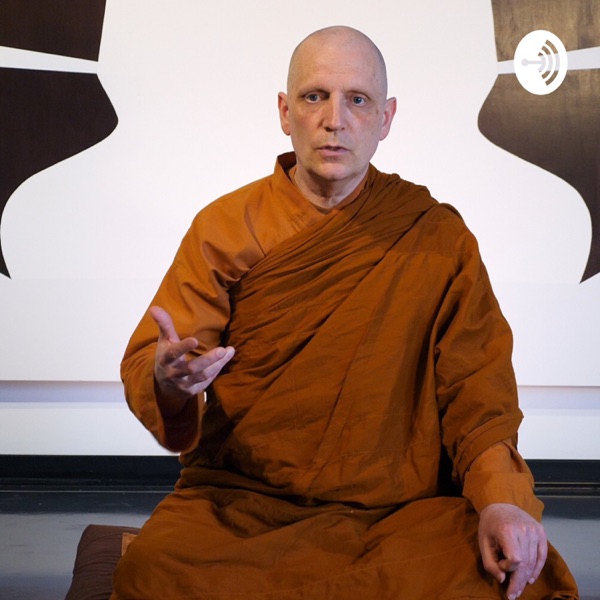
Talk 11 (of 12) from an in-person retreat at Birken Forest Monastery in May of 2023.
Episodes
205
Transcripts
0
0% coverage
Missing Transcripts
205
With Chapters
0
Episodes
Talk 10 (of 12) from an in-person retreat at Birken Forest Monastery in May of 2023.
Talk 9 (of 12) from an in-person retreat at Birken Forest Monastery in May of 2023.
Published 2024-06-30
The 37 Requisites of Enlightenment (8): The Active Side of the Seven Factors
42 min
Talk 8 (of 12) from an in-person retreat at Birken Forest Monastery in May of 2023.
Talk 7 (of 12) from an in-person retreat at Birken Forest Monastery in May of 2023.
Published 2023-09-03
The 37 Requisites of Enlightenment (6): The Four Foundations of Mindfulness
49 min
Talk 6 (of 12) from an in-person retreat at Birken Forest Monastery in May of 2023.
Published 2023-09-03
The 37 Requisites of Enlightenment (5): The Four Roads to Psychic Power (Iddhipāda)
50 min
Talk 5 (of 12) from an in-person retreat at Birken Forest Monastery in May of 2023. In this talk Ajahn Sona discusses the Four Iddhipāda.
Talk 4 (of 12) from an in-person retreat at Birken Forest Monastery in May of 2023. In this talk Ajahn Sona discusses the Four Right Efforts.
Talk 3 (of 12) from an in-person retreat at Birken Forest Monastery in May of 2023. In this talk Ajahn Sona discusses the Five Powers.
Talk 2 (of 12) from an in-person retreat at Birken Forest Monastery in May of 2023. In this talk Ajahn Sona discusses the Five Faculties.
Talk 1 (of 12) from an in-person retreat at Birken Forest Monastery in May of 2023. An introduction to the 37 Requisites and an overview of Right Effort.
Talk 6 (of 6) in a 6-day Virtual Retreat. Given at Birken Forest Monastery, December 2022.
Talk 5 (of 6) in a 6-day Virtual Retreat. Given at Birken Forest Monastery, December 2022.
Published 2023-01-08
The Seven Factors of Enlightenment (4) - Refreshing Energy, Joyful States
36 min
Talk 4 (of 6) in a 6-day Virtual Retreat. Given at Birken Forest Monastery, December 2022.
Talk 3 (of 6) in a 6-day Virtual Retreat. Given at Birken Forest Monastery, December 2022.
Published 2023-01-08
The Seven Factors of Enlightenment (2) - No Surprise...Mindfulness is Necessary
36 min
Talk 2 (of 6) in a 6-day Virtual Retreat. Given at Birken Forest Monastery, December 2022.
Published 2023-01-08
The Seven Factors of Enlightenment (1) - The Structure of the Enlightened Mind
30 min
Talk 1 (of 6) in a 6-day Virtual Retreat. Given at Birken Forest Monastery, December 2022.
Talk 5 (of 5) in a 5-day Virtual Retreat. This talk focuses on the kasinas of the four primary colors, and was given by Ajahn Sona at Birken Forest Monastery, June 2022.
Talk 4 (of 5) in a 5-day Virtual Retreat. This talk focuses on the kasinas of the four primary colors, and was given by Ajahn Sona at Birken Forest Monastery, June 2022.
Talk 3 (of 5) in a 5-day Virtual Retreat. This talk focuses on the air and fire element kasinas, and was given by Ajahn Sona at Birken Forest Monastery, June 2022.
Talk 2 (of 5) in a 5-day Virtual Retreat. This talk focuses on the earth and water element kasinas, and was given by Ajahn Sona at Birken Forest Monastery, June 2022.
Talk 1 (of 5) in a 5-day Virtual Retreat on the element and color kasinas given by Ajahn Sona at Birken Forest Monastery, June 2022.
Talk 6 from The Highest Blessings Virtual Retreat, recorded December 2021 at Birken Forest Monastery.
Talk 5 from The Highest Blessings Virtual Retreat, recorded December 2021 at Birken Forest Monastery.
Talk 4 from The Highest Blessings Virtual Retreat, recorded December 2021 at Birken Forest Monastery.
Talk 3 from The Highest Blessings Virtual Retreat, recorded December 2021 at Birken Forest Monastery.
Talk 2 from The Highest Blessings Virtual Retreat, recorded December 2021 at Birken Forest Monastery.
Talk 1 from The Highest Blessings Virtual Retreat, recorded December 2021 at Birken Forest Monastery.
Ajahn Sona offers a Dhamma reflection on the practice of Maranasati, the Buddhist recollection of death.
Vesak is the celebration of the birth, Enlightenment, and death of the Buddha, celebrated by Buddhists on the full moon of May. On this auspicious day, Ajahn Sona offers a Dhamma reflection and answers questions from around the world.
Opens with a Dhamma Talk; Q&A begins at 23:52.
Teatime at Birken (9 of 9) streamed live as part of the Virtual Metta Retreat (December 23-31, 2020).
Index of questions:
00:00 - Welcome
00:30 - How does one practice Loving-kindness when entangled with unskillful people?
09:12 - In the past, I used to end my sittings with a smile and start to laugh. Is this “laughing-kindness” like “Loving-kindness”?
11:41 - In a Jataka story, the Bodhisatta practices patience (Khanti). Isn’t it a practice of Loving-kindness as well?
15:34 - What strategies can we undertake to keep from getting overwhelmed beyond one’s capacities for Loving-kindness?
20:53 - As a psychotherapist, how can I express to patients, family, etc, that I am not available for periods of time?
27:01 - Please explain how something persisting through many lifetimes, carrying the kamma from many lifetimes, is separate and distinct from an idea of a self?
35:14 - What thoughts, feelings and wishes are appropriate when seeing a dead animal on the street?
37:47 - How does eating meat relate to Loving-kindness towards animals?
43:50 - When I am in a rush and time pressure, it is hard to sustain Metta. Any advice?
48:34 - Can you speak to balancing our own inner wisdom with that of outside voices (teachers, etc)?
51:55 - Any advice in keeping Metta that we’ve cultivated in daily life after the retreat?
Teatime at Birken (8 of 9) streamed live as part of the Virtual Metta Retreat (December 23-31, 2020).
Index of questions:
00:00 - Welcome
00:32 - Beings in nature are inevitably food for other beings, so how does sending Loving-kindness fit in with the food chain?
05:02 - What do monks do when they are having ongoing health problems?
10:59 - How does Metta practice relate to the compilation of death?
15:09 - Sometimes Metta fades and it’s tiring to keep generating it. Any suggestions?
20:11 - Do people get benefits in chanting a sutta (say, in Pali) without knowing it’s meaning?
25:41 - When in an urban environment I try to take negative thoughts that arise from sights and sounds and turn them into positive ones. Am I fooling myself?
30:56 - Why is it that positive or negative emotions put into the universe come back amplified?
38:15 - Can chanting the Metta Sutta act as good kindling for getting Metta started?
40:53 - Having survived trauma, sometimes fear arises during meditation. Does one stop meditating or keep going?
44:46 - Can you clarify the difference between the physical sensation of pain and the concept of dukkha?
48:04 - I have an end of life directive. What would the Buddha say? I don’t want family to be left with bad kamma resulting from that.
52:44 - Can you explain what to observe in our dreams to see how much Metta has penetrated?
Teatime at Birken (7 of 9) streamed live as part of the Virtual Metta Retreat (December 23-31, 2020).
Index of questions:
00:00 - Welcome
00:20 - How does one get the right balance between breath meditation and Metta practice?
07:35 - How does kamma relate to past actions? What releases us from negative past actions and corresponding results?
19:00 - How does one balance retreating from the world when opportunities arise to make active contributions in the world?
24:02 - How do we expand small generations of Metta into longer lengths of experience?
28:37 - Is it possible to take a Metta speed boat all the way to sotapatti?
33:03 - The suggestion to euthanize a sick pet is in conflict with our Buddhist upbringing. Is it a lack of, or abundance of Loving-kindness when a vet gives such advice in a cool manner?
44:49 - When one sees killing in nature, say, a lizard catching a fly for its meal, does one intercede?
48:19 - Does anger arise for enlightened beings?
53:07 - How to recapture feelings of past Loving-kindness when experiencing present difficulties?
Teatime at Birken (6 of 9) streamed live as part of the Virtual Metta Retreat (December 23-31, 2020).
Index of questions:
00:00 - Welcome
00:28 - Can Metta protect one from greed and sense desires?
10:54 - How can one be “a graceful receiver” in a relationship, rather than the giving end?
21:04 - Is there a way to cultivate Metta without words?
24:52 - Does Loving-kindness require vulnerability and forgiveness for oneself and others?
27:33 - You’ve said that one should not be guilty for past unskillful actions because one is no longer that person. If one takes this stance but continues to do the same unskillful actions after vowing to do better, is that failed right effort?
38:49 - My mind is craving for Loving-kindness that isn’t present. Is that craving an impediment?
42:20 - How does one not fail to achieve Nibanna through Loving-kindness? And, how does one achieve Jhana through Loving-kindness?
45:37 - How can one cultivate relaxed safety when confronted with overwhelming bodily discomfort?
50:05 - Can you talk about gratitude from a Buddhist prospective?
Teatime at Birken (5 of 9) streamed live as part of the Virtual Metta Retreat (December 23-31, 2020).
Index of questions:
00:00 - Welcome
00:23 - Does Metta include patiently bearing with the unpleasant?
07:34 - Can you speak of Metta towards objects or natural elements? Like, towards snow.
16:18 - What is the middle way in cultivating Metta powerfully without trying to force it?
22:24 - Do you need to be a Buddhist to recieve or radiate Metta? Does speaking Pali help?
26:31 - Previously you said that one has a better chance with Metta knowing it is a component of the Eightfold Path. Can you say more?
28:40 - I love being happy but don’t want to brush off my broken heart. What do you suggest?
32:07 - Do you have an example of a misused application of metta which we should avoid?
35:18 - Can you comment on spiritual conceit?
41:32 - What is the need to lead a virtuous life and what does trying to do this give us?
48:30 - Given all the horrors of the world, should we use our time and energy to make it a better place?
52:13 - How does one become consistent in the recollection of one’s good actions?
Teatime at Birken (4 of 9) streamed live as part of the Virtual Metta Retreat (December 23-31, 2020).
Index of questions:
00:00 - Welcome
00:33 - Which requires greater effort - overcoming bodily or mental unpleasant feelings?
10:33 - How do we give meaning to Loving-kindness as kusala-kriya - skillfully moving towards the ultimate release of suffering?
23:05 - Could it be that the pandemic has brought good conditions for the development of Metta?
32:53 - Can Metta lead to the Jhanas and Enlightenment?
37:15 - How can I hold my contentment with simplicity and not question it when others ask “what did you do today”?
43:59 - How much needs to be put into Metta practice to overcome our automatic emotional reactions?
48:07 - What does ‘Vande’ mean - from the ‘Buddham Vande’ chant?
Teatime at Birken (3 of 9) streamed live as part of the Virtual Metta Retreat (December 23-31, 2020).
Index of questions:
00:00 - Welcome
00:36 - Did the Buddha teach Metta in the same structured approach as taught by lay retreat teachers?
08:46 - Is a sweet feeling in the middle of the chest a natural response when cultivating Metta?
16:30 - How do you work with joy and energy when they get in the way of sleep?
19:30 - How does Metta transform perception?
29:27 - Can the notion of a Bodhisattva be understood within the Theravada tradition?
38:20 - How to overcome reacting with fear or anger to disagreeable events in the world?
43:49 - Can you comment on the experience of being “in sync” as the practice of Metta deepens?
47:08 - How does one sustain personal goals when outside of the realm of Loving-kindness?
50:47 - How can I tell when I am generating Metta towards myself vs ego self protection?
Teatime at Birken (2 of 9) streamed live as part of the Virtual Metta Retreat (December 23-31, 2020).
Index of questions:
00:00 - Welcome
00:41 - When using Metta to induce a sense of safety, images arise of the possibility of not being safe. How to best work with this?
11:01 - Of the Four Divine Abidings, is Metta the most important for our daily lives?
23:03 - How can one skillfully relate to remorse over harmful speech done in the past?
29:09 - How does one get to an embodied experience of Metta wherever one is? How is Metta seen as a concentration practice?
34:23 - What role does Loving-kindness play in death and dying? 41:47 - How is the guided Metta session used to develop Loving-kindness?
44:57 - How does one find their way into Metta while experiencing physical pain?
48:28 - Should I contemplate the Dhamma talk during meditation, or keep the mind clear and contemplate after the sitting?
51:07 - What kind of self-talk pattern is needed when I need to be kind to myself?
57:00 - Should one practice body self-acceptance and then move on to loving oneself? Can one love themselves too much?
Edited HD version of Teatime at Birken (1 of 9) streamed live as part of the Virtual Metta Retreat (December 23-31, 2020).
Index of questions:
00:00 - Welcome
01:57 - What is the relationship between Metta and the Seven Factors of Enlightenment?
06:02 - As Metta arises in the body, what sensations arise as a result?
18:15 - Is the development of good ethics (Sila) the foundation for generating Metta?
26:20 - When on this Metta cruise on the canoe, is it OK if I want to be on a yacht as well?
32:13 - The mind resists going into Metta and it got worse when kids came along. How can I work to become a more loving and kind person to my children?
39:09 - How do I make negative emotions be absent through the practice of Metta?
44:56 - In the 8th Precept, why do we refrain from lying on a high or luxurious sleeping place?
48:55 - Any advice for keeping and not forgetting the Metta feeling once you’ve found it?
54:03 - What is the relationship between Loving-kindness and the Four Noble Truths?
56:10 - Is there too much goodwill that would put one at risk, for example, from being scammed?
From Ajahn Sona's book "Bloom: Buddhist Reflections on Serenity and Love", narrated by Upasika Bodhipala.
Serenity: Chapters 1-8 | Love: Chapters 9-17
Published weekly March-April 2021.
From Ajahn Sona's book "Bloom: Buddhist Reflections on Serenity and Love", narrated by Ajahn Sona. Vocals by Upasikas Bodhipala & Metta.
Serenity: Chapters 1-8 | Love: Chapters 9-17
Published weekly March-April 2021.
From Ajahn Sona's book "Bloom: Buddhist Reflections on Serenity and Love", narrated by Upasika Bodhipala.
Serenity: Chapters 1-8 | Love: Chapters 9-17
Published weekly March-April 2021.
From Ajahn Sona's book "Bloom: Buddhist Reflections on Serenity and Love", narrated by Upasika Bodhipala.
Serenity: Chapters 1-8 | Love: Chapters 9-17
Published weekly March-April 2021.
From Ajahn Sona's book "Bloom: Buddhist Reflections on Serenity and Love", narrated by Upasika Bodhipala.
Serenity: Chapters 1-8 | Love: Chapters 9-17
Published weekly March-April 2021.
From Ajahn Sona's book "Bloom: Buddhist Reflections on Serenity and Love", narrated by Upasika Bodhipala.
Serenity: Chapters 1-8 | Love: Chapters 9-17
Published weekly March-April 2021.
From Ajahn Sona's book "Bloom: Buddhist Reflections on Serenity and Love", narrated by Upasika Bodhipala.
Serenity: Chapters 1-8 | Love: Chapters 9-17
Published weekly March-April 2021.
From Ajahn Sona's book "Bloom: Buddhist Reflections on Serenity and Love", narrated by Upasika Bodhipala.
Serenity: Chapters 1-8 | Love: Chapters 9-17
Published weekly March-April 2021.
From Ajahn Sona's book "Bloom: Buddhist Reflections on Serenity and Love", narrated by Upasika Bodhipala.
Serenity: Chapters 1-8 | Love: Chapters 9-17
Published weekly March-April 2021.
From Ajahn Sona's book "Bloom: Buddhist Reflections on Serenity and Love", narrated by Upasika Bodhipala.
Serenity: Chapters 1-8 | Love: Chapters 9-17
Published weekly March-April 2021.
From Ajahn Sona's book "Bloom: Buddhist Reflections on Serenity and Love", narrated by Upasika Bodhipala.
Serenity: Chapters 1-8 | Love: Chapters 9-17
Published weekly March-April 2021.
From Ajahn Sona's book "Bloom: Buddhist Reflections on Serenity and Love", narrated by Upasika Bodhipala.
Serenity: Chapters 1-8 | Love: Chapters 9-17
Published weekly March-April 2021.
Published 2021-03-14
Bloom (Audiobook) by Ajahn Sona: Chapter 5 - Breathing in the Noble Path
27 min
From Ajahn Sona's book "Bloom: Buddhist Reflections on Serenity and Love", narrated by Upasika Bodhipala.
Serenity: Chapters 1-8 | Love: Chapters 9-17
Published weekly March-April 2021.
From Ajahn Sona's book "Bloom: Buddhist Reflections on Serenity and Love", narrated by Upasika Bodhipala.
Serenity: Chapters 1-8 | Love: Chapters 9-17
Published weekly March-April 2021.
From Ajahn Sona's book "Bloom: Buddhist Reflections on Serenity and Love", narrated by Upasika Bodhipala.
Serenity: Chapters 1-8 | Love: Chapters 9-17
Published weekly March-April 2021.
From Ajahn Sona's book "Bloom: Buddhist Reflections on Serenity and Love", narrated by Upasika Bodhipala.
Serenity: Chapters 1-8 | Love: Chapters 9-17
Published weekly March-April 2021.
From Ajahn Sona's book "Bloom: Buddhist Reflections on Serenity and Love", narrated by Upasika Bodhipala.
Serenity: Chapters 1-8 | Love: Chapters 9-17
Published weekly March-April 2021.
Music Credit: Riley Lee
Photo Credit: Adobe Stock
From Ajahn Sona's book "Bloom: Buddhist Reflections on Serenity and Love", narrated by Upasika Bodhipala.
Serenity: Chapters 1-8 | Love: Chapters 9-17
Published weekly March-April 2021.
Music Credit: Riley Lee
Photo Credit: Adobe Stock
Talk 10 (of 10) from the Virtual Metta Retreat given in December 2020 at Birken Forest Monastery.
Talk 9 (of 10) from the Virtual Metta Retreat given in December 2020 at Birken Forest Monastery.
Talk 8 (of 10) from the Virtual Metta Retreat given in December 2020 at Birken Forest Monastery.
Talk 7 (of 10) from the Virtual Metta Retreat given in December 2020 at Birken Forest Monastery.
Talk 6 (of 10) from the Virtual Metta Retreat given in December 2020 at Birken Forest Monastery.
Talk 5 (of 10) from the Virtual Metta Retreat given in December 2020 at Birken Forest Monastery.
Talk 4 (of 10) from the Virtual Metta Retreat given in December 2020 at Birken Forest Monastery.
Talk 3 (of 10) from the Virtual Metta Retreat given in December 2020 at Birken Forest Monastery.
Talk 2 (of 10) from the Virtual Metta Retreat given in December 2020 at Birken Forest Monastery.
Talk 1 (of 10) from the Virtual Metta Retreat given in December 2020 at Birken Forest Monastery.
Ajahn Sona concludes his spiritual autobiography, recounting the establishment and development of "Birken III", (known as 'Sitavana' - Pali for "cool forest") outside of Kamloops, British Columbia. Part 3 of 3.
Ajahn Sona continues his spiritual autobiography, detailing the search and establishment of the intermediate monastery after the shack - "Birken II" - in Princeton, British Columbia. Part 2 of 3.
Ajahn Sona continues where he left off in the talk "20 Years a Monk", recounting experiences as a young monk in Thailand, through the establishment of the original Birken Monastery. Part 1 of 3.
Ajahn Sona Livestream Dhamma Q&A from Whistler, BC. Streamed on YouTube October 14, 2020.
A talk given by Ajahn Sona at the Vancouver Public Library in 2008, reflecting on his 20 years as a monk.
Ajahn Sona joins Ajahn Sudanto on his Morning Coffee livestream for a QnA discussion on Jhana talk 6: "Breath Meditation, In Depth". Recorded August 3, 2020.
Talk 6 (of 6) in a series on the development and cultivation of Jhāna, given in March 2020 at Birken Forest Monastery.
Talk 5 (of 6) in a series on the development and cultivation of Jhāna, given in March 2020 at Birken Forest Monastery.
Talk 4 (of 6) in a series on the development and cultivation of Jhāna, given in March 2020 at Birken Forest Monastery.
Talk 3 (of 6) in a series on the development and cultivation of Jhāna, given in March 2020 at Birken Forest Monastery.
Talk 2 (of 6) in a series on the development and cultivation of Jhāna, given in March 2020 at Birken Forest Monastery.
Talk 1 (of 6) in a series on the development and cultivation of Jhāna, given in March 2020 at Birken Forest Monastery.
Dhamma talk and Q&A offered by Ajahn Sona during a live stream event by invitation of the Council of Thai Bhikkhus in the USA. Streamed June 20, 2020.
Questions asked during the Q&A:
1) How do we find equanimity during this time when we are seeing so much injustice, inequity and inequality?
2) How can we carry any calm and stillness that we have developed during the pandemic, once the pandemic is over?
3) How do we build our bank account of unconditional love, lovingkindness, Metta, and Karuna?
4) How do we remain mindful and equanimous when we are bombarded with so much negative news that causes anxiety and depression?
Closing Teatime Q&A with Ajahn Sona. Part of the Four Foundations of Mindfulness Retreat from Birken Forest Monastery and Pacific Hermitage.
Published 2020-05-10
Virtual Mindfulness Retreat - Teatime QnA with Ajahn Sudanto on May 9, 2020
62 min
May 9th Teatime with Ajahn Sudanto. Part of the Four Foundations of Mindfulness Retreat from Birken Forest Monastery and Pacific Hermitage.
Talk 9 (of 9) in the 10-Day Virtual Mindfulness Retreat, given by Ajahn Sona at Birken Forest Monastery, May 2020.
Published 2020-05-09
Virtual Mindfulness Retreat - Teatime QnA with Ajahn Sudanto on May 8, 2020
58 min
May 8th Teatime with Ajahn Sudanto. Part of the Four Foundations of Mindfulness Retreat from Birken Forest Monastery and Pacific Hermitage.
Talk 8 (of 9) in the 10-Day Virtual Mindfulness Retreat, given by Ajahn Sona at Birken Forest Monastery, May 2020.
Published 2020-05-08
Virtual Mindfulness Retreat - Teatime QnA with Ajahn Sudanto on May 7, 2020
56 min
May 7th Teatime with Ajahn Sudanto. Part of the Four Foundations of Mindfulness Retreat from Birken Forest Monastery and Pacific Hermitage.
Talk 7 (of 9) in the 10-Day Virtual Mindfulness Retreat, given by Ajahn Sona at Birken Forest Monastery, May 2020.
Published 2020-05-07
Virtual Mindfulness Retreat - Teatime QnA with Ajahn Sudanto on May 6, 2020
56 min
May 6th Teatime with Ajahn Sudanto. Part of the Four Foundations of Mindfulness Retreat from Birken Forest Monastery and Pacific Hermitage.
Talk 6 (of 9) in the 10-Day Virtual Mindfulness Retreat, given by Ajahn Sona at Birken Forest Monastery, May 2020.
Published 2020-05-06
Virtual Mindfulness Retreat - Teatime QnA with Ajahn Sudanto on May 5, 2020
62 min
May 5th Teatime with Ajahn Sudanto. Part of the Four Foundations of Mindfulness Retreat from Birken Forest Monastery and Pacific Hermitage.
Talk 5 (of 9) in the 10-Day Virtual Mindfulness Retreat, given by Ajahn Sona at Birken Forest Monastery, May 2020.
Published 2020-05-05
Virtual Mindfulness Retreat - Teatime QnA with Ajahn Sudanto on May 4, 2020
58 min
May 4th Teatime with Ajahn Sudanto. Part of the Four Foundations of Mindfulness Retreat from Birken Forest Monastery and Pacific Hermitage.
Talk 4 (of 9) in the 10-Day Virtual Mindfulness Retreat, given by Ajahn Sona at Birken Forest Monastery, May 2020.
Evening Puja Chanting from the Pacific Hermitage, in the Thai Forest Theravada Tradition.
Talk 3 (of 9) in the 10-Day Virtual Mindfulness Retreat, given by Ajahn Sona at Birken Forest Monastery, May 2020.
Published 2020-05-03
Virtual Mindfulness Retreat - Teatime QnA with Ajahn Sudanto on May 3, 2020
54 min
May 3rd Teatime with Ajahn Sudanto. Part of the Four Foundations of Mindfulness Retreat from Birken Forest Monastery and Pacific Hermitage.
Published 2020-05-03
Virtual Mindfulness Retreat - Teatime QnA with Ajahn Sudanto on May 2, 2020
37 min
May 2nd Teatime with Ajahn Sudanto. Part of the Four Foundations of Mindfulness Retreat from Birken Forest Monastery and Pacific Hermitage.
Published 2020-05-03
Virtual Mindfulness Retreat (2) - Focused Attention, Panoramic Awareness
37 min
Talk 2 (of 9) in the 10-Day Virtual Mindfulness Retreat, given by Ajahn Sona at Birken Forest Monastery, May 2020.
Morning Puja Chanting from the Pacific Hermitage, in the Thai Forest Theravada Tradition.
Talk 1 (of 9) in the 10-Day Virtual Mindfulness Retreat, given by Ajahn Sona at Birken Forest Monastery, May 2020.
Teatime talk given by Ajahn Sona at Birken Forest Monastery on the topic of illness and loss during this time of the pandemic. Recorded April 8, 2020.
Talk 11 of 11 in the series of talks on Right Effort, given by Ajahn Sona at the Pacific Hermitage retreat, Birken Forest Monastery, May 2019.
Talk 10 of 11 in the series of talks on Right Effort, given by Ajahn Sona at the Pacific Hermitage retreat, Birken Forest Monastery, May 2019.
Talk 9 of 11 in the series of talks on Right Effort, given by Ajahn Sona at the Pacific Hermitage retreat, Birken Forest Monastery, May 2019.
Talk 8 of 11 in the series of talks on Right Effort, given by Ajahn Sona at the Pacific Hermitage retreat, Birken Forest Monastery, May 2019.
Talk 7 of 11 in the series of talks on Right Effort, given by Ajahn Sona at the Pacific Hermitage retreat, Birken Forest Monastery, May 2019.
Talk 6 of 11 in the series of talks on Right Effort, given by Ajahn Sona at the Pacific Hermitage retreat, Birken Forest Monastery, May 2019.
Talk 5 of 11 in the series of talks on Right Effort, given by Ajahn Sona at the Pacific Hermitage retreat, Birken Forest Monastery, May 2019.
Talk 4 of 11 in the series of talks on Right Effort, given by Ajahn Sona at the Pacific Hermitage retreat, Birken Forest Monastery, May 2019.
Ajahn Sona in an interview with Dinka Pignon and Joe Wiseley. A conversation about human nature and higher aspirations.
Talk 3 of 11 in the series of talks on Right Effort, given by Ajahn Sona at the Pacific Hermitage retreat, Birken Forest Monastery, May 2019.
Talk 2 of 11 in the series of talks on Right Effort, given by Ajahn Sona at the Pacific Hermitage retreat, Birken Forest Monastery, May 2019.
Talk 1 of 11 in the series of talks on Right Effort, given by Ajahn Sona at the Pacific Hermitage retreat, Birken Forest Monastery, May 2019.
Ajahn Sona
A talk offered by Ajahn Sona at Abhayagiri Buddhist Monastery in October 2016, at the inauguration of new facilities.
Stages of Enlightenment, in the series of talks on The Noble Eightfold Path, The Tenfold Path, and The Four Noble Truths.
Right Knowledge & Liberation, in the series of talks on The Noble Eightfold Path, The Tenfold Path, and The Four Noble Truths.
Right Concentration, in the series of talks on The Noble Eightfold Path, The Tenfold Path, and The Four Noble Truths.
Right Mindfulness, in the series of talks on The Noble Eightfold Path, The Tenfold Path, and The Four Noble Truths.
Right Effort, in the series of talks on The Noble Eightfold Path, The Tenfold Path, and The Four Noble Truths.
Right Livelihood, in the series of talks on The Noble Eightfold Path, The Tenfold Path, and The Four Noble Truths.
Luang Por Pasanno reflects on his year-long retreat in Thailand and Canada. Dhamma talk offered at Birken Forest Monastery on June 16, 2019.
Right Action, in the series of talks on The Noble Eightfold Path, The Tenfold Path, and The Four Noble Truths.
Right Speech, in the series of talks on The Noble Eightfold Path, The Tenfold Path, and The Four Noble Truths.
Right Intention, in the series of talks on The Noble Eightfold Path, The Tenfold Path, and The Four Noble Truths.
Right View, in the series of talks on The Noble Eightfold Path, The Tenfold Path, and The Four Noble Truths.
A series of talks on The Four Noble Truths, The Noble Eightfold Path, and The Tenfold Path.
In conversation: Rabbi Shmuel Braun and Ajahn Sona, abbot of the Birken Forest Buddhist Monastery.
Part 10, last in the series on Buddhist Cosmology. In dialogue: Ajahn Sona and Ajahn Punnadhammo. Cosmology Book, free download: https://www.arrowriver.ca/book/cosmoBook.php
Part 9 in a continuing series on Buddhist Cosmology. In dialogue: Ajahn Sona and Ajahn Punnadhammo. Cosmology Book, free download:https://www.arrowriver.ca/book/cosmoBook.php
Part 8 in a continuing series on Buddhist Cosmology. In dialogue: Ajahn Sona and Ajahn Punnadhammo. Cosmology Book, free download: https://www.arrowriver.ca/book/cosmoBook.php
Part 7 in a continuing series on Buddhist Cosmology. In dialogue: Ajahn Sona and Ajahn Punnadhammo. Cosmology Book, free download: https://www.arrowriver.ca/book/cosmoBook.php
Part 6 in a continuing series on Buddhist Cosmology. In dialogue: Ajahn Sona and Ajahn Punnadhammo. Cosmology Book, free download: https://www.arrowriver.ca/book/cosmoBook.php
Part 5 in a continuing series on Buddhist Cosmology.
In dialogue: Ajahn Sona and Ajahn Punnadhammo.
Cosmology Book, free download: https://www.arrowriver.ca/book/cosmoBook.php
Part 4 in a continuing series on Buddhist Cosmology. In dialogue: Ajahn Sona and Ajahn Punnadhammo. Cosmology Book, free download: https://www.arrowriver.ca/book/cosmoB...
Part 3 in a continuing series on Buddhist Cosmology. In dialogue: Ajahn Sona and Ajahn Punnadhammo. Cosmology Book, free download: https://www.arrowriver.ca/book/cosmoB...
Talk 12 on Metta / Loving-kindness by Ven. Ajahn Sona, Pacific Hermitage Retreat, Birken Forest Monastery, May 2017.
Talk 11 on Metta / Loving-kindness by Ven. Ajahn Sona, Pacific Hermitage Retreat, Birken Forest Monastery, May 2017.
Talk 10 on Metta / Loving-kindness by Ven. Ajahn Sona, Pacific Hermitage Retreat, Birken Forest Monastery, May 2017.
Talk 9 on Metta / Loving-kindness by Ven. Ajahn Sona, Pacific Hermitage Retreat, Birken Forest Monastery, May 2017.
This is an ongoing series with Jataka stories told by Margo McLoughlin. Jatakas are native to India and belong to the first Buddhist literature concerning the previous births of the Buddha in both human and animal form. The Acrobats (Citta-Sambhuta-Jataka) is Jataka no. 498 in the six-volume series of translations edited by E. B. Cowell. Margo translated and adapted this story.
Margo McLoughlin is a storyteller, writer and teacher, based in Victoria, on the west coast of Canada. While on staff at the Insight Meditation Society in Barre, Massachusetts, Margo began studying Pali, the language of the earliest Buddhist teachings. For the past twenty years she has been translating, adapting and performing the Jataka tales and other stories from the Buddhist tradition. For more about Margo, please visit: margostoryteller.net.
Talk 8 on Metta / Loving-kindness by Ven. Ajahn Sona, Pacific Hermitage Retreat, Birken Forest Monastery, May 2017.
This is an ongoing series with Jataka stories and Buddhist legends told by Margo McLoughlin. The Jataka tales relate the previous births of the Buddha in both human and animal form. The Buddhist Legends recount miraculous events from the life of the Buddha following his enlightenment. Each story includes a verse from the Dhammapada, a popular collection of sayings of the Buddha. The legends are considered part of the commentarial literature. At the beginning of "The Legend of the Weaver's Daughter," the Buddha gives a teaching on the importance of practicing mindfulness of death. A young woman hears the Buddha's instructions and takes them to heart, practicing diligently for three years. Margo has translated and expanded this story.
Margo McLoughlin is a storyteller, writer and teacher, based in Victoria, on the west coast of Canada. While on staff at the Insight Meditation Society in Barre, Massachusetts, Margo began studying Pali, the language of the earliest Buddhist teachings. For the past twenty years she has been translating, adapting and performing the Jataka tales and other stories from the Buddhist tradition. For more about Margo, please visit: margostoryteller.net.
Talk 7 on Metta / Loving-kindness by Ven. Ajahn Sona, Pacific Hermitage Retreat, Birken Forest Monastery, May 2017.
Talk 6 on Metta / Loving-kindness by Ven. Ajahn Sona, Pacific Hermitage Retreat, Birken Forest Monastery, May 2017.
This is an ongoing series with Jataka stories told by Margo McLoughlin. Jatakas are native to India and belong to the first Buddhist literature concerning the previous births of the Buddha in both human and animal form. The second story in the series is The Antelope Birth (Kurunga Miga Jātaka), which is Jataka No. 206 in the six-volume series of English translations edited by E. B. Cowell. Margo translated this story from Pali and retells it with a few Pali words included. Her version is published in The Giving Heart: Folktales for Exploring Generosity, available through her website, margostoryteller.net.
This is an ongoing series with Jataka stories told by Margo McLoughlin. Jatakas are native to India and belong to the first Buddhist literature concerning the previous births of the Buddha in both human and animal form. The first story in our series, The Crow Birth (Kāka-Jātaka) is Jataka no. 140 in the seven-volume series of translations, edited by E. B. Cowell. Margo translated and adapted this story. Her version is published in The Giving Heart: Folktales for Exploring Generosity, available through margostoryteller.net.
Margo McLoughlin is a storyteller, writer and teacher, based in Victoria, on the west coast of Canada. While on staff at the Insight Meditation Society in Barre, Massachusetts, Margo began studying Pali, the language of the earliest Buddhist teachings. For the past twenty years she has been translating, adapting and performing the Jataka tales and other stories from the Buddhist tradition. For more about Margo, please visit: margostoryteller.net.
My Life, My Practice is a continuing series of interviews with Ajahn Sona and longtime Buddhist practitioners, both monastics and laypeople, to discover what brought them to and keeps them on the Buddhist path. In this interview, meet Margo McLoughlin, the Jataka story teller. |*| Jataka Stories: https://youtu.be/AWtzr8Qa8wI
Talk 5 on Metta / Loving-kindness by Ven. Ajahn Sona, Pacific Hermitage Retreat, Birken Forest Monastery, May 2017.
Talk 4 on Metta / Loving-kindness by Ven. Ajahn Sona, Pacific Hermitage Retreat, Birken Forest Monastery, May 2017.
Talk 3 on Metta / Loving-kindness by Ven. Ajahn Sona, Pacific Hermitage Retreat, Birken Forest Monastery, May 2017.
Talk 2 on Metta / Loving-kindness by Ven. Ajahn Sona, Pacific Hermitage Retreat, Birken Forest Monastery, May 2017.
Talk 1 on Metta / Loving-kindness by Ven. Ajahn Sona, Pacific Hermitage Retreat, Birken Forest Monastery, May 2017.
Part 2 in a continuing series of talks about cancer and the Buddhist approach to illness. Ajahn Sona in an interview with Piyadassi, whose experience with cancer was greatly supported by Ajahn Sona's coaching and her healthy attitude towards the disease.
Part 1 in a continuing series of talks about cancer and the Buddhist approach to illness, by Ajahn Sona.
Talk 6 on 'Development of the Higher Mind', by Ven. Ajahn Sona, Pacific Hermitage Retreat, Birken Forest Monastery, May 2018.
Talk 5 on 'Development of the Higher Mind', by Ven. Ajahn Sona, Pacific Hermitage Retreat, Birken Forest Monastery, May 2018.
Talk 4 on 'Development of the Higher Mind', by Ven. Ajahn Sona, Pacific Hermitage Retreat, Birken Forest Monastery, May 2018.
Talk 3 on 'Development of the Higher Mind', by Ven. Ajahn Sona, Pacific Hermitage Retreat, Birken Forest Monastery, May 2018.
Talk 2 on 'Development of the Higher Mind', by Ven. Ajahn Sona, Pacific Hermitage Retreat, Birken Forest Monastery, May 2018.
Talk 1 on 'Development of the Higher Mind', by Ven. Ajahn Sona, Pacific Hermitage Retreat, Birken Forest Monastery, May 2018.
Talk 6 on Equanimity by Ven. Ajahn Sona, Pacific Hermitage Retreat, Birken Forest Monastery, May 2018.
Talk 5 on Equanimity by Ven. Ajahn Sona, Pacific Hermitage Retreat, Birken Forest Monastery, May 2018.
Talk 4 on Equanimity by Ven. Ajahn Sona, Pacific Hermitage Retreat, Birken Forest Monastery, May 2018.
Talk 3 on Equanimity by Ven. Ajahn Sona, Pacific Hermitage Retreat, Birken Forest Monastery, May 2018.
Talk 2 on Equanimity by Ven. Ajahn Sona, Pacific Hermitage Retreat, Birken Forest Monastery, May 2018.
Talk 1 on Equanimity by Ven. Ajahn Sona, Pacific Hermitage Retreat, Birken Forest Monastery, May 2018.
A continuing series of interviews with Ajahn Sona and longtime Buddhist practitioners, including both monastics and laypeople, to discover what brought them to and keeps them on the Buddhist path.
A continuing series of interviews with Ajahn Sona and longtime Buddhist practitioners, including both monastics and laypeople, to discover what brought them to and keeps them on the Buddhist path.
The first in a series of interviews with Ajahn Sona and longtime Buddhist practitioners, including both monastics and laypeople, to discover what brought them to and keeps them on the Buddhist path.
Buddhism is the world's oldest psychology. It is also the most spiritual of all psychologies and the most psychological of all spiritualities. In this continuing series, Ajahn Sona talks about differences between Buddhist and Western psychology.
Buddhism is the world's oldest psychology. It is also the most spiritual of all psychologies and the most psychological of all spiritualities. In this continuing series, Ajahn Sona talks about differences between Buddhist and Western psychology.
Part 2 in a continuing series on Buddhist Cosmology.
In dialogue: Ajahn Sona and Ajahn Punnadhammo
Part 1 in a continuing series on Buddhist Cosmology.
In dialogue: Ajahn Sona and Ajahn Punnadhammo.
#10 in the series of talks on Ten Perfections, the outstanding virtues that were cultivated by the Buddha before his enlightenment. Discover a multitude of practical ways to nourish and sustain these virtues in daily life.
#9 in the series of talks on Ten Perfections, the outstanding virtues that were cultivated by the Buddha before his enlightenment. Discover a multitude of practical ways to nourish and sustain these virtues in daily life.
#8 in the series of talks on Ten Perfections, the outstanding virtues that were cultivated by the Buddha before his enlightenment. Discover a multitude of practical ways to nourish and sustain these virtues in daily life.
#7 in the series of talks on Ten Perfections, the outstanding virtues that were cultivated by the Buddha before his enlightenment. Discover a multitude of practical ways to nourish and sustain these virtues in daily life.
#6 in the series of talks on Ten Perfections, the outstanding virtues that were cultivated by the Buddha before his enlightenment. Discover a multitude of practical ways to nourish and sustain these virtues in daily life.
#5 in the series of talks on Ten Perfections, the outstanding virtues that were cultivated by the Buddha before his enlightenment. Discover a multitude of practical ways to nourish and sustain these virtues in daily life.
#4 in the series of talks on Ten Perfections, the outstanding virtues that were cultivated by the Buddha before his enlightenment. Discover a multitude of practical ways to nourish and sustain these virtues in daily life.
#3 in the series of talks on Ten Perfections, the outstanding virtues that were cultivated by the Buddha before his enlightenment. Discover a multitude of practical ways to nourish and sustain these virtues in daily life.
#2 in the series of talks on Ten Perfections, the outstanding virtues that were cultivated by the Buddha before his enlightenment. Discover a multitude of practical ways to nourish and sustain these virtues in daily life.
#1 in the series of talks on Ten Perfections, the outstanding virtues that were cultivated by the Buddha before his enlightenment. Discover a multitude of practical ways to nourish and sustain these virtues in daily life.
Dhamma talk on Ten Perfections, recorded during teatime with guests and residents at Birken Forest Monastery.
This series of short talks delves into the Brahmaviharas (Divine Abidings) and explores how these ingenious feelings of love and contentment can take up residence within us, transforming our everyday lives from the mundane to the extraordinary.
This series of short talks delves into the Brahmaviharas (Divine Abidings) and explores how these ingenious feelings of love and contentment can take up residence within us, transforming our everyday lives from the mundane to the extraordinary.
This series of short talks delves into the Brahmaviharas (Divine Abidings) and explores how these ingenious feelings of love and contentment can take up residence within us, transforming our everyday lives from the mundane to the extraordinary.
This series of short talks delves into the Brahmaviharas (Divine Abidings) and explores how these ingenious feelings of love and contentment can take up residence within us, transforming our everyday lives from the mundane to the extraordinary.
This series of short talks delves into the Brahmaviharas (Divine Abidings) and explores how these ingenious feelings of love and contentment can take up residence within us, transforming our everyday lives from the mundane to the extraordinary.
Part 5 in a series of talks on Right Effort, the sixth (and often neglected) step of the Buddha's Noble Eightfold Path.
Part 4 in a series of talks on Right Effort, the sixth (and often neglected) step of the Buddha's Noble Eightfold Path.
Part 3 in a series of talks on Right Effort, the sixth (and often neglected) step of the Buddha's Noble Eightfold Path.
Part 2 in a series of talks on Right Effort, the sixth (and often neglected) step of the Buddha's Noble Eightfold Path.
Part 1 in a series of talks on Right Effort, the sixth (and often neglected) step of the Buddha's Noble Eightfold Path.
Part 5 in a series of short talks on the Five Hindrances, the mental factors that are pervasive obstacles to peace in both meditation and our daily lives.
Part 4 in a series of short talks on the Five Hindrances, the mental factors that are pervasive obstacles to peace in both meditation and our daily lives.
Part 3 in a series of short talks on the Five Hindrances, the mental factors that are pervasive obstacles to peace in both meditation and our daily lives.
Part 2 in a series of short talks on the Five Hindrances, the mental factors that are pervasive obstacles to peace in both meditation and our daily lives.
Part 1 in a series of short talks on the Five Hindrances, the mental factors that are pervasive obstacles to peace in both meditation and our daily lives.
This series of short talks describes in detail the most favored method of meditation used by the Buddha over 2500 years ago, and brings to light the indispensable emotional benefits of this timeless practice for the contemplative person of today.
This series of short talks describes in detail the most favored method of meditation used by the Buddha over 2500 years ago, and brings to light the indispensable emotional benefits of this timeless practice for the contemplative person of today.
This series of short talks describes in detail the most favored method of meditation used by the Buddha over 2500 years ago, and brings to light the indispensable emotional benefits of this timeless practice for the contemplative person of today.
This series of short talks describes in detail the most favored method of meditation used by the Buddha over 2500 years ago, and brings to light the indispensable emotional benefits of this timeless practice for the contemplative person of today.
This series of short talks describes in detail the most favored method of meditation used by the Buddha over 2500 years ago, and brings to light the indispensable emotional benefits of this timeless practice for the contemplative person of today.