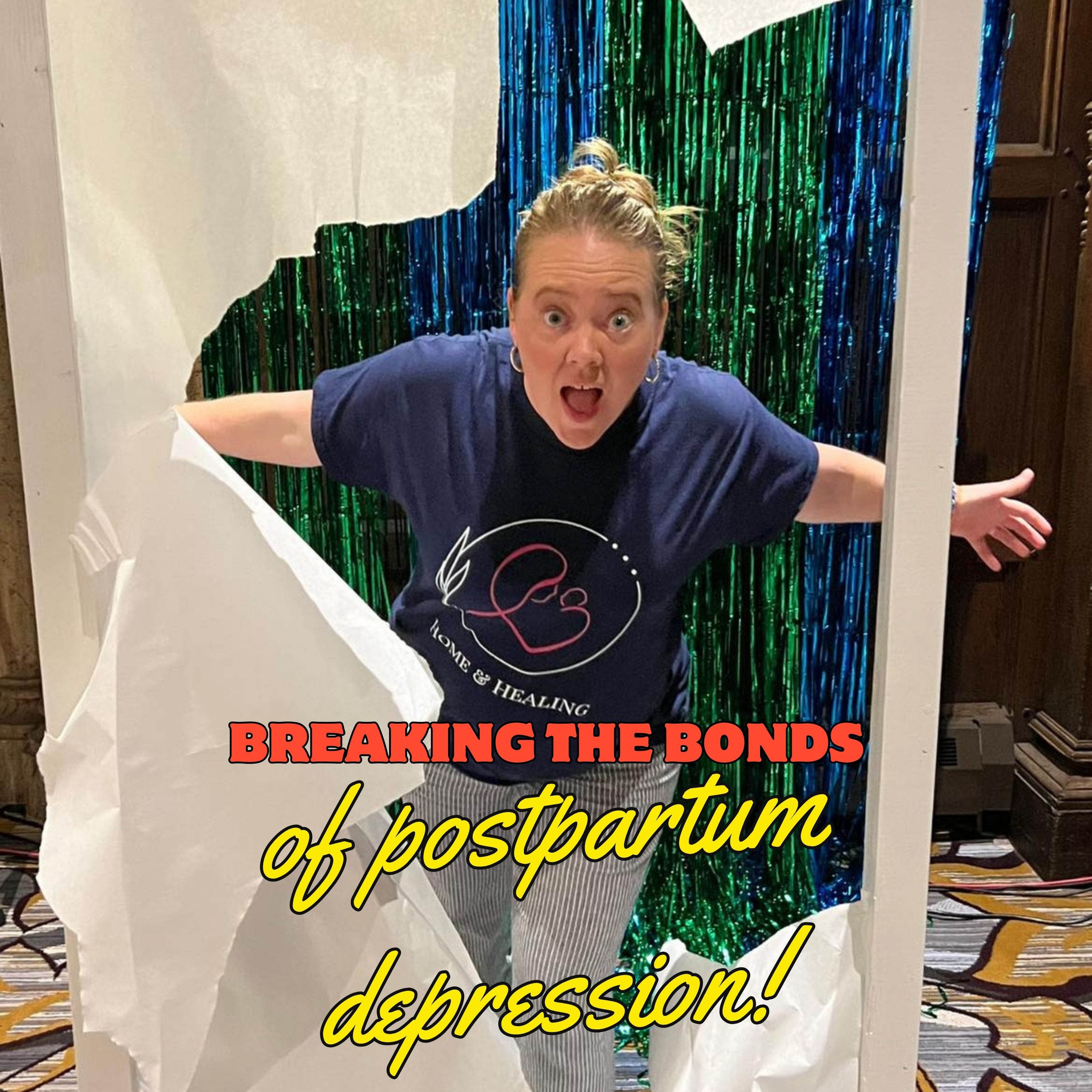
Breaking the bonds of postpartum depression!
This episode features Amanda Ewers, a certified pre and postnatal coach who specializes in supporting mothers through the challenges of postpartum life.
Amanda shares her personal journey through the trials of motherhood, including her struggles with postpartum depression, and emphasizes the importance of building a strong support system.
She highlights how crucial communication is between partners to navigate the complexities of parenting and mental health, urging couples to check in with each other regularly.
The conversation also touches on the often-overlooked fact that partners can experience postpartum depression as well, making it essential for everyone involved to understand and address these feelings.
Through her insights, Amanda aims to empower mothers and their partners to foster healthier family dynamics, ultimately creating a foundation for thriving relationships and well-being.
Takeaways:
- The importance of communication and support between partners during the postpartum period cannot be overstated.
- Postpartum depression affects both mothers and fathers, highlighting the need for shared understanding.
- Navigating the challenges of parenthood requires proactive conversations before the baby arrives to avoid future conflicts.
- Maintaining individual identities and self-care practices is crucial for parents to thrive together.
- Creating a supportive environment for postpartum recovery can significantly impact the family dynamics.
- Establishing routines and responsibilities early on helps ensure a smoother transition into parenthood.
Links referenced in this episode:
- homeandhealing.com
- YouTube: www.youtube.com/@amandaewers
- LinkedIn: www.linkedin.com/in/amanda-ewers-13a7101a/
- Instagram: @alk0211
- FB: www.facebook.com/profile.php?id=22219855
Available Results
Generated results are saved to the knowledge database for reuse and search.
Extract Knowledge
Pick what you want extracted first. Model, scope, and chapter options appear after a template is selected.
Transcript
Darrell Snow
00:00:10
Hey.
Darrell Snow
00:00:10
Welcome back to another episode of A Warrior Spirit, where the inner warrior shines in their light, presented by Praxis 33, the company that aligns your thoughts, goals, and actions to create your best life.
Darrell Snow
00:00:21
I'm your host, Darrell Snow, and today we're going to be talking with a certified pre and postnatal coach, Amanda Ewers.
Darrell Snow
00:00:28
She supports mothers mentally, emotionally, and physically in their postpartum journey in order for them to heal and thrive long after their baby has arrived.
Darrell Snow
00:00:36
So we want to welcome Amanda to the show.
Darrell Snow
00:00:40
Thank you for joining us and thank you for, you know, taking time out of your day to kick this off for us.
Amanda Ewers
00:00:47
Oh, thank you for having me.
Darrell Snow
00:00:50
Amanda, where did you start your.
Darrell Snow
00:00:53
Your own personal journey?
Darrell Snow
00:00:54
Where did you grow up?
Amanda Ewers
00:00:57
Oh, gosh, I moved a lot when I was younger.
Amanda Ewers
00:01:00
A lot of people say.
Amanda Ewers
00:01:01
Were you in the military?
Amanda Ewers
00:01:02
Nope.
Amanda Ewers
00:01:04
I.
Amanda Ewers
00:01:04
I spent most of my life on the east coast and North Carolina, where I called home until I moved to Minnesota.
Darrell Snow
00:01:17
You.
Darrell Snow
00:01:17
How old were you when you moved to Minnesota?
Darrell Snow
00:01:19
That's kind of where I grew up, so.
Darrell Snow
00:01:20
So I'm fascinated by.
Darrell Snow
00:01:22
People actually choose the cold of Minnesota.
Amanda Ewers
00:01:29
So I.
Amanda Ewers
00:01:30
I met my husband my junior year of college.
Amanda Ewers
00:01:33
He was in the military, so we met out on the east coast, got engaged, I graduated from college and we moved to Iowa and kind of trying to figure out career things.
Amanda Ewers
00:01:47
After the military, we moved to Memphis, and then after having our second child there, we decided to move to Minnesota because he's from Iowa, family's here, he could get a good position here.
Amanda Ewers
00:02:04
So that's how we ended up in Minnesota, and we've been here a little over nine years now.
Darrell Snow
00:02:11
I was born in Minneapolis, and then I grew up in Iowa as well.
Darrell Snow
00:02:16
So I have an affinity for those Iowa boys.
Darrell Snow
00:02:21
What.
Darrell Snow
00:02:22
What was your childhood like?
Darrell Snow
00:02:24
Moving around a little bit.
Darrell Snow
00:02:26
And what was your.
Darrell Snow
00:02:27
What was your upbringing like?
Amanda Ewers
00:02:31
You know, the very beginning, you know, those foundational years, if you will.
Amanda Ewers
00:02:38
I was the only child until I was five.
Amanda Ewers
00:02:43
My mom and dad were together.
Amanda Ewers
00:02:45
My mom stayed home.
Amanda Ewers
00:02:46
My dad was a truck driver.
Amanda Ewers
00:02:48
Had close relationships with my grandparents, great grandparents, aunts, uncles, cousins, all of that.
Amanda Ewers
00:02:56
And then my sister came along, and I was really excited.
Amanda Ewers
00:03:01
I was going to have a little sister.
Amanda Ewers
00:03:04
And then mom and dad had another baby, so three kids by the time mom was 24.
Amanda Ewers
00:03:11
So.
Amanda Ewers
00:03:13
And then when my youngest sister was four months old, my parents split, and that's kind of when things started kind of changing a lot.
Amanda Ewers
00:03:24
Initially, I was with mom and then moved with dad to Florida, stayed with his mother.
Amanda Ewers
00:03:32
There he got remarried, had two more stepsisters, so we stayed in Florida for a few years.
Amanda Ewers
00:03:38
That marriage didn't work out, so we moved to West Virginia with his dad's side of the family, so.
Amanda Ewers
00:03:45
And then he got remarried again.
Amanda Ewers
00:03:49
I ended up being able to choose who I wanted to live with at that point.
Amanda Ewers
00:03:53
I think it was 14, 15, and my mom was living in Virginia beach.
Amanda Ewers
00:03:58
And so I opted the.
Amanda Ewers
00:04:01
This summer I went to go visit with her.
Amanda Ewers
00:04:03
That.
Amanda Ewers
00:04:03
That's where I wanted to be.
Amanda Ewers
00:04:05
I wanted to be by the ocean and not in the mountains of West Virginia.
Amanda Ewers
00:04:08
And so I stayed with mom, ended up between Virginia and North Carolina for a few years, like I said, graduated, stayed in North Carolina for college, and then kind of moved with my husband.
Amanda Ewers
00:04:24
So I.
Amanda Ewers
00:04:25
I just kind of went up and down the east coast for a lot of the time.
Amanda Ewers
00:04:30
And I think that middle school, intro to high school, that was.
Amanda Ewers
00:04:39
That was pretty.
Amanda Ewers
00:04:41
That was probably the roughest part of all of that.
Amanda Ewers
00:04:44
And I think some of that was my younger sisters starting to get a little bit older and.
Amanda Ewers
00:04:49
And starting to deal with their own kind of things and just kind of knowing where to find that support from your parents.
Amanda Ewers
00:04:58
But, yeah, just kind of moving around a lot was challenging in itself.
Darrell Snow
00:05:05
Most people have a hard time in their teenage years anyway, and it's kind of rare that the children go with their father in divorce.
Darrell Snow
00:05:18
So how did that impact the relationship with your biological mom?
Darrell Snow
00:05:21
So since you were in and out of blended families and not really living with her for the first middle part?
Amanda Ewers
00:05:31
Yeah, I remember everything that had any sort of attachment to my mother was priceless.
Amanda Ewers
00:05:48
I remember kind of really yearning for that relationship with her to be there, and everything was.
Amanda Ewers
00:05:59
Was a real surprise.
Amanda Ewers
00:06:01
It was.
Amanda Ewers
00:06:01
I was at school, and I remember going home early and then my going with my dad, and we were going to Florida, and I was under the impression that we were going for Christmas break.
Amanda Ewers
00:06:16
And then my grandfather was asking me about books that needed to be returned.
Amanda Ewers
00:06:20
I was getting enrolled in school, and everything was just kind of happening.
Amanda Ewers
00:06:25
And I didn't really know what and why or how things were kind of taking place.
Amanda Ewers
00:06:35
And so I didn't get to see my.
Amanda Ewers
00:06:37
I just kind of got picked up, taken from mom, and didn't really know how long that was going to be.
Amanda Ewers
00:06:45
And that.
Amanda Ewers
00:06:46
That went on for a couple of years, just having a lot of questions.
Amanda Ewers
00:06:52
And I spent a lot, a lot of time trying to figure out who was telling the truth, you know, whether it was like, how.
Amanda Ewers
00:07:06
How did I end up with dad?
Amanda Ewers
00:07:08
You know, where was Mom?
Amanda Ewers
00:07:10
Why wasn't she here?
Amanda Ewers
00:07:12
And that was.
Amanda Ewers
00:07:14
That was really tough.
Amanda Ewers
00:07:15
I.
Amanda Ewers
00:07:16
And I didn't.
Amanda Ewers
00:07:17
My sister was 2, and, you know, I can't imagine what was going through her mind, going through all of.
Amanda Ewers
00:07:26
All of these transitions.
Amanda Ewers
00:07:27
You know, she just knew dad, really.
Amanda Ewers
00:07:32
Yeah, it was.
Amanda Ewers
00:07:32
It was a lot of navigating and a lot of.
Amanda Ewers
00:07:35
A lot of questions that I had inside, but I didn't know how to ask what was happening as.
Darrell Snow
00:07:42
As a young girl, you know, did you have to develop your own skills in order to, like, maintain friends?
Darrell Snow
00:07:52
And I know, I see this in military children a lot.
Darrell Snow
00:07:54
And you get, you know, the question, are you a military kid?
Darrell Snow
00:07:58
You know, they either make a lot of friends wherever they go, or they become so introverted that they make no friends.
Darrell Snow
00:08:06
And it becomes even harder.
Darrell Snow
00:08:08
Which path.
Darrell Snow
00:08:09
Which path did you go?
Amanda Ewers
00:08:15
Looking back, I mean, I always tried to make friends, and wherever I was, I always had one or two people that were in pr, were a part of my life, and I.
Amanda Ewers
00:08:31
I remember their names.
Amanda Ewers
00:08:33
I remember the things that we enjoy doing.
Amanda Ewers
00:08:35
But keeping in touch, that wasn't really something that.
Amanda Ewers
00:08:41
Because every move was unexpected.
Amanda Ewers
00:08:46
When we.
Amanda Ewers
00:08:46
When my dad left Florida, I was actually visiting my mom over the summer.
Amanda Ewers
00:08:55
And when he got us, it was, okay, well, we're not going back to Florida.
Amanda Ewers
00:08:59
We're going to West Virginia.
Amanda Ewers
00:09:00
Because we split up.
Amanda Ewers
00:09:02
Like, those moves were always so spontaneous that I didn't know that I needed to say goodbye.
Amanda Ewers
00:09:12
I didn't know that I needed to foster that relationship and to take that on.
Amanda Ewers
00:09:19
And I think once.
Amanda Ewers
00:09:21
Once I was able to have access to, like, social media and things like that, it's been easier to maintain those.
Amanda Ewers
00:09:28
Those relationships.
Amanda Ewers
00:09:30
But that wasn't until, you know, probably my senior year in high school, before that was I had access to anything like that.
Darrell Snow
00:09:39
When you're bouncing around, you know, and you ask a question to your.
Darrell Snow
00:09:46
To your mom, what does she say is happening?
Darrell Snow
00:09:50
What does she explain?
Darrell Snow
00:09:51
You know, this is.
Darrell Snow
00:09:52
This is where things are.
Amanda Ewers
00:09:57
Oh, there were so many stories.
Amanda Ewers
00:10:01
There was this idea that my.
Amanda Ewers
00:10:03
My father kidnapped us.
Amanda Ewers
00:10:08
And I.
Amanda Ewers
00:10:11
I found that so interesting because we were able to be enrolled in school and, you know, stuff like that.
Amanda Ewers
00:10:19
But when you're younger, you really don't know what to believe.
Amanda Ewers
00:10:23
You don't know.
Amanda Ewers
00:10:24
You don't know what you don't know, and the whole legalities and things like that.
Amanda Ewers
00:10:30
I really just had to educate myself at a really young age and find people that I could trust.
Amanda Ewers
00:10:41
And I think for a long time I didn't know who those people were because, you know, would my dad's side of the family tell me his story and my mom's side of the family tell me their story?
Amanda Ewers
00:10:53
But then I had some family members that just didn't want to get involved.
Amanda Ewers
00:10:58
But my mom was always.
Amanda Ewers
00:11:01
It was never her fault.
Amanda Ewers
00:11:03
It was always someone else had done something to cause this to be.
Amanda Ewers
00:11:10
And that was what I believed for a very long time.
Darrell Snow
00:11:18
Which, you know, you as a young person, you want to believe that your parents are being honest with you, and.
Darrell Snow
00:11:26
And then you come to find out that I go back to my own situation, and people who've listened to my story understand.
Darrell Snow
00:11:37
But I spent 58 of my 59 years believing the lies that my mother told about my biological father.
Darrell Snow
00:11:46
And it cost me a side of the family I never even knew.
Darrell Snow
00:11:51
It cost me years of being angry at a person who I come to find out didn't deserve that anger.
Darrell Snow
00:12:01
It cost me a lot of living my life in a certain way because of the lies that my mom wasn't willing to address or even own up to.
Darrell Snow
00:12:14
Even she passed recently, but even up until her passing, she didn't want to admit or address any of the lies that she told my entire life.
Darrell Snow
00:12:24
So it creates an entirely different life, you know, and you have been married now for 20 years.
Darrell Snow
00:12:35
You are now a pre and postnatal coach, which is helping other women because postpartum depression is rampant in this country and very often not talked about.
Darrell Snow
00:12:51
You know, women don't want to say, I don't like my kid, you know, and I don't like my kid not because I don't like my kid.
Darrell Snow
00:12:58
I don't like my kid because my brain isn't allowing me to.
Darrell Snow
00:13:02
You know, I just interviewed a woman who her mom, the day she was born, was put in her mom's arms and her mom immediately disliked her because she said she looked at her with judging eyes.
Darrell Snow
00:13:18
She's a brand new infant just out of the womb, and you're already not liking your child because they're judging you.
Darrell Snow
00:13:26
How can they possibly judge you?
Darrell Snow
00:13:28
So the biological chemical reaction is real.
Darrell Snow
00:13:32
So how does someone overcome all the lies that you've overcame and all the movements that you've overcome to go on to now be a certified pre and postnatal coach?
Amanda Ewers
00:13:48
I going through my healing process.
Amanda Ewers
00:13:52
I recently lost my mother as well through this, trying to find out why things happened.
Amanda Ewers
00:14:06
I lost my sister in 2016, lost my mother this year.
Amanda Ewers
00:14:12
And there were a lot of patterns that had taken place over the years.
Amanda Ewers
00:14:19
You know, the different questions that I had, the answers started to surface.
Amanda Ewers
00:14:25
And looking back at my.
Amanda Ewers
00:14:29
My own journey of becoming a parent, I had postpartum depression with my.
Amanda Ewers
00:14:39
With my son.
Amanda Ewers
00:14:40
I had it with both, but it was really bad with my son.
Amanda Ewers
00:14:47
And through that, I had to go through the process of, you know, figuring out, how do I get better?
Amanda Ewers
00:14:54
Didn't have the maternal support.
Amanda Ewers
00:14:58
I didn't have the examples other than what my foundation was and how important that foundation was.
Amanda Ewers
00:15:10
What was different for me than my.
Amanda Ewers
00:15:15
Than my sisters because their life took a completely different direction.
Amanda Ewers
00:15:20
What was different for me?
Amanda Ewers
00:15:23
And I realized that it was the support system.
Amanda Ewers
00:15:28
And, you know, my mother did things differently when it was just her and I, as far as, like, taking care of herself than later when.
Amanda Ewers
00:15:41
When my other sisters came along.
Amanda Ewers
00:15:44
And so just through examining life and, you know, what was.
Amanda Ewers
00:15:51
What were the things that I did to help heal myself?
Amanda Ewers
00:15:57
I'll tell you that when I was going through postpartum, how many different medications they tried to.
Amanda Ewers
00:16:05
To give me to make me better, and some of the just reactions that I was getting, like, one of them I was actually allergic to, and it was just a mess.
Amanda Ewers
00:16:18
I didn't want to go through that anymore because it was making me feel worse.
Amanda Ewers
00:16:23
So I had to figure out an alternative.
Amanda Ewers
00:16:27
And so that led me to become a fitness instructor.
Amanda Ewers
00:16:32
And even though I was working with these women all the time, we were having transformations.
Amanda Ewers
00:16:39
We were having all of these amazing things take place.
Amanda Ewers
00:16:43
There was still something missing.
Amanda Ewers
00:16:45
There were still families that were hurting.
Amanda Ewers
00:16:47
There were still some things that I felt like were unfinished.
Amanda Ewers
00:16:52
And then as my daughter started getting older and I started making connections with.
Amanda Ewers
00:16:57
With my family dynamics and maybe how I was doing things, all the pieces just started falling into place.
Amanda Ewers
00:17:05
And I knew that the foundation of the family from the very beginning is going to be much more impactful than trying to heal.
Amanda Ewers
00:17:17
When you're an empty nester, you're going through retirement or going through a divorce.
Amanda Ewers
00:17:22
We need to get back to the family foundation and building the tribe for women.
Amanda Ewers
00:17:27
So that was kind of the.
Amanda Ewers
00:17:29
The journey that got me to thinking of what direction I needed to go into.
Darrell Snow
00:17:36
And how did your husband play into your postpartum?
Darrell Snow
00:17:41
Because family dynamics are unique.
Darrell Snow
00:17:47
There's no one size fits all.
Darrell Snow
00:17:49
We all come into relationships with our own baggage and our own experiences and our own traumas and our own point of healing or not.
Darrell Snow
00:18:00
But to deal with the emotional impact that postpartum has, that's hard enough for the woman.
Darrell Snow
00:18:14
It's also difficult.
Darrell Snow
00:18:16
And this is a Part I don't think a lot of people talk about.
Darrell Snow
00:18:18
It's hard for the man, too, because we don't understand why does our wife not like this child that we purposely brought into this world, or why aren't they as affectionate or as caring or as loving, Whatever symptoms is manifesting because of the postpartum.
Darrell Snow
00:18:37
So.
Darrell Snow
00:18:38
And we don't know because there's not an owner's manual for any of this.
Darrell Snow
00:18:44
We don't know.
Darrell Snow
00:18:45
Do we mention it to our wife?
Darrell Snow
00:18:48
Do we ignore it?
Darrell Snow
00:18:51
Do we cuddle her?
Darrell Snow
00:18:52
Do we like.
Darrell Snow
00:18:54
We don't know.
Darrell Snow
00:18:56
So what was, what was the dynamic in your own household with it?
Darrell Snow
00:19:00
What was your husband's response and dynamic?
Amanda Ewers
00:19:05
You know, he always wanted.
Amanda Ewers
00:19:08
He always wanted kids.
Amanda Ewers
00:19:09
And so for him, it was, when I'm home, I'm going to take that burden.
Amanda Ewers
00:19:16
You know, I really dislike using the word burden, but I'm going to take that responsibility and I'm going to.
Amanda Ewers
00:19:28
To own that right now, because that is going to be.
Amanda Ewers
00:19:35
It's something that he wanted, and that was a way that he could support me to, to kind of help relieve some of those responsibilities and, you know, cooking and making sure that, you know, I was getting.
Amanda Ewers
00:19:53
Getting to bed or prepping bottles or whatever it was that he could do.
Amanda Ewers
00:19:58
He.
Amanda Ewers
00:19:59
He really did show up for that.
Amanda Ewers
00:20:04
And it was just us.
Amanda Ewers
00:20:06
We didn't have a whole lot of family around.
Amanda Ewers
00:20:09
I don't think he knew how to support me in that space.
Amanda Ewers
00:20:17
Space, but he knew that some of those responsibilities could give me the space to maybe figure it out.
Amanda Ewers
00:20:28
And just.
Amanda Ewers
00:20:30
I think that was the biggest thing, like that was his love language is, you know, the acts of service.
Amanda Ewers
00:20:36
And so he was very good at doing those things.
Amanda Ewers
00:20:41
That's one element.
Amanda Ewers
00:20:43
And a lot of times, you're right.
Amanda Ewers
00:20:45
Men don't know what they're.
Amanda Ewers
00:20:47
They're supposed to do.
Amanda Ewers
00:20:48
And just to give you some, some facts here, one in seven women will experience postpartum depression.
Amanda Ewers
00:21:00
And 50% of those women, their partners, will experience postpartum depression.
Amanda Ewers
00:21:07
And we don't talk about that at all.
Amanda Ewers
00:21:10
We don't talk about the fact that men also experience postpartum depression.
Amanda Ewers
00:21:16
They don't educate on that.
Amanda Ewers
00:21:18
They don't check in with partners.
Amanda Ewers
00:21:21
And there's still a lot of confusion about what is the difference between postpartum, postpartum depression, baby blues and postpartum psychosis.
Amanda Ewers
00:21:34
Like the.
Amanda Ewers
00:21:34
There's a lot of education, and that's one of the things that is really important to me is to bring that education and to help Men or partners to, to understand how do I support mom as she's going through this and how do I identify what those symptoms are.
Darrell Snow
00:21:59
For.
Darrell Snow
00:22:00
For women, postpartum often is a chemical issue.
Darrell Snow
00:22:06
Often not, you know, always.
Darrell Snow
00:22:08
But for men, we don't have the hormonal, you know, indifference and the hormonal stuff that, that women do.
Darrell Snow
00:22:16
So what do you think is there is an element of the men's version?
Darrell Snow
00:22:22
Is it the fact that the wife now has this other person that they unconditionally love and dote on versus the man?
Darrell Snow
00:22:30
Or do you think it's a byproduct that the woman's going through it?
Darrell Snow
00:22:34
So the man is, or you know, what is your professional as a post and prenatal coach?
Darrell Snow
00:22:40
What is your professional opinion of that?
Amanda Ewers
00:22:45
So it's a combination of factors.
Amanda Ewers
00:22:48
It's, you know, before, before the baby, it's you and your partner.
Amanda Ewers
00:22:54
And now we have a whole third, a whole third, sometimes fourth, you know, other individual that now I'm responsible for caring for.
Amanda Ewers
00:23:08
And I, I'm not even connected with my partner right now because I can't understand them.
Amanda Ewers
00:23:15
So now I'm stepping into this new role, new identity for myself, new responsibility, extra responsibility, lack of sleep, maybe not taking care of themselves because not only are you having that change, but now your partner, the one that, that generally will kind of pick up the slack or support you when you're down, is unable to do that right now.
Amanda Ewers
00:23:48
And so you're trying to figure out how to show up for you and your, and your baby and how do you show up for your, for your partner who doesn't know how to show up for themselves.
Amanda Ewers
00:23:59
And so it's this whole dynamic shift that happens and it's a lot about the roles and responsibilities and it's a trauma, it's a, it's a major life event that's that happens and how we are responding to it can help us to identify what it is that we need to do to help each other.
Amanda Ewers
00:24:28
And that's what I do.
Amanda Ewers
00:24:30
I come in and I talk with part to.
Amanda Ewers
00:24:32
With couples to help them prepare.
Amanda Ewers
00:24:36
So that's the prenatal part.
Amanda Ewers
00:24:38
What are some things that we can do to set ourselves up so that we have some checks and balances for each other?
Amanda Ewers
00:24:47
And that's, that's a key part in being able to identify the depression, to identify where it is that I can support, where it is that maybe I need to, to take care of myself more.
Amanda Ewers
00:25:05
Because yeah, there's.
Amanda Ewers
00:25:07
You go to that six week appointment, you don't get an hour with your doctor to talk about your feelings and how your partner showing up.
Amanda Ewers
00:25:16
And a lot of times, the.
Amanda Ewers
00:25:21
The partner that doesn't have the child will be the one that has to go back to work.
Amanda Ewers
00:25:27
And by six weeks now you're.
Amanda Ewers
00:25:31
Now you're adding in work on top of all of these other things.
Amanda Ewers
00:25:36
And the baby feels like they're still a part of the mother for the first seven to nine months of their life.
Amanda Ewers
00:25:46
So they're expecting to be attached to mom, not dad.
Amanda Ewers
00:25:52
And so there's this.
Amanda Ewers
00:25:54
How come they don't want to be.
Amanda Ewers
00:25:56
How come they're not responding to me the same way?
Darrell Snow
00:25:59
Interesting.
Darrell Snow
00:26:00
How did you work your way out of your postpartum?
Darrell Snow
00:26:04
And who did you reach out to before you had these tools that you're helping other people with?
Amanda Ewers
00:26:11
So, you know, first I just.
Amanda Ewers
00:26:15
I talked to my doctor.
Amanda Ewers
00:26:15
I had a really great doctor.
Amanda Ewers
00:26:18
And like I said, we had tried kind of some medications, and then I started doing talk therapy.
Amanda Ewers
00:26:26
So I was able to find a therapist, but that therapist didn't specialize in postpartum.
Amanda Ewers
00:26:34
And that's.
Amanda Ewers
00:26:35
That therapist actually made me feel worse.
Amanda Ewers
00:26:39
And so that's another thing.
Amanda Ewers
00:26:42
If you're going to go into therapy knowing that the therapist that you're working with actually has some knowledge about what you're going through, because that.
Amanda Ewers
00:26:56
That was a big.
Amanda Ewers
00:26:57
That was a.
Amanda Ewers
00:26:59
It was a setback for me.
Amanda Ewers
00:27:02
But she did mention maybe I try exercise.
Amanda Ewers
00:27:08
And I'm like, I don't.
Amanda Ewers
00:27:10
I've never had to do that.
Amanda Ewers
00:27:11
I was always really tiny.
Amanda Ewers
00:27:13
I never.
Amanda Ewers
00:27:16
I never was in sports or anything like that.
Amanda Ewers
00:27:18
It wasn't something that my family did.
Amanda Ewers
00:27:21
So for me to go to the gym, like, I would be the one that maybe had a Snickers bar in my gym bag, because I just didn't know any better.
Amanda Ewers
00:27:30
And people don't just come up to you and.
Amanda Ewers
00:27:33
And try to help you out at the gym all the time.
Amanda Ewers
00:27:36
And so I.
Amanda Ewers
00:27:38
I tried the gym.
Amanda Ewers
00:27:39
It was a lot.
Amanda Ewers
00:27:40
Trying to take two babies and all of that.
Amanda Ewers
00:27:45
And so I decided I would.
Amanda Ewers
00:27:48
I was up late one night, got an infomercial, ordered myself a Beachbody program, and Shanti told me I could do 30 minutes a day.
Amanda Ewers
00:27:59
And so I started working out.
Amanda Ewers
00:28:02
And I told my husband, I said, I don't like who I am right now, and if I can take 30 minutes a day for myself and it works, that'll be worth it.
Amanda Ewers
00:28:17
So you can do this with me, or I'm gonna do it by myself.
Amanda Ewers
00:28:22
I just need your support.
Amanda Ewers
00:28:24
And so I had my transformation.
Amanda Ewers
00:28:27
I lost the baby weight.
Amanda Ewers
00:28:29
My mood changed because I started eating differently.
Amanda Ewers
00:28:32
I was prioritizing sleep, sleep.
Amanda Ewers
00:28:34
My husband was doing it with me.
Amanda Ewers
00:28:36
And so he understood the, the work that I was doing.
Amanda Ewers
00:28:41
He was helping me prep my meals.
Amanda Ewers
00:28:43
And so we were.
Amanda Ewers
00:28:45
Then we had not just the change in our nutrition, the change in moving our body, and just we were making our, Our health and how we were taking care of ourselves a priority, and we were doing it together.
Amanda Ewers
00:29:02
So then we had something for us because the babies weren't eating what we were eating.
Amanda Ewers
00:29:09
They weren't working out with us until they could.
Amanda Ewers
00:29:13
And that was, that was really cool to see what I was doing.
Amanda Ewers
00:29:17
And the kids were like, as soon as Blaze could start crawling, like he tried to do his push ups or whatever.
Amanda Ewers
00:29:25
And it was just, it was really cool to, to just feel differently.
Amanda Ewers
00:29:31
And I said, if I can do this, then I've got to help one woman.
Amanda Ewers
00:29:39
I.
Amanda Ewers
00:29:39
I've got to be able to help another woman out there that's going through it too.
Amanda Ewers
00:29:43
And fortunately, there was another coach locally that was doing the same program I was, and she had a similar experience with postpartum.
Amanda Ewers
00:29:54
And so she and I became really close friends.
Amanda Ewers
00:29:57
And so now I'm doing personal development, working out, eating good, spending time with my partner.
Amanda Ewers
00:30:06
And then I started learning about personal development and working on my mindset.
Amanda Ewers
00:30:12
And that really was a turning point for me.
Darrell Snow
00:30:16
I think it's always important to be able to do things not only separately, but with your partner.
Darrell Snow
00:30:23
And we talked about this earlier off camera.
Darrell Snow
00:30:27
Our children model what they see, and what they see is two parents, in spite of troubles, in spite of conflict, in spite of whatever, coming together and working together and communicating together to overcome all of that, to make life better.
Darrell Snow
00:30:45
And I think that models a good example that you don't even have to speak about in your household.
Darrell Snow
00:30:55
The children see it, they feel it, and they understand it.
Darrell Snow
00:30:58
I mean, you just said your son is trying to do push ups.
Darrell Snow
00:31:03
He doesn't even know what a push up is, but he sees what his parents are doing.
Darrell Snow
00:31:06
But he also sees the connection and the communication, and he sees the mood change between.
Darrell Snow
00:31:13
He may not see it, but.
Darrell Snow
00:31:14
But he feels it for sure.
Darrell Snow
00:31:16
The mood change between how you interacted with him when you were depressed and how you interact now as a more healed couple.
Darrell Snow
00:31:26
Do you find that the relationship, even with your children has improved because of all that?
Amanda Ewers
00:31:33
Oh, absolutely.
Amanda Ewers
00:31:34
And it's been really cool because my son, he's.
Amanda Ewers
00:31:42
He's a lot like me.
Amanda Ewers
00:31:43
And I get compliments from teachers, from, you know, parents of people that he goes and, and visits with friends of just how respectful, how polite and, and kind and that he is.
Amanda Ewers
00:31:59
And anytime that maybe I'm feeling down about myself or, or being self critical or whatever, he's always repeating back to me the things that I'm saying to my clients.
Amanda Ewers
00:32:16
The, the, the things that I'm, you know, putting in my journals.
Amanda Ewers
00:32:20
The, in.
Amanda Ewers
00:32:22
They are listening, they are picking up on these things.
Amanda Ewers
00:32:27
And even my daughter will say, mom, I've got a, a friend that's, that's going through this and I told her that she should talk to you.
Amanda Ewers
00:32:36
So anytime her friends are going through rough things, she's like, you should talk to my mom.
Amanda Ewers
00:32:41
She helps, she helps people.
Amanda Ewers
00:32:43
And so to see, I, I was actually at a conference a year ago and was kind of sharing what I was thinking with, with making a shift with home and healing that my kids are old enough now for me to see the impact that my personal development has made on them.
Amanda Ewers
00:33:11
We don't always see and get that immediate reward as parents and we don't always know whether we're doing it right or wrong because there is no instruction manual.
Amanda Ewers
00:33:25
However, learning how to take care of yourself is demonstrating to them the behaviors that they should be doing because they'll see how you're showing up in the world.
Amanda Ewers
00:33:43
Are you showing up as someone who's positive?
Amanda Ewers
00:33:47
Are you showing up as someone who can adapt to change?
Amanda Ewers
00:33:50
Are you sure?
Amanda Ewers
00:33:51
Are you showing up as someone who can, can get up and do things with them?
Amanda Ewers
00:33:58
They see that what are the things that you're doing that allows you to do that stuff?
Amanda Ewers
00:34:06
And they will be really quick to call me out if I'm not showing up because they know what it looks like when I am.
Darrell Snow
00:34:15
Isn't it always fun when our children throw our own words back at us to keep us in check and we don't get to be mad about it because we said it, we implemented it and we profess it to them.
Darrell Snow
00:34:31
And it's rarely a thing where you go because I told you so.
Darrell Snow
00:34:38
No, this is what you've shown in the, this isn't how we behave when, when these things happen.
Darrell Snow
00:34:43
It's always funny when they school us back.
Darrell Snow
00:34:47
So I'm amused at that because I've seen it with my own kids and whatnot.
Amanda Ewers
00:34:54
It hurts for a second.
Darrell Snow
00:34:55
It does hurt for a second.
Darrell Snow
00:34:57
And you're like, damn it, he listened.
Darrell Snow
00:35:03
But I'm going to ask you kind of a deeper question because as we mentioned, things aren't a one size fits all solution for where people are.
Darrell Snow
00:35:15
But there has to be kind of a general.
Darrell Snow
00:35:19
Like, I know with my psychology degree that people are different in all phases, but in 3,000 years, we're still asking the same question, why am I here and what's my purpose?
Darrell Snow
00:35:31
Like, we haven't evolved that much to where the underlying arc isn't somewhat similar.
Darrell Snow
00:35:38
So in what you do and how you help both men and women, I'm presuming the context to which you do it before the baby's arrived versus after the babies arrived has to be a little different.
Darrell Snow
00:35:57
So how do you work with people before the babies arrive to avoid some of these things that might arise after the baby arrives?
Amanda Ewers
00:36:08
So before baby arrives, we really have to identify what are, what are the current practices?
Amanda Ewers
00:36:19
Has it been a healthy pregnancy?
Amanda Ewers
00:36:22
Have there been turmoil in the relationship?
Amanda Ewers
00:36:26
Are there things that we need to tackle now before the baby comes?
Amanda Ewers
00:36:33
A lot?
Amanda Ewers
00:36:35
I don't want to say a lot of times, but it still happens more frequently than we like to see.
Amanda Ewers
00:36:41
Couples will think that having a baby will fix the relationship.
Amanda Ewers
00:36:46
Now if we've come into this with that thinking, then obviously there's something in the relationship that isn't working and bringing the child into the relationship is not necessarily going to fix that.
Amanda Ewers
00:37:03
So it's, it's helping couples to identify what it is that we need to take care of before we have this added component in our relationship.
Amanda Ewers
00:37:14
So are we communicating with each other?
Amanda Ewers
00:37:19
Is that something that we're good at?
Amanda Ewers
00:37:22
Do we need to learn some other ways?
Amanda Ewers
00:37:26
Are there some, some ways that we can start identifying responsibilities?
Amanda Ewers
00:37:35
And another thing is when it's time for those difficult conversations, maybe like childcare, for example, do we know what we expect from that?
Amanda Ewers
00:37:49
What if mom wants to take some extra time and stay home?
Amanda Ewers
00:37:55
Is that feasible?
Amanda Ewers
00:37:56
So it's really just sitting down and having some of those conversations so that it's not okay?
Amanda Ewers
00:38:02
Well, now we have a baby and we should have talked about all this stuff.
Amanda Ewers
00:38:05
It's kind of like premarital counseling, but like pre, pre birth counseling, I like to say.
Amanda Ewers
00:38:14
So those are just important conversations that we have to have and we don't always think, think about.
Amanda Ewers
00:38:20
And it truly will change how your partner shows up in the relationship after the baby is born.
Darrell Snow
00:38:31
Yeah, and I love your, I love the name of your company, Home and Healing.
Darrell Snow
00:38:35
Because it isn't just the healing part, it is the home part too.
Darrell Snow
00:38:38
And you said something that caught my attention about, you know, couples having a child to try to save Their marriage.
Darrell Snow
00:38:46
My daughter is not biologically mine.
Darrell Snow
00:38:49
She's mine through a marriage prior to my current wife.
Darrell Snow
00:38:56
But her mom and her biological dad had her in order to save their marriage.
Darrell Snow
00:39:09
And it didn't.
Darrell Snow
00:39:10
It made it worse.
Darrell Snow
00:39:11
It made it so that she started off from the jump in an abusive relationship, in an abusive situation.
Darrell Snow
00:39:19
So it didn't save anything.
Darrell Snow
00:39:22
It brought another entity into this world that was then neglected and abused.
Darrell Snow
00:39:28
And I think you have to be very careful to think that anything other than healing yourself and communicating with your partner is going to save your relationship.
Darrell Snow
00:39:45
A dog won't do it.
Darrell Snow
00:39:46
A pet won't do it.
Darrell Snow
00:39:47
A child won't do it.
Darrell Snow
00:39:49
It has to be internalized and dug deep in there.
Darrell Snow
00:39:53
It cannot be some extra thing that you bring into the situation because you're already in stress and now you're bringing more stress.
Darrell Snow
00:40:01
Do you think if you and I are arguing that.
Darrell Snow
00:40:03
That a crying baby in the background is going to really improve it?
Darrell Snow
00:40:07
No, it's just going to add more chaos and stress.
Amanda Ewers
00:40:10
Yeah.
Amanda Ewers
00:40:11
You know, what.
Amanda Ewers
00:40:12
What is that routine that you're going to develop for each other, you know, if.
Amanda Ewers
00:40:16
If you know that.
Amanda Ewers
00:40:19
So dad has, you know, four weeks of leave.
Amanda Ewers
00:40:23
Okay.
Amanda Ewers
00:40:25
Is he willing to get up in the middle of the night?
Amanda Ewers
00:40:28
Are you going to have a couple of nights where.
Amanda Ewers
00:40:31
Or a couple of days where you let mom sleep in?
Amanda Ewers
00:40:34
I mean, those are things that we really should talk about.
Amanda Ewers
00:40:37
We should have some.
Amanda Ewers
00:40:39
Some sort of level of responsibility that I can expect.
Amanda Ewers
00:40:45
Like, even now, I know that my.
Amanda Ewers
00:40:48
My husband, his.
Amanda Ewers
00:40:49
His schedule is different than mine.
Amanda Ewers
00:40:52
And so there are some mornings where, you know, he's not here, and so I get up with the kids.
Amanda Ewers
00:40:57
But then if he's here, he gets up with the kids and lets me have, you know, another hour or so to sleep.
Amanda Ewers
00:41:04
That's something that we developed early on, and it has still carried through even now as the kids are, you know, becoming teenagers.
Amanda Ewers
00:41:15
And so that's something that is good for your relationship.
Amanda Ewers
00:41:19
And, you know, off camera, we were talking about there's going to come a day where the children are no longer in the home.
Amanda Ewers
00:41:29
So how do we make sure that this baby does not change our relationship, that it enhances our life?
Amanda Ewers
00:41:38
And how do we bring the things that brought us together?
Amanda Ewers
00:41:43
How do we make sure that it keeps us together?
Amanda Ewers
00:41:46
And those are, again, they're just important conversations to be had.
Amanda Ewers
00:41:52
And that's just one element of the services that I provide.
Darrell Snow
00:41:57
If you were to speak directly to someone right now who was going through whatever it is they're going through, what would you advise them when it comes to the relationship and the pre and postnatal part of being together?
Darrell Snow
00:42:16
Obviously, you know, it's not a one size fits all.
Darrell Snow
00:42:18
Everyone's unique.
Darrell Snow
00:42:19
But again, that underlying thread, what would you.
Darrell Snow
00:42:22
What would be your best advice that Amanda would give an initial client?
Amanda Ewers
00:42:29
You have to check in with each other, like truly check in with each other.
Amanda Ewers
00:42:35
I've heard some couples do, like money date nights where they will have a date night to go over their finances.
Amanda Ewers
00:42:46
And that's difficult to do to start out, because sometimes, like, we haven't really been talking about this and we need to.
Amanda Ewers
00:42:56
And so it's kind of breaking the ice.
Amanda Ewers
00:42:58
And then it just becomes something that you build into your routine.
Amanda Ewers
00:43:03
Maybe Thursday nights you have a glass of wine or, or water or whatever it is that you partake in and you just sit down and you talk about the things that need to be talked about.
Amanda Ewers
00:43:14
And that's your mental health too.
Amanda Ewers
00:43:20
Men don't always have the space to talk about what they're feeling, especially in the workplace.
Amanda Ewers
00:43:27
And so there may be dynamics that they're dealing with at work.
Amanda Ewers
00:43:32
If they're going through training, if they have the new supervisor, if there's a project deadline, if something is rumored about the company changing stuff.
Amanda Ewers
00:43:45
You know, we had just had, you know, the looming government shutdown.
Amanda Ewers
00:43:49
I mean, there's a lot of stuff that men will keep inside and not necessarily share.
Amanda Ewers
00:43:56
And same with women, because women will say, I'm supposed to be able to do all of these things.
Amanda Ewers
00:44:04
Society tells me I'm supposed to be this amazing mother that can, you know, bake cookies and be the PTO mom and this and that.
Amanda Ewers
00:44:15
And, you know, I'm supposed to make sure that my baby looks a certain way all of the time.
Amanda Ewers
00:44:19
And oh my gosh, it's.
Amanda Ewers
00:44:24
It's not like that.
Amanda Ewers
00:44:27
It's so raw and real and we need to just have a time where maybe it's just a 10 minute check in, it's just the two of you.
Amanda Ewers
00:44:37
Maybe you lock yourself in the bathroom and say, really, how are you?
Darrell Snow
00:44:43
Your similar methods for what you do and what I do is the same because it does come down to, and I say this to my clients as well.
Darrell Snow
00:44:58
You have to date your partner entirely throughout your partnership.
Darrell Snow
00:45:06
You've made it to 20 years, I've made it to 10 years.
Darrell Snow
00:45:09
It isn't because we just stopped dating each other.
Darrell Snow
00:45:13
It's because we kept dating each other.
Darrell Snow
00:45:16
We still dance in the rain and sing songs while we're doing Dishes and, and little silly things.
Darrell Snow
00:45:22
It doesn't have to be the, oh, I'm taking you out to a dinner and movie all the time.
Darrell Snow
00:45:27
But it's, you know, I'll go fill my wife's car up with gas, you know, instead of buying her flowers.
Darrell Snow
00:45:34
The gas means more in these prices, you know, but it's the, it's the continuous dating process that keeps the relationship with or without children.
Darrell Snow
00:45:47
Because if you're in a relationship that doesn't have children or can't have children, that's going to be for the rest of your relationship.
Darrell Snow
00:45:53
And if you're in a relationship that does have children, you didn't start off with the children and they're going to be gone.
Darrell Snow
00:45:59
So you're going to still be stuck with each other after the children are there.
Darrell Snow
00:46:03
So you have to build that foundation of, I can't always like you, but I have to always love you.
Darrell Snow
00:46:14
But love fades and wanes.
Darrell Snow
00:46:17
And if there wasn't a strong enough ember there to re.
Darrell Snow
00:46:20
Spark once it fades, it's going to die.
Darrell Snow
00:46:23
So you have to keep fanning that flame in order for it to relax.
Darrell Snow
00:46:28
And I say this to clients all the time, your partnership cannot be a 50.
Darrell Snow
00:46:34
50.
Darrell Snow
00:46:35
What if I don't like the 50% you're giving?
Darrell Snow
00:46:39
It has to be a hundred.
Darrell Snow
00:46:40
A hundred.
Darrell Snow
00:46:41
Because then I'm giving fully of myself to you, and you're giving fully of yourself to me and each other.
Darrell Snow
00:46:50
Like two halves don't make a whole, two holes make a whole.
Darrell Snow
00:46:56
You have to work on it from that standpoint, in my humble life's opinion.
Darrell Snow
00:47:02
Yours?
Amanda Ewers
00:47:02
Yeah.
Amanda Ewers
00:47:03
And so the, the question is, what do we do when.
Amanda Ewers
00:47:07
When we can't show up in that capacity?
Amanda Ewers
00:47:10
And how do I identify that I'm not showing up, you know, and how do I have this conversation?
Amanda Ewers
00:47:19
Because I still find women are just going through it and they don't even real.
Amanda Ewers
00:47:25
They're just.
Amanda Ewers
00:47:26
Well, this is just a part of my life that I'm.
Amanda Ewers
00:47:28
I'm just learning to navigate.
Amanda Ewers
00:47:30
And, you know, it's.
Amanda Ewers
00:47:33
Maybe it's always been this way.
Amanda Ewers
00:47:35
Well, you don't know what you don't know.
Amanda Ewers
00:47:37
And so my hope is that at least if there's women out there that are questioning, is this how I should be feeling?
Amanda Ewers
00:47:49
Should I have a conversation with my doctor?
Amanda Ewers
00:47:52
What are the questions I need to be asking?
Amanda Ewers
00:47:55
What, what are some questions I should be asking my partner and how, how might I communicate with them?
Amanda Ewers
00:48:04
What I need, that's what I hope to help facilitate for women, is maybe I give you the list of questions that you can fill out and that you can take to your doctor.
Amanda Ewers
00:48:17
So then it's.
Amanda Ewers
00:48:18
You're not sitting there trying to.
Amanda Ewers
00:48:21
To think on the spot of all these things.
Amanda Ewers
00:48:24
Maybe, maybe you just.
Amanda Ewers
00:48:25
You have it.
Amanda Ewers
00:48:26
And, you know, these are the things that they're looking for, and these are the things that are affecting you.
Amanda Ewers
00:48:33
And so you're already going in prepared to have this conversation.
Amanda Ewers
00:48:38
You're not trying to, you know, go through all of these things and then have to make another appointment.
Amanda Ewers
00:48:44
Go to the appointment armed with information and get your partner to go with you, because they're gonna see patterns that they're just chalking up to hormones, new baby, right.
Amanda Ewers
00:49:03
Like, yeah, she's not the same.
Amanda Ewers
00:49:04
But if we're talking six, eight weeks after you've already had the baby, you need to be having a conversation with your doctor that's talking about postpartum depression.
Amanda Ewers
00:49:16
But postpartum itself is a full year after you have a baby.
Amanda Ewers
00:49:22
That first year is called the postpartum period.
Amanda Ewers
00:49:27
And for seven to nine months of that, the baby is wanting to be attached to mom.
Amanda Ewers
00:49:36
And so how do I go back to work and how do I, you know, like, there's.
Amanda Ewers
00:49:42
There's so much more than just the depression piece of it.
Amanda Ewers
00:49:47
It's, how do I navigate this new phase of my life, and how do I show up for my partner and my baby without losing my identity?
Darrell Snow
00:50:00
Yeah, we.
Darrell Snow
00:50:02
My wife is.
Darrell Snow
00:50:06
When we met, three months after we met, she got crossed chronically ill.
Darrell Snow
00:50:11
And she's been trying to overcome that for the last 10 years.
Darrell Snow
00:50:15
And one of the things that I've had to remind her of frequently is that your hundred percent today may look differently than your hundred percent tomorrow.
Darrell Snow
00:50:28
You're going to be at different levels.
Darrell Snow
00:50:30
But as long as you're giving your 100%, whatever it is that day, that's good enough.
Darrell Snow
00:50:35
Because then you're showing up the best you can.
Darrell Snow
00:50:39
Your hundred percent isn't always going to be elevated all the time.
Darrell Snow
00:50:43
And with your illness, it's going to be.
Darrell Snow
00:50:46
Some days, just getting out of bed is all you can do.
Darrell Snow
00:50:50
And I think it's very important for partners in what you're dealing with to understand it's very similar.
Darrell Snow
00:51:00
Some days, just getting out of bed is their hundred percent.
Darrell Snow
00:51:04
And you have to be willing to meet them wherever that is so that they don't add to the guilt of, gee, I couldn't do this or I couldn't do that.
Darrell Snow
00:51:12
No, you gave what you could today, and that's good.
Darrell Snow
00:51:14
Enough.
Darrell Snow
00:51:16
I think that's a important distinction that both partners need to understand.
Darrell Snow
00:51:22
You're not always here.
Darrell Snow
00:51:25
Some days you're up and down, but give whatever that 100% looks like for that day, you know, and have that communication around it and that understanding around it.
Darrell Snow
00:51:36
So do you agree with that?
Amanda Ewers
00:51:39
Yeah, I, when I'm teaching my fitness classes, I tell it, I tell everyone, show up with the, with the body that you woke up with today because you're strong yesterday might not be your strong today.
Amanda Ewers
00:51:54
And it's the same thing.
Amanda Ewers
00:51:56
Show up in the level, the capacity that you have for that day and it might not be what you think is your, your hundred percent with no things, you know, impacting that, but you're 100% today.
Amanda Ewers
00:52:16
Like, this is what I have to give today.
Amanda Ewers
00:52:20
And sometimes it might not be much, but it's everything that you are capable of showing up for.
Darrell Snow
00:52:29
And that leads me into the final question that I ask all my guests.
Darrell Snow
00:52:36
What does a warrior spirit or having a warrior spirit mean to Amanda Ewers?
Amanda Ewers
00:52:46
Warrior to me is being able to deal with the battles that show up, whether it's mental, physical, emotional, and knowing that arrows are projected forward.
Amanda Ewers
00:53:13
That's where I'm going.
Amanda Ewers
00:53:15
There's always going to be something that wants to pull me back, but I'm not going that way.
Amanda Ewers
00:53:21
And so the warrior spirit means that I'm going to continuously, even with the resistance, I'm going to be moving forward.
Darrell Snow
00:53:35
Well, I think forward, I mean, what's that adage?
Darrell Snow
00:53:39
The windshield is bigger than the rear view mirror for a reason.
Darrell Snow
00:53:43
Too many of us try to live in our past and we drag that into our present.
Darrell Snow
00:53:48
And that is not the ideal situation to be in and to go so forward.
Darrell Snow
00:53:55
Especially as we go into the new year 2025, there's a lot of forward for all of us to go.
Darrell Snow
00:54:02
And Amanda, I appreciate you for joining us today and helping propel somebody, hopefully from where they are to where they want to be and, and move them forward as well.
Amanda Ewers
00:54:14
Thank you so much.
Amanda Ewers
00:54:15
And if you, if you don't mind, I'd love for anyone that's listening to Visit my website, homeandhealing.com and there I have a free resource for you.
Amanda Ewers
00:54:29
It's called the Nests Guide.
Amanda Ewers
00:54:31
And it really could be used by anyone, not just science, someone that's going through pre or postnatal.
Amanda Ewers
00:54:39
It is, it is literally the foundation of how to take care of yourself.
Amanda Ewers
00:54:46
And so if it can help you or anyone you know, please tap into that resource.
Amanda Ewers
00:54:51
It's a free download.
Darrell Snow
00:54:53
Well, I appreciate you doing that.
Darrell Snow
00:54:54
And I do have your contact information up on the up on the screen.
Darrell Snow
00:54:59
And for those who are listening on the audio podcast, the social media links are in the description notes so you can connect with Amanda@homeandhealing.com or any of her social media platforms, Facebook, LinkedIn and YouTube.
Darrell Snow
00:55:17
And we just appreciate all that you do.
Darrell Snow
00:55:22
And once again, we thank you for joining us on this edition of A Warrior Spirit.
Darrell Snow
00:55:26
Be sure to like or subscribe so that you catch all the episodes and and propel yourself forward to make 2025 the best year yet.
Darrell Snow
00:55:34
Thank you for joining.